Dr. Ibram X. Kendi is already fielding requests from people who want to attend next year’s Antiracist Book Festival.
This wouldn’t be out of the ordinary, except that the first one hasn’t happened yet.
“Most book festivals are organized [based on] region,” says Kendi, a National Book Award-winning author, professor, and director of American University’s Antiracist Research & Policy Center. “We thought, what would happen if we organized a book festival around a specific topic … racial justice?”
This Saturday, the organizers will find out.
The inaugural National Antiracist Book Festival from the Antiracist Research and Policy Center at American University (disclosure: AU holds the license for DCist’s parent company WAMU) is a one-day ticketed event where writers, top literary agents, and advocates from around the country will discuss what an antiracist future could look like—and how we get there. The festival is not going to present answers; it is being billed as a new space where people can talk constructively about racism.
According to the center, the term “antiracism” goes beyond vocalizing a wish for racial equality. Instead, the word refers to finding direct solutions for racist policies and ideas.
Being angry that Shaw’s Metro PCS was threatened with a lawsuit for playing go-go music? Frustrated with how Howard University’s campus is treated by its neighbors? Not antiracist.
Working with policymakers and building conversation in the community to ensure that black culture is not suppressed as Washington, D.C. continues to change? Antiracist.
“There has never been, as far as we know, a book festival that looks at race and specifically antiracism in the written word,” says Christine Platt, managing director of the Antiracism Center.
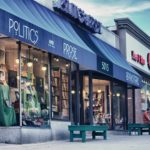
At last count, the festival’s lineup boasts New York Times bestselling authors, National Book Award winners and nominees, a Pulitzer Prize winner, and more nationally ranked and lauded writers. Literary agents, professors, editors, and outlet staff writers will also be attending sessions, speaking at panels, and leading workshops. Politics & Prose will be the official bookseller of the festival.
“We’re hoping that local D.C. writers will come and be inspired, learn a new set of skills, make connections to these editors,” says Kendi.
Most of the panels at the events will focus on a theme and feature a conversation with two authors a moderator. For example, activists and authors DeRay McKesson and Margaret Wilkerson Sexton will have a conversation at the panel “On White Supremacy.” Poet Tyehimba Jess and writer Clint Smith will speak together “On the Lyric.” Historians David Blight and Martha Jones will join in conversation “On Freedom.” Each of the panel conversations will end with book signings. Beyond these conversations are opportunities for direct learning through a series of workshops like “Race & Photography” and “Self-Care in Activism.” There’s a free film screening for young audiences, and events designed for emerging writers to mingle with literary agents and veteran authors.
Since Washington, D.C. “is both multiracial and deeply segregated, it’s an ideal location to begin to work out [the] historical thorniness of race,” says Dr. Christopher Petrella, professor at American University and director of advocacy at the Antiracism Center.
The District is nearly exactly divided by race on its longitudinal axis and it also holds the highest percentage of gentrifying neighborhoods in the nation. As the exchange at Metro PCS displayed earlier this month, that often leads to tension.
“Where does one live and where does one send their kids to school?” poses Petrella. “If you’re white and antiracist, how do you use your privilege?”
The primary challenge for the festival organizers is being able to foster a new platform for honest conversations about antiracism, racism, and policy. The festival organizers will be the first to admit that they do not hold the secret to fighting racial inequalities—but they are ready to work with and learn from attendees in an intentionally vulnerable setting.
“If we’re not able to be wrong and be courageous and ask the wrong questions in educational spaces, where can we ask them?” asked Dr. Petrella. They hope that their breadth of panels and workshops will encourage these questions.
While all-day passes are already sold out, tickets to many workshops are still available.
“We had no idea it was going to be this popular,” says Platt. “I think we’re in a space where these conversations are so necessary and it’s so important that [more people] have access to them.”
The National Antiracist Book Festival takes place Saturday at the American University Washington College of Law. Panels $15 each, VIP all-access pass $250.