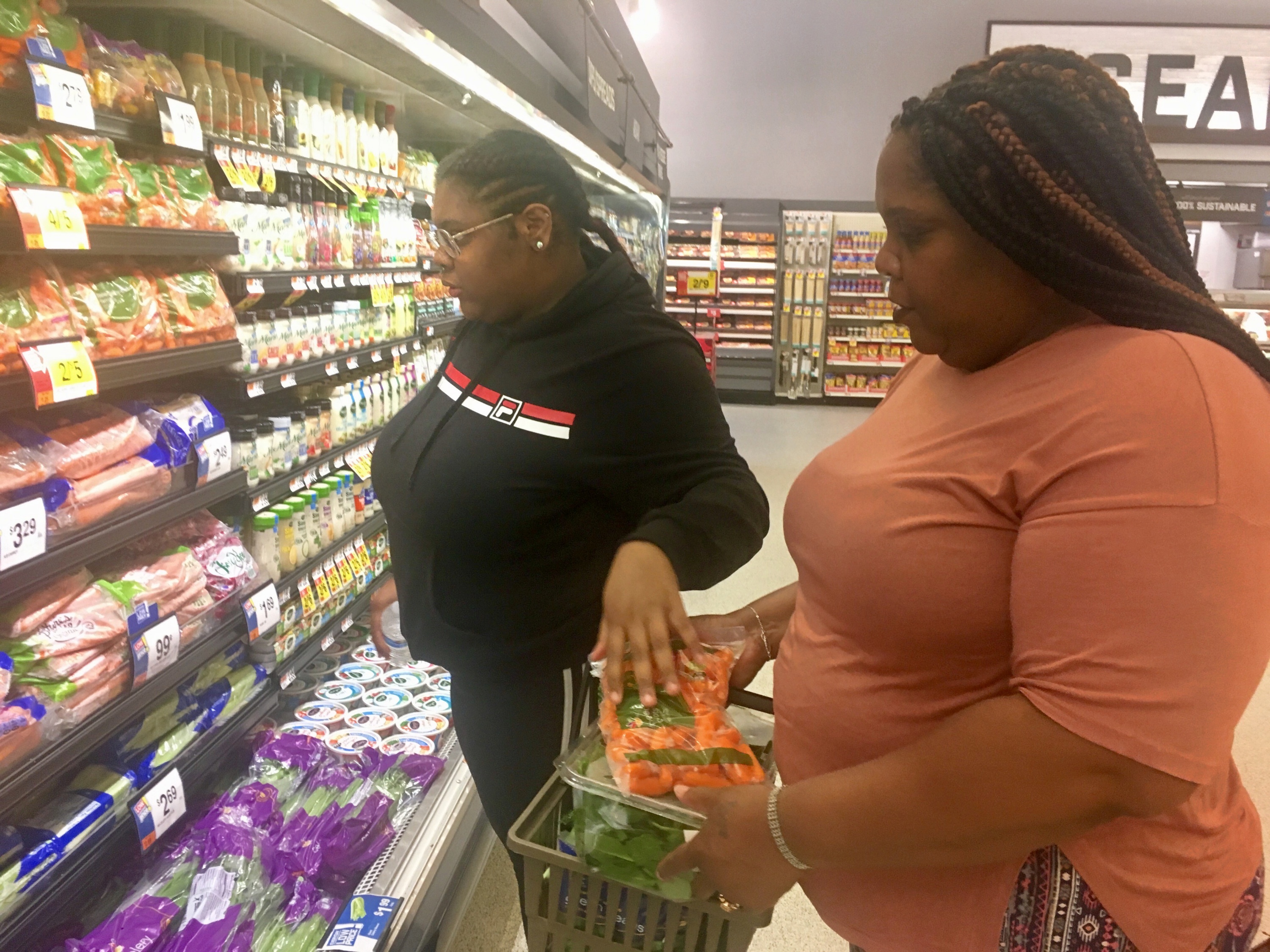
What began as Adrienne Dove’s routine visit to the doctor’s office ended more like a life-changing sales pitch of sorts. The physician checked Dove’s blood pressure, which has been dangerously high of late, and then the two started brainstorming ways Dove could conquer her battle with weight loss. That’s when, Dove says, a woman appeared who began touting the benefits of a program that could help sneak more greens into her diet.
“She said, ‘How would you feel about eating more healthy foods and getting $20 or $40 to buy more fresh fruits and vegetables?’” Dove says, “And I told her, ‘Yes! I would really take advantage of that.’”
The woman, Dove said, was a representative from nonprofit DC Greens who touted the benefits of Produce Rx and immediately signed her up. The program offers a “prescription” for healthy foods to underserved patients in Ward 8 who are struggling with diet-related chronic illnesses, such as diabetes and hypertension. While the program has served a handful of D.C. farmers markets since 2012, it recently expanded to the Alabama Avenue Giant Food, the only full-service grocery store in Ward 8. Dove, an African American woman who is also anemic, attended the program launch Wednesday afternoon in Southeast D.C. with her 22-year-old daughter, Angelique, by her side.
According to research by Georgetown University, African American residents in the District are three times more likely to be obese and nearly four times more likely than white residents to live below the poverty level. Health experts say programs like Produce Rx will be critical in the fight for food access in Southeast D.C.—where more than 80 percent of Washington’s food deserts exist.
“How we get food to all of the members of our community is the only way that we’re going to achieve health equity in this city,” says Dr. LaQuandra Nesbitt, director of DC Health. “We cannot improve the health and well-being of our community without creating food access.”
The Alabama Avenue Giant will serve as the primary pharmacy and supermarket for Produce Rx patients. Dove is one of an initial 500 patients who will receive a $20 coupon each week—or $40 every two weeks—to spend on produce. Aside from the financial incentive, they’ll get nutrition education and be connected to clinics and other local health resources.
“I think a lot of people want to learn more about healthy living, but they just don’t know where to start,” says Dove.
Right now, there’s a 15-year difference in life expectancy between Ward 3 and Ward 8 according to a study by Virginia Commonwealth University. That’s largely due to diet-related illnesses. On average, someone who resides in Georgetown lives nearly 20 years longer than someone who lives in Anacostia, according to the study. Health outcomes and quality of life indicators for those east of the Anacostia River do not reflect the progress that has been made in other parts of the city. And low-cost, unhealthy food products are more accessible and pervasive in Ward 8 than affordable, healthy food.
Produce Rx is a collaboration between DC Greens, Giant Food, DC Health, and AmeriHealth Caritas D.C. At Wednesday’s event, District government officials also affirmed their commitment to investing in programs like Produce Rx across the city to help residents achieve food security.
Dove says she lives right around the corner from the neighborhood Giant, an added bonus when she receives her biweekly vouchers.
“To have this program at the store I already shop at? That’s excellent,” she says. “And if they can keep that funding to have other stores come on board, this will really help everybody out here.”
This story originally appeared at WAMU. This story has been updated to reflect that the launch at Giant represents an expansion of the existing Produce Rx program.