Natalie Delgadillo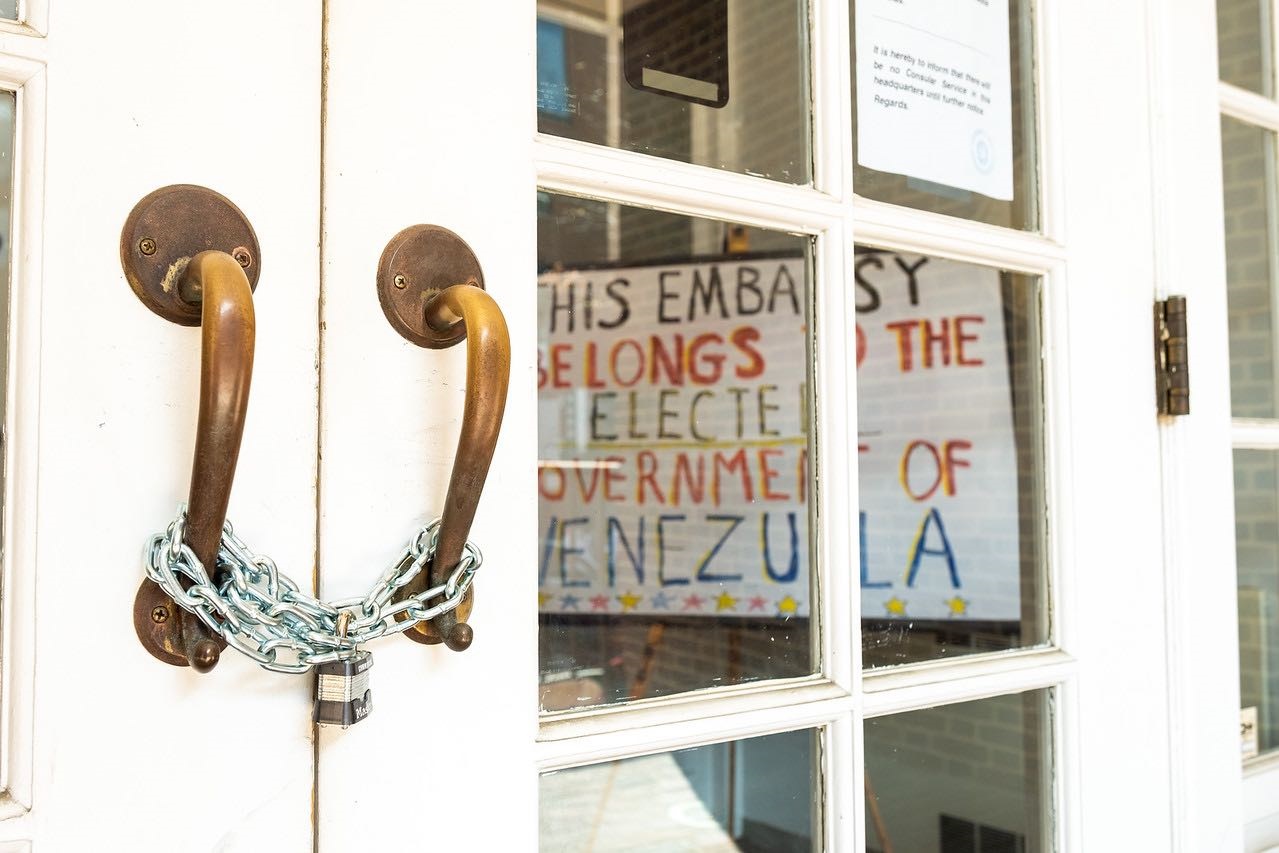

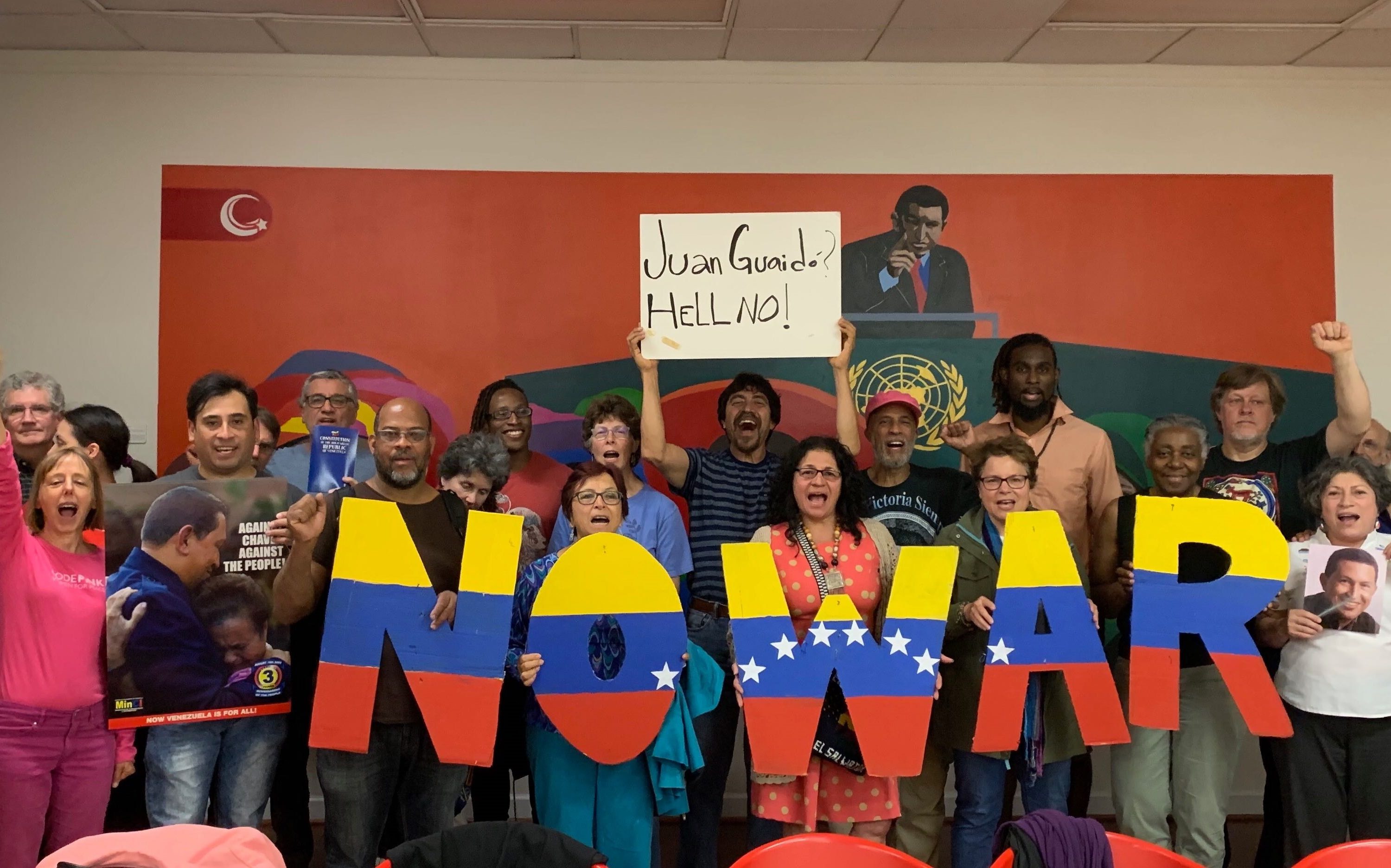
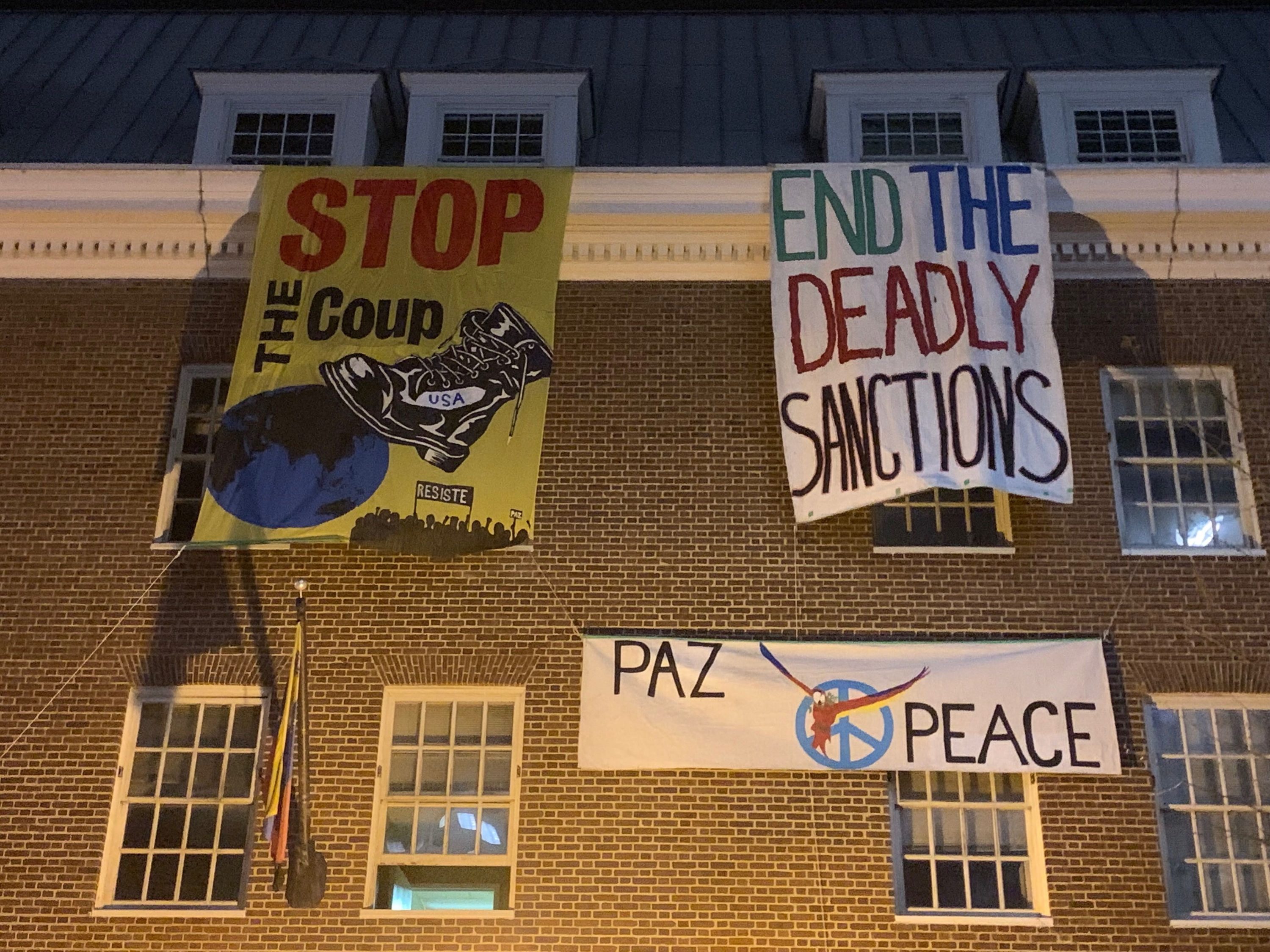
The activists haven’t been home in two weeks.
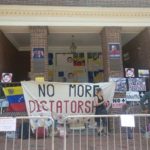
Since April 10, the group of eight has been camped out 24 hours a day in the Venezuelan Embassy on 30th Street Northwest in Georgetown. They’ve been sleeping on couches, exiting and entering the premises for food and necessities with key cards provided by the country’s diplomatic representatives. They plan to stay as long as they must.
“I’m 67 years old, and I’ve seen too much already of my government screwing things up in other countries,” says Medea Benjamin, one of the activists taking up residence in the embassy and the co-founder of antiwar organization Code Pink. “And I’ve seen personally decades of war in Latin America and how utterly devastating it is … and I just can’t abide by sitting and watching as my government helps engineer another coup in Latin America that will lead to decades of violence.”
Medea is referring to Venezuela’s tense and increasingly dangerous political situation, wherein two men are both claiming the right to the presidency. On one side is leftist leader Nicolás Maduro, the mentee of socialist president Hugo Chávez. Many people in the country and around the world blame Maduro for the country’s slide into economic insolvency and the deep poverty of its citizens. On the other is Juan Guaidó, the opposition leader who declared himself the country’s president earlier this year. Maduro’s supporters believe Guaidó is illegally trying to usurp a democratically elected leader. The United States and the Organization of American States both recognize Guaidó as Venezuela’s president, while the United Nations and many other countries, like China and Russia, still recognize Maduro.
These international conflicts have repercussions at Venezuela’s diplomatic outposts in the District. Diplomats at two military attaché buildings in Washington D.C. have defected to Guaidó, effectively turning those buildings over to the opposition government. On April 10, the last of Maduro’s diplomats at the embassy were terminated from duty, a State Department spokesperson confirmed to DCist. As such, they have two weeks to adjust their immigration status or leave the United States. The deadline for them to exit the country is Wednesday.
Benjamin says she thinks it’s likely the diplomats will leave by the deadline, though she doesn’t know for sure.
But one thing she does know: she and the seven other activists will be staying, living in the embassy as long as it takes to make sure it isn’t given over to diplomats for Guaidó.
“We saw how the Guaidó representatives took over the military attaché building of the Venezuelan government on California Street [in D.C.], and we heard they wanted to take over the embassy, and we felt that was a terrible idea,” Benjamin says. “It would only inflame the bad relations even more. We’re worried about a civil war in Venezuela, about a U.S. military intervention, and we felt like helping to protect the embassy was a way to say ‘stop, let’s use other ways to promote dialogue.'”
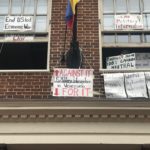
The group of activists has been calling themselves the Embassy Protection Collective. Organized through Code Pink and Popular Resistance, they have been busy holding educational events each evening on Venezuelan history, U.S. foreign policy, Wikileaks founder Julian Assange (who claimed asylum in the Ecuadorian embassy in London for nearly seven years until his arrest earlier this month), and other topics, Benjamin says. They’ve spent the days making posters and decorating the embassy with banners. One of them reads “End the Deadly Sanctions,” a reference to the U.S’s sanctions against the country. There are 32 signs in the windows “giving a chronology of the attempted Venezuelan coup,” which Benjamin hopes will provide the building’s Georgetown neighbors with some information about what’s happening in the country.
As the Washington Post has reported, other countries have also been struggling to resolve similar tensions that have emerged at Venezuelan embassies around the world.
Benjamin says that she and the other protesters expect for the “takeover” of the embassy to happen on April 25, the day after all of Maduro’s remaining diplomats should have left the country. At 10 a.m., the Embassy Protection Collective plans to hold a rally in front of the embassy, and a press conference about their protest at 11 a.m.
On Wednesday morning, Benjamin says several officers that looked like Secret Service agents surrounded the building, appearing to scope it out.
The Secret Service referred all questions about plans to empty the embassy to the State Department. The State Department would only confirm the termination of Maduro’s diplomats and the requirement that they leave the country.
The group is asking for other activists in the area to come to the rally on Thursday in support of preserving the embassy for Maduro’s government. “You can’t just create a parallel government while there’s already a government in power and think that will lead to anything but more chaos and violence,” she says.