Natalie Delgadillo

The best place to see them is right at the bank of Rock Creek near Peirce Mill in Northwest D.C. At the right time of year, there might be hundreds of fast-moving shadows slipping through the water, chasing one another upstream.
Each spring, the river herring that began their lives in the tributaries of the Potomac River make their way back here, looking for just the right place to spawn. Female herring swim for hundreds of miles, their bellies fat with eggs, lured by the chemical scent of the freshwater creek or river where they started their lives. Groups of males also head back to the tributaries of their births, chasing after nearby females and waiting for the moment they can release their sperm and fertilize the eggs.
These fish species have made the same trek for centuries, starting their swim from the Atlantic Ocean in February each year and making their way through the Chesapeake Bay, then to the Potomac River, and then up Rock Creek. They spawn here, and the hatchlings born in a few days’ time eventually make the exact same journey, spawning in the same waters where they started their lives.
There was a time where hundreds of thousands of river herring, mainly a species known as the alewife, would swim past the spot on Rock Creek where Peirce Mill now stands, spawning over a large expanse of the creek.
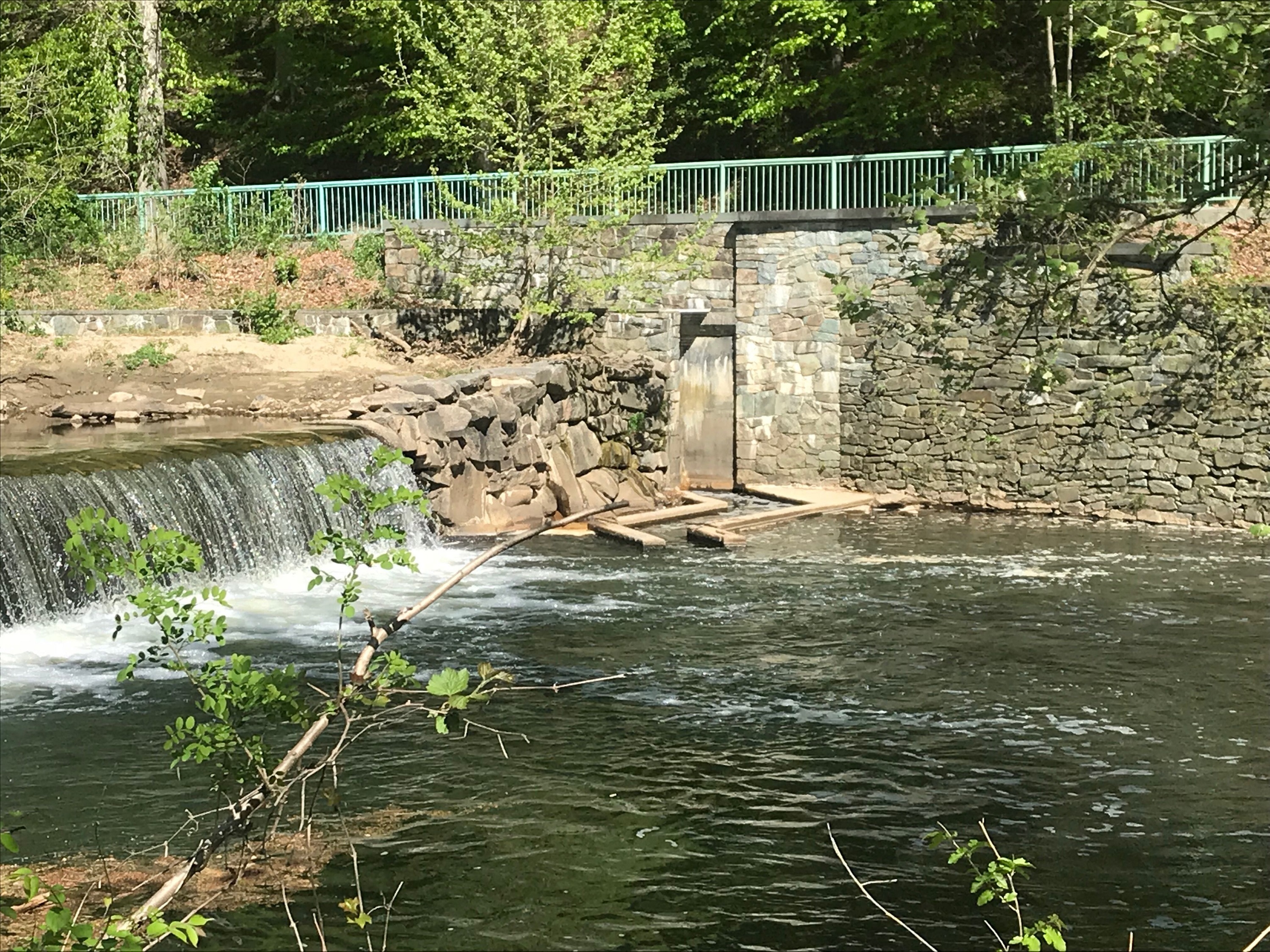
But in 1904, in an attempt to add some ambience to a tea house at the defunct Peirce Mill, humans built a dam in this part of the creek, creating a scenic waterfall and, in the process, blocking the passage of fish to the spawning grounds beyond. River herring—called by chemical signature to waters they could no longer reach—would reach the dam, lay all their eggs near Peirce Mill, and then make the journey back to the ocean.
“It affected the whole breeding scenario for them because they’re forced into tighter quarters there that may compromise the number of eggs,” says Bill Yeaman, a Rock Creek Park ranger. “Historic habitat, the areas where they used to spawn, can help benefit the whole population [of river herring]. This dam was the major impediment.”
Enter the “fish ladder.”
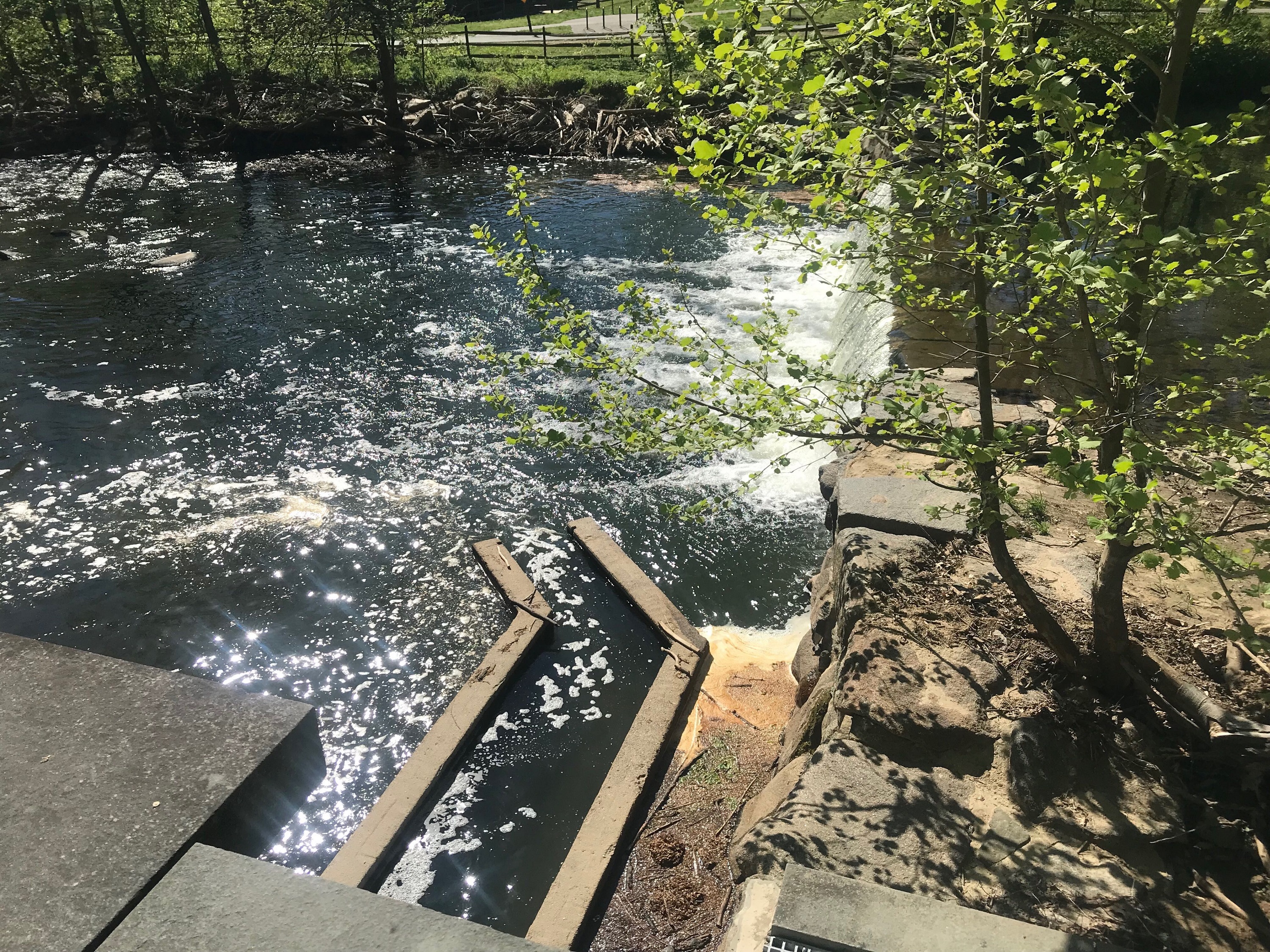
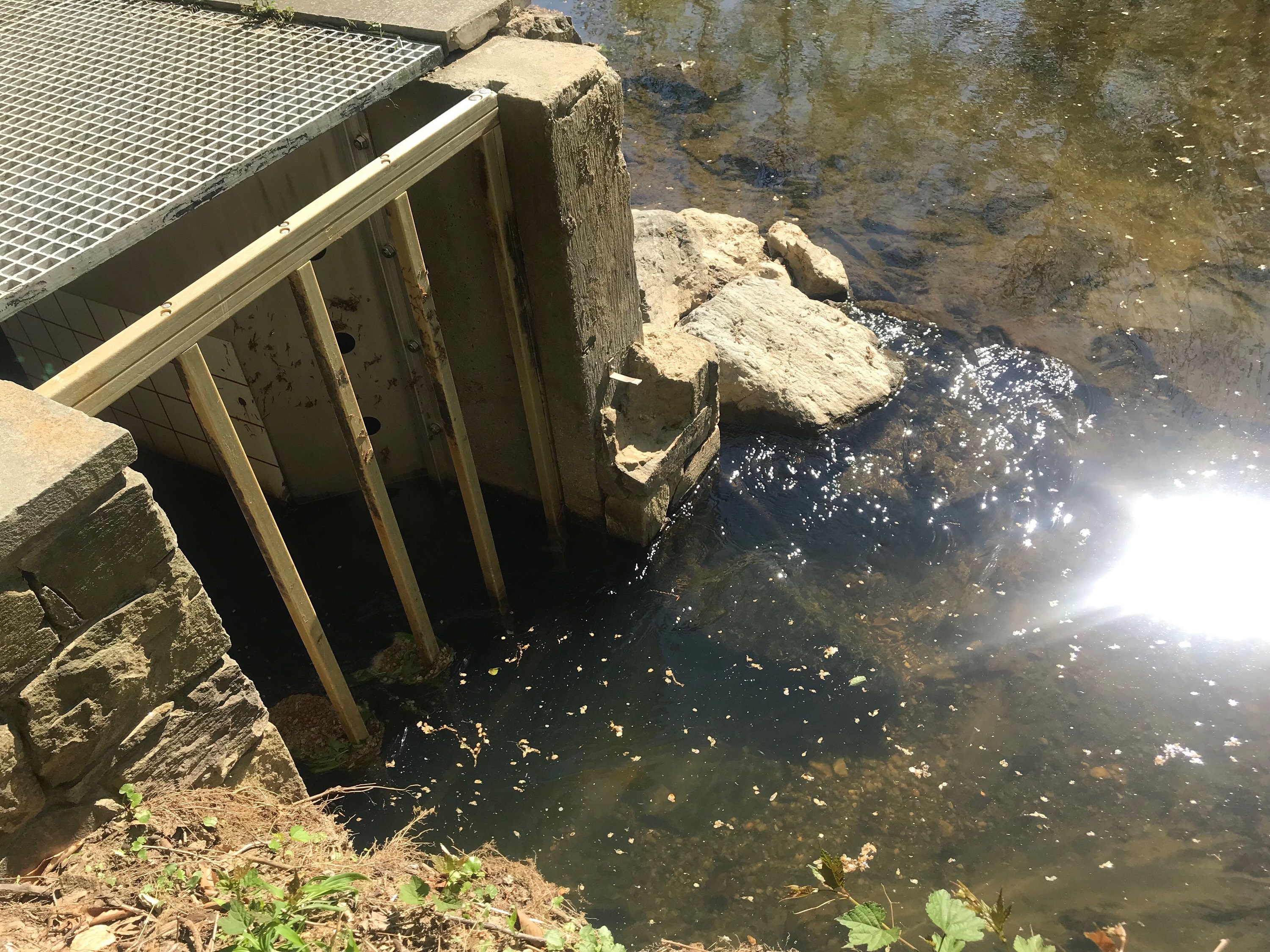
In 2007, federal workers created a workaround for herring who want to get on the other side of that waterfall: a kind of alternative path that goes around the dam, climbing upward in several “steps” with space along the side for tired fish to rest along the way.
Without a trained eye, you might miss the structure altogether. Looking into the creek from Peirce Mill, it’s on the far side of the dam, and appears at first like a swimmy little sidewalk for fish. If the conditions are right (the current has to be strong enough to attract fish who want to swim upstream), river herring can swim up this little sidewalk and then into the “ladder,” where the current looks downright harrowing. The fish are meant to swim against the current one step at a time, eventually coming out on the other side of a grate and (voila) into a vast expanse of suitable spawning ground.
The ladder has been here for more than a decade now (it was originally built with funds from the Wilson Bridge project, which damaged some habitat during construction and then had to make some environmental amends). But until very recently, scientists haven’t had concrete proof that it was working. This is actually the first year since its installation that fish biologists have observed adult herring above the ladder, says Daniel Ryan, the fisheries research branch chief at the D.C. Department of Energy and the Environment.
“In years past, we’ve observed river herring at the base of the ladder, and there are others, like Bill [Yeaman] … who might have visually observed fish above the ladder, but as far as what we have seen doing our biological surveys, this spring is the first time we have observed adult river herring above the ladder,” Ryan says.
Yeaman, on the other hand, says he has seen herring making it to the other side of the ladder most years since it was installed in 2007. But success depends on lots of other conditions. Some years, hardly any herring make it up to Rock Creek for a variety of reasons, including low water levels from a lack of rain or a low breeding population due to bycatch in the ocean. If there are very few herring, the ones who make it to the dam may not feel the need to swim further for more room to spawn, says Ryan.
But this year, conditions have been optimal, and Yeaman says he and his colleagues have seen dozens exiting the ladder.
“We do make observations and record what we see. Like yesterday afternoon, there were about 12 [fish] right at the exit of the fish ladder. And then they drifted off into the creek to go up and keep on going,” Yeaman says.
This is a good sign that the fish are using the ladder for its intended purpose, and may even point to a stronger river herring population more generally, but it’s impossible to tell how well the ladder (and other measures taken to preserve the population of herring) are working without years of study, Ryan says.
Yeaman says this is the best year he’s ever seen for the number of herring running up the creek. The first run of alewives he noticed lasted for six or seven days, where sometimes it only lasts for one, he says. He’s seen what look like hundreds of river herring this year swimming up to Peirce Mill, tempting predators: for two days during the last run, he says, a bald eagle stayed perched on a low branch above the river and had his pick of the passing herring.
But a good year doesn’t necessarily mean anything about what could happen next, Ryan says. “I’ve been doing this for 21 years, and it’s crazy variable … we can have a crazy high followed by a record low,” he says. “We may not see [river herring] above the mill for ten more years.”