In each of the television series he’s helped create, George Pelecanos has captured a different city’s unique tone, whether it’s Baltimore on The Wire, New Orleans on Treme or vintage New York City on The Deuce. But until now, the D.C. native has only brought his hometown to life in his novels, including King Suckerman, Hard Revolution, and The Man Who Came Uptown. Now, he’s telling four stories about the District on screen.
DC Noir, based on Pelecanos’ short stories, is four episodes packaged together as a single film, making its local premiere at FilmFest DC. A chapter of the film is also screening at the Tribeca Film Festival in New York this week. The episodes were filmed entirely on location in Washington with a local crew and mostly local actors.
Executive producer Ginny Grenham, whose company DC Stories provides support to local filmmakers, hopes the movie dispels some myths about Washington.“The whole reason that I got involved in this was because I always had a problem with D.C. being portrayed as just K Street and the White House,” she says. “I feel we need to tell the world about D.C. People don’t really get that it’s a real live city.”
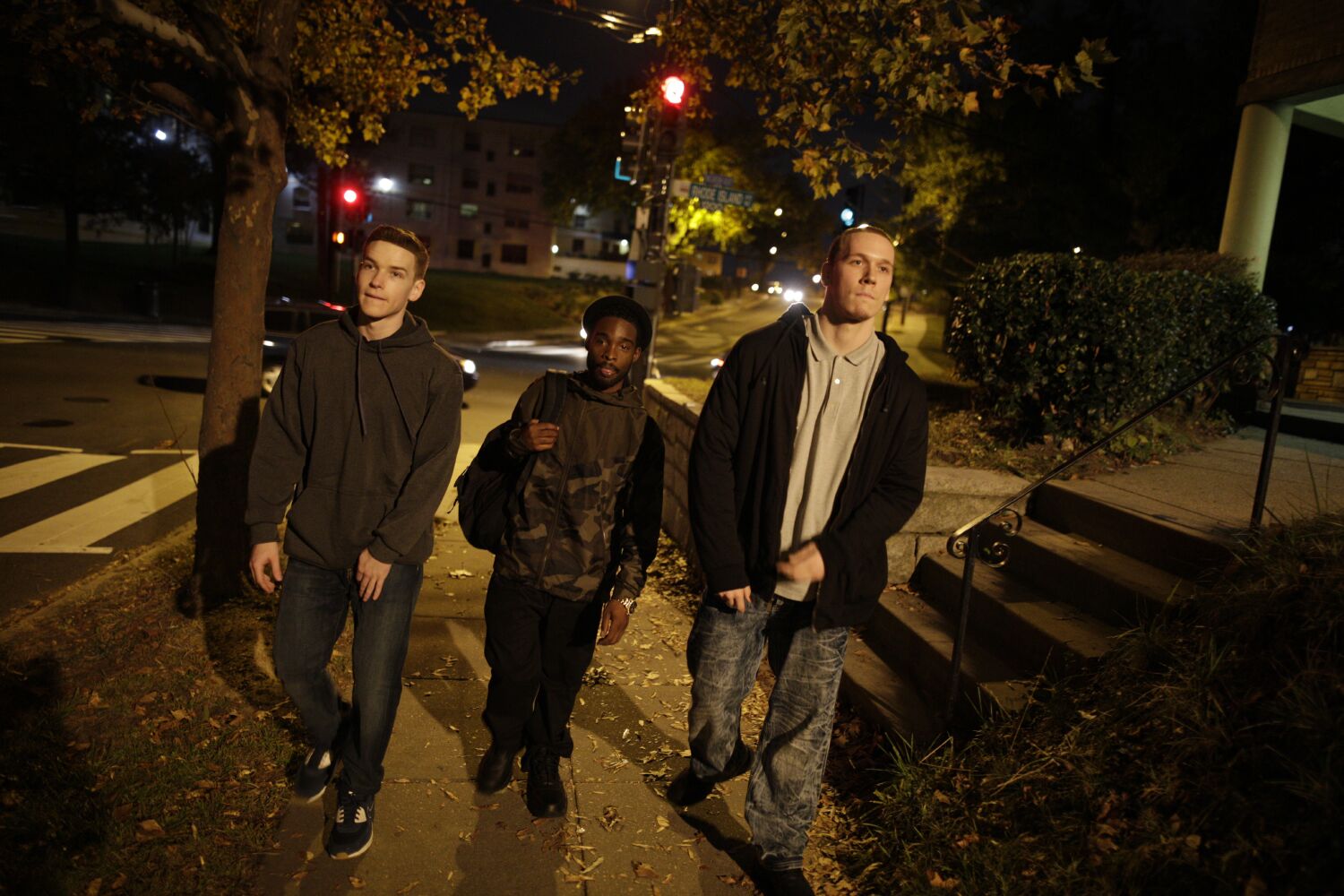
In DC Noir, Pelecanos makes his debut as a director with one of the chapters, “The Lovers,” a brand new story of marital infidelity set in present-day Petworth. Three other segments are adapted from stories Pelecanos wrote in the 2000s, and are set in Petworth and Park View at a time before housing prices rose and coffee shops moved in. While “The Lovers” depicts a gentrified city, other segments feature characters struggling to make ends meet and young people trying to stay out of trouble despite the temptations of the drug trade. Nick Pelecanos, George’s son, makes his debut as a director with the effective “Miss Mary’s Room.” Stephen Kinigopoulos, who recently directed a Kacey Musgraves video, handles the film’s final segment, “Confidential Informant,” which stars The Deuce’s Thaddeus Street.
Many of the actors featured will be familiar to fans of Pelecanos’ previous series. Washington native Gbenga Akinnagbe, who starred in The Wire and The Deuce and is currently appearing on Broadway in To Kill a Mockingbird, plays a police detective in “The Lovers.” He also directs an episode called “String Music,” a gritty story of a young man who gets caught up in a gang fight at a go-go club.
DC Noir shows a side of the city that most people outside the Beltway (and even on Capitol Hill) may not even know exists. A native Washingtonian’s image of the city is evident from the movie’s opening credits. Sure, they show the Capitol Building, but also Cardozo High School and Augustus Saint-Gaudens’ Adams Memorial in Rock Creek Cemetery.
“The D.C. of Homeland and House of Cards and The Americans is not D.C.,” says Pelecanos, 62. “It doesn’t look like it. And it can’t double for it. If you live in D.C. you know that.”
The film also represents D.C. musically. There’s a punk score by Fugazi’s Brendan Canty and go-go is present in an appearance by Backyard Band’s Anwan Glover, who plays himself. The sound of go-go, in particular, has been a hot-button issue of late, after Shaw’s Metro PCS store was ordered to turn off its iconic go-go soundtrack. The owner told DCist at the time that a resident at a nearby luxury apartment building had complained about the noise.
“I think that if you’re going to move into the city you need to respect people and respect the culture and traditions,” says Pelecanos. ”Remember that that’s probably why you wanted to come into the city to begin with—for culture. And that’s D.C. culture in a nutshell. Same thing with Howard University and people letting their dogs crap in the yards. … Just respect that. That’s all. Just try to think what you’re complaining about before you do.”
DC Noir is a co-production of Spartan Productions (Pelecanos’ company), and Pictureshow Productions, which is run by film producer Kyle David Crosby out of offices in Union Market. The producers hope their film will boost the local film industry and spur even more jobs. When Pelecanos is finished with The Deuce he says he will turn his focus to adapting Hard Revolution, his novel about the 1968 D.C. riots, for television. And he promises to bring that production to the city.
“I’m pretty firm about shooting it in D.C.or not shooting it at all.” he says. “I won’t shoot it anywhere else. It’s gotta look like D.C. because it never does.”
While the production honors the past, it looks to the future as well. Howard University film students interned on the project, and Pelecanos says some of them have already gotten industry jobs thanks to that experience. Pelecanos helped students out with connections that his own education didn’t give him.
“When I went to film school at the University of Maryland, when I got out I was useless,” Pelecanos says. “I didn’t know how to get a job and if I’d walked onto a set I wouldn’t have known what to do. It’s an impractical sort of degree unless you get out there and get some work. But it’s a chicken-egg thing. It’s very, very hard to get your foot in the door in the industry.”
Can DC Noir bring that kind of industry to the city on a regular basis? “We’re trying to build something. I’ve seen it happen,” he says. When Pelecanos worked on Treme in New Orleans, the area was still reeling after Hurricane Katrina, but thanks to a tax credit from Louisiana for film productions, the state has seen an uptick in movie and TV projects in the area. American Horror Story, Green Book, NCIS: New Orleans, and Girls Trip are among the recent productions to set up shop in Louisiana.
“That’s how you build the economy,” he says. “It might be pie-in-the-sky, but that’s what I’m hoping for. I’d love to come home and work the rest of my career in [the D.C. area] and sleep in my own bed at night.”
DC Noir screens Saturday at 8:30 p.m. at AMC Mazza Gallerie. $14. George Pelecanos will appear in person.