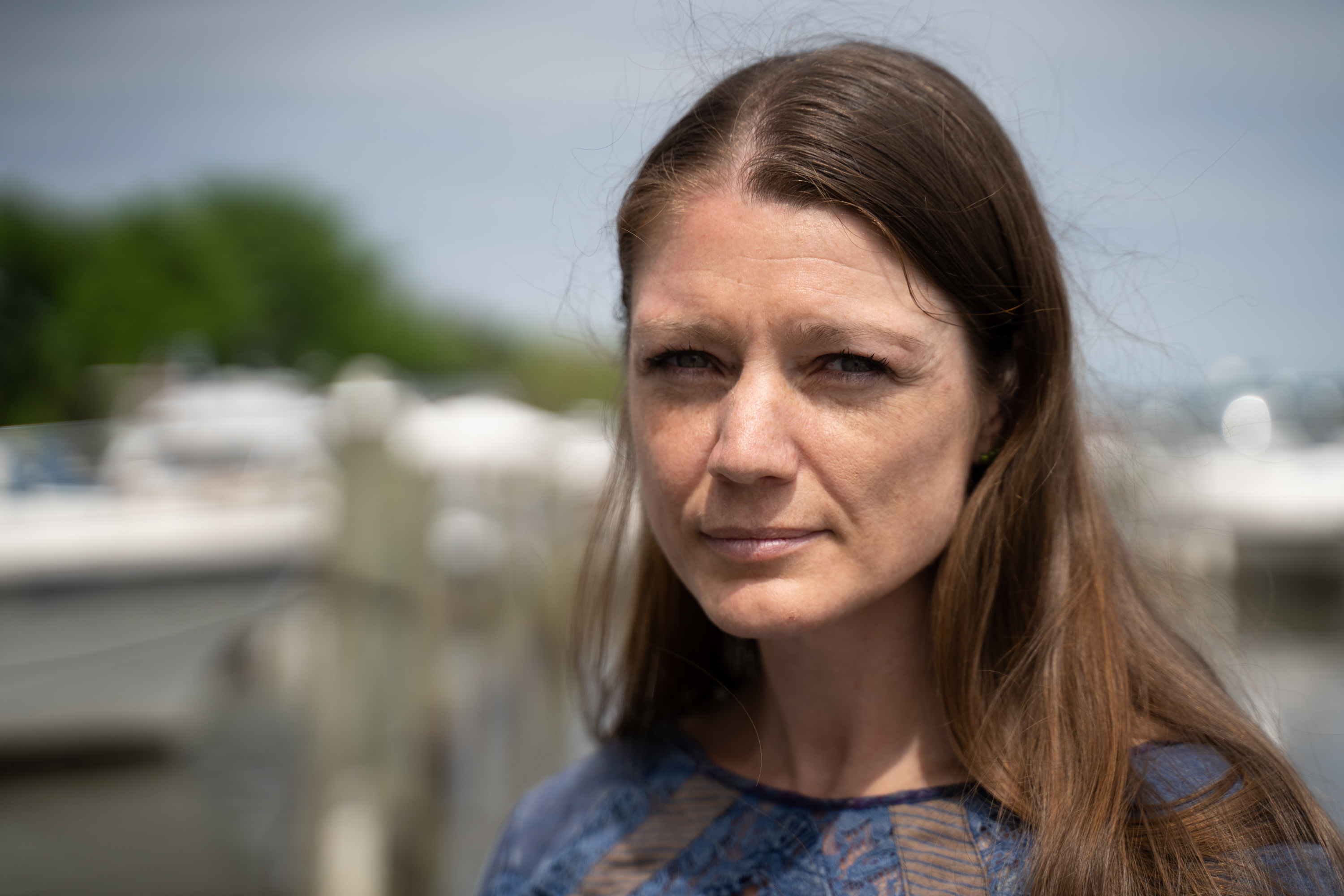
Jacob Fenston
Wendy Sittner first saw the straws on Instagram. More than 4,000 of them, separated by color.
“I had been eyeing these straws for a while,” says Sittner, a mixed media artist. The straws had been posted on social media by the Anacostia Watershed Society. The group’s volunteers collected them during a single river cleanup, then staff members sorted and counted each one.
“It’s something that’s easy to multitask and do during meetings,” says Emily Conrad, development director with the Anacostia Watershed Society.
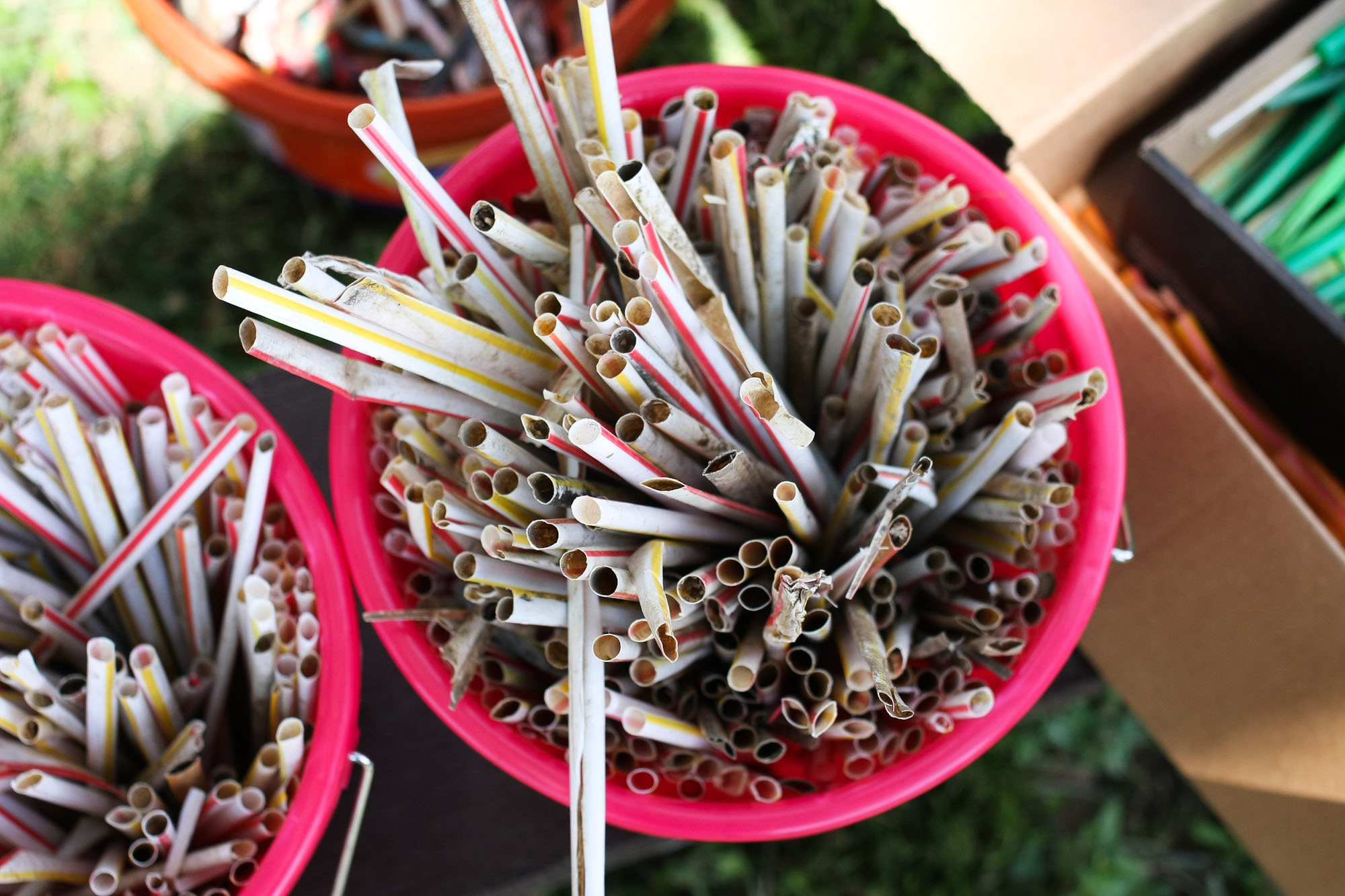
The group finds straws in every trash cleanup—they’re a ubiquitous piece of litter. But this was the first time they separated them, to draw attention to plastic straw pollution. Though straws make up a small fraction of total plastic pollution, they’ve been the target of recent activism because they can harm marine animals.
When Sittner saw the colorful straws on social media, she could see their potential. “The straws definitely weren’t originally attractive,” says Sittner. “It took several baths in Lysol and scrubbing them down before they were even usable.”
Sittner was attracted to the straws not just for their aesthetic value. She wanted to use them to create an anti-pollution message. The finished piece of straw art stands nearly seven feet tall, a colorful mosaic reflecting the light. It features a young girl, waist-deep in the water, fishing. In the background is the pirate ship play structure at Anacostia Park. Sittner says the piece represents a future Anacostia River, when the water is clean enough to swim in and fish in.
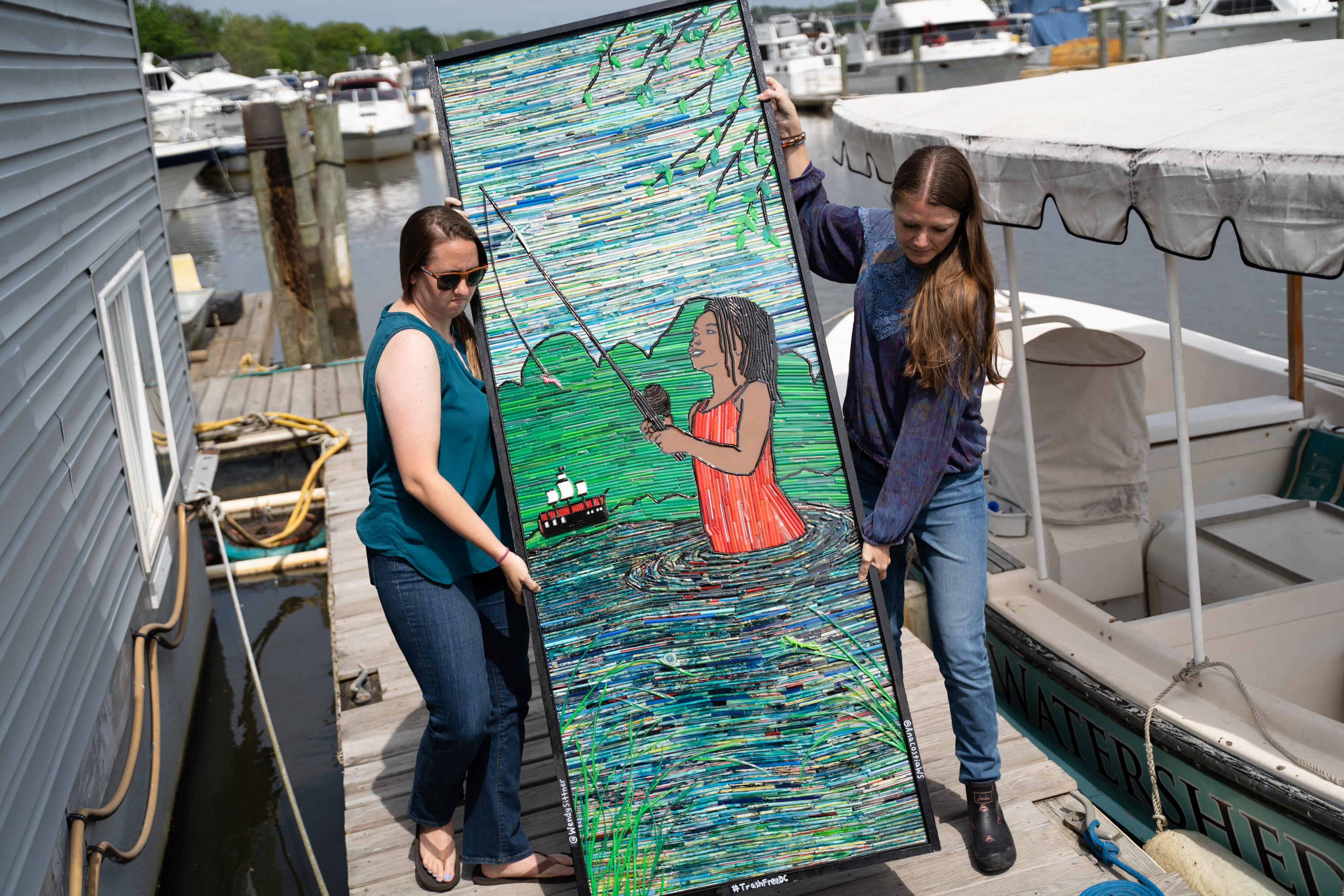
The artwork has been on display several places, including recently at the Anacostia River Festival. Sittner says it sparked lots of conversation about straws and single-use plastics, once people realized what it was made of.
“The children a lot of times were able to identify the straws as being plastic straws. The adults would have to look at it longer to get a sense of what it was,” Sittner says.
In January, D.C. implemented a ban on plastic straws, and Takoma Park, Maryland, followed suit, voting in favor of a ban in March. It’s part of an international movement against plastic straws: Along with several city-wide bans, many restaurants and corporations are ditching them voluntarily, opting for paper or other more environmentally-friendly options.

Emily Conrad says it’s still too early to tell what sort of impact the plastic straw bans are having. “Straws are definitely still around, and we’re finding them in the waste stream,” Conrad says.
As for Sittner, she says she likely won’t be returning to straws as a medium. “A lot of people have asked me if I have done work with straws before,” says Sittner. “I rarely use the same material twice.”
But Sittner has her eye on another plentiful material: plastic bags. “I have an idea to iron them together, like a thin cardboard so they would be a little more workable and less likely to blow away in the wind if it were an outdoor installation.”
This story originally appeared on WAMU.