Jacob Fenston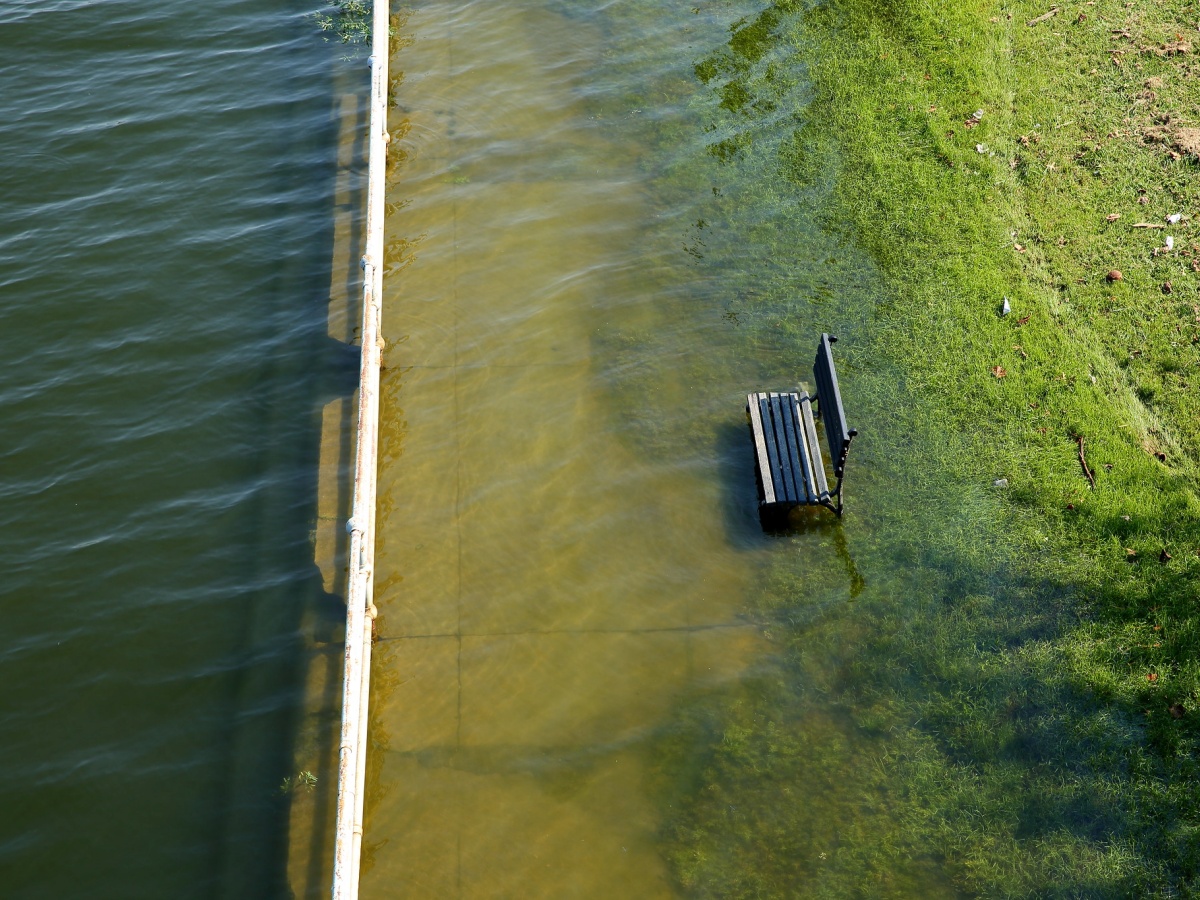
In the year 2080, the sea level on the Potomac River and Anacostia River will be more than three feet higher than it is currently. There will be twice as many heat emergency days as there were in 2018—meaning nearly the entire summer will feature days with a heat index over 95 degrees. What’s known as a “100-year” storm will happen every 20 years.
This is the not-so-rosy picture painted by climate scientists, and it’s the one that the District’s new Resilient D.C. plan attempts to prepare for. The plan also includes sections on other ongoing challenges, including technological change and population growth.
Kevin Bush, D.C.’s chief resilience officer, says the strategy seeks to “make the city’s immune system stronger” so the District is ready for “any 21st-century challenge.”
In the climate section, the plan includes a goal to retrofit all flood-prone buildings by 2050. Some buildings might have to be removed, “in areas were building retrofits are inadequate or too expensive given the level of risk.”
Bush likens this to the way cities in California are dealing with earthquake risk. If we know now how much sea level will rise in the future, we can catalog which buildings will be frequently flooded. “Let’s meet with those building owners and come up with a plan to address that risk,” says Bush.
That process will be made easier by new flood modeling software the District plans to build that will give city officials a much clearer picture of current and future flood risk. D.C. Mayor Muriel Bowser has included this flood modeling project in her most recent budget proposal—$5.7 million over four years.
The plan envisions two pilot “resilience districts” along the Anacostia River, in Southwest D.C. and near Kenilworth Park in Northeast. These two areas—being low-lying and flood-prone—are some of the most at-risk from climate change. The resilience districts will include things like specially-designed parks that can capture large amounts of stormwater during significant rain events, to mitigate flooding in homes nearby.
Besides climate change, the resilience strategy contains a broad range of goals—from closing the educational achievement gap, to building more housing, to hiring hundreds more police officers and deploying them on foot, bike, Segway, and scooter.
Bush says this broad focus is important, to create a city that can withstand natural and manmade disasters. He uses Hurricane Katrina as an example. “Part of the reason Katrina was such a devastating disaster for New Orleans is because of some of the ongoing challenges that the city was already facing.”
D.C. is part of the Rockefeller Foundation’s 100 Resilient Cities program, which funded the development of the resilience strategy.
This story originally appeared on WAMU.