 Rachel Sadon
Five years after moving to D.C., Krysten Copeland rolled down the window of an Uber on a warm spring night. Her eyes swelled to the point that she could barely see. The public relations professional stumbled out of the car and made a beeline for the nearest pharmacy.
“I have a lot of friends who have allergies and they were complaining about similar symptoms, but I had always kind of felt genetically superior up until this point,” says Copeland, 29, who moved to the District after graduating from college in Alabama. “I had never experienced it firsthand.”
The same thing happened to me: A few years after moving to D.C., I found myself sniffling in the second row of a lighthearted musical, as tears streamed down my face. I don’t even remember the name of the play, but I won’t soon forget the first time that my head went haywire. So let me admit upfront: What follows is a personal investigation.
I’ve heard many times over that previously (gloriously!) allergy-free people often develop symptoms a few years after moving to the D.C. area. Some people even say that it’s basically a fact of life—and that it’s more likely to happen here than in other cities.
Sarah Lord, a 29-year-old research analyst, grew up in Florida thinking she was the lucky one in a family of allergy sufferers. Lo and behold, two years after she moved to the District from Lebanon, they finally struck in the form of constant sniffling and dry eyes.
“I was so aghast at the whole experience. And as I started talking to other people who are transplants to D.C., I kept hearing ‘Oh, yeah, that happened, to me, too.’ Or ‘Oh, yeah, that’s a really common thing. I don’t what it is about D.C. pollen,'” Lord says. “I mean, truly, like strangers in bars. I have friends who have lived here their whole lives. And they’re just like, ‘Yeah, that’s totally a thing. You move here and you get them.'”
So why do so many people seem to develop allergies a few years after moving here? And is it worse in the D.C. area than in other places, or is that an urban myth perpetuated by the miserable masses?
I’ll tell you now that there doesn’t appear to be a definitive answer. But there are some very good reasons why it feels like it’s the case.
“[Patients] come to my office and they’re like ‘you know, the first couple of years here, I was okay. And then I just started having significant problems,'” says Rachel Schreiber, an allergist and immunologist with a private practice in Rockville. “And I’m always like, ‘Welcome to Washington. Like this is Washington. Part of living here is allergy.'”
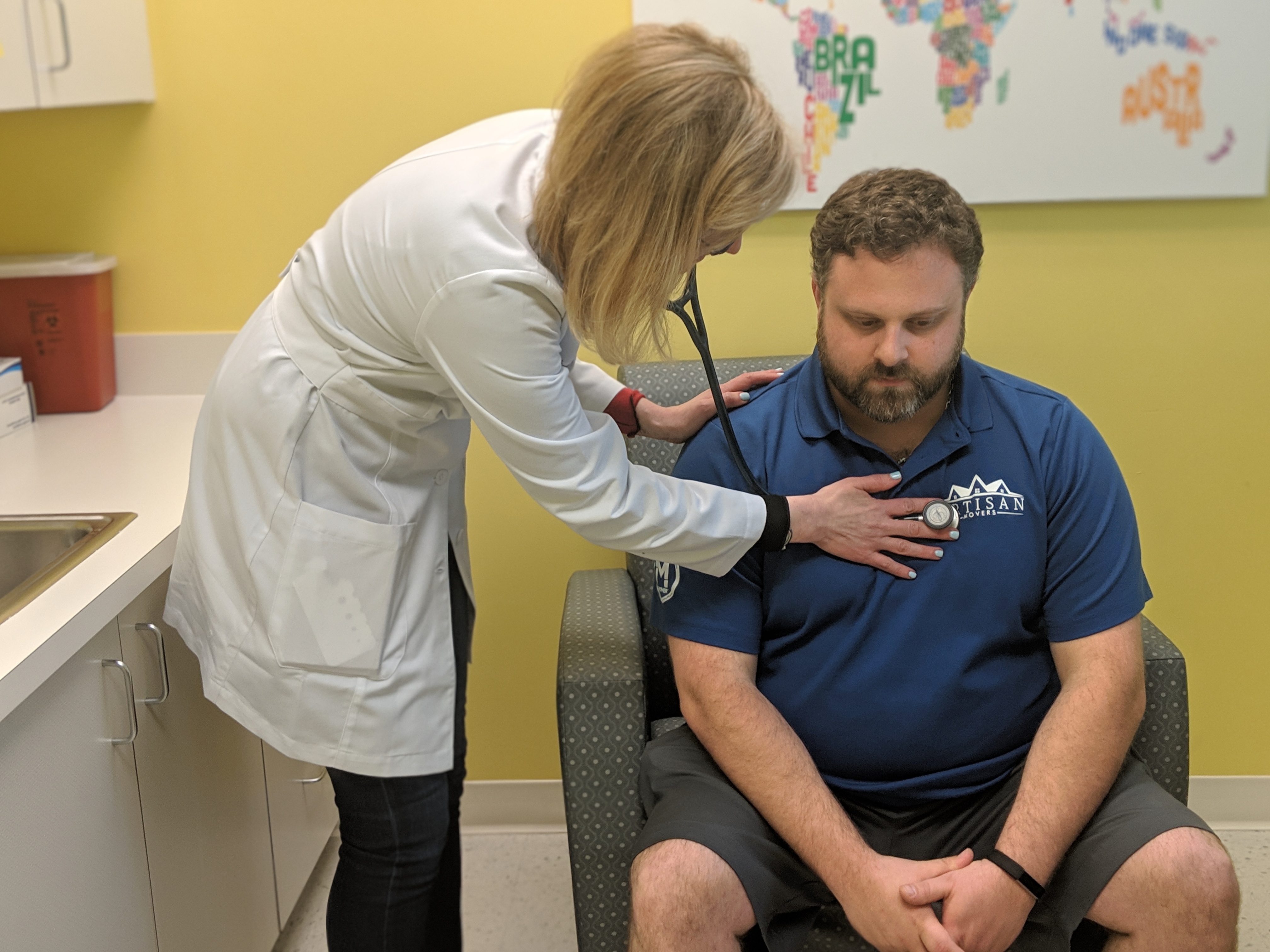
Two years after moving to D.C., Shaefer Bagwell visited the nurse at his job on Capitol Hill with what he assumed were cold symptoms: congestion, coughing, body aches. “I felt like I was hit with a bus,” recalls the 26-year-old native Californian. The nurse sized Bagwell up and declared the villain wasn’t a virus, but seasonal allergies.
The process starts when your immune system comes into contact with a harmless substance and mistakes it for something dangerous. Like a seriously misguided friend just trying to help, it prepares to attack with an antibody called immunoglobulin E (often shortened to IgE). When you come across the substance again, the result is the bodily mayhem known as allergies. Genetic history plays a large role, but it’s not a guarantee that a person will or won’t get them.
“While you may have a tendency develop allergies, you have to be exposed at some point to become sensitized,” says Dean Metcalfe, a principal investigator at the National Institute of Allergy and Infectious Diseases (which is a part of the National Institutes of Health). “At some point after you become sensitized—and sensitized enough—then when you get exposed to that allergy, you’ll have an allergic reaction.”
And with seasonal allergies, that process generally takes a while to play out.
“Sometimes people call me up and they say, ‘I think my six-month-old baby has pollen allergy,'” Schreiber says. “Your six-month-old baby probably doesn’t have pollen allergy yet because he or she has not seen the season for enough time to develop allergies. Your body has to be exposed to it for a year or two before you’re going to mount a response to it.” And for some, it takes even longer.
So that explains why newcomers to the area tend to be blindsided with symptoms after they’ve stopped feeling quite so new the area.
Though no one is really safe—doctors see new diagnoses at any time of life—people typically develop allergies in childhood or as a young adult. Given how many people move to D.C. at 18 for college or for career opportunities in their twenties, age could be playing a role in the suspicion that the District is an allergy trap.
There’s an even more important element in the sentences above: moving.
A common factor in developing new seasonal allergy symptoms as an adult is relocating to a new environment, where there are unfamiliar pollens to react to for the first time.
“If you came from an area where the plant flora was the same as the D.C. area, maybe from the south, which is where regions are fairly similar to D.C., you probably wouldn’t have that problem. You’d probably already be allergic,” Metcalfe says. “But there are a lot of areas in the country—northern climates, New England, the Southwest [among many others]—where if those people moved to D.C., they may be seeing a lot of the tree pollens and grass pollens for the first time.”
Or they’re seeing them after a period of avoidance, which can make symptoms worse.
Political strategist Lisa Rice never had allergies when she was growing up in Southeast’s Fort Dupont neighborhood. But when she moved back to the city after finishing graduate school in 1991, they struck—hard.
“I slept with my windows open one night, and the next morning, my eyes were glued shut. I mean, it was that dramatic,” she says.
Rice now lives in the same house she grew up in (“I am in the exact physical place that I was a child … I’m back with the same grasses and some of the same old trees and everything”) and her allergies have only gotten worse over the past three decades. She takes a dizzying combination of pills, sprays, and drops to manage the symptoms.
Because the onset of allergy symptoms often coincides with the blooming of D.C.’s most famous trees, many people think that the cherry trees are to blame for their springtime suffering.
“It would actually be very unusual to have an allergy to the cherry blossoms,” says Shelby Elenburg, an allergist who treats patients at the Foggy Bottom and Shady Grove locations of the Allergy and Asthma Center. But “when the cherry blossoms are blooming, that’s when all of the other trees are pollinating. So they’re allergic to all the other things that are out.”
In fact, it’s unlikely that flowers are the reason for your spring sniffles. Flower pollen is generally carried by insects, rather than wind. That powder turning your car an eerie shade of green in the early spring is largely from trees.
To be clear, not everyone develops allergies when they move here. And some people report that their allergies cleared up when they moved to D.C. But for those of us suffering—including plenty of D.C.-area natives who’ve dealt with this for all of their lives—let’s band together and pin some of the blame for our misery.
Over the spring, which tends to be the most severe season, most allergies are caused by pollinating trees (a particularly bad offender is D.C.’s thousands of oaks, but there’s a long list of species). If your symptoms don’t flare up until late spring or into summer, grass pollen is a more likely culprit. And if you’re struggling at the end of summer and into the fall, ragweed may be your nemesis.
The region has a great diversity of trees and grasses, which flourish over a long growing season. “This is a pretty aggressive area for sensitizing people that are prone to have allergies,” Metcalfe says.
He also notes that urban areas can have it worse because city landscapers tend to plant more pollen-producing male trees (female trees produce seeds and fruit that gunk up sidewalks). One horticulturist dubbed the phenomenon botanical sexism.
“The point of pollination is for those pollens to go everywhere. I mean, these pollens have been found a mile out to the sea, a mile up into the atmosphere. Nature made it so the pollens fly everywhere and make more trees,” says Schreiber. “And that’s what is so difficult is that this stuff, it’s in the air. You walk outside for a second, you’re inhaling it. It’s landing on your head, it’s landing on your eyelashes, it’s landing in your nose, it’s going into your respiratory tract. You can’t really escape it.”
Oh, and it’s getting worse.
One of the other reasons why allergies might seem particularly severe in recent years is because allergy season is getting longer, though this is also true across nearly the entire country.
The length of D.C.’s frost-free season has increased by 17 days since 1970, according to a report by Climate Central, making for an even longer growing season for plants that cause allergies.
“We’re seeing longer seasons, and they’re overlapping with other pollen seasons as well. Spring is the typical tree pollen season and summer is grass pollen season, but we’re definitely seeing those overlap a lot more,” says Elenburg.
Susan Kosisky, the director of the U.S. Army Centralized Allergen Extract Lab, told Kojo Nnamdi recently that data from the past two decades in the D.C. area show higher production levels for tree pollen, though grasses and weeds have been more stable. “Trees just seem to be affected a little bit more by whatever is going on with climate change out there in the region,” she said.
Meanwhile, rapid weather changes “can contribute to some of that non-allergic inflammation that makes you more susceptible to allergic inflammation,” Elenburg says. In other words, an unseasonably warm week in February followed by a dramatic drop in temperature can cause similar kinds of inflammation, which then makes you even more likely to be hit hard by allergies.

But, surely, things are worse here than other places, right?
Turns out, it isn’t easy to measure this specific kind of misery.
Across the United States, 20 million people were diagnosed with seasonal allergies in 2017, according to CDC data—to say nothing of everyone who skipped the doctor and went straight to Flonase. But there’s not a ton of data broken out by city or state.
The Asthma and Allergy Foundation ranked D.C. as the 81st worst city in the country for allergy sufferers in 2019. “I know that folks are suffering at this time of year. But when you compare it to the whole country, we’re really not as bad,” Angel Waldron, the director of communications for the Allergy and Asthma Foundation of America, told DCist. The report uses a combination of pollen count, the amount of over-the-counter medication purchased, and the number of allergy specialists to gauge how challenging an area is for sufferers.
Meanwhile, a 2011 report from QuestDiagnostics, which looks at the results of 2 million tests over a four-year period, found that D.C. is one of the five worst cities in the country for allergy sensitization. But that represents an amalgamation of allergies to food, ragweed, mold, house dust mites, and cats/dogs.
If you put any stock in Dr. Google, the District of Columbia consistently ranks high in searches for “spring allergies” over the past 15 years. When compared to states, D.C. ranked fifth-highest. In terms of metro areas, the D.C. region was the seventh-highest to Google the term.
If it’s hard to say if the experience of allergies is worse here than anywhere else, it’s even more difficult to answer whether or not adults develop new seasonal allergies at an uncommon rate after moving to the D.C. area. In fact, it doesn’t appear to have been studied at all.
“The answer is, anecdotally, we see that all the time,” says Schreiber. “Is it truly a place where people develop allergy more? I don’t know if anyone has really studied that state by state. Is it totally possible? Do I see it all the time? Yeah.”
And that might just be enough.
“This whole conversation is making me laugh,” Lord told me after I told her what I’d learned about our similar allergy experiences. “It’s comforting to know that the way that this happened to me is common.”