Natalie Delgadillo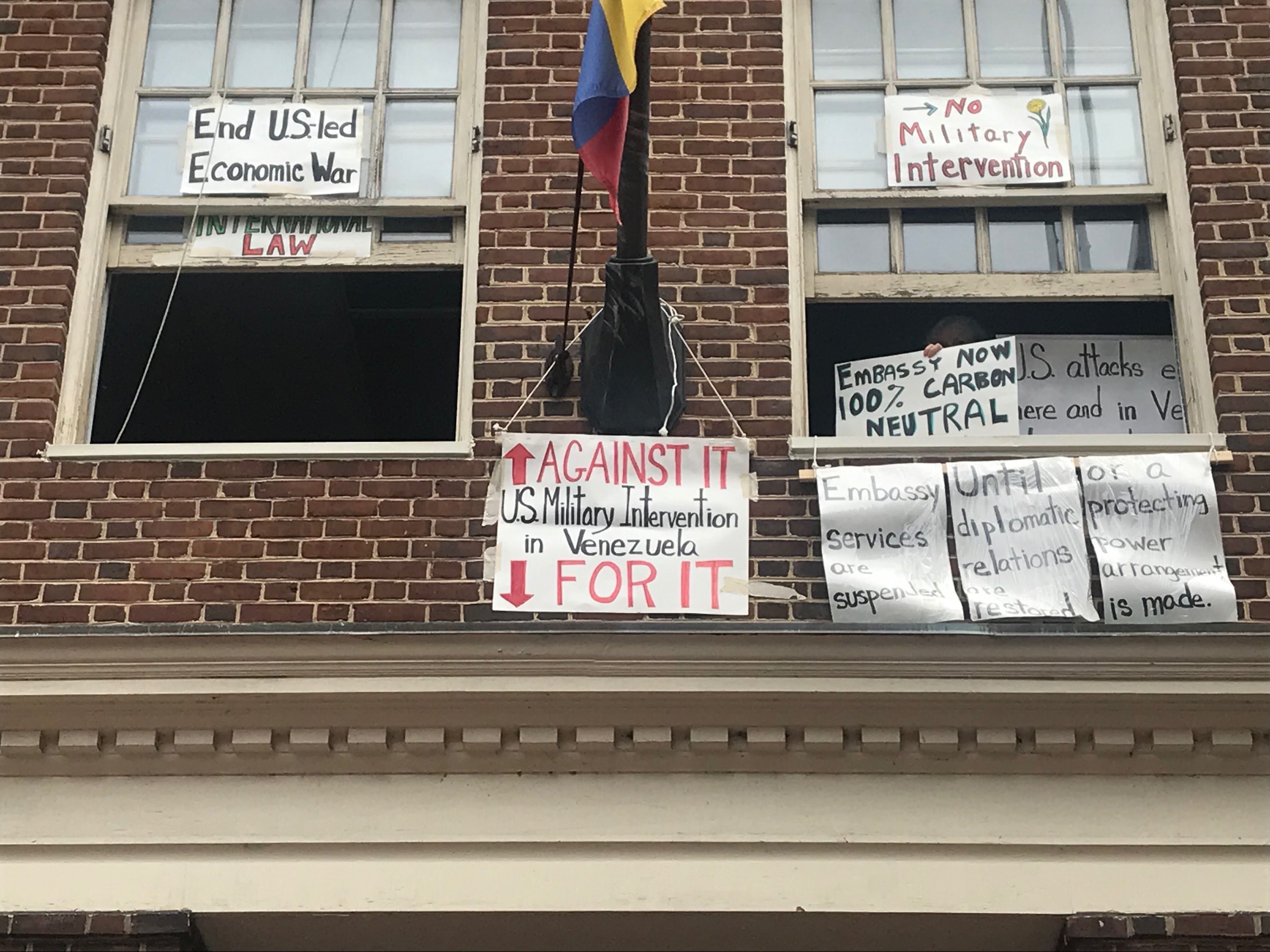
The standoff at the Venezuelan Embassy in Georgetown has continued for more than a week—and the tension only appears to be increasing. As of Wednesday evening, the activists who have barricaded themselves inside the embassy since early April say they no longer have power in the building.
“Last night Pepco, with protection from the Secret Service, cut electricity … to the building,” says Ariel Gold, the national co-director of the antiwar activist organization Code Pink. “All of the utility bills have always been paid in full by the government of Venezuela.”
Activists initially said that the water had also been cut off, but DC Water confirmed to DCist that it has never cut off water to the embassy.
Carlos Vecchio, the Venezuelan ambassador to the U.S. appointed by the opposition government, took responsibility on Twitter for the power outage. Activists have prevented him from entering the embassy.
Videos on Twitter show officials working on utility lines around more than one manhole near the embassy Wednesday afternoon and evening. Pepco has declined to answer questions about whether and why they shut off utilities to the Venezuelan Embassy, telling DCist in an emailed statement that “Pepco does not discuss the status of individual customer accounts or service to individual properties.”
Kei Pritsker, a member of the ANSWER Coalition, another activist organization involved in the embassy action, says that the power “went out last night at around 8 p.m. There were some people in the manhole across the street.” Pritsker has been living in the embassy for around two weeks. “We would love for the power to get turned back on, but we don’t know if it will. And we plan on staying. That’s that,” he says.
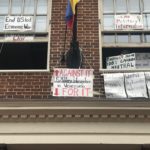
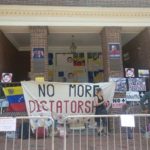
The Venezuelan Embassy, on a normally quiet street in Georgetown, has been the site of major clashes recently between the group of mostly American activists inside and Venezuelan protesters outside. Since April 10, organizers have been living in the embassy 24/7 in an effort to keep diplomats for the country’s opposition government from taking it over. Meanwhile, outside, a group of Venezuelan protesters has set up literal camp, pitching tents and showing up in droves to demand that the activists inside leave the embassy.
“It is an outrage to come here and find that a group of radical Americans are inside my embassy. They’re trespassing, they’re occupying the building,” Bianca Ruber, a Venezuelan national who’s lived in the U.S. for more than 20 years, says in Spanish. Ruber has been coming to the embassy every day since she heard of the controversy. “This group of Venezuelans came here organically, spontaneously, because we don’t want these invaders on our land,” she says.
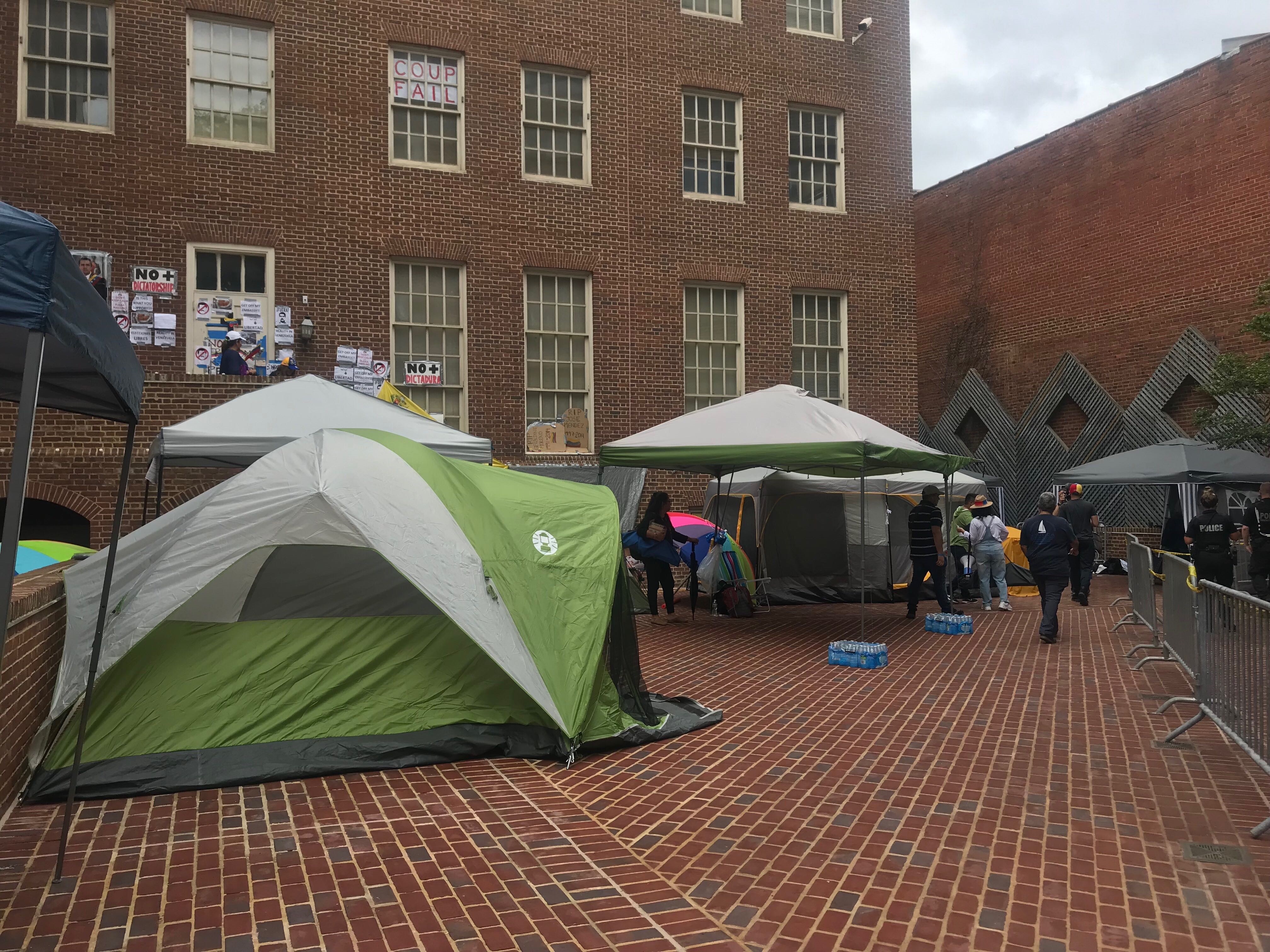
Venezuela is a deeply troubled country in the midst of economic collapse and political turmoil. Two men are claiming the presidency: left-wing Nicolás Maduro, who has been president since 2013, and opposition leader Juan Guaidó, who declared himself interim president in January of this year. The United States and the Organization of American States (along with several other countries) recognize Guaidó as Venezuela’s leader, but the United Nations, China, and Russia continue to recognize Maduro.
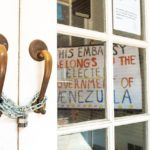
In late April, the last of Maduro’s diplomats left the Venezuelan Embassy after the OAS relieved them of their diplomatic duties. But they left the keys to the embassy with a group of American activists who vowed to preserve the building for what they view as the legitimate government of Venezuela—Maduro’s. Their presence has prevented Guaidó’s appointed ambassador, Carlos Vecchio, from taking up residence in the embassy.
“I’m 67 years old, and I’ve seen too much already of my government screwing things up in other countries,” Medea Benjamin, the co-founder of Code Pink, told DCist in April. “I’ve seen personally decades of war in Latin America and how utterly devastating it is … and I just can’t abide by sitting and watching as my government helps engineer another coup in Latin America that will lead to decades of violence.”
On Wednesday night, a man representing Vecchio spoke in front of a cheering crowd of Venezuelans outside the embassy, saying that Pepco had showed up at Vecchio’s direction to cut the power. “We’ve decided to give them a bit of the experience of what it’s like to live in Venezuela under the disastrous socialism of Maduro,” Vecchio tweeted in Spanish along with a video of the announcement.
Activists inside are undeterred. “Obviously, initially, when your power gets shut off you freak out a little. But once we met up and talked about it, everyone was like, ‘Okay, this is how it is now,” says Pritsker. He says he plans to continue living in the embassy “indefinitely.”
Arguments breaking out between Code Pink activists and Venezuelan protesters in front of the Baked & Wired pic.twitter.com/0Cjo43o9kD
— Natalie Delgadillo (@ndelgadillo07) May 9, 2019
Pritsker and other activists inside have said the protesters outside are rich Venezuelans who support a right-wing coup of the democratically-elected president of Venezuela. “[The group outside] is a select sample size of Venezuelans, mostly right wing, and living in the United States, the country backing the coup. It’s totally self-selecting,” Pritsker told DCist earlier this month.
Daniela Bustillos, a Venezuelan who has been protesting outside the embassy since April 30, says that she does not support U.S. intervention in Venezuela, and neither do most of the other people she’s protesting with.
“We don’t support intervention. We’re supporting transition,” she says. Guaidó is an interim president, she says, who has used a provision in Venezuela’s constitution to oust Maduro and call another election. The people outside the embassy are less in favor of Guaidó than they are against the current government and state of affairs, she says.
Ruber agrees. “Well, if it weren’t Guaidó, I would support someone else. He’s the interim president. That’s the law of our land,” she says.
The clashes over the last week have grown more and more intense, as several people on both sides have gotten arrested during confrontations. The protesters outside routinely block entrances to the embassy to prevent activists from delivering food to those inside, which has created several physical confrontations and lead to arrests of people delivering the supplies.
Gold is among those who have been arrested for throwing food toward the embassy in an attempt to deliver it to activists inside. She says she was processed at the D.C. Jail and has a court date on May 30, where she has to respond to charges of “missile throwing,” considered a disturbance of the public peace.
But despite the tension, neither side has made any signs that they plan to budge.
“I will stay here as long as I have to,” Ruber says.
This story has been updated to reflect that water has not been cut off to the building, despite activists initially saying that was the case.
Previously:
Activists Have Been Living In The Venezuelan Embassy For More Than Two Weeks
Venezuelan Protesters Clash With American Activists Living In Embassy