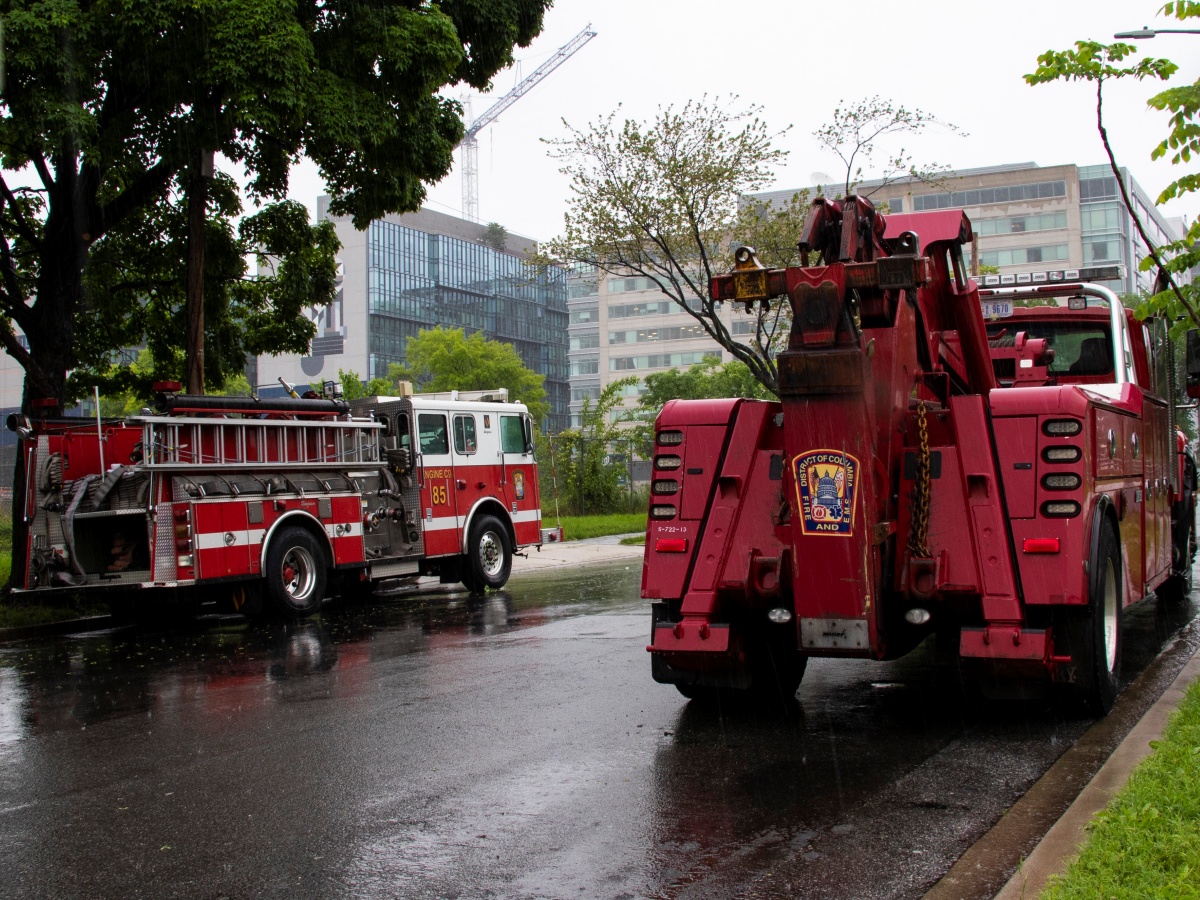
After years of mechanical problems plaguing the District’s emergency response vehicles, the D.C. Council is moving to fund $65 million in fixes.
The Council’s Committee on the Judiciary and Public Safety wants the District to replace old and broken down ambulances, fire engines, and ladder trucks with the funds, as well as build a new repair shop.
Long-standing maintenance issues and purchasing shortages means the department no longer has a reserve fleet of ladder trucks to replace those going out of service for repairs.
This has left the D.C. Fire and EMS scrambling to cover for missing vehicles. When one goes out of service, the department swaps in vehicles from other neighborhoods in shifts to cover the missing apparatus. It’s also led firefighters to try fixing mechanical issues themselves because they don’t trust the department’s repair shop. Last year, one aging truck malfunctioned during a training exercise, leading to a firefighter breaking his leg.
On Tuesday, the full D.C. Council will take a final swing at the budget. If they approve the public safety committee’s recommendation, next year the District will spend $7.45 million next year to purchase five new ladder trucks and $3.9 million to buy 10 new ambulances, and will hire 45 new firefighters or paramedics east of the Anacostia. An additional $43.5 million over the next six fiscal years will go towards building a new repair shop. These represent a boost to the mayor’s proposed budget for FEMS.
“I’m optimistic,” said Charles Allen, Ward 6 councilmember and chair of the public safety committee, last week. “Compared to where we were several years ago, we made a lot of improvements in terms of purchasing. But we still need to move aggressively on ladder trucks.”
Allen led a vote on increasing the funding for ladder trucks during a committee markup of the budget earlier this month. The committee approved to increase ladder truck replacement spending to $7.45 million next fiscal year, up from the $5.78 million Mayor Muriel Bowser approved in her March draft budget.
The committee also bumped up the $3.5 million Bowser proposed for ambulance replacements to $3.9 million, an investment which also adds 45 firefighters or paramedics east of the Anacostia “to improve emergency medical services in the neighbors in the East End of the District,” said Allen at the time.
“We look forward to seeing the Council’s markup of the Mayor’s budget,” FEMS spokesman Doug Buchanan said Monday, adding that the proposed budget “helps keep our recent progress on track.”
Each year, D.C. officials base their funding for departments on estimates from those agencies. But this year, Bowser’s proposed funding for FEMS fell short of those recommendations. The mayor’s draft FY2020 capital spending plan earmarked $14,181,000 to replace ambulances over the next six fiscal years, less than the $14,516,000 total FEMS requested. She also proposed funding $14,387,000 for ambulances instead of FEMS’s $18,302,000 ask. The mayor’s office did not respond to a request for comment.
Buchanan said FEMS is “grateful” for the investment from the mayor and the council, and that, “the Mayor’s budget is a reflection of Department’s apparatus needs.”
In a series of performance reports FEMS submitted this year, the department noted that ambulances were recorded as out of service about 29 percent of the time, slightly worse than its stated 25 percent benchmark. (Buchanan says that this is the first year in many during which FEMS has had a complete fleet of 40 ambulances.) Ladder trucks were out of service 40.2 percent of the time, and fire engines 33.4 percent of the time.
One of the main “strategic objectives” listed in the performance report for going forward is to “ensure that our facilities, vehicles, equipment, and processes remain capable of supporting service delivery requirements” and that means making sure each is “reliably maintained, safely repaired, and available for use.”
Buchanan says that he’s seen progress thanks to a mixture of ongoing preventive maintenance of vehicles and having a reserve of equipment, which “are a direct result of the increased and sustained funding over the past four years for the FEMS apparatus purchasing and replacement program.”
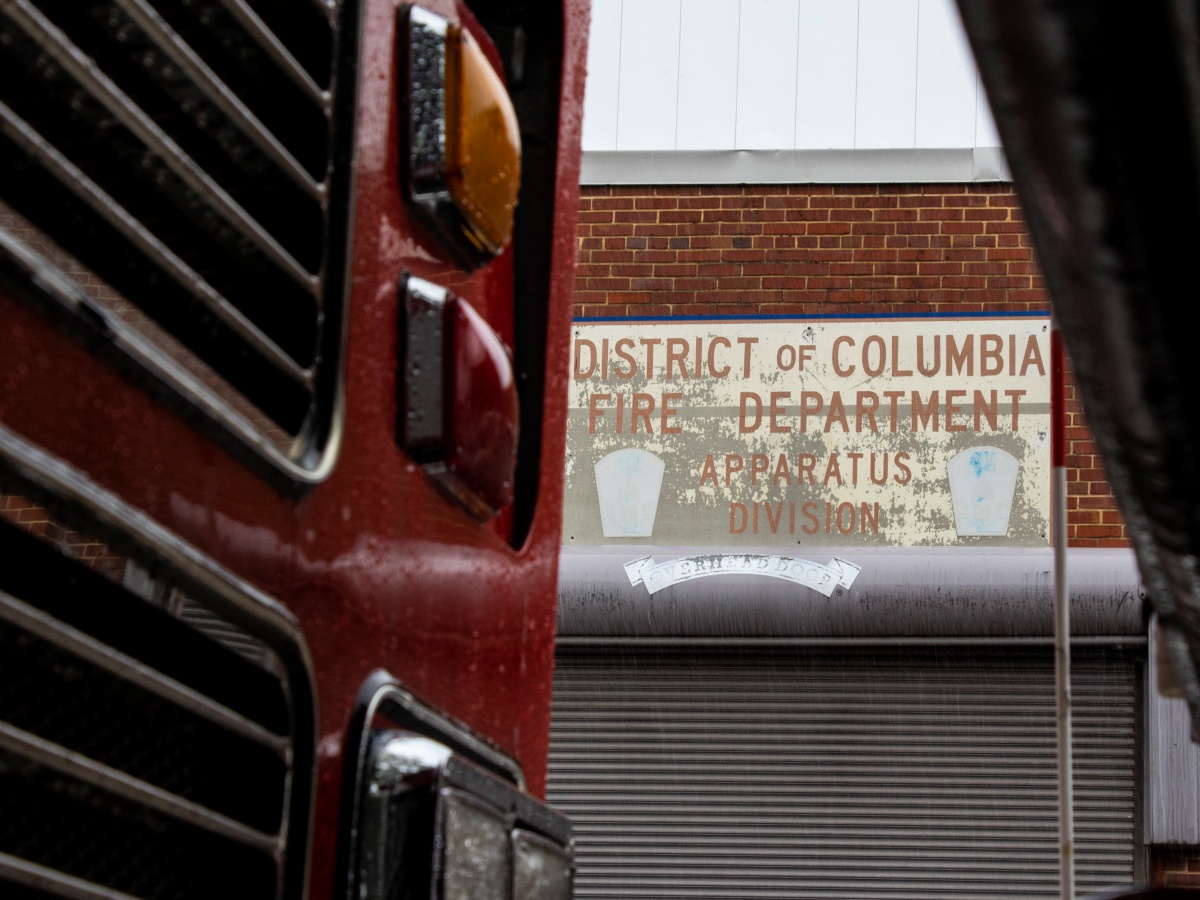
But this year, there have also been cuts. Beginning January 1, FEMS eliminated the midnight to 6 a.m. shift at its Southwest repair shop, according to multiple sources and confirmed by the department. (FEMS Chief Greogry Dean and other staffers present during the department’s winter oversight meeting with the D.C. Council did not mention the repair shop’s reduced hours.)
“We’re keeping a close eye on that overnight to early morning shift to see what the impact will be,” said Allen, who said he learned of the change during a recent tour of the facility. “I think that everybody acknowledges that the existing maintenance and repair shop is wholly inadequate and that is why we got the new site that we’ll be moving to.”
Buchanan previously said that the department “made the decision in an effort to improve efficiency and productivity,” and noted it aligned with recommendations from a 2013 that suggested cutting the shift to increase the number of foreman and mechanics on the remaining shifts.
Buchanan said the department doesn’t anticipate a cost increase from fewer shifts, even if it means some repairs have to be outsourced after midnight. Last year the department spent $1.92 million in total outsourced repairs. “We will be monitoring the impact and look forward to reporting relevant data once the change has been in place for a longer period of time,” he said, adding that the department plans to gather data until October (the department considers 10 months to be “statistically sufficient”).
D.C. Firefighters Association IAFF Local No. 36 President Dabney Hudson is worried eliminating the midnight shift could worsen a repair backlog in the shop. “We’re going to be in trouble with our apparatus this summer anyway. We’re really in a bad spot with our ladder trucks,” he said, referring to the fact that calls for service usually trend upwards this time of year. “So without the ability or bandwidth to make repairs, when you reduce that at any level it could have the impact to reduce service delivery.”
A spokesman for Allen noted the councilmember could still make some tweaks to the funding before Tuesday’s final vote, but didn’t elaborate on what the changes might be.
Each emergency response vehicle is custom built in a process that can take up to 18 months. And because fiscal year 2020 funding doesn’t start until October of 2019, it means it will be some time before the cavalry arrives for the department’s aging’s fleet.
“We’re still probably two to two-and-a-half years away from seeing those ladder trucks on the streets of D.C.,” said Allen last week. “That’s why I felt a sense of urgency.”