Martin Austermuhle
D.C. Council Chairman Phil Mendelson is threatening to withhold building permits for government building projects if Mayor Muriel Bowser fails to implement a law passed by the Council last year that will regulate and restrict short-term rentals booked through home-sharing platforms like Airbnb, VRBO and HomeAway.
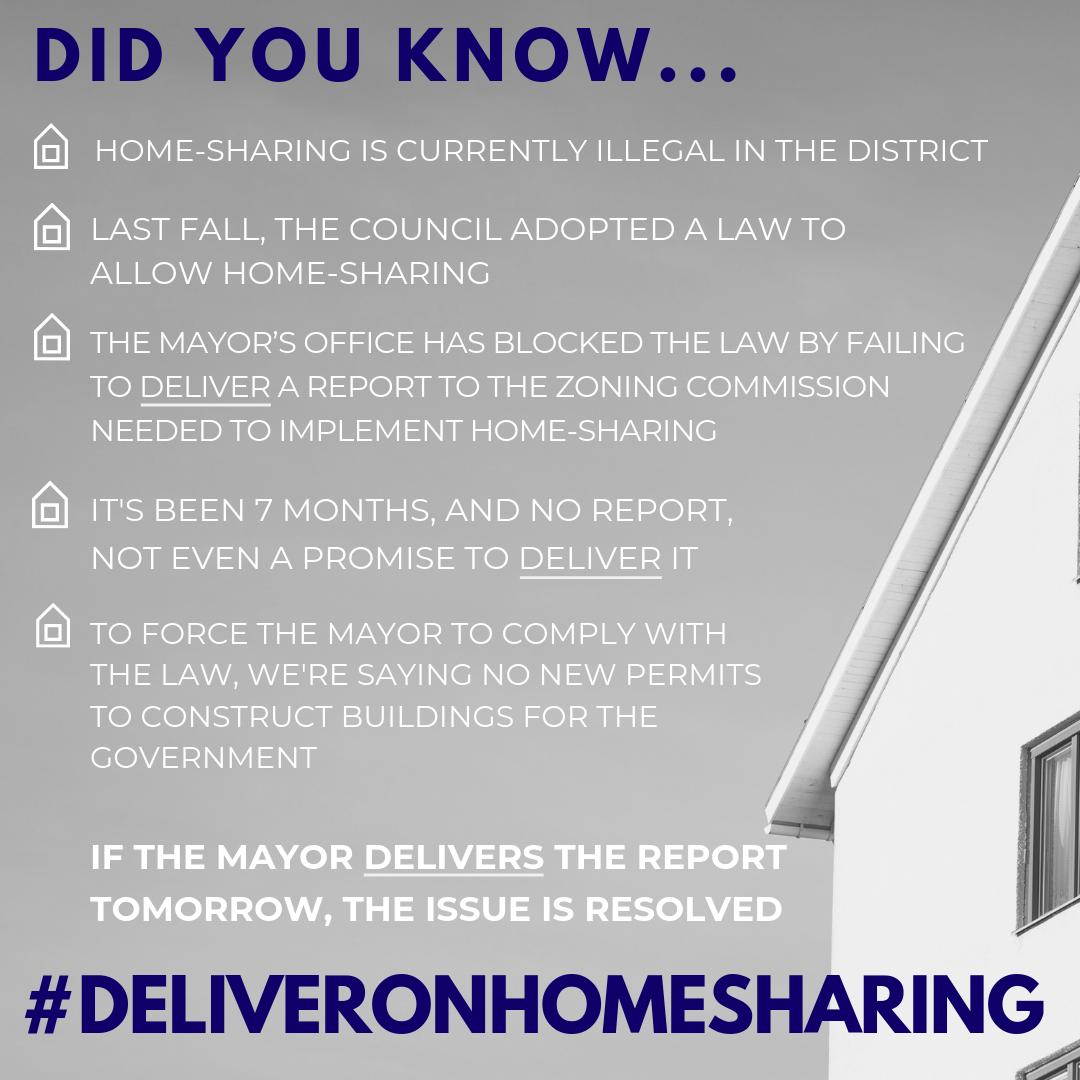
In a tweeted image, D.C. Council Chairman Phil Mendelson said he would withhold building permits for government projects if Mayor Muriel Bowser doesn’t implement a new law regulating home-sharing.
The feud between the two elected officials burst into public view last Thursday, when Mendelson tweeted the threat, saying that Bowser’s administration had not yet submitted a report to the D.C. Zoning Commission that is needed to kickstart the law’s implementation. That prompted a tweeted response from John Falcicchio, Bowser’s chief of staff, who called the Council’s law “possibly unconstitutional” and said it would “kill most home-sharing.”
The bill approved by the Council last November allows homeowners to rent out a bedroom, basement or carriage house on any home-sharing platform without limit, provided they are living in the home at the time of the rental. If they are not, the bill imposes a 90-day annual cap on short-term rentals. It also bans the use of second and third homes for short-term rentals.
As part of his changes to Bowser’s 2020 budget, Mendelson is providing the D.C. Department of Consumer and Regulatory Affairs with $1.4 million to hire 17 employees to enforce the new home-sharing law.
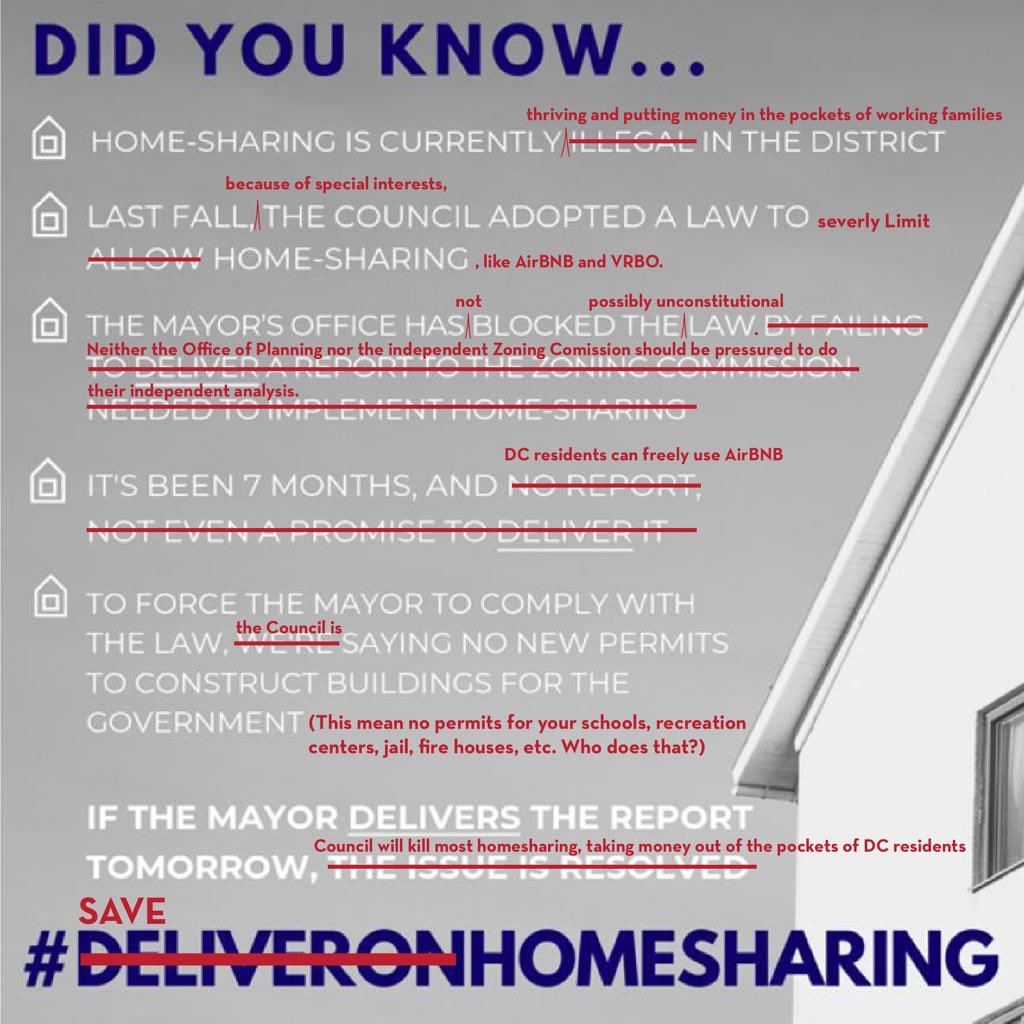
Responding to Mendelson, Bowser’s chief of staff John Falcicchio said the Council bill could “kill home-sharing.”
Supporters of the law say it properly balances the desire of homeowners to rent out extra space for short periods of time on popular services like Airbnb and the city’s broader need to keep housing available for long-term tenants. But critics — including Bowser — say the law is too strict, and will stifle a home-sharing industry that has grown to 7,007 rentals — 85% of them listed on Airbnb alone.
Bowser said in a letter to the Council earlier this year that she worried a provision requiring home-sharing platforms to turn data over to the city is unconstitutional, but allowed the bill to become law without her signature.
Still, the law, which is set to take effect on Oct. 1, faces one significant hurdle: the city’s zoning code. Currently, short-term rentals — often defined as anything less than 30 days at a time — are prohibited in most residential neighborhoods, even though they have been taking place for years. Without amending the zoning code to allow home-sharing, the new law would give city agencies broader enforcement powers to crack down on short-term rentals — likely incurring a significant hit to the tax revenue they bring in.
As part of the Council’s passage of the bill, it asked the Zoning Commission to amend the zoning code to allow short-term rentals. The Zoning Commission agreed to do so, but asked that the Office of Planning first submit a report providing details on the current extent of home-sharing and guidance on how to best address it.
That report has not yet been submitted, prompting Mendelson’s angry tweet on Thursday. “It’s been 7 months and no report, not even a promise to deliver it,” he wrote.
But Bowser’s aides pushed back against Mendelson’s threat to withhold building permits for government projects.
“We are adamantly opposed to any proposal that will result in schools not opening on time for the next school year, among other obvious impacts to the welfare and health of our residents,” tweeted City Administrator Rashad Young.
The fight over the home-sharing law parallels a broader feud between Bowser and the Council over her 2020 budget, which the Council will vote on next week. Bowser has spent the week loudly criticizing some of the Council’s proposed changes to her budget — including on issues like a child care tax credit and the fate of the United Medical Center — while Mendelson has expressed frustration over some of Bowser’s budgeting practices, which on Wednesday he said could be “illegal.”
It also ties into the broader national battle being waged in a number of cities of how best to regulate home-sharing services like Airbnb. While D.C.’s new law is similar to one in New York City, it’s more restrictive than in some cities — including jurisdictions in the Washington suburbs. In Montgomery County, the annual cap on short-term rentals when the home’s owner is not present is 120 days, while in Arlington County it’s 185 days.
“We use AirBnB all the time for family guests, putting money in neighbors pockets, and getting a place to stay within walking distance of our house. No hotel could provide that,” tweeted D.C. resident Will Handsfield.
“I do the same thing for my family,” responded Nolan Treadway, a spokesman for Councilmember Kenyan McDuffie (D-Ward 5), who helped write the Council’s bill. “The law lets people continue to do that with English basements and [accessory dwelling units] (+ up to 90 day/yr vacation rentals). There needs to be a limit or every potential home buyer in DC will be bidding against Airbnb speculators.”
This story first appeared on WAMU.