Natalie Delgadillo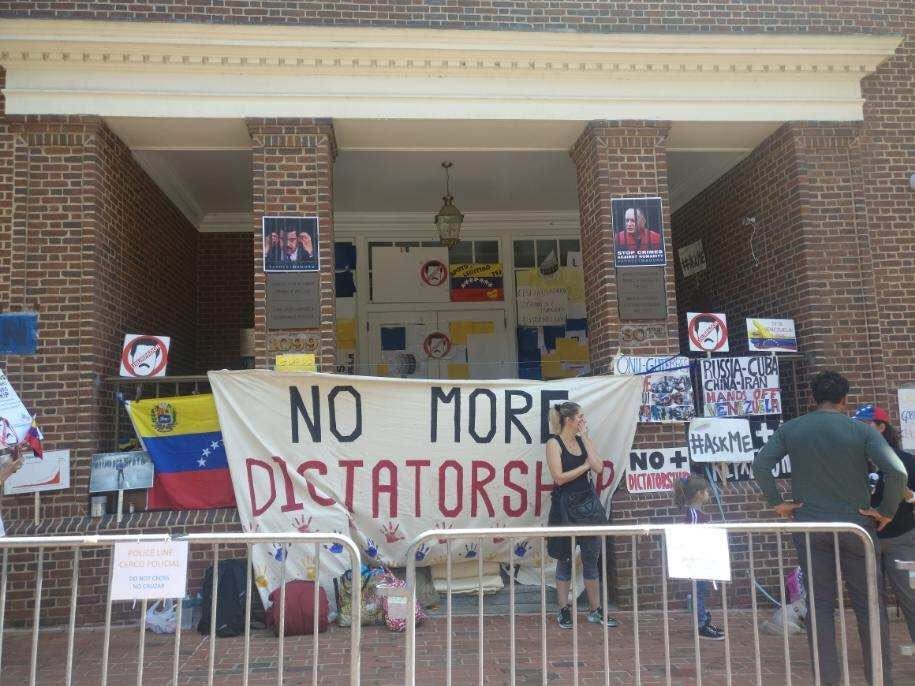
Four people remain in the Venezuelan Embassy in Georgetown, a tiny fraction of the 30-50 activists who once occupied the building.
And, if recent events are any indication, the holdouts may be evicted imminently.
On Monday night, Secret Service officers posted a notice on the door of the embassy, where leftist anti-war activists have been living since April in an attempt to keep the building out of the hands of diplomats from the country’s opposition government.
#AHORA: Autoridades notifican a invasores ilegales de nuestra Embajada de #Venezuela en #Washington que deben desalojar sede diplomática. Anunciaremos próximos pasos pronto. Cesará invasión y pronto usurpación. Gracias infinita a la diáspora venezolana por su esfuerzo. pic.twitter.com/LyNJJMyybT
— CARLOS VECCHIO (@carlosvecchio) May 13, 2019
The notice, which has no letterhead and provides no indication of who wrote it, orders the activists on the premises to leave the building or risk arrest and criminal prosecution.
Some of them listened. After weeks of struggling to smuggle food into the embassy and days of no electricity, some of those inside decided to leave the building once the notice was posted on the door.
But there were a few who remained, and police appeared ready to force them out. In videos from Monday night, officials from the Secret Service and the D.C. Fire Department can be seen cutting the chains on the front doors and opening them. Then, D.C. police and Secret Service officers mill in the entryway, speaking with some of the activists inside and a lawyer representing them. The officers shut the doors, zip tie them, and leave.
As of Tuesday morning, no one had been forcibly removed from the embassy. The standoff continues.
Since late April, a group of anti-war activists from organizations like Code Pink and Popular Resistance have been living in the embassy in support of Nicolas Maduro, one of the two men claiming the presidency of Venezuela. They say they are trying to prevent U.S. intervention in the country’s affairs and an ensuing war in Latin America.
“I’m 67 years old, and I’ve seen too much already of my government screwing things up in other countries,” Medea Benjamin, the co-founder of Code Pink, told DCist in April. “And I’ve seen personally decades of war in Latin America and how utterly devastating it is … and I just can’t abide by sitting and watching as my government helps engineer another coup in Latin America that will lead to decades of violence.”
Juan Guaido is the other man claiming the presidency. In January, he declared himself president, and, shortly after, the U.S. and several other countries recognized him as the country’s leader. The United Nations continues to recognize Maduro.
Maduro is the socialist protege of Hugo Chavez, often blamed for the country’s current social and economic collapse. He won his second term in an election last year which some consider to have been stacked in his favor. While Guaido’s supporters believe he is legally trying to remove a dictator, his detractors say he is staging a coup to overthrow a democratically-elected government.
By the way, last night I was cross the street and could mostly just see the cops’ backs.
This incredible photo by Mara Verheyden-Hilliard @ThePCJF shows what the cops were seeing.
Mara is legal council for the Embassy Protection Collective. pic.twitter.com/9HpUTVaWZz
— Ford Fischer (@FordFischer) May 14, 2019
About two weeks ago, a group of Venezuelans and Venezuelan Americans began showing up outside the embassy, enraged that a group of Americans supporting Maduro had occupied the embassy. They have been blocking anyone from entering the building, including those trying to deliver food and other supplies to the activists barricaded inside. The clashes between the two sides have often involved insults and even physical confrontations.
“This organization has been appropriating the situation, the suffering of many Venezuelans, to push their own agenda here in the U.S.,” a Venezuelan protester named Daniella said earlier this month outside the embassy. “And what people have to know is that this is not a right or left movement. This is about suffering, visible Venezuelans right now.”
According to the eviction notice posted on the embassy doors Monday night, Carlos Vecchio, the Guaido-appointed diplomat to the United States, asked that the government evict the activists trying to keep him from entering the embassy. He tweeted a photo of the notice, and wrote that he will “announce next steps soon,” and that “the invasion and usurpation [of the embassy] will cease.”
Ariel Gold, the national co-director of Code Pink, says that police appeared to back off Monday night after having a conversation with activists and their lawyer about officers’ lack of arrest warrants.
The Secret Service referred a request for comment to the State Department, which has not answered. The Metropolitan Police Department has not responded to requests for comment.
In its summary of Monday night’s events, Code Pink wrote that it anticipates the Trump Administration will go to court Tuesday “to request an official U.S.-government order to remove the Collective members from the Venezuelan Embassy.”
But the few people left will not go without a fight. There is already a protest planned on Wednesday outside the embassy in support of them, which Jesse Jackson has pledged to attend. After police left on Monday night, videos show Kevin Zeese, an activist who has been living in the embassy since April 10, leaning out of the window with his fist in the air to a mix of loud cheers and boos from people on both sides down below.
“We’re still here,” he yelled out. “See you all tomorrow.”