Natalie Delgadillo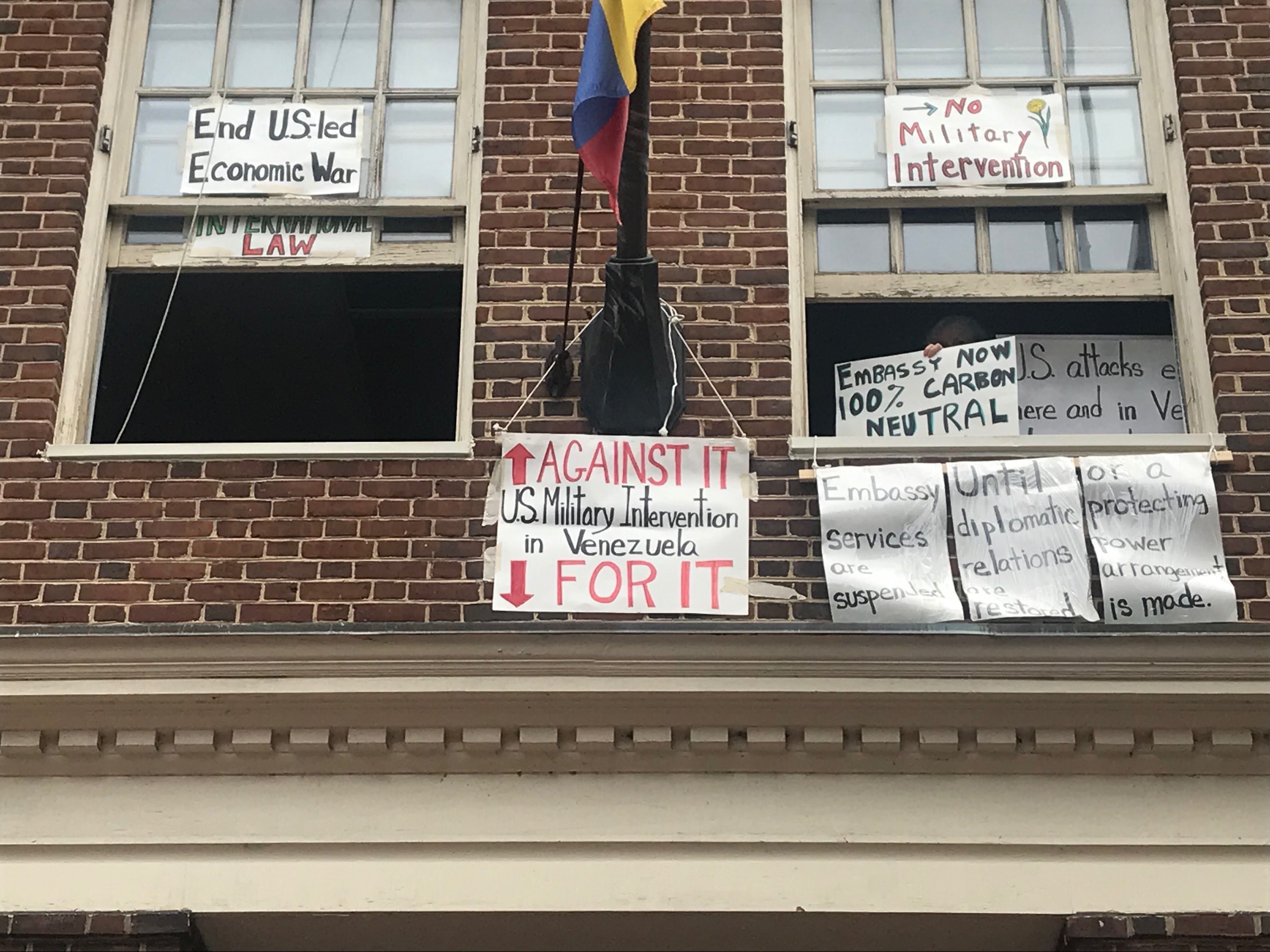
Federal officers, some in military fatigues, entered the Venezuelan Embassy in Georgetown on Thursday morning and arrested the four remaining activists living inside, according to State Department officials.
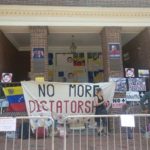
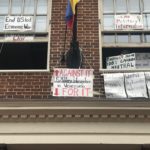
For more than a month, anti-war activists with groups like Code Pink and Popular Resistance have been living in the embassy at the invitation of the embattled government of Nicolás Maduro. They say they’re trying to keep diplomats of the country’s opposition government, which is led by Juan Guaidó, from moving into the building.
https://twitter.com/aletweetsnews/status/1129018074244497408
On Monday night, federal officials (with support from District police, according to social media accounts from the scene) surrounded the building and ordered the activists still inside to leave immediately, warning that they were trespassing and could be criminally prosecuted. A notice was posted to the embassy’s doors, without letterhead or a signature, explaining that the U.S. considers the embassy to be under the authority of diplomats from Venezuela’s opposition government.
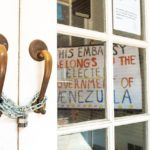
Police cut the chains on the door and stood in the entryway speaking with the activists left inside, who refused to leave. Organizers told DCist at the time that Code Pink and their lawyers pressed officers about whether they had arrest warrants.
Police made no arrests that night, but activists expected them to come back in the following days to evict them from the embassy.
Now, that appears to have happened. At about 9:30 a.m. on Thursday, Kevin Zeese, a member of Popular Resistance and one of the activists still in the building, posted on Facebook that police had broken into the building and said they would arrest the people left inside.
https://twitter.com/Marissa_Jae/status/1129028623527288832
The State Department told NPR that the four individuals in the embassy were arrested “for interfering with the Department of State’s protective functions.” The official also said that “the Venezuelan government, led by interim president Juan Guaidó, has legal authority over the Venezuelan embassy in Washington, D.C. That government has asked the trespassers to depart the premises.”
Federal police entered the premises and made the arrests once they were provided with the necessary “waiver of inviolability” from Guaidó’s government, the official said.
For weeks now, the Venezuelan embassy has been roiled by clashes between those supporting the American activists inside and (mostly Venezuelan and Venezuelan American) anti-Maduro protesters outside who wanted them kicked out. The protesters outside tried to block food and supplies from reaching activists barricaded inside, and succeeded for many days (though on Wednesday, Rev. Jesse Jackson successfully delivered food inside to loud boos and jeers from the protesters).
The conflict at the embassy is a kind of proxy struggle for the fight in Venezuela, where two men (leftist Maduro and opposition leader Guaidó) are both staking claim to the presidency. Maduro is often blamed for the country’s social and economic collapse, and Guaidó declared himself president in January under a provision in the Venezuelan constitution allowing for the creation of a transition government. The U.S. recognizes Guaidó as the leader of the country, while other countries, like Russia and China, continue to recognize Maduro. Maduro currently retains effective control of the government.
Since early April, American anti-war activists have been living in the building with the permission of Maduro’s government, much to the chagrin of Guaidó’s diplomats and many Venezuelans living in D.C.
“The issue was that they’re using another people’s suffering … to push their own agenda in the U.S.,” says Daniella Bustillos, a Venezuelan who lives in D.C. and who has been showing up to the embassy every day for the past two weeks. Bustillos says she believes the activists inside were mostly concerned about U.S. issues that have little or nothing to do with what’s happening in Venezuela. “You can take your fight, which is completely valid, to the White House, to Congress. Don’t do it in our embassy,” she tells DCist.
Bustillos and a group of Venezuelans and Venezuelan Americans gathered outside the back of the embassy after the arrests and celebrated, singing the Venezuelan national anthem, chanting, and hugging one another.
“The best part of this is that I feel so proud of the Venezuelan people in Washington, D.C. They were persistent. They resisted rain, cold, 24 hours a day, seven days a week, waiting to get their territory back,” says Roy Lenin, one of the protesters supporting the pro-Guaidó Venezuelans. Lenin is from Nicaragua, but has been showing up in solidarity with people from a country he says is experiencing some of the same political problems as his own.
Meanwhile, activists with Code Pink and Popular Resistance say today’s arrests were “an illegal entry” into sovereign territory. On Saturday, the group will hold a rally in protest of the arrests.
Carlos Vecchio, Guaidó’s appointed ambassador to the United States, tweeted on Thursday that the embassy was “liberated” and thanked the Venezuelan diaspora for their struggle to kick the activists out. Meanwhile, Carlos Ron, the deputy foreign minister for North America for the Maduro government, tweeted that “the Government of the Bolivarian Republic of Venezuela does not authorize the entrance of any US law enforcement officers into our former Embassy building in Washington. Any such entrance is an unlawful breach of the Vienna Convention.”
This story has been updated throughout with additional information from the scene and the State Department.