 Mikaela Lefrak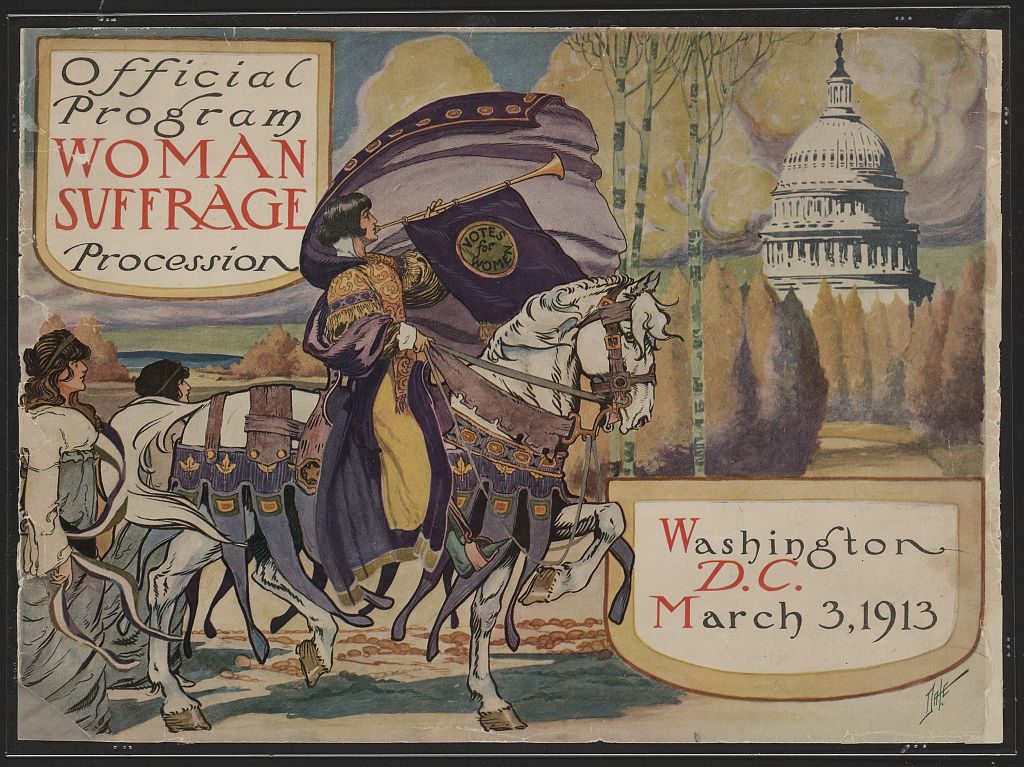
The history of women’s suffrage and the landscape of Washington, D.C. are inextricably tied. It took decades of women organizing near the Capitol, picketing outside the White House, lobbying Congress and marching on the National Mall to win the right to vote.
This June 4 marks the 100-year anniversary of Congress’ passage of the 19th Amendment to the U.S. Constitution, which prohibits the government from denying the right to vote on the basis of sex. Museums and institutions around the District are marking the centennial with exhibitions on the movement’s history and leaders.
Here are five of our top picks for places to learn about key women suffragists, the movement’s strategic wins and moral failings and how the fight for voting rights continues today.
1. Untold Stories: The National Portrait Gallery
The women’s suffrage movement has its own fraught history. The curators of “Votes For Women: A Portrait of Persistence” interweave the movement’s successes with stories of how poor and African American suffragists were consistently sidelined by their white, wealthy counterparts. The exhibition also has a number of elements that’ll be of particular interest to D.C. history buffs, like the portraits of two turn-of-the-century African American suffragists who once taught at Dunbar High School, the city’s first public high school for black students. The exhibition runs through Jan. 5, 2020.
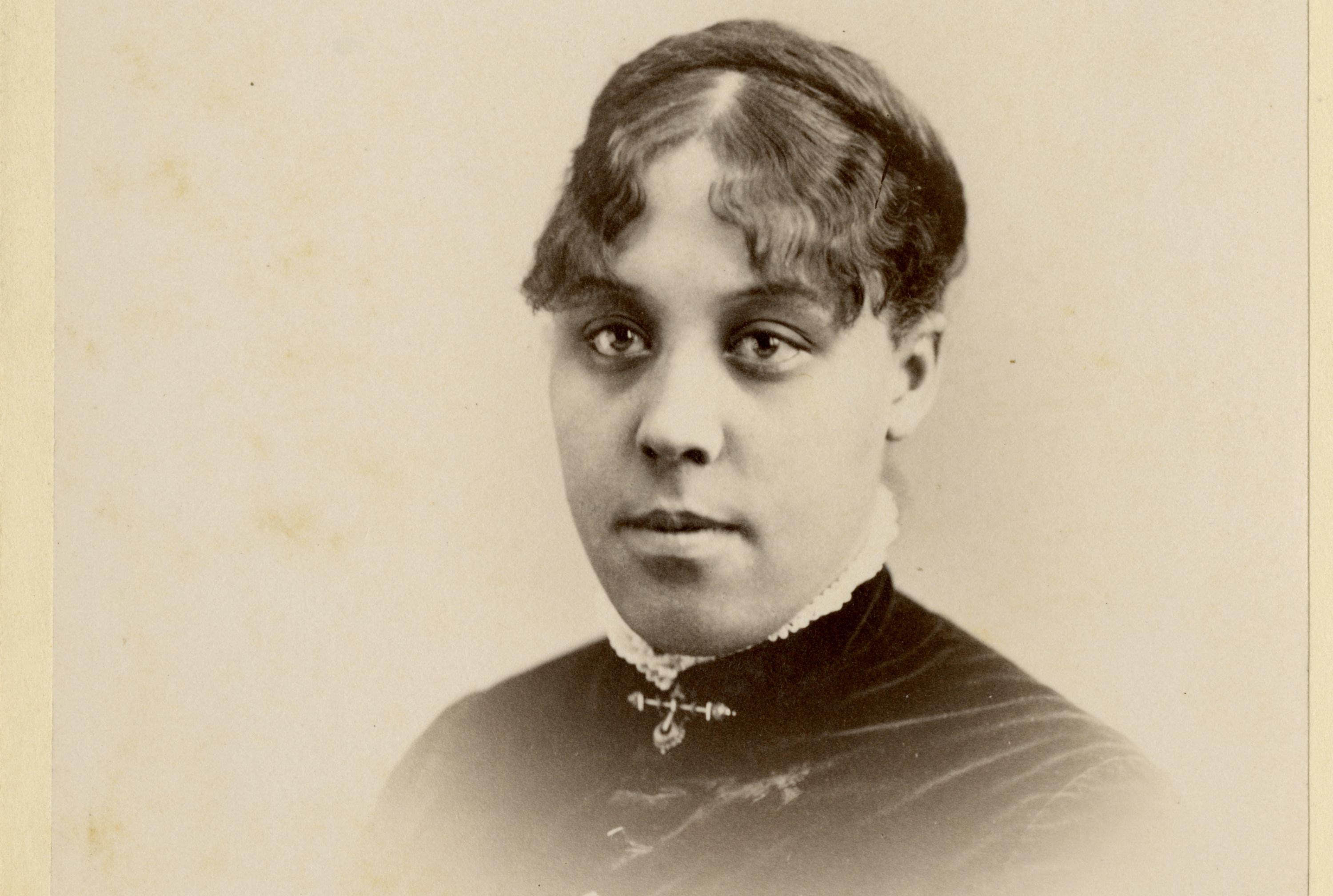
This portrait of Ida B. Gibbs, a suffragist and D.C. public high school teacher, now hangs in the halls of the National Portrait Gallery.
2. Primary Sources: The National Archives
Visitors can go right to the source at the National Archives’ new exhibition, “Rightfully Hers: American Women and the Vote.” The original 19th Amendment is on display alongside 90 other historic documents, including an 1877 petition for universal suffrage signed by black and white suffragists and a patent drawing for a “gendered voting machine” from 1910. The exhibition runs through Jan. 3, 2021.
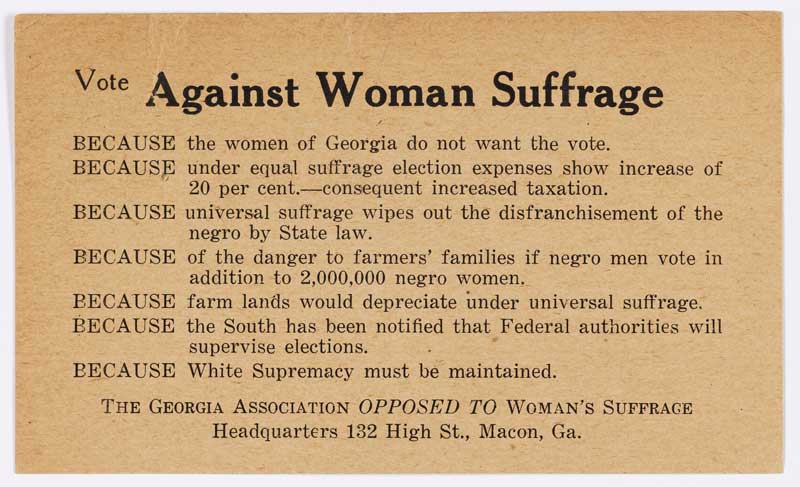
A 1916 postcard from the Georgia Association Opposed to Woman’s Suffrage shows how sexism and racism were closely intertwined for many of those who opposed expanding voting rights.
3. The Room Where It Happened: Belmont-Paul Women’s Equality National Monument
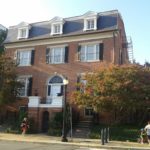
This 200-year-old house is just a block away from the U.S. Capitol. It was once the headquarters of the National Women’s Party (NWP), a political organization founded by women’s suffrage leader Alice Paul in 1916. Paul went on to write the Equal Rights Amendment in 1923 (which is yet to be adopted) and is now one of the house’s namesakes. These days, the National Park Service operates a museum about the suffrage movement and the fight for women’s rights out of the historic house. Ranger-led tours run Wednesdays through Sundays at 9:30 a.m., 11:00 a.m., 2:00 p.m. and 3:30 p.m.
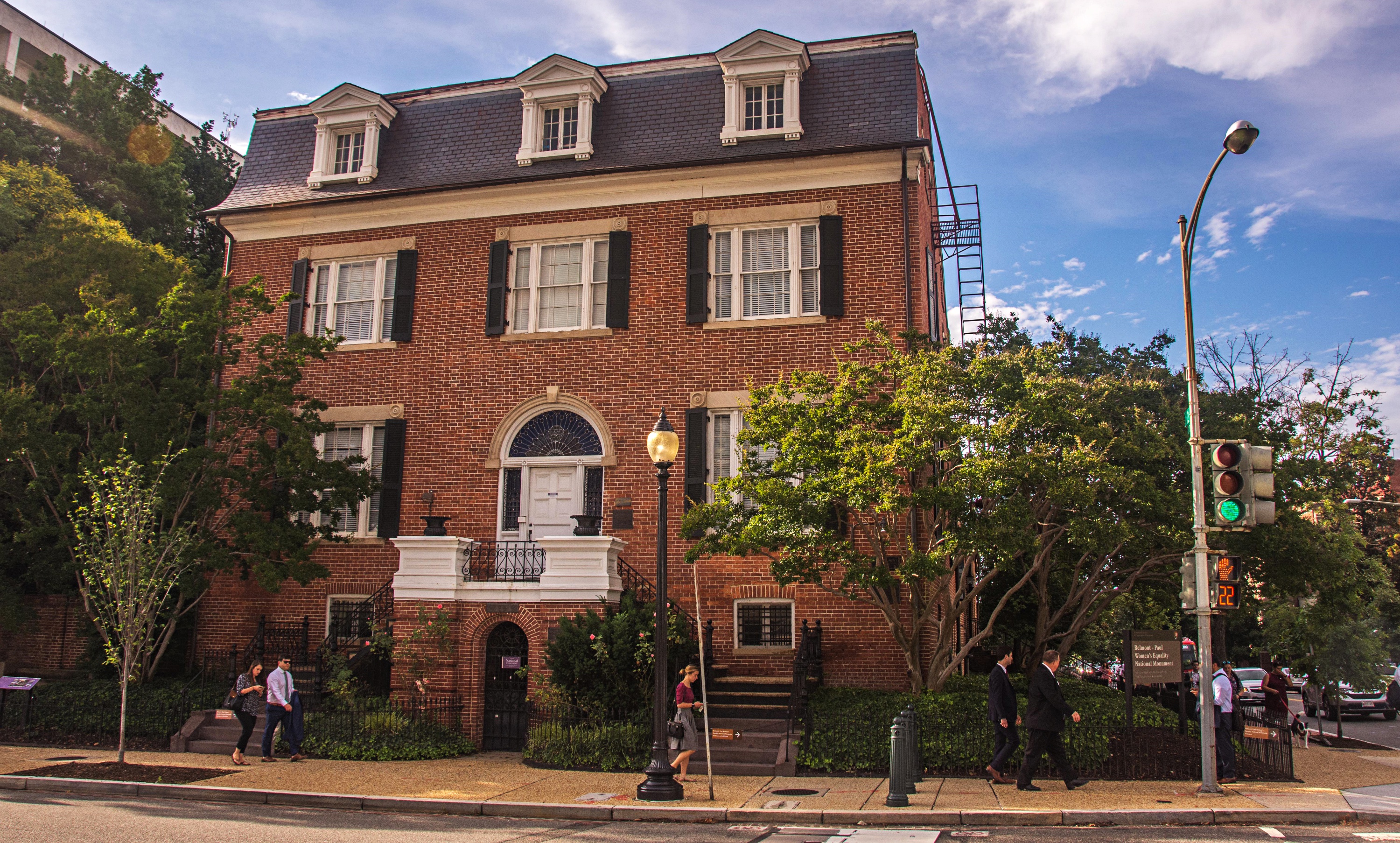
Apart from its connection to the women’s suffrage movement, Belmont-Paul is also one of the oldest residential buildings left standing in D.C.
4. Personal Papers Galore: The Library of Congress
The campaign for women’s suffrage lasted more than seven decades, and the Library of Congress collection captures all of it. If you want to read letters and documents written by women’s suffrage powerhouses like Susan B. Anthony and Mary Church Terrell, then “Shall Not Be Denied: Women Fight for the Vote” is the exhibition for you. It opens June 4 and runs through September 2020 in the library’s Thomas Jefferson Building.
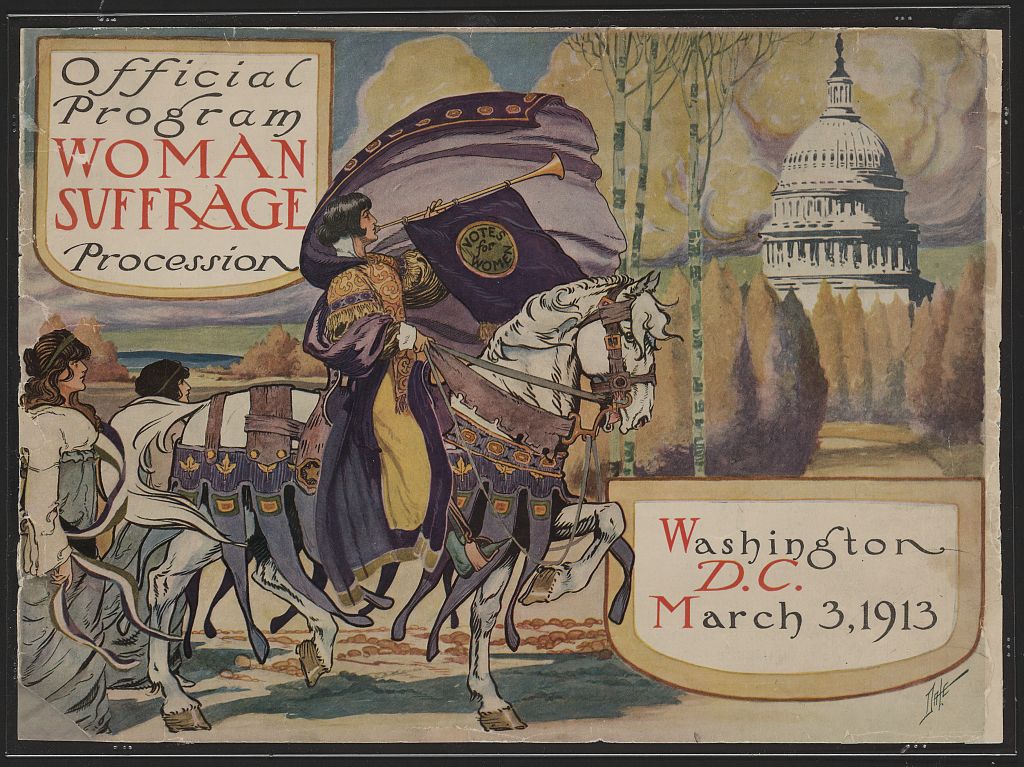
Okay ladies, now let’s get in formation: The official program for a 1913 women’s suffrage march on Washington.
5: Tables And Wagons: The National Museum of American History
An ongoing exhibit at the American History Museum, “American Democracy: A Great Leap of Faith,” includes a trove of objects related to the women’s suffrage movement. There’s the wooden table that Elizabeth Cady Stanton used to draft the Declaration of Sentiments for the Seneca Falls Convention in 1848, and a “women’s suffrage wagon” that was used at rallies in the 1910s. While there, check out “All Work, No Pay: A History of Women’s Invisible Labor,” to see how women have been made responsible for unpaid household work for centuries. Women’s suffrage is also the subject of the museum’s annual Youth Summit and educational webcast for middle and high schoolers, which takes place May 21.
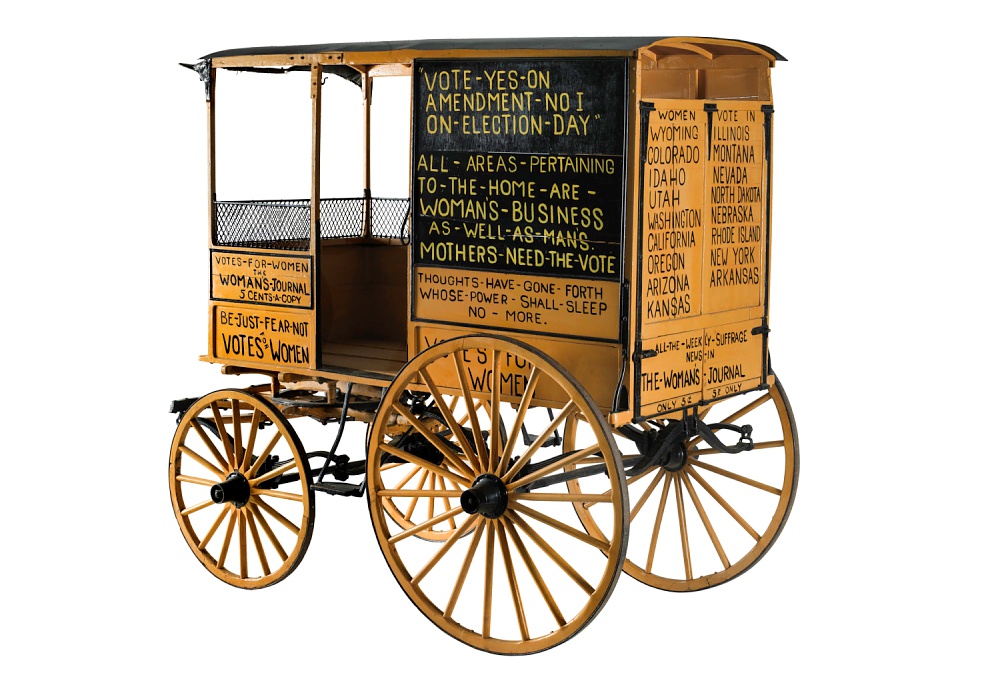
Suffragist and feminist Lucy Stone reportedly used this wagon to distribute the Woman’s Journal in the 1910s.
If you can’t make it to these exhibitions by the June centennial date, don’t worry — there’s another date farther in the future to celebrate. After Congress passed the 19th Amendment, it took more than a year to get the Constitutionally-required three-fourths of states to ratify it. The final ratification came on Aug. 18, 1920, thanks to a narrow yes vote in Tennessee.
This story originally appeared at WAMU. It has been updated with the correct opening date for the National Portrait Gallery’s exhibit.