What if, in 15 minutes time, you could walk from Kenilworth Park to the U.S. National Arboretum?
By 2021, it might be a possibility.
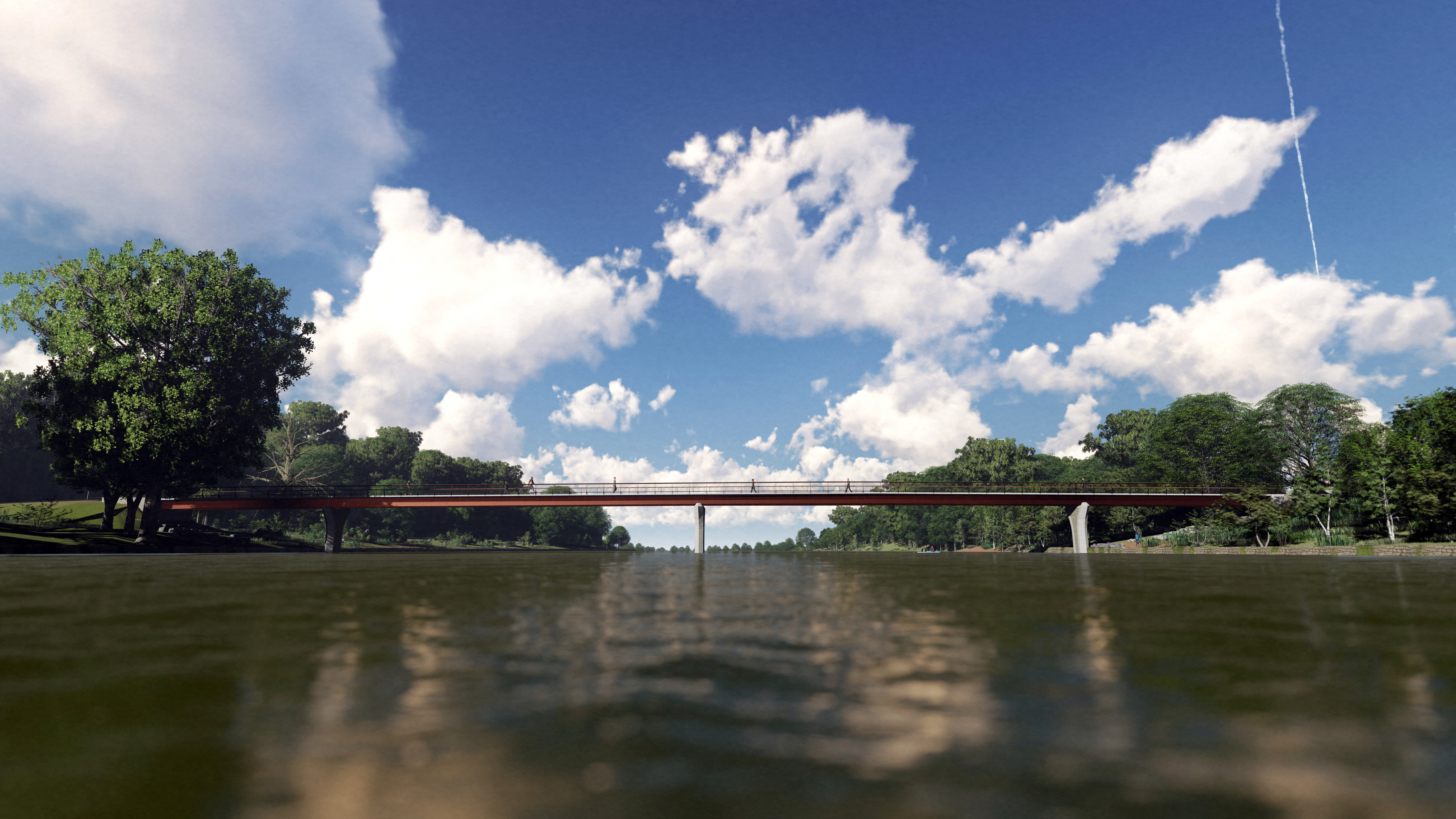
A pedestrian and bicyclist bridge over the Anacostia River has been a long time coming—it is one of 15 projects in the 30-year plan to transform the Anacostia waterfront. The project, situated on National Park Service land, would create a passageway between the Arboretum and Kenilworth Park North, as well as the neighborhoods of Mayfair, Kenilworth Parkside, and River Terrace.
“It’s a lot more than just a bridge,” Katie Harris, the trails coalition coordinator for the Washington Area Bicyclist Association, told DCist at the first public meeting for the project on Tuesday night. “It’s about connecting these communities.”
The 390-foot bridge will be part of the Anacostia River Trail network, which will be 28-miles long when completed — stretching from the tidal basin to D.C.’s Northeast border with Maryland. The trail would connect 16 waterfront neighborhoods to the Anacostia River, Southwest Waterfront, Nationals Park, Washington Navy Yard, RFK Stadium, and the Arboretum.
The ADA compliant crossing to the Arboretum promises to improve access not just for pedestrians and bicyclists but also for kayakers, canoers, rowers, fishermen, and wildlife observers.
“We want you to be able to take the kids, take the stroller, and go to the gardens,” said Joe Spadea, project manager for Pennoni Associates, the engineering firm consulting on the bridge.

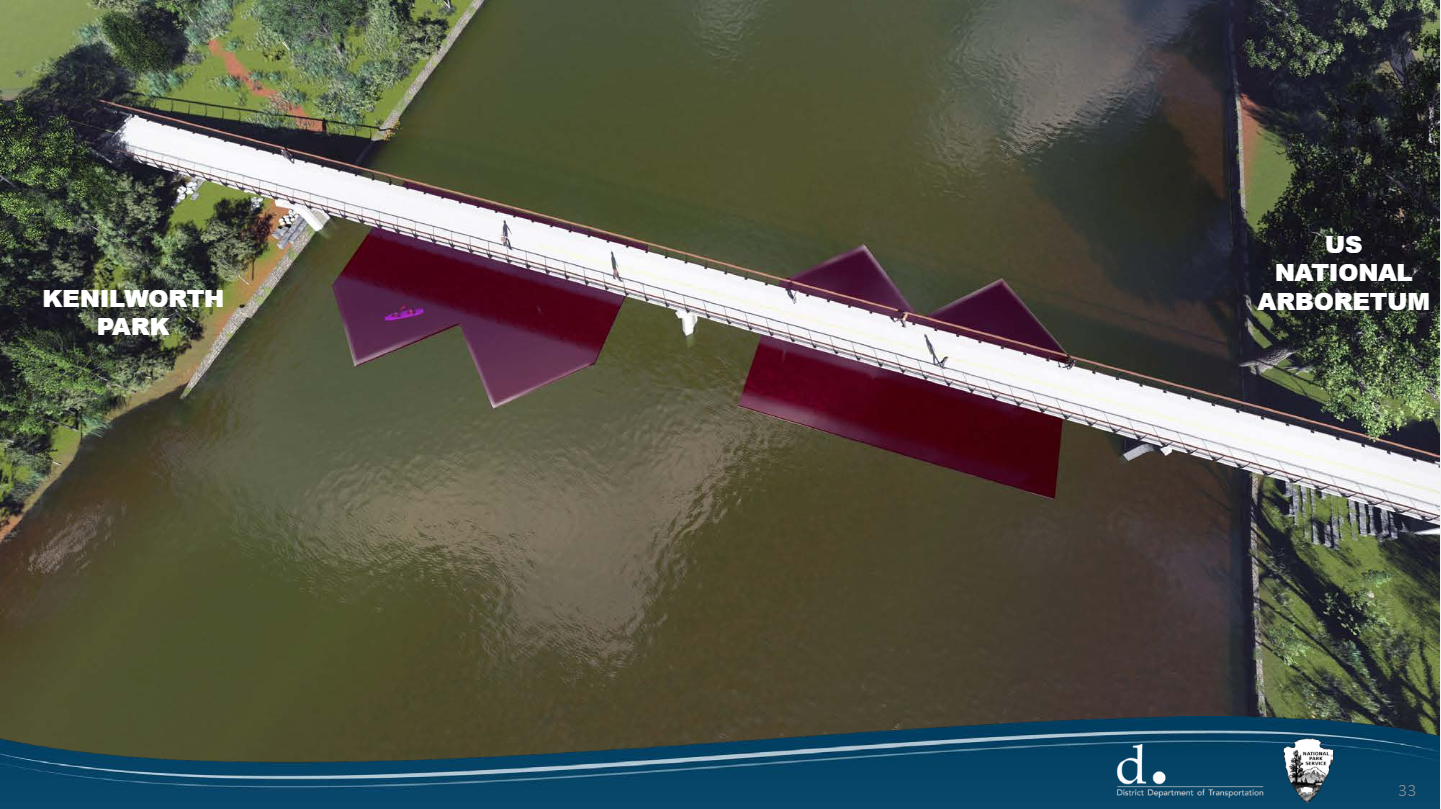
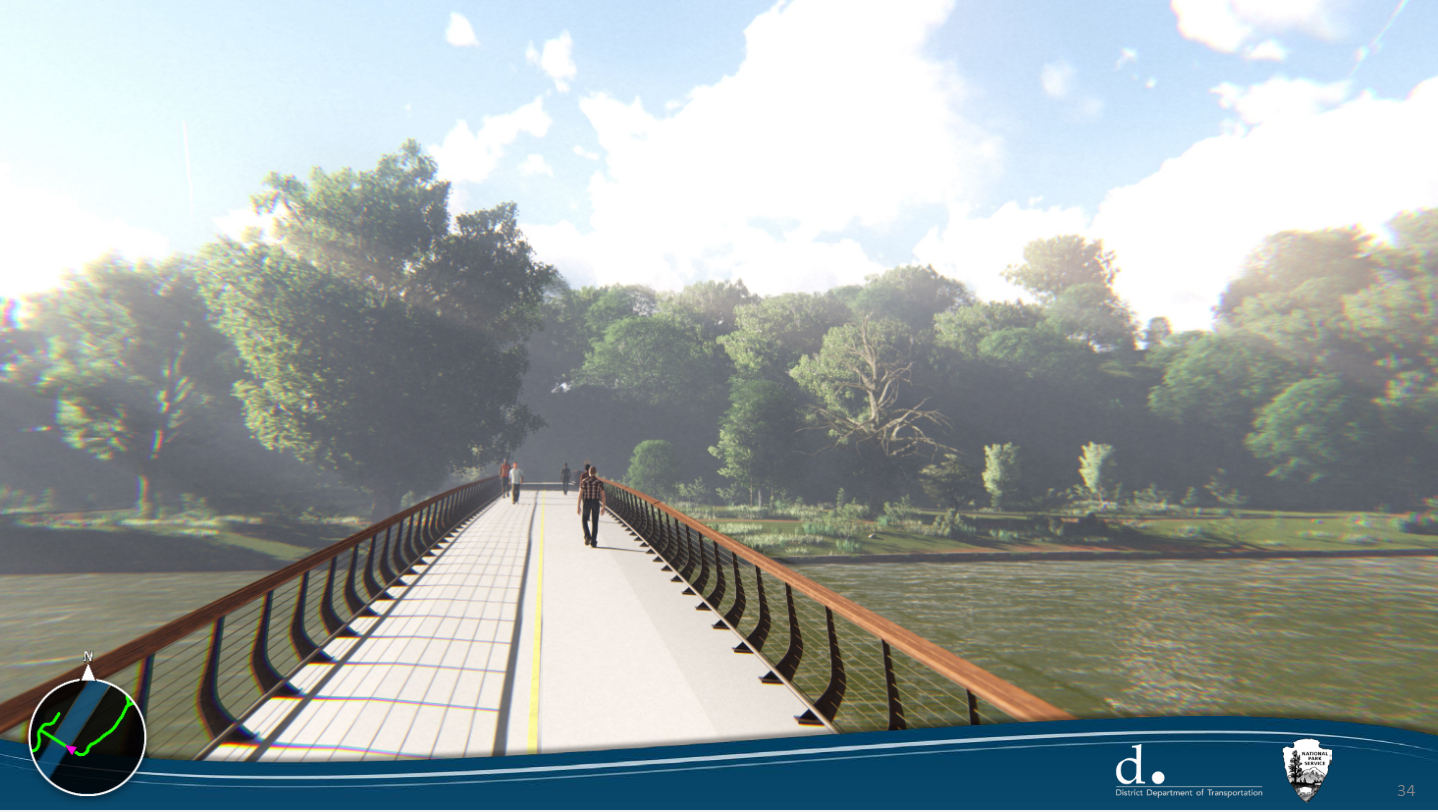
The crowd at Tuesday’s meeting expressed a mix of support and skepticism for the project, which, in addition to the bridge over the Anacostia River, will include a new floating dock and kayak launch. Some in the rowing community worried that the bridge could impede their route and potentially create sandbars, while bicyclists and Ward 5 residents on the whole seemed to view the proposed trail as a boon to safe passage.
“I’d like to have access to the Arboretum north of Benning Road,” said Monica Irmler, a longtime D.C. bicyclist and member of the Capital Trails Coalition. “It’s still treacherous to bike around this city.”
Kyle Ohlson, project manager for the District Department of Transportation (DDOT) said that the engineers, in collaboration with the Commission of Fine Arts, have selected a bridge with a low-profile design. It’s estimated to cost around $3 million.
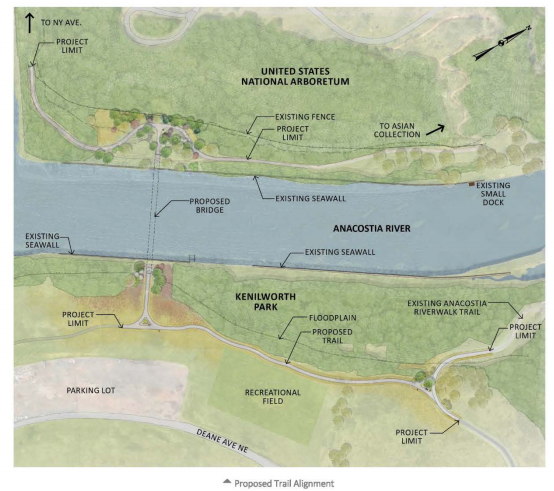
The placement of the bridge, which some in Tuesday’s audience voiced concerns about, was intentionally chosen where there is a gap in the treeline.
“We don’t want to remove trees if we don’t have to,” Ohlson said. “We realize this is a natural environment and we want to preserve that as much as we can.”
Now a third of the way through the design process, the Department of Transportation is seeking feedback from residents, local officials, businesses, and other stakeholders.
“It’s going to bring so many people to the river,” said Harris. “If you don’t already have access to the river, it can feel like it’s not for you — but it is.”
A second public meeting on the Arboretum Bridge and Trail will be held tonight from 6:30-8:30 p.m. at the Department of Employment Services (4058 Minnesota Avenue NE). Find more information here.