Jacob Fenston
In much of the world, foraging for food is a regular part of daily life.
“You’re walking around and you find a mango tree, and just pick up the mangoes,” says Marisol Perez, who grew up in Venezuela and Puerto Rico. “It’s normal. It’s nothing special.”
Anya Pinchuk had a similar experience—but on the opposite side of the globe. “I grew up in the Soviet Union, in the Ural Mountains,” says Pinchuk. “For me, going to the mushrooms every summer, three months of the summer, would be the norm. Every day, pretty much.”
Residents of the D.C. region are also surrounded by edible foods—especially in spring and summer. Delicious mushrooms like morels and chanterelles can be found in small forests squeezed between housing subdivisions. On city streets, there are many plants with fruits, flowers, or leaves that can make a great snack or contribute to a meal.
But just as many modern urbanites have become distanced from our agricultural roots, many of us have also become estranged from our even deeper foraging heritage. We were hunters—but also gatherers.
Perez and Pinchuk both live in the D.C. area now, and both spent a recent Friday morning hiking through the woods next to Lake Needwood in Montgomery County on a foraging foray with the Mycological Association of Washington.
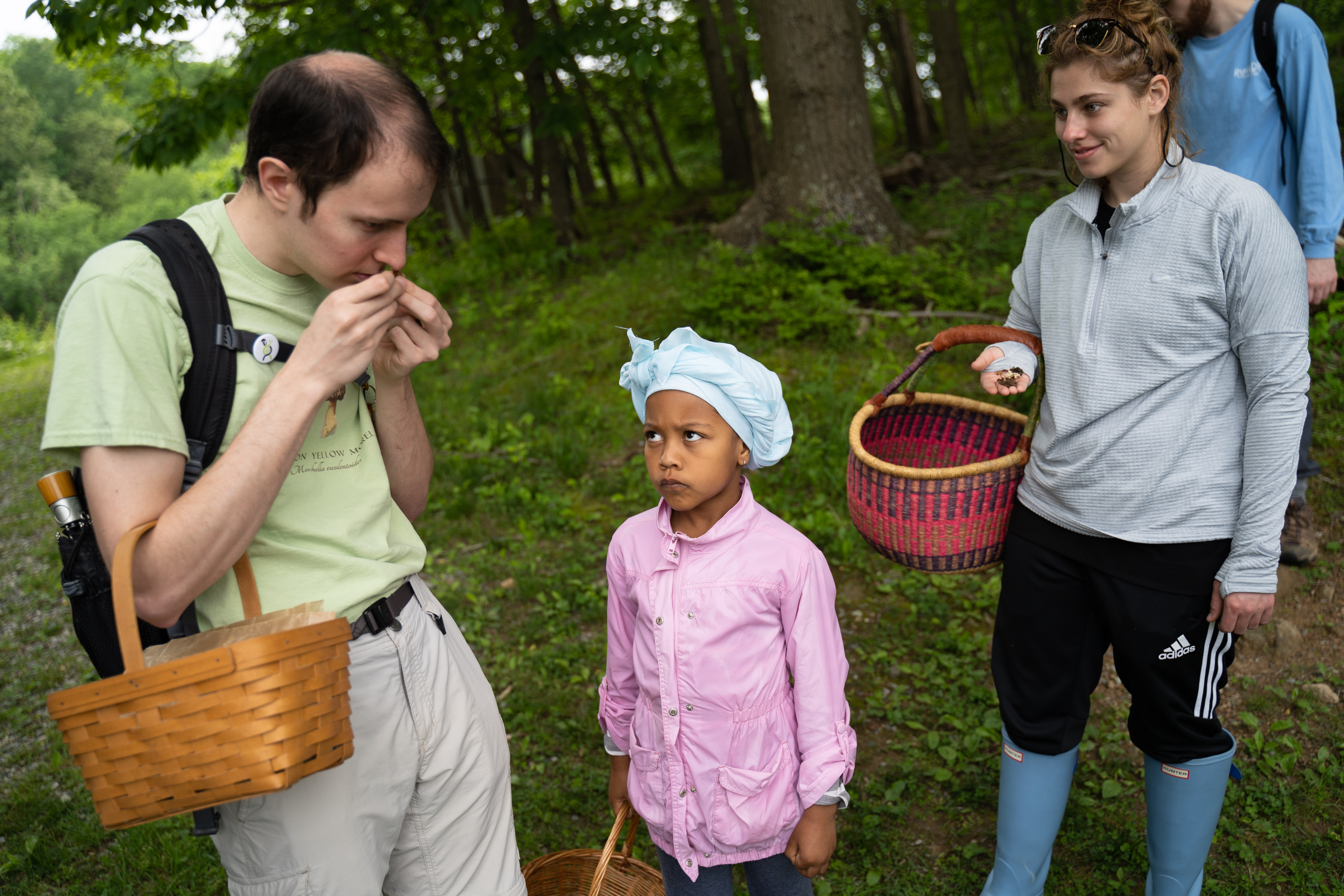
“Is this edible?” asks six-year-old Yva Zongo. “Yes, though it’s slimy,” answers Thomas Roehl.
The foray was led by mushroom blogger Thomas Roehl. It was past morel season and too early for chanterelles—two of the most prized local mushrooms—but Roehl was hoping to find some chicken-of-the-woods mushrooms. “Mycologists are great at naming things,” says Roehl. Chicken-of-the-woods, he says, looks like cooked chicken if you break the mushroom open, and tastes a bit like chicken, too.
Some mushrooms are easily identifiable by sight, but for some you have to use your sense of smell.
“This one, not exactly sure, but it reminds me of the Metro,” says Roehl, sniffing a large mushroom. “A little bit humid, but also kind of a sweetness and maybe a faint amount of ozone.”
Tom McCoy, another longtime mushroom hunter on the foray, says the best way to learn to find edible mushrooms safely is to join a local mushroom club, or at least go hiking with someone who knows what they’re doing. “You will learn more in a shorter amount of time, and have much more confidence in your identification skills than any other way.”
Field guide books are good, he says, but shouldn’t be your only source of information.
Another thing you need to know before you go foraging for mushrooms or plants: the rules on what you can and can’t harvest vary from place to place. “I live right beside Rock Creek Park,” says McCoy. “You can’t touch anything in Rock Creek Park, you’ll get a huge fine.” In other parks, he says, the rules can seem to change depending on which ranger you ask. “There doesn’t seem to be a very good structure to definitively let people know what’s permitted and what isn’t.”
McCoy says one of his favorite places to find mushrooms is right in his neighborhood. “I make sure to take walks around the neighborhood regularly,” says McCoy. “And I live in a very urban part of the city.”
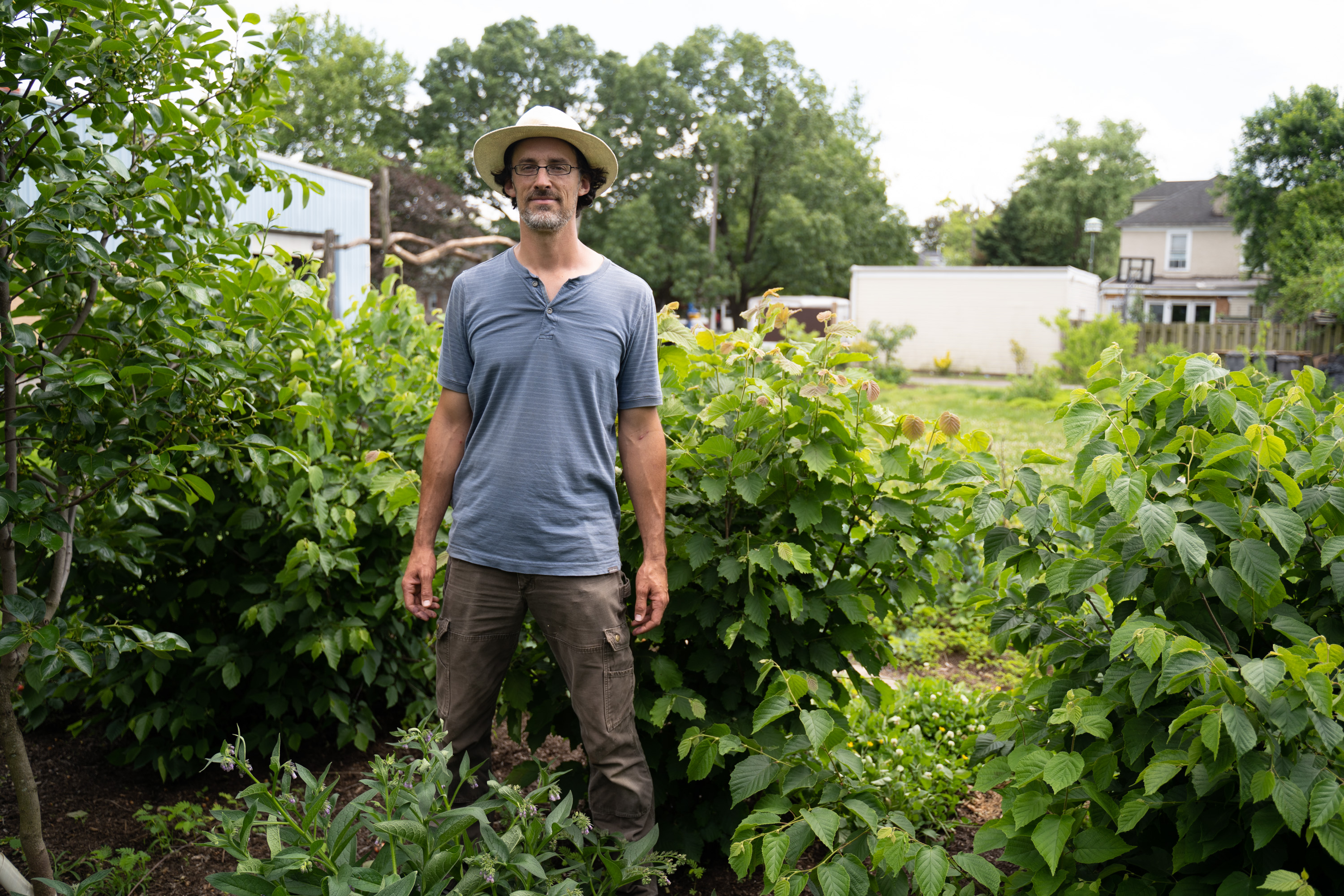
Lincoln Smith, standing among edible plants in the Emerson Street Food Forest.
While some forageable foods—like mushrooms—grow wild on their own, there’s a movement to bring more edible plants into urban environments. Hyattsville, Maryland, is at the forefront.
On a hot afternoon, Lincoln Smith approaches a group of men in blue coveralls sitting at a picnic bench in a small city park. The men work at the auto body shop across the street from the park.
“You want to come try the fruit?” asks Smith, after introducing himself. “It’s for everybody in the neighborhood.” The men confer with each other in Spanish, then follow Smith into the Emerson Street Food Forest.
Smith designed this city park, transforming what used to be a vacant lot filled with dead trees and illegal dumping. The park, nestled among houses and industrial buildings, now has a large grassy area with benches, surrounded by fruit trees and bushes and edible greens, many of them native to the region. Smith says creating an edible forest is good for the environment—forests capture and filter water much better than turf or other landscapes—and it’s also good for the neighbors. “We can restore water quality, we can restore wildlife habitat and we can feed ourselves much better.”
This small park certainly won’t feed everyone in Hyattsville, but Smith says it can help introduce people to the idea of foraging for food in a safe and comfortable setting.
“There is a lot of evidence to say that the diet we’re eating right now from our grocery stores is abundant, but it’s not nearly as diverse as any of our ancestors would have been eating. Our ancestors would have been much more in tune with a much greater diversity of plants in their local environment than we are today,” Smith says.
Some of the plants are easier to convince people to eat than others. Smith shows the men in coveralls a mulberry tree, and they each pick one of the ripe blackberry-like fruits. “Esa está buena,” says one of them, approvingly. Then Smith grabs bunch of white elderberry flowers.
“You can take all this and you can put it in, like, pancakes,” he says. The men just laugh.
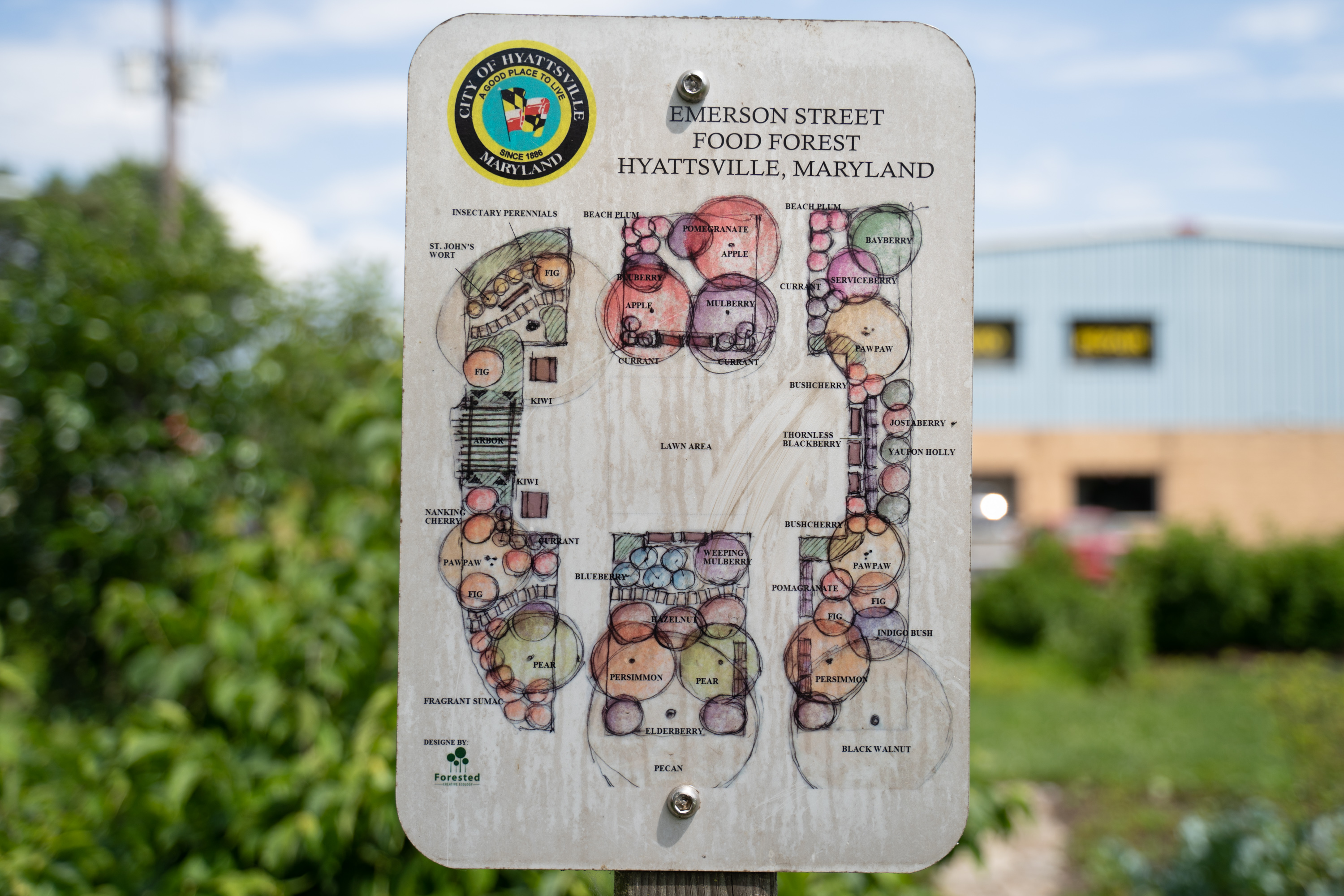
A map of the food forest in Hyattsville.
Smith is used to some initial skepticism.
“After you try your first few things straight from the landscape, it becomes a little less scary, and indeed it can be quite addictive, and before you know it, you’re growing an edible jungle in your own backyard,” says Smith. That’s what happened to him—he used to work as a landscape architect. Now he operates his own 10-acre food forest in Bowie, Maryland.
The city of Hyattsville has plans to plant more food forests — squeezing edible plants into small bits of open space. The next one being developed is beside the Prince George’s Plaza Metro Station — basically a glorified walkway between the Metro station and the neighborhood next to it.
Lesley Riddle, director of the city’s public works department, says this kind of landscaping is actually easier—in a way—than keeping up a lawn.
“When you have vacuous amounts of mulch and grass, it takes the most resources, the most human-plus-earth resources—gas and oil and everything else,” says Riddle. When you plant a forest, on the other hand, she says, “you create a space that takes less maintenance—slightly different care—but much less inputs.”
In D.C., the local Department of Transportation has been busy in recent years planting medians and sidewalk boxes with a tree that happens to produce large quantities of sweet, juicy berries. Serviceberry trees (also known as juneberries or shadberries) are attractive and hardy landscaping plants that do well in the less-than-ideal conditions of a sidewalk box.
“The fact that the fruit is edible is not the primary factor or driver for why we selected that plant,” says Earl Eutsler, associate director for DDOT’s urban forestry division. Eutsler says the city started planting serviceberries about a decade ago, largely in an effort to diversify the urban tree canopy. Now, though, the District is working to bring more edibles to city streets—but not every fruit tree makes a good street tree.
“Not everyone is going to take and consume all of the fruit a tree might produce. Fruitfall that falls on the ground and is left to rot can also sometimes become a nuisance,” says Eutsler. “So we have to find the right spot and the right plant.” Currently, DDOT operates a small orchard near Suitland Parkway, where arborists are testing out fruit trees to find which ones might make good additions to the street tree inventory.
“Something that might surprise people, but it turns out it’s a really excellent selection, is pomegranate,” says Eutsler. The trees grow well in the mid-Atlantic, and the fruit’s tough skin means fallen fruit can still be harvested.
Finding wild edible foods doesn’t require going to a specially designed park, or getting out into the woods. Forager April Thompson is currently in a wheelchair, but she offered to take me on an urban foraging adventure, promising we would find at least five edibles within a block of her apartment in D.C.’s Park View neighborhood.
“You do not have to go far, you do not have to be in good shape,” says Thompson.
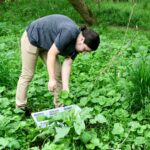
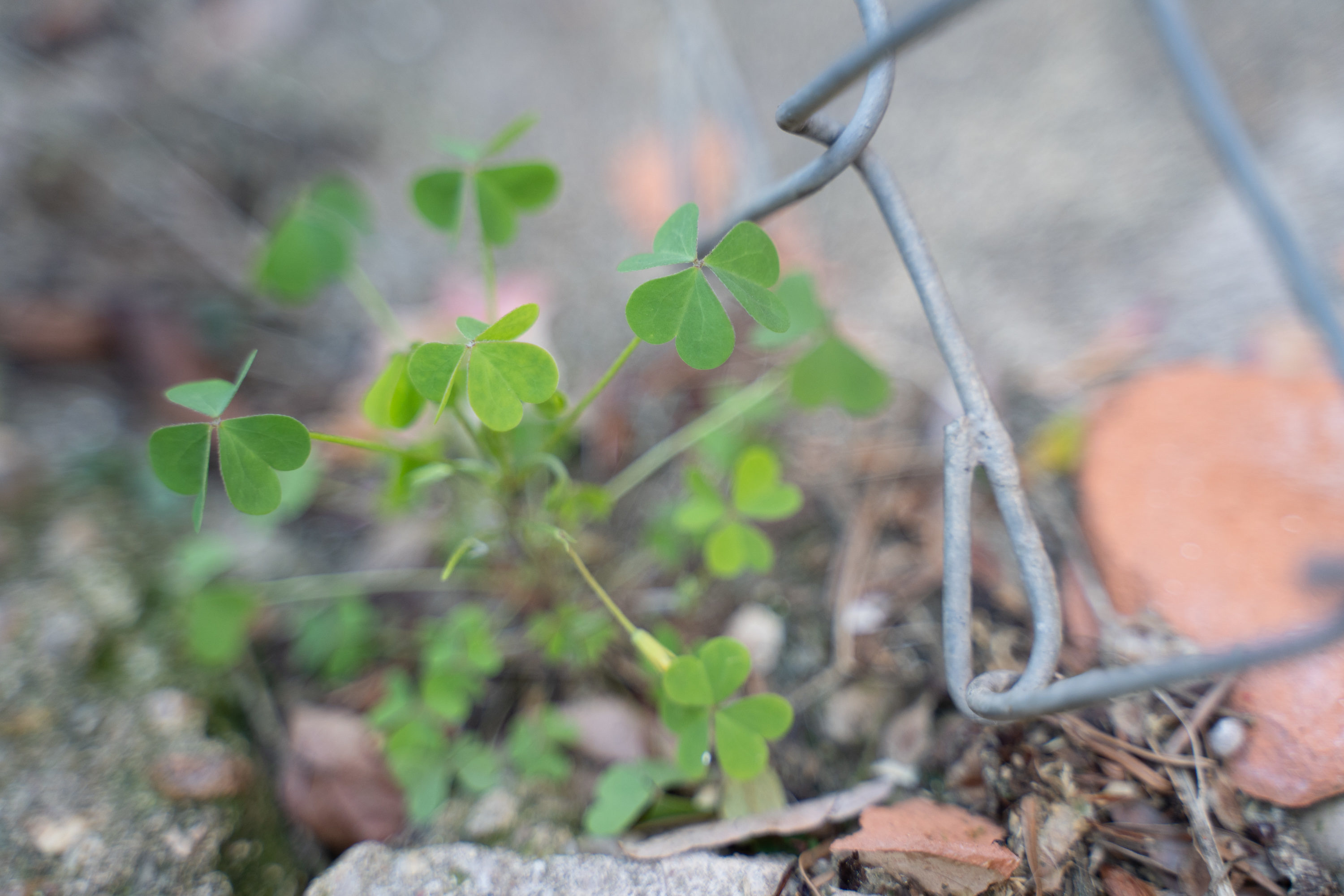
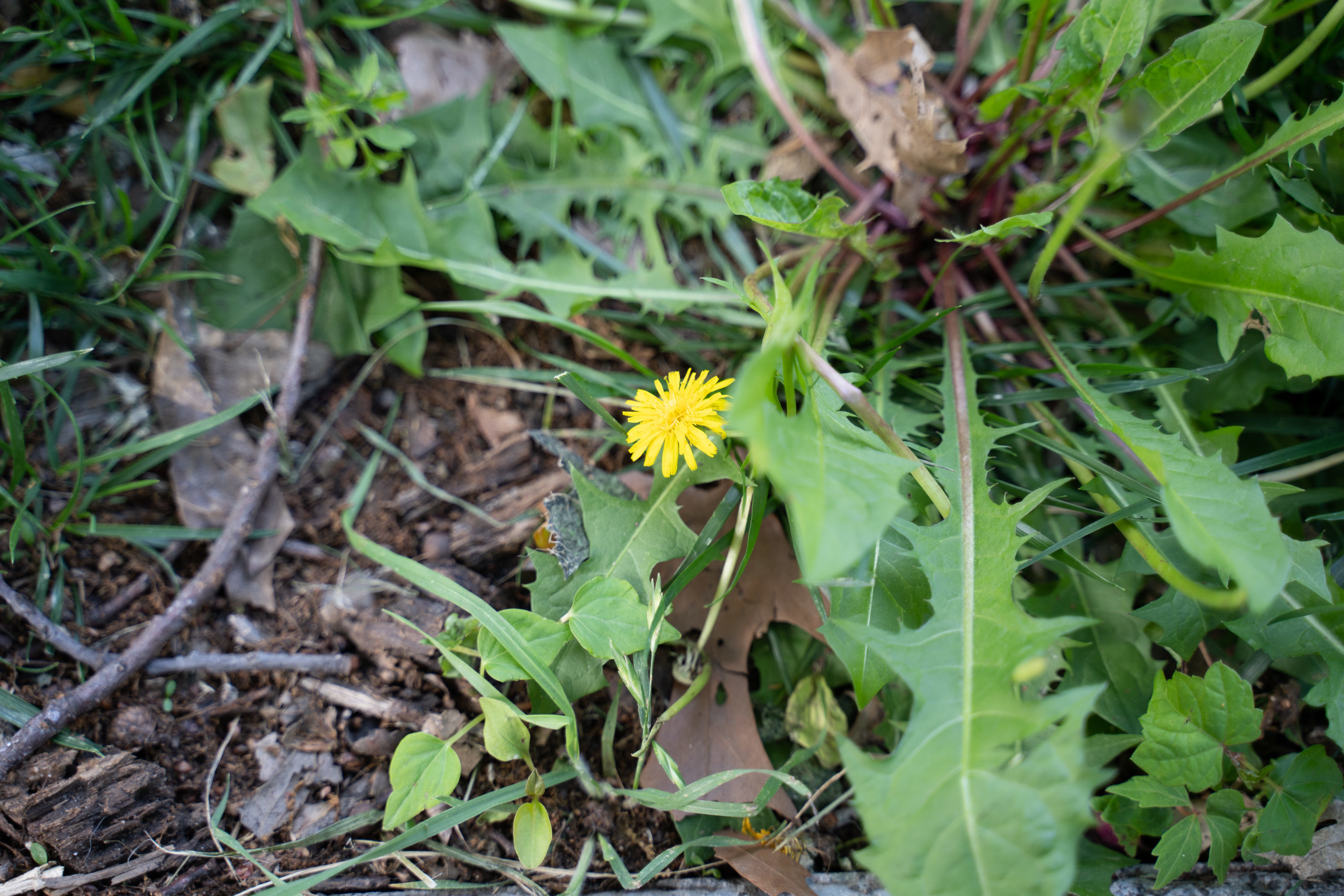
We stop just steps from her door, and she points to a patch of weeds. “So, wood sorrel kind of looks like clover, but is easily distinguishable by its heart-shaped leaves,” Thompson says. It’s a weed I’ve stepped on—and mowed—probably a million times. It has a lemony taste, and Thompson says it’s good in salads. She points to more familiar weeds—who knew they even had names?
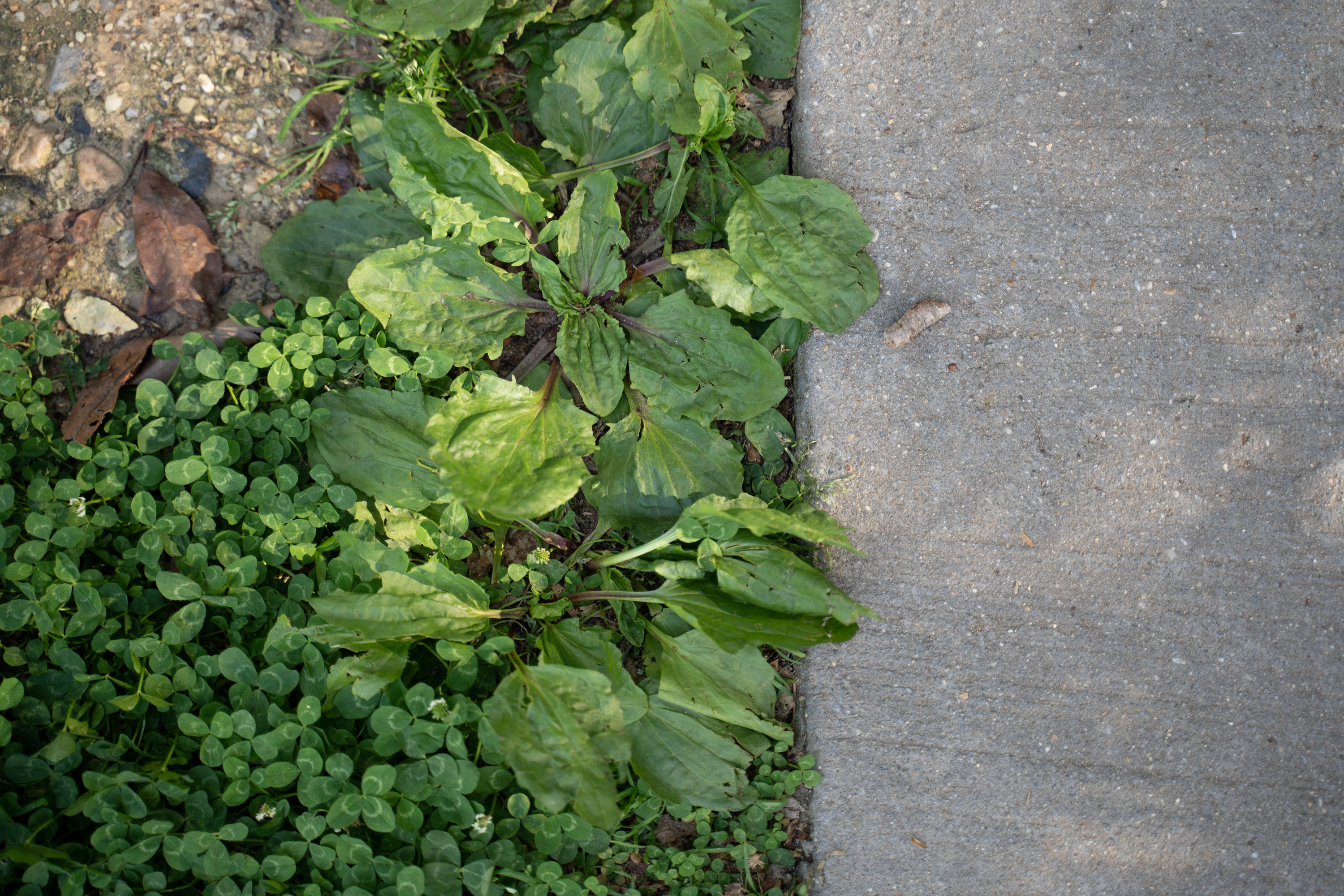
Well before the end of the block, Thompson has found five edible plants, just like she promised. There’s purple henbit, Virginia peppergrass, wild violets, chickweed—all pretty tasty.
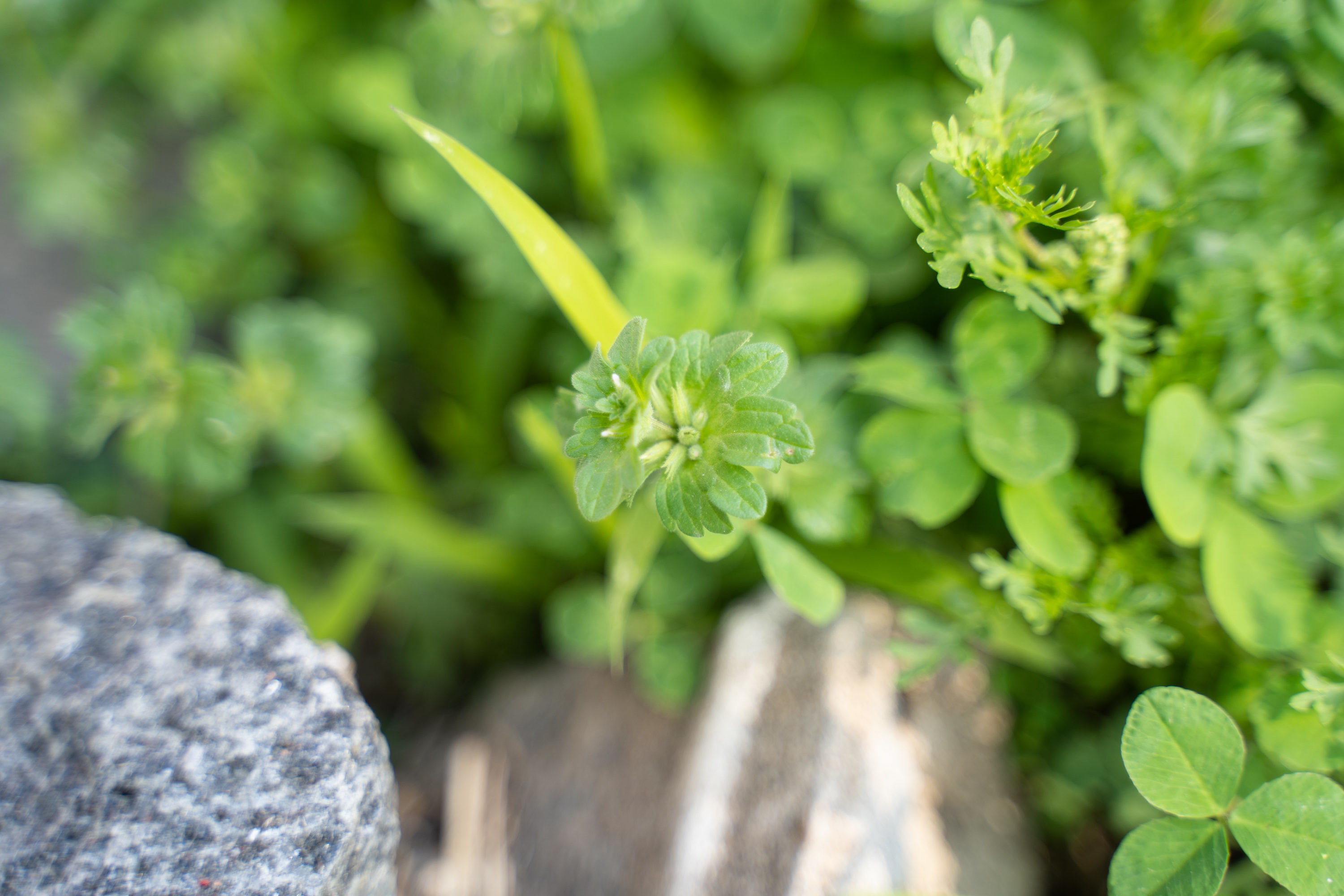
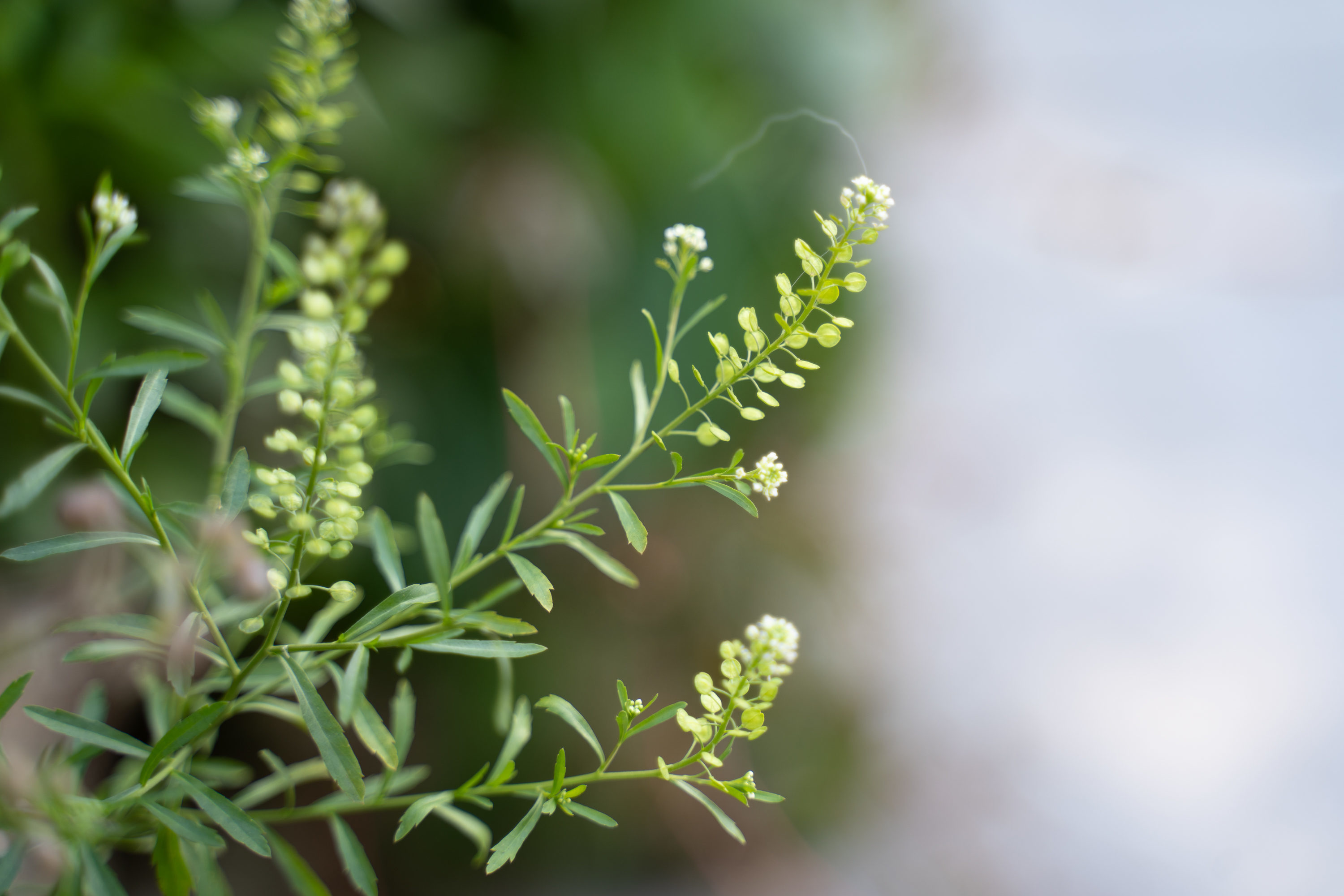
At this point, you may be wondering: is it really a good idea to be eating weeds off the sidewalk next to a busy, traffic-clogged street?
This is something Philip Stark also wanted to know. He’s a professor at U.C. Berkeley who recently published a study on edible weeds in the Bay Area. He found the plants—even those harvested in industrial areas with contaminated soil—didn’t build up heavy metals or pesticides.
Stark is a statistics professor, but he got interested in foraging because he’s also a ultrarunner. Spending long periods of time running outdoors got him curious about the plants he kept seeing.
“Once you kind of click into being the hunter-gatherer that we’re all programed to be, you see the resources all over the place,” says Stark. “That got me thinking, here these things are growing near a road or in pavement, places where they’re exposed to exhaust, or tire dust or god-knows-what. Are they safe to eat?”
Stark also studied the nutrients in the weeds, and found some are as nutritious as spinach or kale.
“There’s a story behind that,” says Stark. Over the centuries, agricultural crops have been selectively bred for properties other than nutrition. “As we’ve bred for shelf life and transportability, we have accidentally bred a lot of the nutrition and a lot of the flavor out of our food.”
Stark imagines a future food system where foraged foods and weeds are a more regular part of our diet—where some sought-after weeds become valuable enough that farmers can sell them to restaurants—rather than trying to eradicate them.
To get to that weed-eating future, governments would need to ease restrictions on foraging. Stark says in many countries where foraging is the norm, people have a right to harvest a certain amount from public lands, whereas in the U.S., many park systems and jurisdictions have outright bans on any foraging — even of invasive species.
Weeds won’t solve world hunger. But Stark says weeds and other foraged foods could be a good addition to our diets. “There’s something growing to eat pretty much year-round,” Stark says. “Even if it’s not going to be a main source of calories, it’s something you can add to what you’re eating already and in the process add some really nutritionally dense foods to your plate.”
This story originally appeared on WAMU.