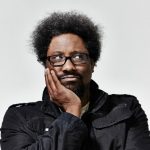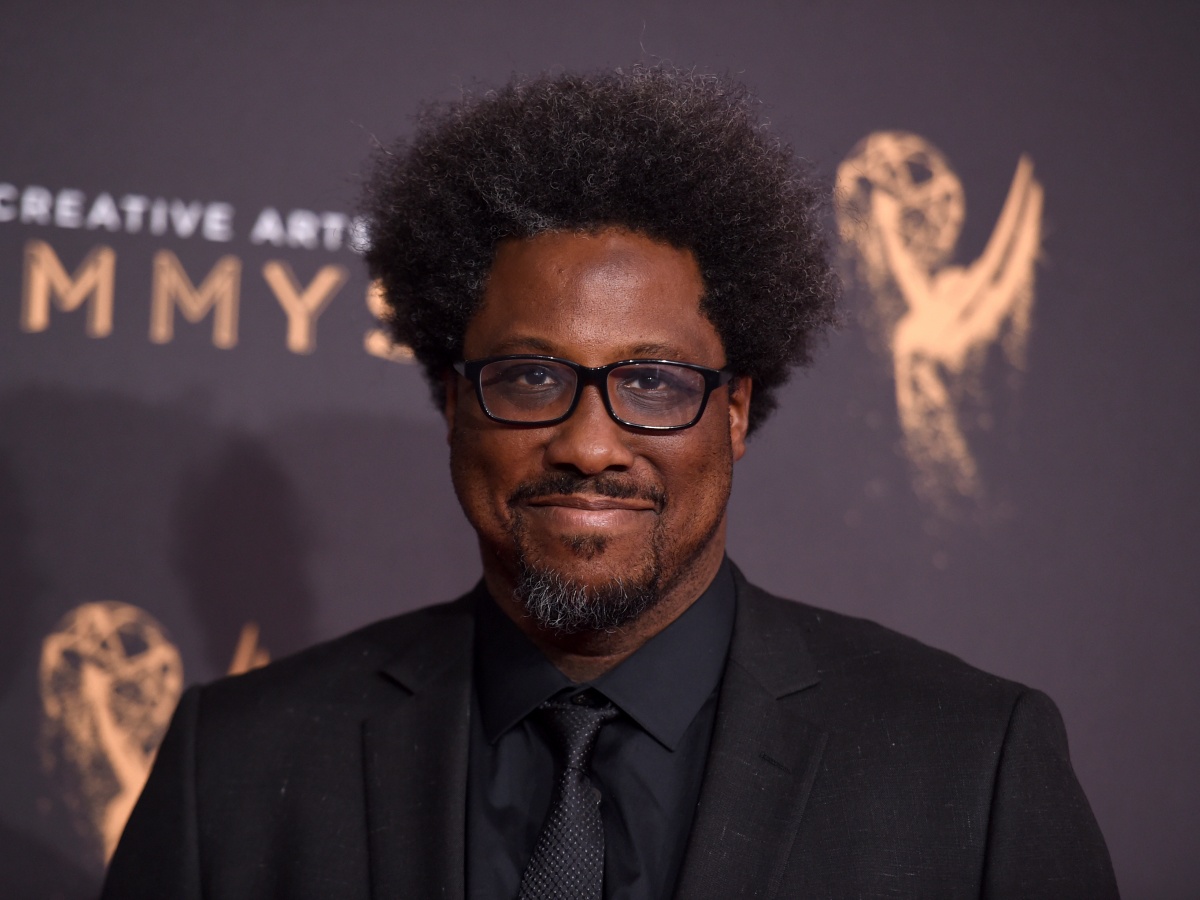
In the latest episode of his CNN show United Shades of America, comedian W. Kamau Bell travels to our fair District. He notes that the anger people feel towards the nation’s capital is separate from the local city. “If you hate Washington, D.C., the thing you actually hate is Washington—and, most likely, you don’t know much about D.C.”
The idea to visit, Bell says, came from D.C. Council spokesperson Josh Gibson, who tweeted at him almost a year ago. “How can the capital of the capital of the free world be an American subculture?” Gibson tweeted. “Try being home to, and perpetually associated with, the federal gov’t. Then try having no vote in Congress.” Bell bit. In the episode, he visits local businesses and meets with Washingtonians, looking to find the “real D.C.”
So what is the “real” D.C. according to W. Kamau Bell? Here are the places and people he highlighted.
Calabash Tea & Tonic
Bell kicks off the episode with a visit to Calabash Tea & Tonic. Located in the Shaw neighborhood, not too far from Howard University, the cafe is a bustling gathering place for neighborhood residents, students, professors, and people from all walks of life. He interviews owner Sunyatta Amen, a fifth generation herbalist and naturopath (who also plans to open another outpost in Brookland), as well as Howard Professor Greg Carr about what makes D.C. unique and the changes that have happened in the neighborhood.
For Carr, places like Calabash are an important gathering spot for a neighborhood that is rapidly changing. “When Sunyata opened this spot, it just renewed the energy [in the area],” he tells Bell. And it’s a place where people can talk about things besides national politics. “A lot of students at Howard come from all over the world, primarily the African world, so there’s a convening here that has nothing to do with what’s going on at 1600 Pennsylvania Avenue.”
Lee’s Flower and Card Shop
Bell also visits Lee’s Flower and Card Shop, a black family owned and operated business on the U Street Corridor that was first established in 1945. Rick Lee, whose father founded the shop and whose children now run it, recalls to Bell the experience of being in the store during the 1968 riots. “We were here all night long watching over the store,” Lee tells Bell. “Wrote ‘Soul Brother’ on the window. All the Black-owned businesses, the word was out, put ‘Soul Brother’ on the window. And my mom and I were in here with a shotgun. That was rough though, smoke all over the city.”
Naomi Wadler
To Bell, part of living in the real D.C. is being within arm’s reach of the levers of power. He interviewed 12-year-old Naomi Wadler, a Virginia native, who organized a gun protest at her school and spoke at the 2018 March For Our Lives. When Bell asks her what it feels like to have access to a city like D.C. she says it’s empowering and gives her something to look forward to. “When I grow up I can walk its streets and I can see all people with different stories to tell, and different ideas to bring to the table, and just really be in this very one-of-a-kind city.”
April Ryan
Despite his hunger to show the local side of the District, many D.C. residents do interact on a regular basis with the federal portion of Washington. Bell talks to journalist April Ryan, a Baltimore native, who regularly questions the Trump administration as a member of the White House press corps. “When you ask questions, sometimes it effectuates change,” she tells Bell. Although Ryan has been reporting on the White House for over 20 years, she says that now she’s “lit” and more people know about her because of her interactions with President Donald Trump.
Kristin Mink
D.C. residents who don’t report on the White House could run into federal officials, too. Bell also interviewed Kristin Mink, a D.C.-area teacher, who went viral for confronting then-Environmental Protection Agency administrator Scott Pruitt at Teaism. When the scandal-plagued Pruitt stepped down less than a week later, citing unrelenting attacks, Mink says she felt like she contributed to his resignation in her own way. Bell expands Mink’s interaction with Pruitt to a larger conversation about civility (politicians in D.C., especially in the Trump administration, have faced protests where they live and eat). Mink tells Bell that White House spokesperson Sarah Huckabee Sanders characterized her conversation with Pruitt as one that “wasn’t civil. Did she say anything to address the content of my words, right? The corruption, the misuse of taxpayer dollars, what he was doing to our air and our water, or the favors that he was doing to corporate lobbyists? No. She said people should be able to eat their lunch. Like his taco was more important than the air that we’re all breathing.”
Henry Rollins and Trouble Funk
A story about the real D.C. wouldn’t be complete without talking about its music. Henry Rollins and band members of the pioneering band Trouble Funk make an appearance on the show to talk about the cultural significance of go-go to the city and the way that the music has become a symbol for how the city deals with demographic and political change.
When talking about growing up in D.C. as a kid, Trouble Funk founder, Big Tony said it was rough. “I lost one of my brothers right in front of my mother’s house.” Trouble Funk keyboardist James Avery adds that the city tended to blame that roughness on the music. “The councilmembers didn’t know what to do about the violence so they associated the things that happened outside of the go-go with the go-go” he says. “They tried to shut go-go down.”
Oyster Adams Bilingual School
Bell also visits Oyster-Adams Bilingual School where about half the students are native English-speakers, the other half are native-Spanish speakers, and all students start learning Mandarin Chinese in 6th grade. When Bell mentions that Latinos are not necessarily the population someone might think of when they think of D.C., Oyster-Adams principal Mayra Cruz responds saying “You can’t have D.C. without Salvadorans.”
Although D.C. earned the nickname “Chocolate City” because of its many Black residents, several people that Bell talked to say that just isn’t D.C.’s reality anymore. In a montage of man-on-the-street interviews, residents say that a more accurate nickname for D.C. now would be something closer to “Milk Chocolate City” or “Reese’s Pieces City,” thanks to the D.C.’s changing demographics.
Many of the students who attend Oyster-Adams are Salvadoran, which is the largest immigrant community in D.C. The American Immigration Council reports thatmore 14 percent of D.C.’s population was born somewhere other than the United States, with the top countries of origin being El Salvador, China, and Ethiopia.
Baliwick Clothing
A bonus video with D.C. Council’s Gibson segment features this Baliwick t-shirt in the background. The homegrown D.C. clothing company has also been spotted on Bryce Harper back when he was a Nationals player.
This story has been updated to reflect that Naomi Wadler spoke at the March For Our Lives.