 Mikaela Lefrak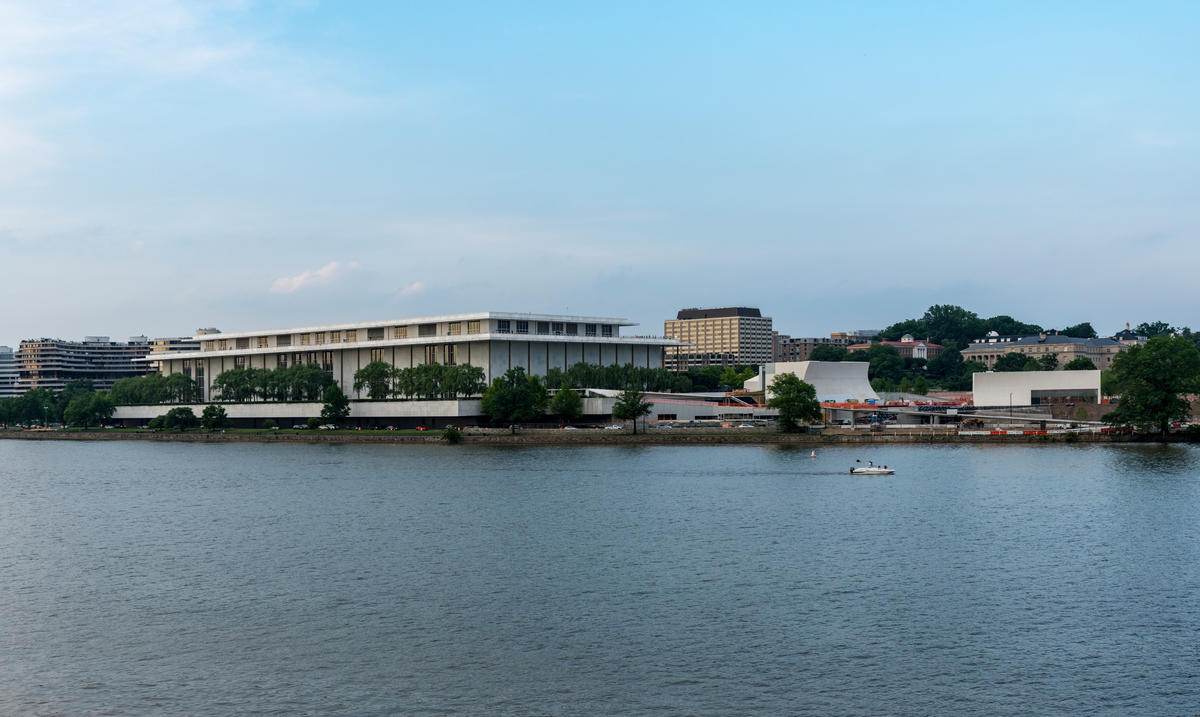
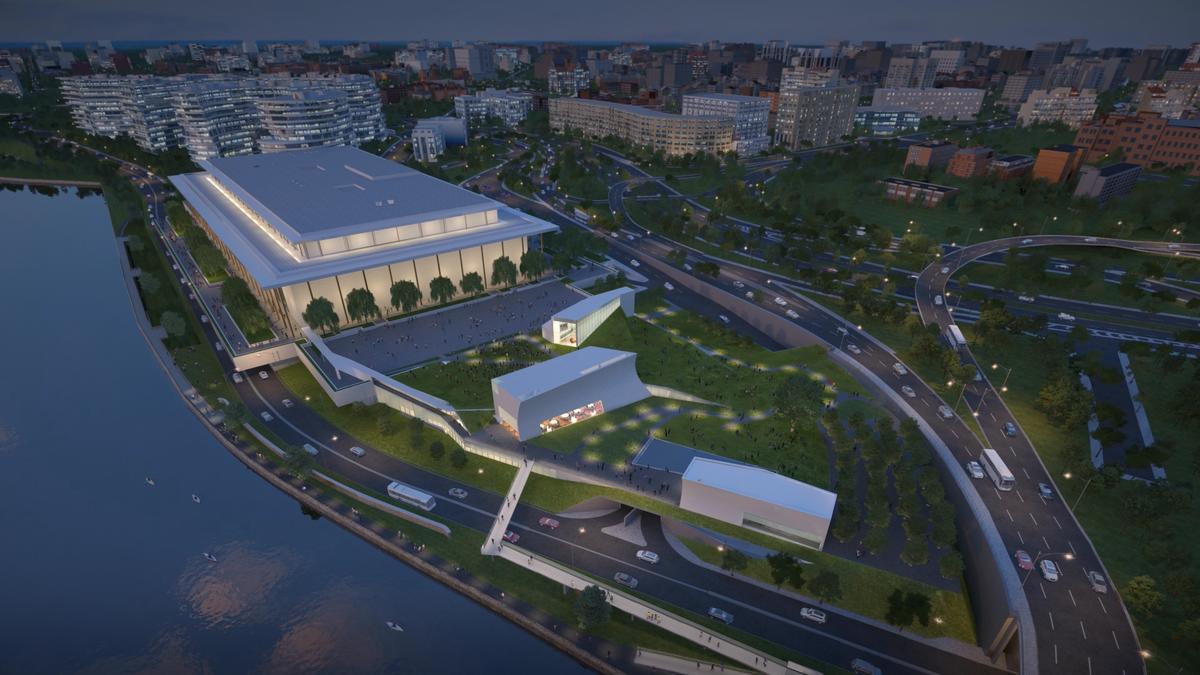
Three white sloping buildings emerge out of the landscape near the Kennedy Center for the Performing Arts and the banks of the Potomac River. Inside one, a string quartet comprised of National Symphony Orchestra musicians played to a crowd of journalists and arts leaders.
They were gathered for a preview of The REACH, the Kennedy Center’s first major expansion in its nearly 50-year history. While the new buildings and green space are eye-catching additions to the original landmark facility, most of the expansion is underground. Classrooms, event spaces, rehearsal rooms and performance halls with top-of-the-line acoustics are hidden underneath a sprawling lawn that, on the day of the press event, was being used for a lunchtime yoga class.
The expansion will mark its opening with a 16-day public festival from Sept. 7-22. Its lineup of more than 400 free events are nearly wide-ranging enough to mask the various issues that have dogged the expansion project for years.
The REACH’s opening comes two years later than projected and about $100 million over its original budget. The delays had numerous causes: DC Water’s Clean Rivers Project asked for a reduction in sewage, hazardous soil had to be removed and the building’s swooping concrete walls proved challenging to pour.
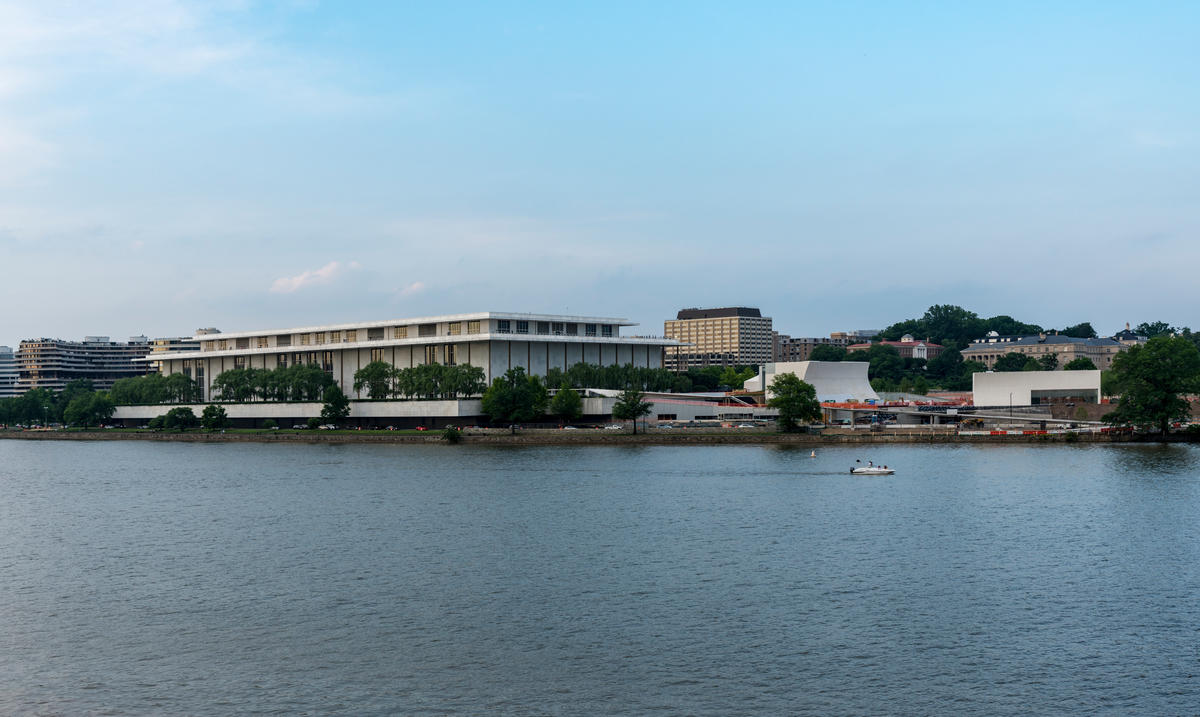
The view from the Potomac during construction on The Reach.
The development team has raised about $224 million of its $250 million goal as of Wednesday, according to Kennedy Center President Deborah Rutter. The largest donor is no surprise to anyone familiar with Washington philanthropy: David Rubenstein, the billionaire financier, philanthropist and chairman of the Kennedy Center Board of Trustees. He donated $50 million to the project.
Architect Steven Holl didn’t seem phased by the delays. “I think this is a miracle that this is getting finished in seven years,” he told journalists. “Most of my buildings take eight years. This is terrific.”
Holl’s design aimed to further connect the Kennedy Center with both its namesake and the landscape. A pedestrian walkway over Rock Creek Park connects the popular trail along the Potomac River to the Kennedy Center. Thirty-five ginkgo trees planted on the expansion’s lawn honor the 35th president. Their yellow leaves typically drop in November, the month of his assassination. And quotes from Kennedy about the importance of artists have been etched in glass and marble across the campus.
Inside, the 72,000 square feet of various rehearsals and performance spaces have been meticulously designed for top-grade acoustics. Crinkle concrete promotes reverberation and sound disbursement, acoustic plaster absorbs sound in the performance halls, and the studios have been fully sound-proofed.
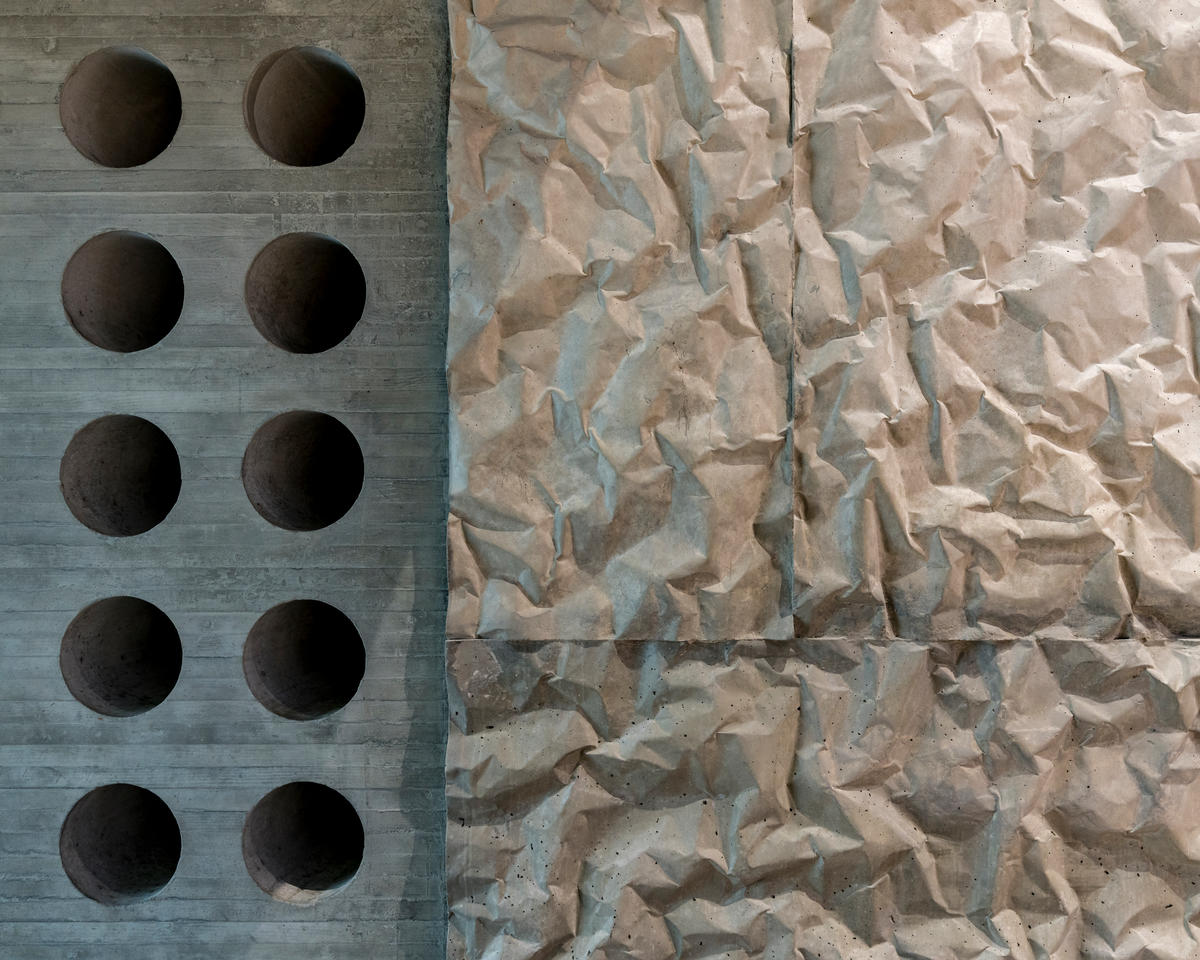
Acoustic crinkle concrete reduces unwanted noise inside the Welcome Pavilion.
“[Acoustics] were really important for me, from the very beginning,” Rutter said. “I’ve always worried about what the environment is for sound.” Holl called the entire project “an acoustic moment.”
The opening festival has been designed to show off the campus’s versatility and, Rutter hopes, its inclusivity. It will include a veritable smorgasbord of events, ranging from a go-go performance by the Chuck Brown Band, to a showcase of D.C.’s standup comedians, to a ballet masterclass led by the New York City Ballet’s principal dancer. There will be virtual reality experiences and slam poetry, film screenings and panel discussions with indigenous artists. There will even be a West Indian-style sunset dance party on the festival’s final night.
“These spaces are intended to be beautiful in their glory,” Rutter said, “but welcoming and transparent so that all people feel like they can come and visit here as an observer, as a participant, and as an artist.”
This story originally appeared at WAMU.
Previously:
The Kennedy Center Is Adding 7,200 Square Feet, Three Pavilions, And 35 Ginkgo Trees