Rachel Kurzius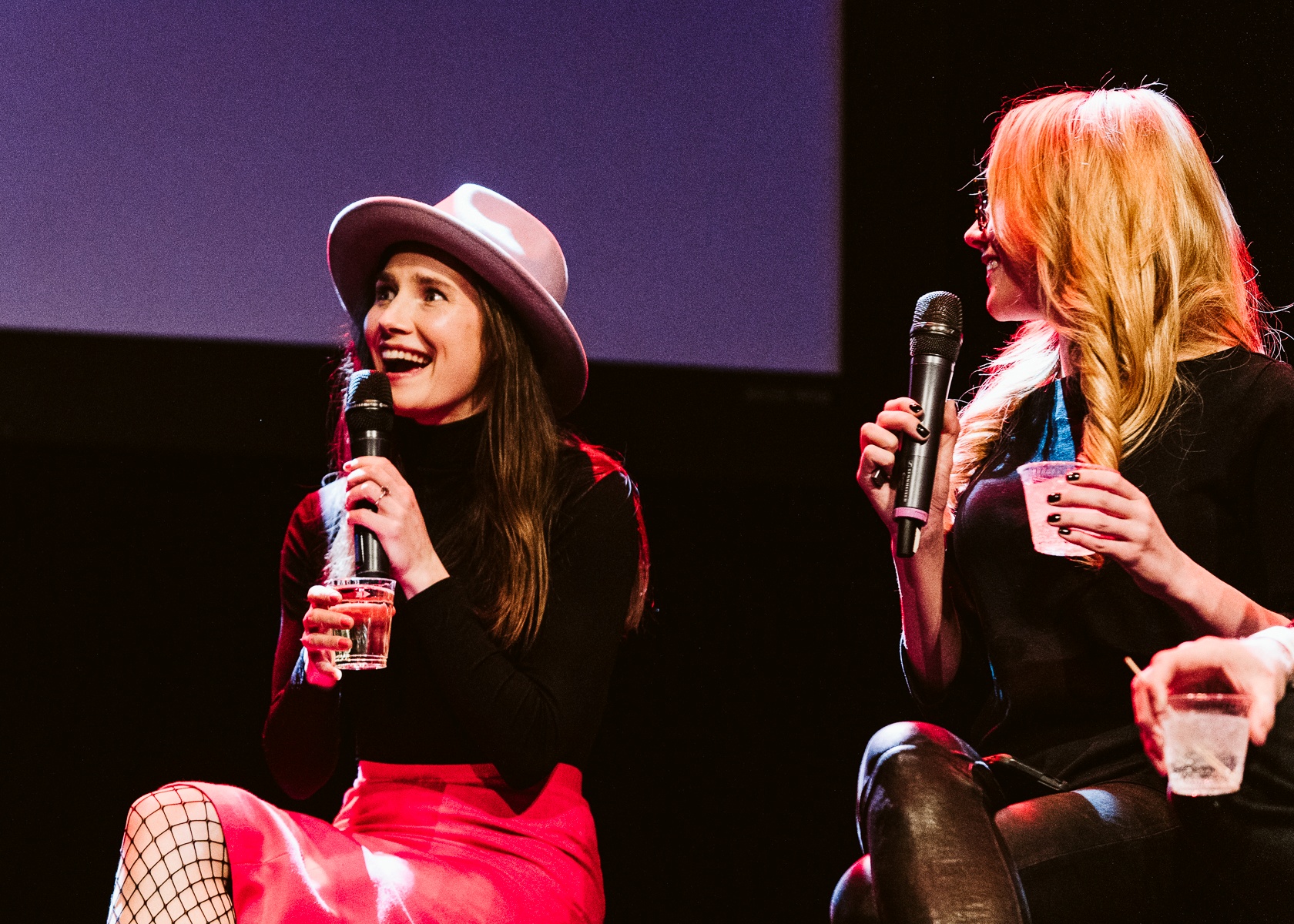
Update, 9/6/19:
Amanda Knox, one of the headliners of true crime festival Death Becomes Us, will be interviewing another woman whose name was splashed across tabloids—Lorena Bobbitt.
Now known as Lorena Gallo, she became infamous in the early 1990s for cutting off her then-husband’s penis. In the years since, a somewhat fuller picture has emerged of the woman at the center of the incident, who faced years of abuse at the hands of her husband. She was the subject of a Jordan Peele-produced documentary earlier this year—a far cry from the many comedy skits over the decades that made her the butt of the joke.
Knox will interview Gallo as part of the live version of her podcast The Truth About True Crime with Amanda Knox. “I’m so excited to take the stage with a woman who has survived and transcended an abusive husband, tabloid exploitation, and the casual cruelty of an entire nation,” Knox tells DCist over email. “Lorena Gallo is an inspiration, and we’re going to talk about everything we have in common.”
Original: Death Becomes Us, the true crime festival organized by Brightest Young Things, is returning to D.C. for a second year this November, with a slate of performances that include Amanda Knox (the tabloid subject/murder suspect-turned-host of her own true crime podcast), Murder Squad, Throwing Shade, Buzzfeed Unsolved, and more.
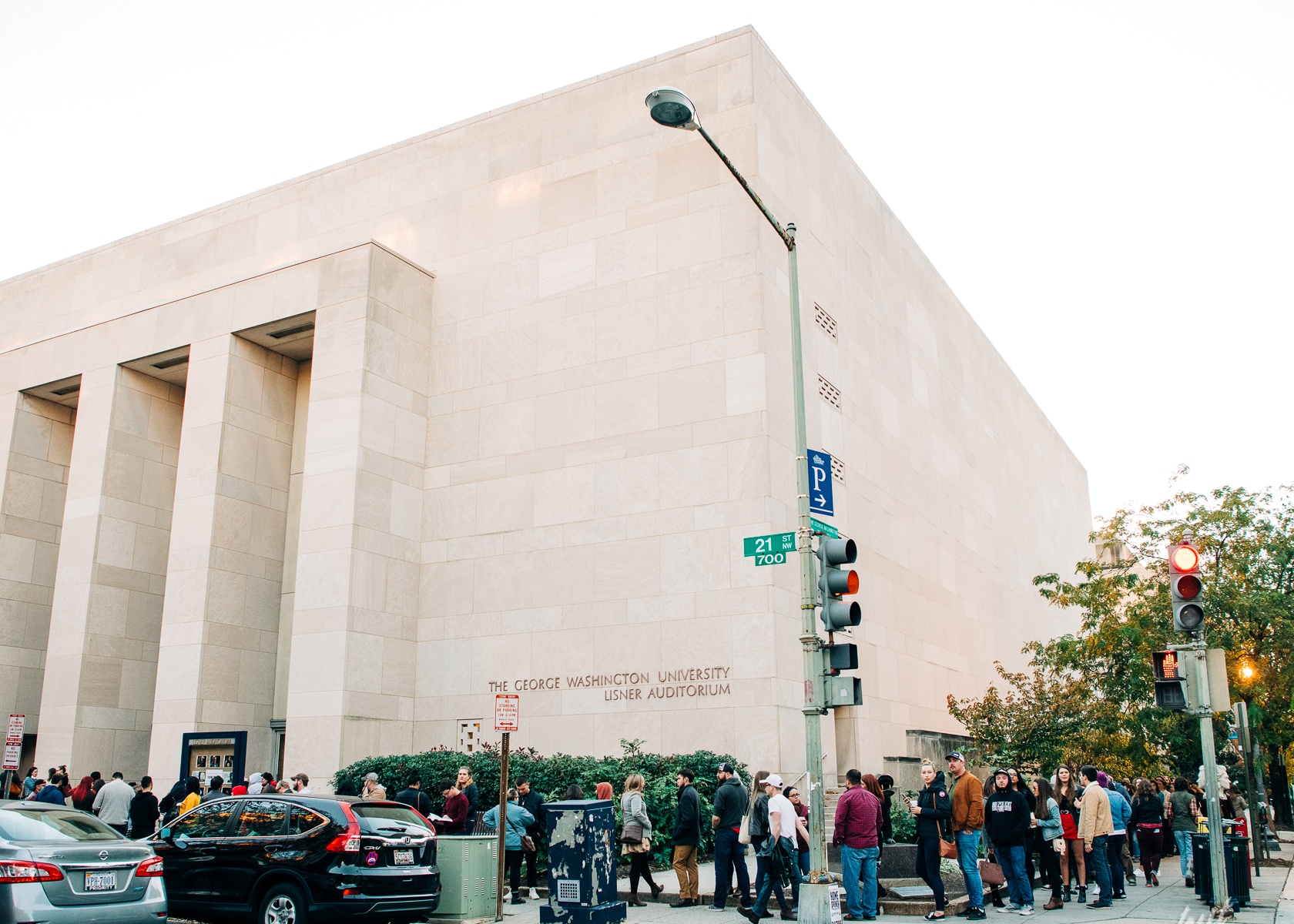
After the premiere of the festival in D.C. last November, followed by a New York version this past March, Death Becomes Us is coming back to the Lisner Auditorium on November 8-10, this time for three days rather than two, and expecting upwards of 8,000 attendees for a cornucopia of morbid talks, books events, screenings, meet-and-greets, and more.
We talked to Jenn Tisdale, the director of Death Becomes Us (“it’s my favorite business card,” she says with a laugh ), comedian, and longtime BYT contributor, about this year’s festival, her obsession with true crime, and the fact about Jeffrey Dahmer that she just can’t shake. (This conversation has been edited for length and clarity.)
DCist: So what can you tell us about this year’s Death Becomes Us? What are you most excited about?
Jenn Tisdale: What I am most excited about this time around is bringing Amanda Knox to D.C. When people found out that she was in New York, the D.C. people were super bummed that she was not in D.C., and so I heard their cries for Amanda Knox. Amanda is going to come and do a podcast The Truth About True Crime with Amanda Knox and the guest that we’re working on is a very special guest.
I like to take non-true crime shows and fashion then into true crime shows. Have you heard Throwing Shade, which is my probably one of my top five podcasts? Erin Gibson and Bryan Safi are two of the funniest, most intelligent, well rounded, politically involved commentators, I think, out there today … We’re also going to put them with true crime guests to give it that true crime feel. But they also kind of dip into that world a little bit themselves, because they talk about what’s going on in the world today. And we all know, there’s so much crime going on today. I guess that’s why this festival exists. Yes, of course, I’m both happy and sad about that.
And then we’re bringing back BuzzFeed Unsolved because, I don’t know if you went to that show last November, but it felt the most like a Backstreet Boys concert. It was like incredible, incredible amounts of young teenagers, like, crying. It was very sweet … I remember opening up the Lisner Auditorium doors before the lobby, and I was like, “Oh, there’s a lot of hormones in the lobby right now” … That was their first live show—our festival. And unless they do something else, it’ll be their second live show at our festival … They’re going to do something a little different this time than they did last time, is what I’ve been told.
And, you know, the new kids on the block that are coming are two Death Becomes Us alumni—Paules Holes and Billy Jensen—but they’re coming with Murder Squad, their new podcast, which a lot of people asked about coming and again, you know, I heeded their cries. Their podcast was announced right before they were both at our festival in March. And the second it was public, I locked that down as quickly as I could for this festival. I’m not sure what their live show will be. I’m not sure they’re sure. But I’m sure it’s gonna be great.
So what was last year’s festival like? What are you definitely hoping to carry over into this year, and what are you hoping will be a little bit different this go around?
It was a little more traditional. We were just dipping our toes into the water. So we basically had classic podcasts like Criminal and Last Podcast On The Left. We had How Did This Get Made come and do a crime movie, which was very funny. The first thing [comedian and How Did This Get Made co-host] Paul Scheer said when he got on stage was, “I don’t know why we’re here.” And I’m just like, “Because I’m a big fan.”
So I think I just wanted it to be something that you could feel okay about having fun at, because it’s a sensitive subject at times, a sensitive genre at times. And I wanted to create a vibe that was like, “It’s okay to have a good time,” because I do think you need that release sometimes. So I wanted to do shows that were serious, and then I kind of wanted to have shows that I called “palate cleansers,” so that you could bring your emotional self back up again.
And then we partnered with the Smithsonian and the Library of Congress and the Crime Museum, which, you know, used to be here but now moved to Pigeon Forge, Tennessee—yes, classic move, but they have a home base here and they came in and did a pop-up exhibit. I got to hold John Wayne Gacy’s wallet, and I’m pleased to tell you that he was a member of Radio Shack. With D.C, we try to keep D.C.-centric with things like the Smithsonian and the Library of Congress. And then, we’re partnering with Drink Company again for a true crime pop-up bar.
In New York, I came up with this idea for a show called Forensic Files Uncorked that we worked on with HLN where Wine and Crime, their podcast started because they all love Forensic Files, so they did a Mystery Science Theater 3000 thing over their favorite episode of Forensic Files. So for me, that was something I discovered in New York that I really like to do, and what I hope to do for at least one show moving forward. And we didn’t really do that [last year] in D.C. because it was the first time, so we kept it a little traditional. I wouldn’t say we played it safe, because it was still us. Like, at one point before the Last Podcast On The Left show, I asked my co-workers to put me in a body bag and drag me out on stage. And then I undid myself. And that’s how I appeared on the stage and so, you know, that’s where my real joy is, is being totally weird.
I think there is a fraught thing about true crime, which is that it’s so enjoyable. How do we tell these stories that are outrageous, but that also have victims and people who have survived and are really upset? Can you talk to me about the balance for you about how you try and create something that’s also respectful to people who have died?
Something that I think about a lot is that, theoretically, the genre “true crime” shouldn’t exist. The fact that it is here in and of itself should be something that’s upsetting for everyone. But it’s here, and we’re interested in it. And it has always been around in some form or another, even if you’re just watching the news every night. So to start with the genre itself, it’s a little gross that it’s around, but we’ve accepted its existence. And I think that people like to move the goalposts around a bit in terms of how comfortable they are, but what they don’t remember that honestly, the whole thing is a little weird. To me, in terms of the laughter part, I always try to punch up. Don’t make fun of victims, don’t make fun of anyone’s pain or suffering. Always make fun of the bad guy or always laugh at the bad guy. Keep the comedy on those people, not the victims or the families, not anyone who suffered, and I think that’s what makes it okay, and even better to enjoy, because people need to have that balance of that dark sadness, and then that unbridled joy. You can find it in true crime as long as you keep the joy where it belongs—by making fun of the monsters.
So what is something you’ve learned through your obsession with true crime that always boggles your mind when you think about it, or is something you keep returning to?
Something I think about—and you’re going to be horrified that I have this piece of information tucked in my memory—is that [serial killer] Jeffrey Dahmer’s first murder that he ever committed was with a dumbbell. And I believe in prison he was beaten to death with a dumbbell bar. That’s circular but, well, that’s life. What are the odds of that happening? I think about that fact all the time.
Is there anything else you wanted to say about Death Becomes Us or true crime?
I try to think about why I love it so much. And what I keep coming back to is that I think a lot of people think they have to rationalize their interest in it by giving some sort of greater purpose. And for me, honestly, there are a lot of reasons why true crime is very deep and meaningful. But at the end of the day, I think I’m just a very morbid person, and I think people in general are very morbid, and I think that that’s an okay thing to admit. Once upon a time, we used to be very familiar with death. We’ve become quite insulated from it. And I do think that we, as humans, are still attracted to death, and that this is trying to think about it and process it. People aren’t dying in homes anymore. Do you know what I mean? Like, we used to be very familiar with death. And we’re less familiar with that. And I think that true crime is a way for us to just go have conversations about death.
Death Becomes Us will take place from November 8-10 at Lisner Auditorium. All-access tickets are on sale for $150 plus fees, and individual show tickets will be released on a rolling basis.