
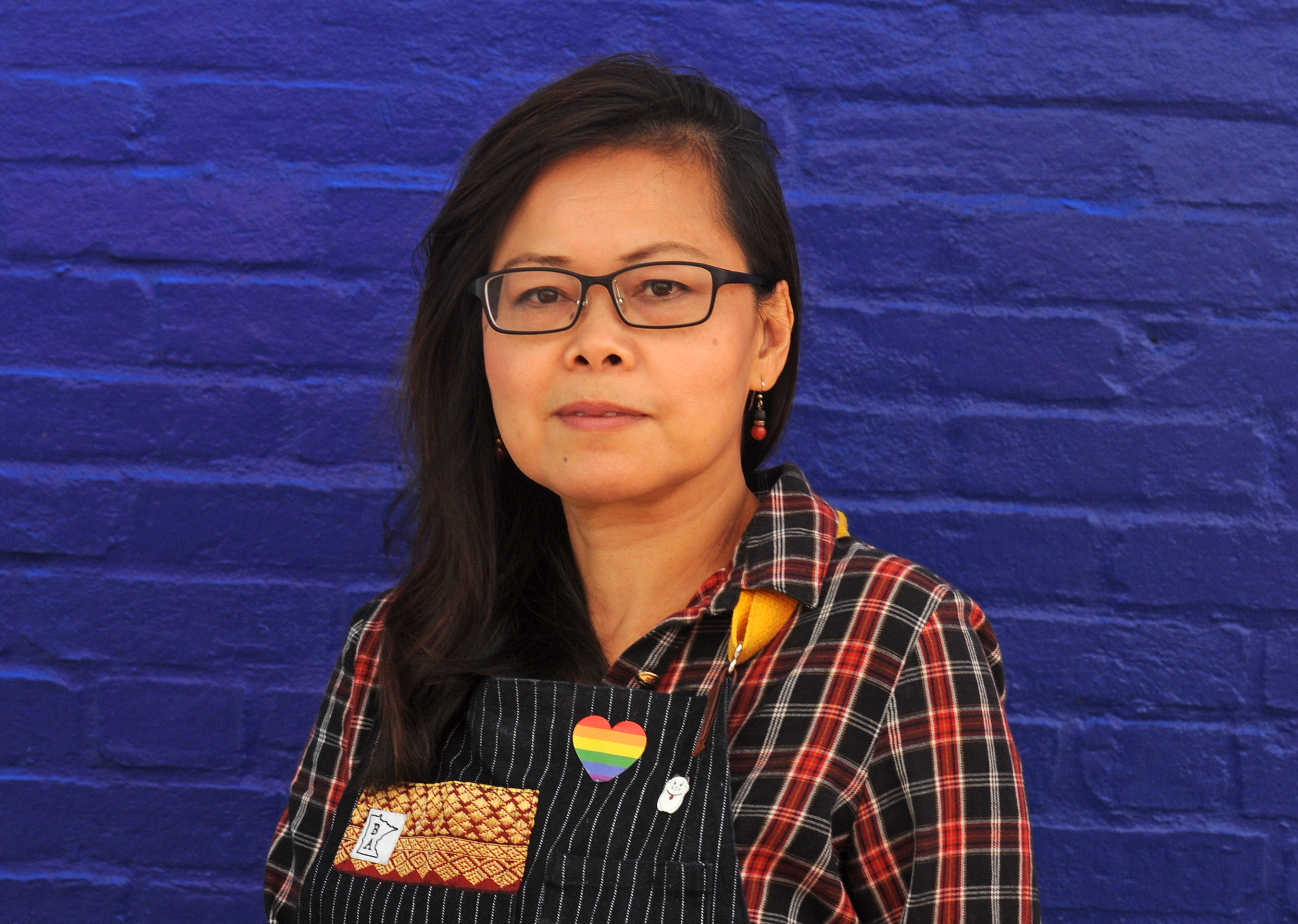
By naming their newest venture Hanumanh, for the powerful Buddhist and Hindu monkey god, mother-son chef-restaurateur duo Seng Luangrath and Bobby Pradachith knew that they were tempting the deity. But they also knew how to appease him.
At Hanumanh, the two proudly serve Laotian dishes that Luangrath once offered only secretly off-menu at her first restaurant, a small Thai place in Falls Church. Today, Luangrath oversees a budding Laotian food empire that stretches across four restaurants with the opening of Hanumanh last month.
Hanumanh, Pradachith explains, is a crafty and powerful god—and that also describes his mother, a refugee who immigrated to States as a teenager fleeing the effects of the Vietnam War. Her pioneering style and emergence as the leader of the self-styled Lao Food Movement speaks to her passion to teach D.C. about the “funky, pungent, sour, and sweet” of Laotian food, according to Pradachith.
When non-Lao patrons began to request those secret menu dishes, Luangrath finally printed an English version, delighted that Americans would respond to something other than pad Thai. Her family soon opened a second Lao restaurant in McLean, and then launched Thip Khao in Columbia Heights in 2014.
“Our goal is to try to expand what Lao food is like,” says Pradachith, a graduate of the Culinary Institute of America. “We want to be respectful of the original, but serve dishes that are easily eaten and shared.”
At Hanumanh, Pradachith has taken the lead, crafting a bar-focused space where tiki drinks reign—and also rein in the sharp chilies and heady umami of padaek, the unfiltered fermented Lao-style “wine of fish sauce” that makes its way into almost every dish.
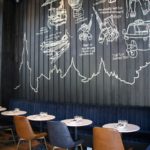
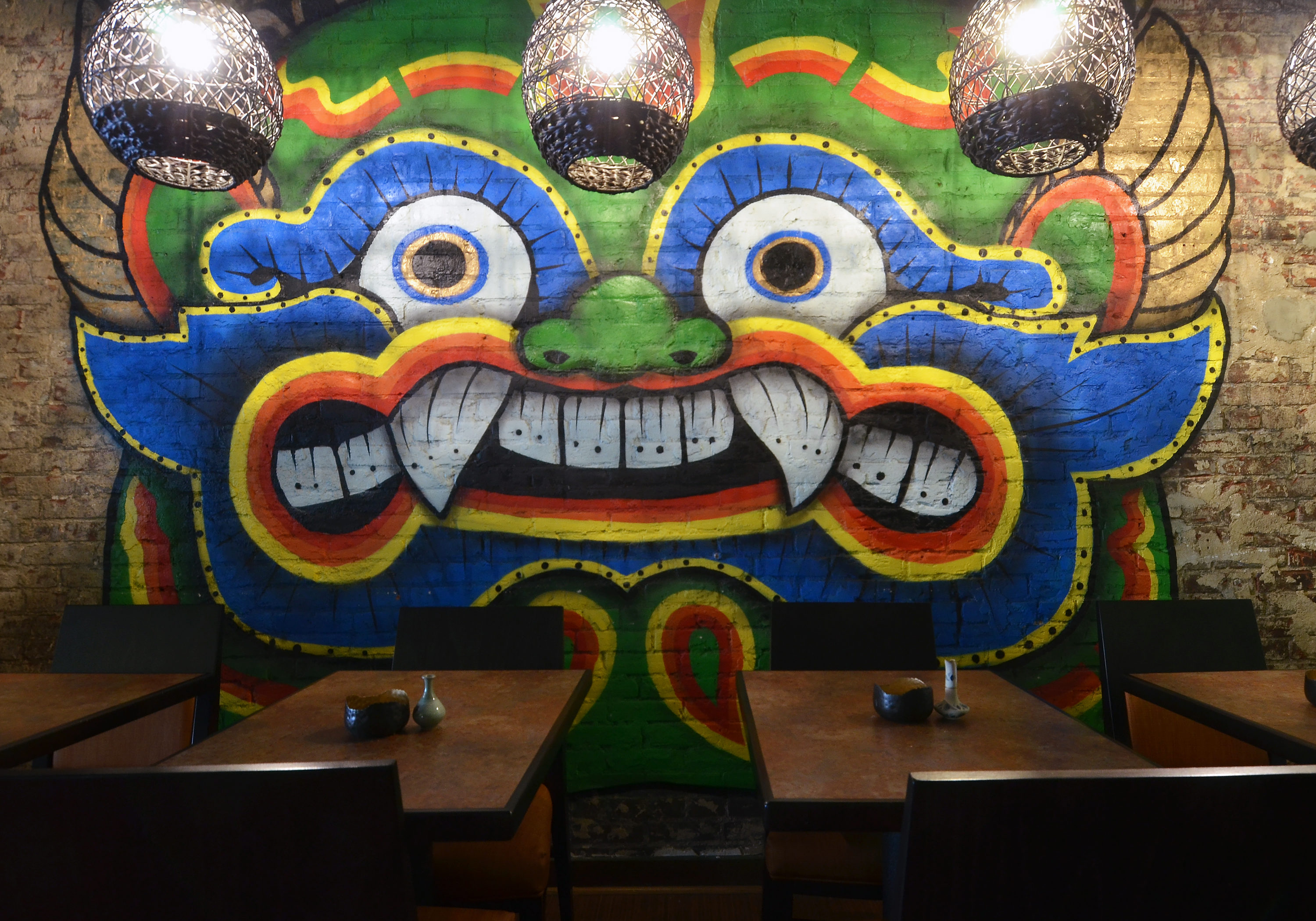
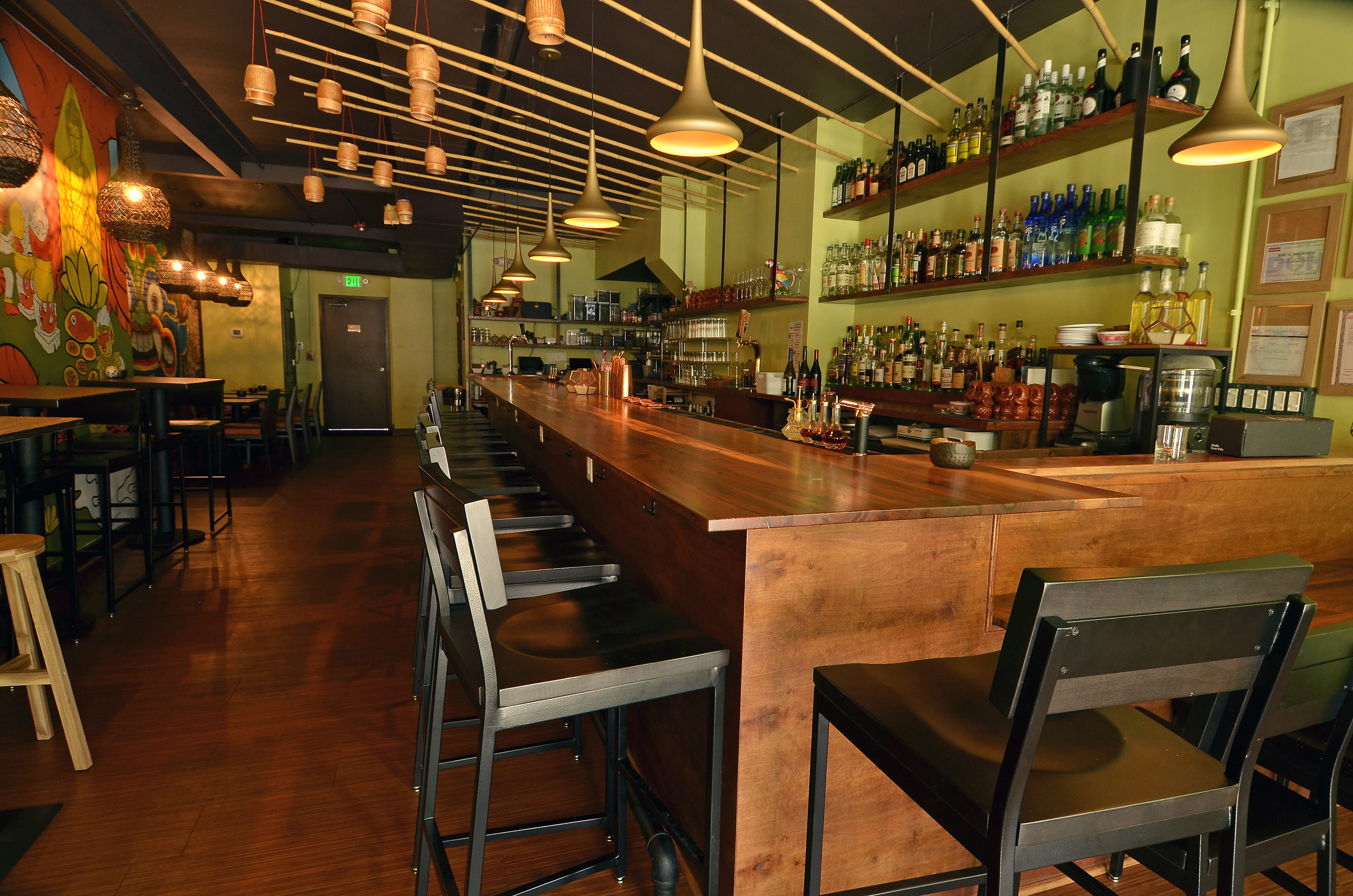
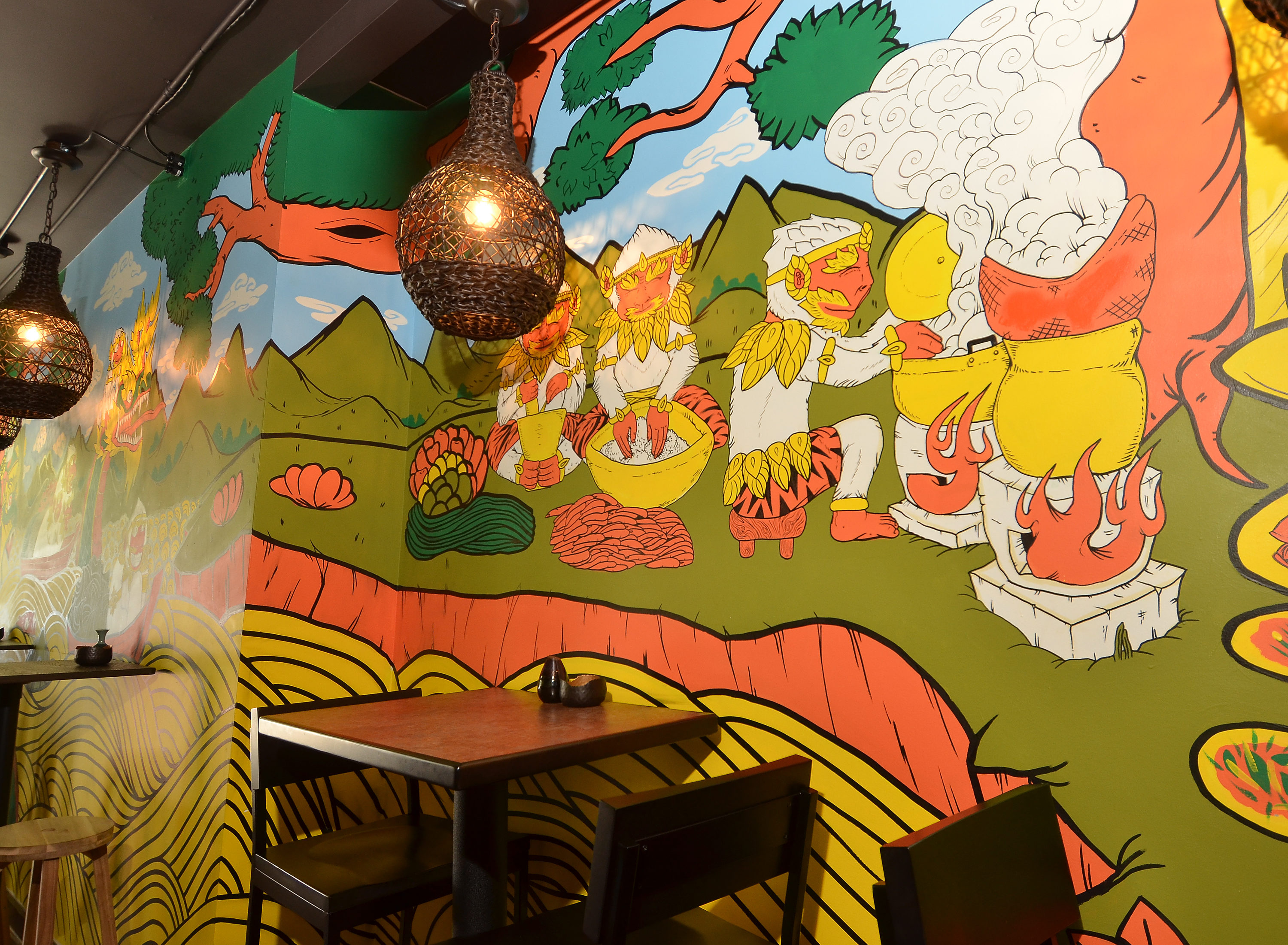
A cozy space, Hanumanh is worlds away from its 7th Street neighbor Dacha. The exposed-brick walls sport an enormous, vibrantly colored mural of the eponymous monkey king. He lords over the space and its 30 seats, half of which crowd around the bar and its trendy copper cocktail gadgets.
Pradachith brought in Al Thompson (of barmini) to oversee the bar menu, a challenge because drinks in Laos are “either straight alcohol or sugary to mask the liquor,” Pradachith says. The tropical drinks are more complex and honor Laotian ingredients, though some are still on the sweeter side.
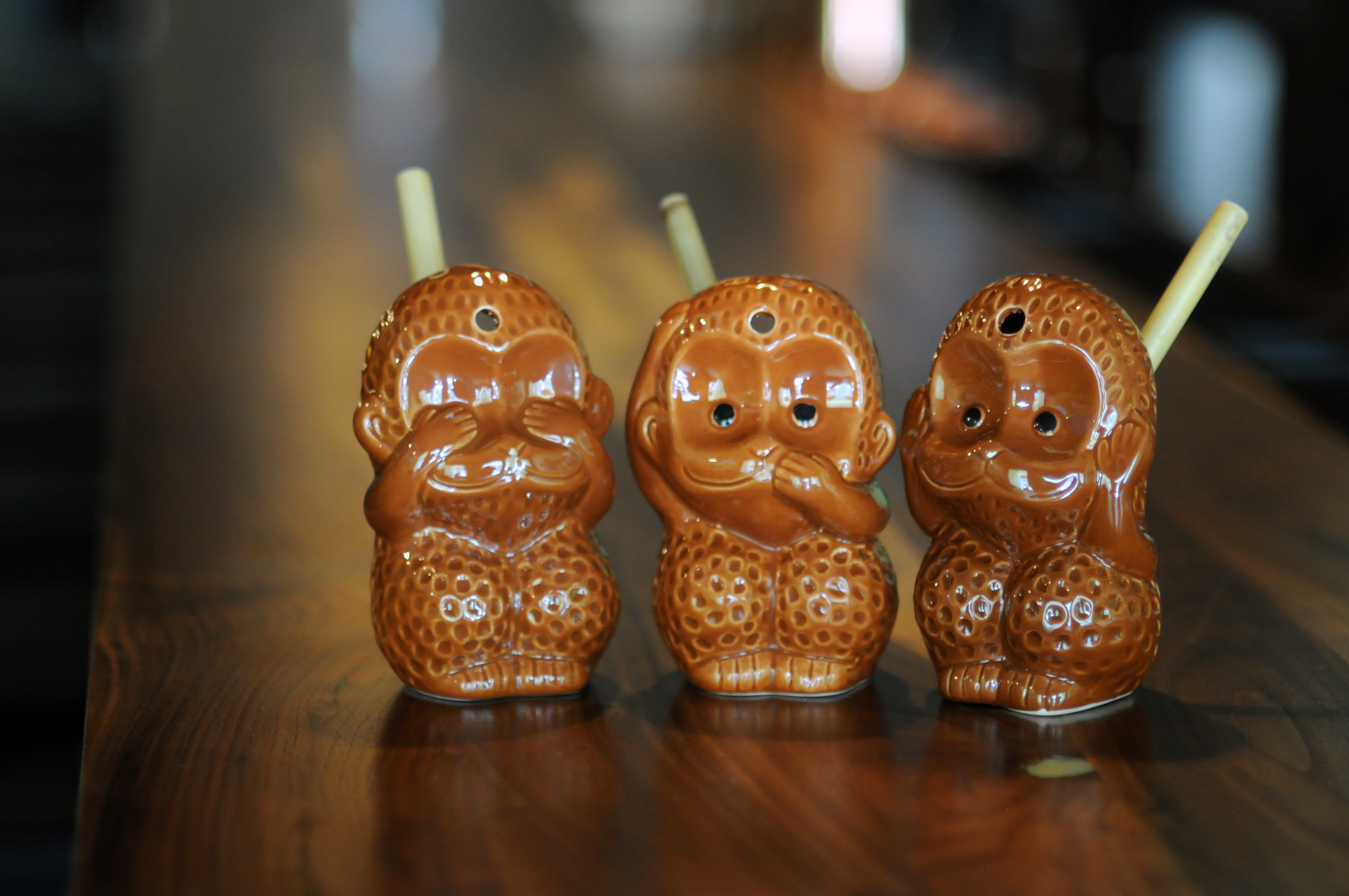
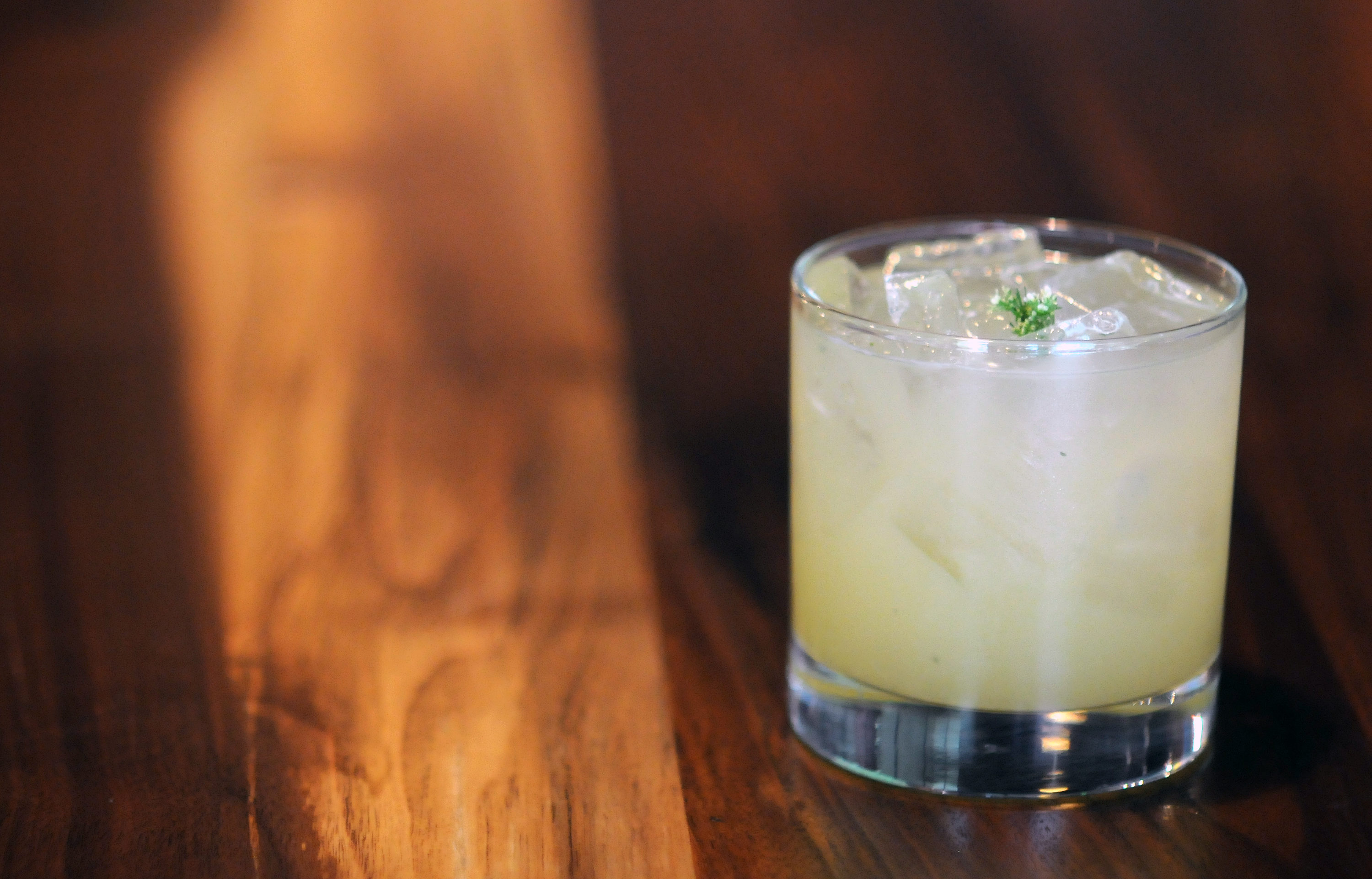
Foremost at the bar is the namesake Hanumanh cocktail, arriving in a ceramic monkey. Its base is Lao-style White Tiger whiskey, created locally but distilled from traditional sticky rice. Thompson infuses the whiskey with bananas, nutmeg, and cinnamon, adds brown-butter fat-washed condensed milk, and mixes in passionfruit and papaya puree: fruits that Hanumanh worshippers use as offerings to the monkey god.
Another favorite of Pradachith’s is the Som Nahm Nah, roughly translating as “you get what you ask for/what’s coming to you,” which is what his parents would say to him as a child. The drink, refreshing at the start, builds on gin and aquavit with lime, cilantro, and lemongrass—but ends with a strong kick from chilies and ginger.
Pradachith, in his effort to assemble a social space, assembles a menu of shareable favorites. The menu of 12-odd dishes rotates so often that it won’t appear online; Pradachith wanted “an opportunity to change the dishes around and play with seasonality and test-kitchen ideas—so we in the kitchen and the guests don’t get bored.”
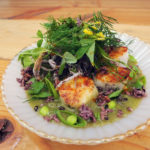
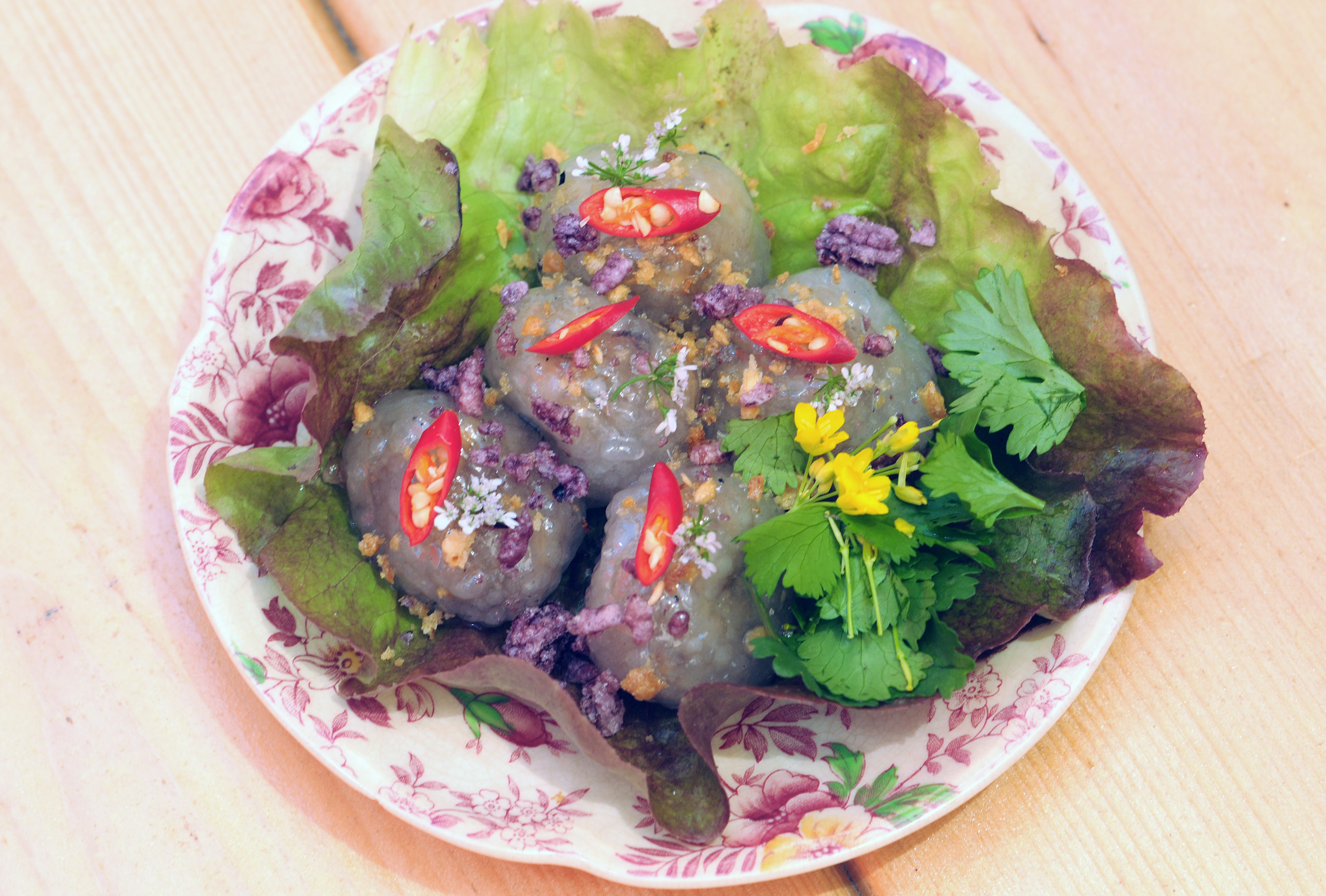
The menu is divided into appetizers, salads, and curries. One top-spot snack is sakoo yadsai, or tapioca dumplings. Pradachith melts salted radish, pork, and peanuts into a palm-sugar caramel as the filling. The dumplings are coated in puffed rice and fried garlic, and topped with sliced chilies and chrysanthemum leaves.
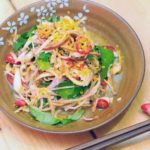
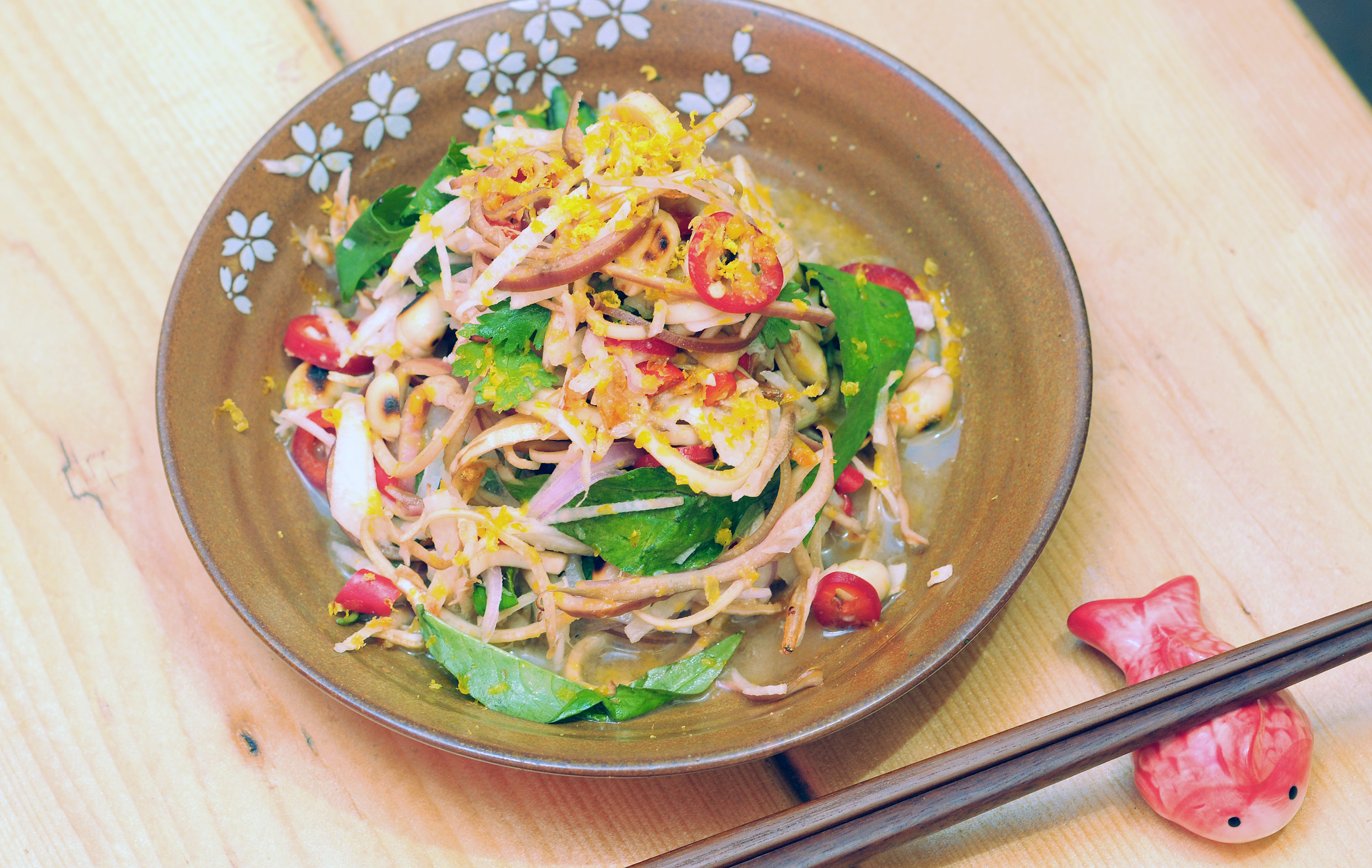
Another is the shaved banana blossom salad, made from the flower of the banana plant. With no resemblance to the starchy, sweet fruit itself, the blossom acts more like an artichoke, floral and bitter. The kitchen slices it thin and mixes it with jicama, toasted peanuts, and dried baby shrimp, tossed in a tropical-tangy tamarind-coconut fish sauce. It’s topped with fried shallots and salt-and-sugar-cured egg yolk shavings. The salad is a cousin of the ubiquitous papaya salad found in Southeast Asian night markets, but stands out with its use of the banana leaf, so infrequently found in the U.S.
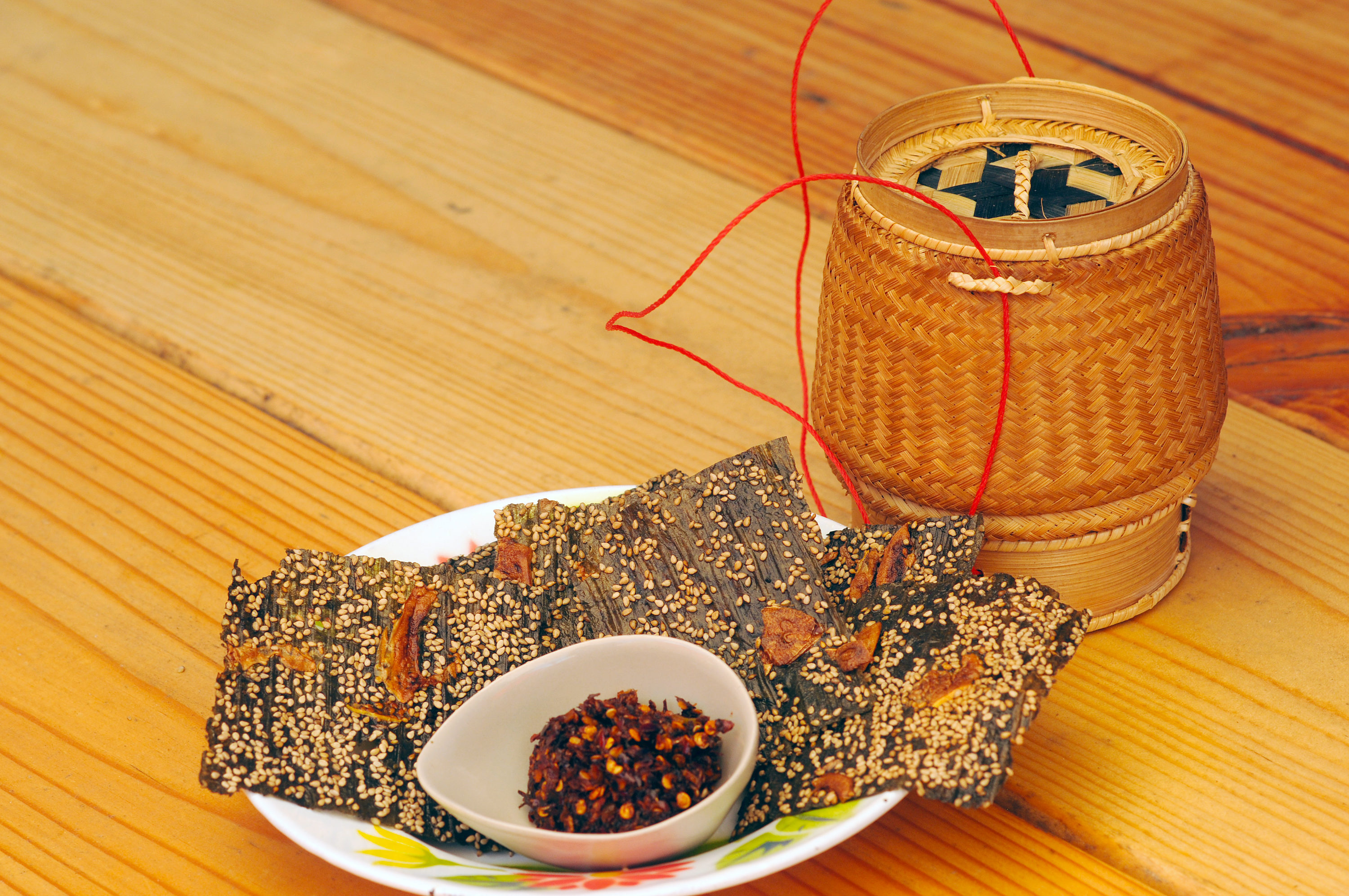
“We work with local farms and purchase their produce that resemble what we’d find in Laos—we can’t find many indigenous ingredients besides the ones we bring back in our suitcases from trips home,” he says. This includes sesame-flecked Mekong Delta-sourced seaweed served as a palate opener before the meal.
Pradachith explains that many Thai restaurants are actually owned and run by Laotian immigrants like his parents.
He and his family are leaning in on what it means to be Lao-American. “Instead of calling the item ‘pork dumpling’ we use the traditional name and present the dish with all of its funky, challenging flavors,” Pradachith says.
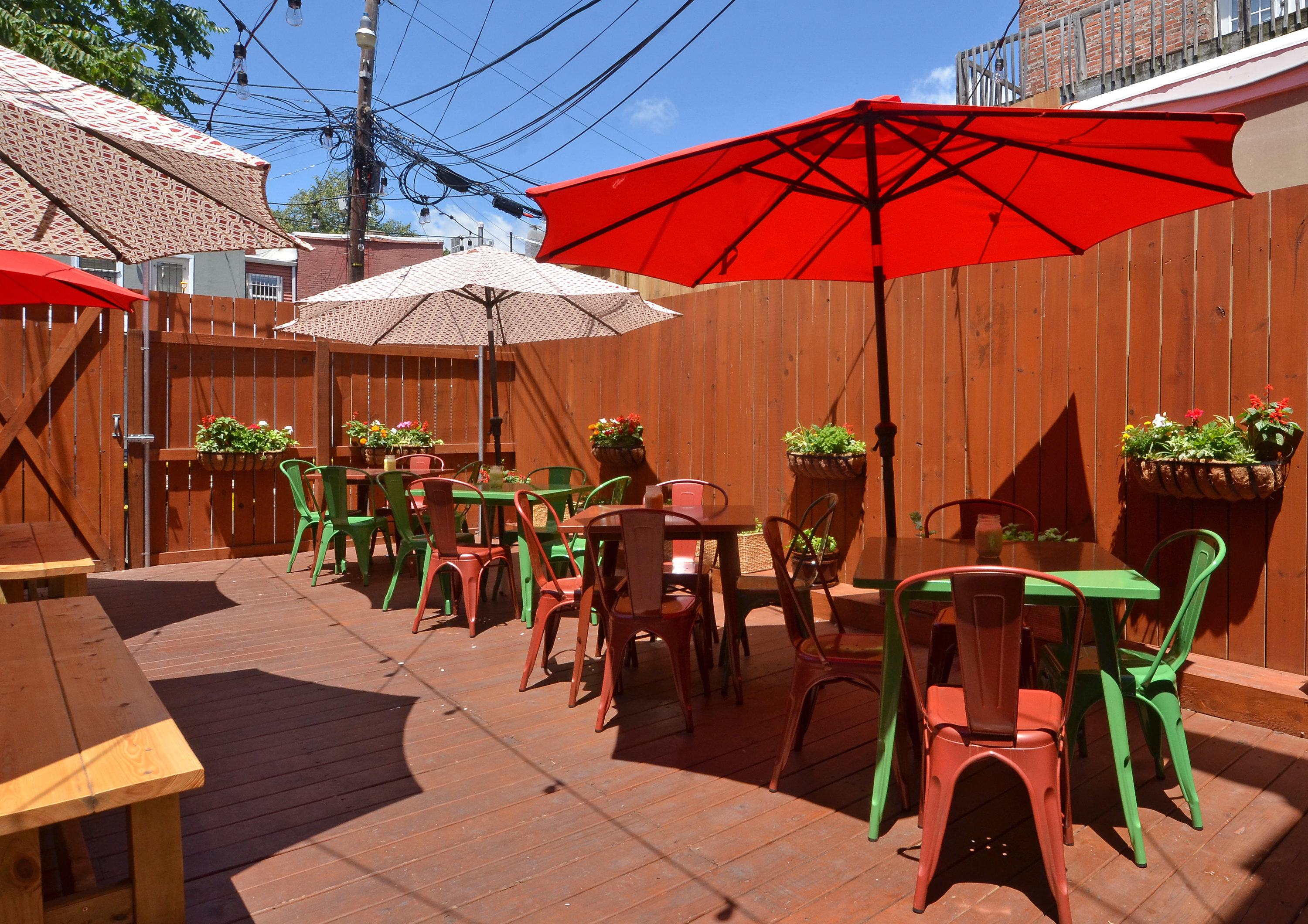
A backyard area welcomes boisterous guests at two umbrella-shaded communal tables and a smattering of four-tops. Pradachith envisions eventual daytime service with an even smaller menu alongside caffeinated beverages and other nonalcoholic drinks already on the menu, like herbal teas, shrubs, and infusions.
Hanumanh is located at 1604 7th St NW. Hours are 5 p.m.-12 p.m. Wednesday, Thursday, and Sunday and 5 p.m.-1 a.m. Friday-Saturday; the kitchen closes at midnight daily.