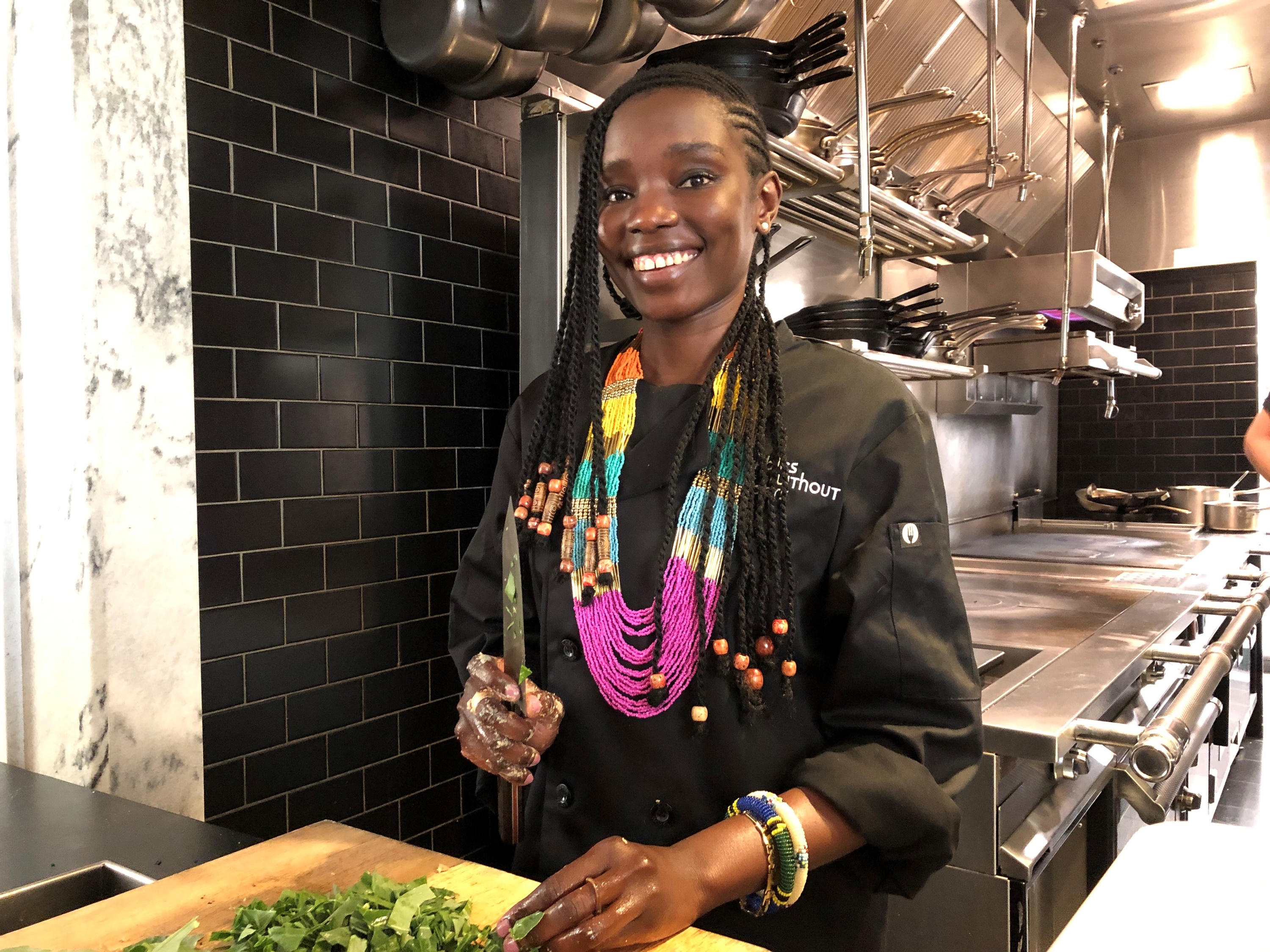
When Mary Apollo came to the U.S. in 2016, she didn’t know how to cook. So, like any homesick person longing for the flavors of familiar food, Apollo reached out to the one person who always knows best in these situations.
“I started talking to my mom by social media,” she says. “And then she taught me how to do it. She’d send me the recipe and she’d talk to me. So, this is how I learned how to cook.”
Back home in South Sudan, Apollo was a journalist and activist. She came to the U.S. as part of a State Department program for young professionals. Citing security concerns, she decided to seek asylum, leaving behind her parents and other family members. After three years, Apollo is still awaiting asylum.
In the meantime, she sharpens her culinary skills by swapping recipes with members of her Falls Church community.
“This is what we do back home,” she says. “When you cook or do something, you don’t eat it yourself. You go and share it with your neighbors. Or, you cook and then you give your neighbor a dish to test and they tell you what they think about it.”
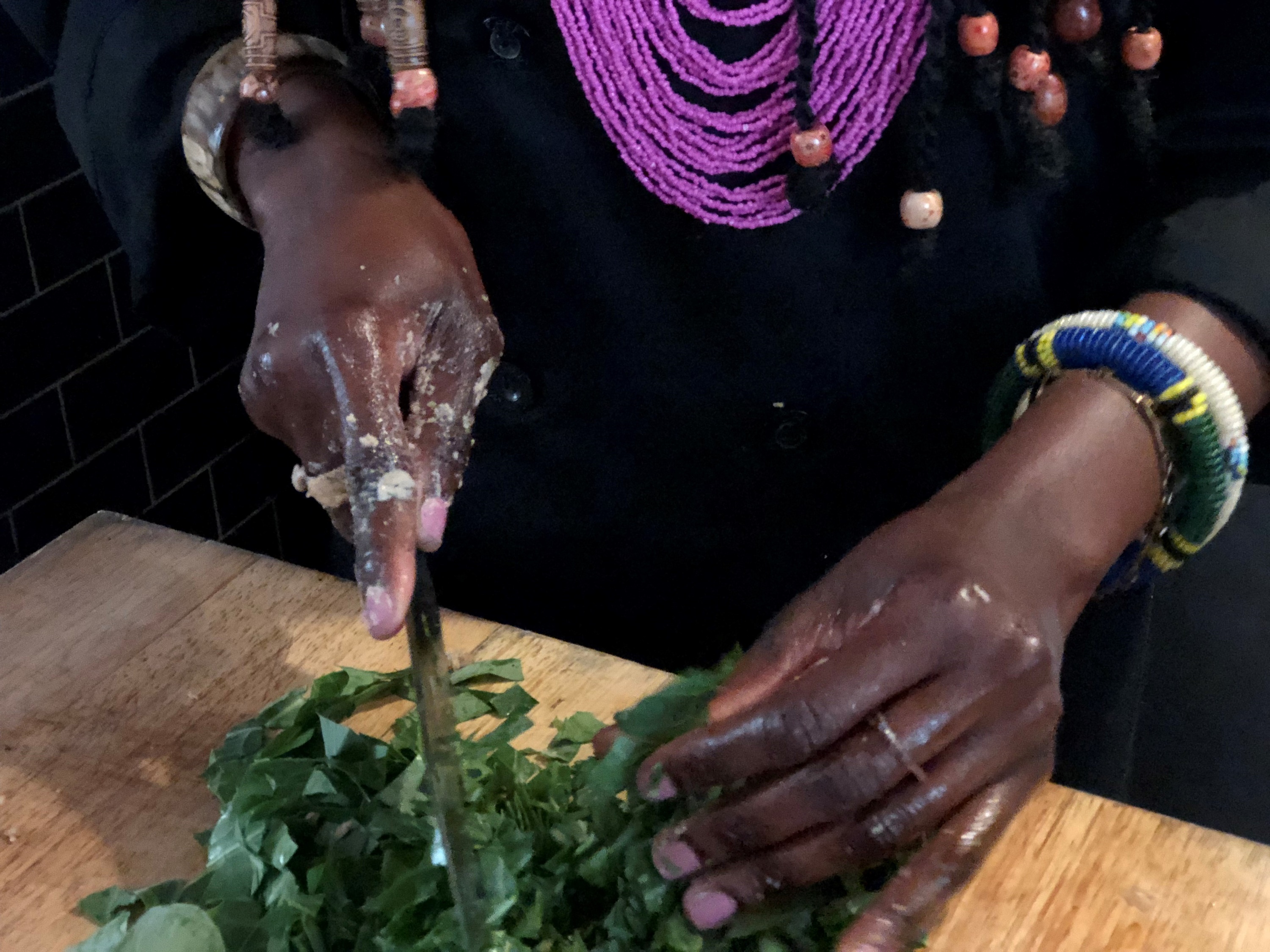
Apollo chops collard greens for use in her dish, basico. Her hands are sticky with a paste made of ground sesame seeds, also an ingredient in basico.WAMU / Esther Ciammachilli
The effort has paid off. As part of a new program called Tables Without Borders, Apollo is cooking alongside chef Patrick Crooks, known affectionately as Chef Opie, at A Rake’s Progress inside the Line Hotel in D.C. The program is in honor of World Refugee Week. Ahead of the event, Chef Opie prepared his interpretation of a traditional South Sudanese dish called bamia for Apollo to taste and critique.
“Bamia is traditionally a stew with lamb. And so, we have a little lamb loin on top that we grilled with cardamom and coriander, and a little charred onion relish that we kind of lacquered it with as it cooks,” he says describing the colorful and savory plate.
The dish is finished with tomatoes, pickled okra and fresh dill. It’s served on a small, round flatbread and topped with a savory brown sauce.
“The base for the stew [has] onions and garlic and tomatoes and cardamom. And so that’s like all in this little sauce right here,” Chef Opie says.
“It just makes me feel like home,” Apollo says as she smiles nostalgically.
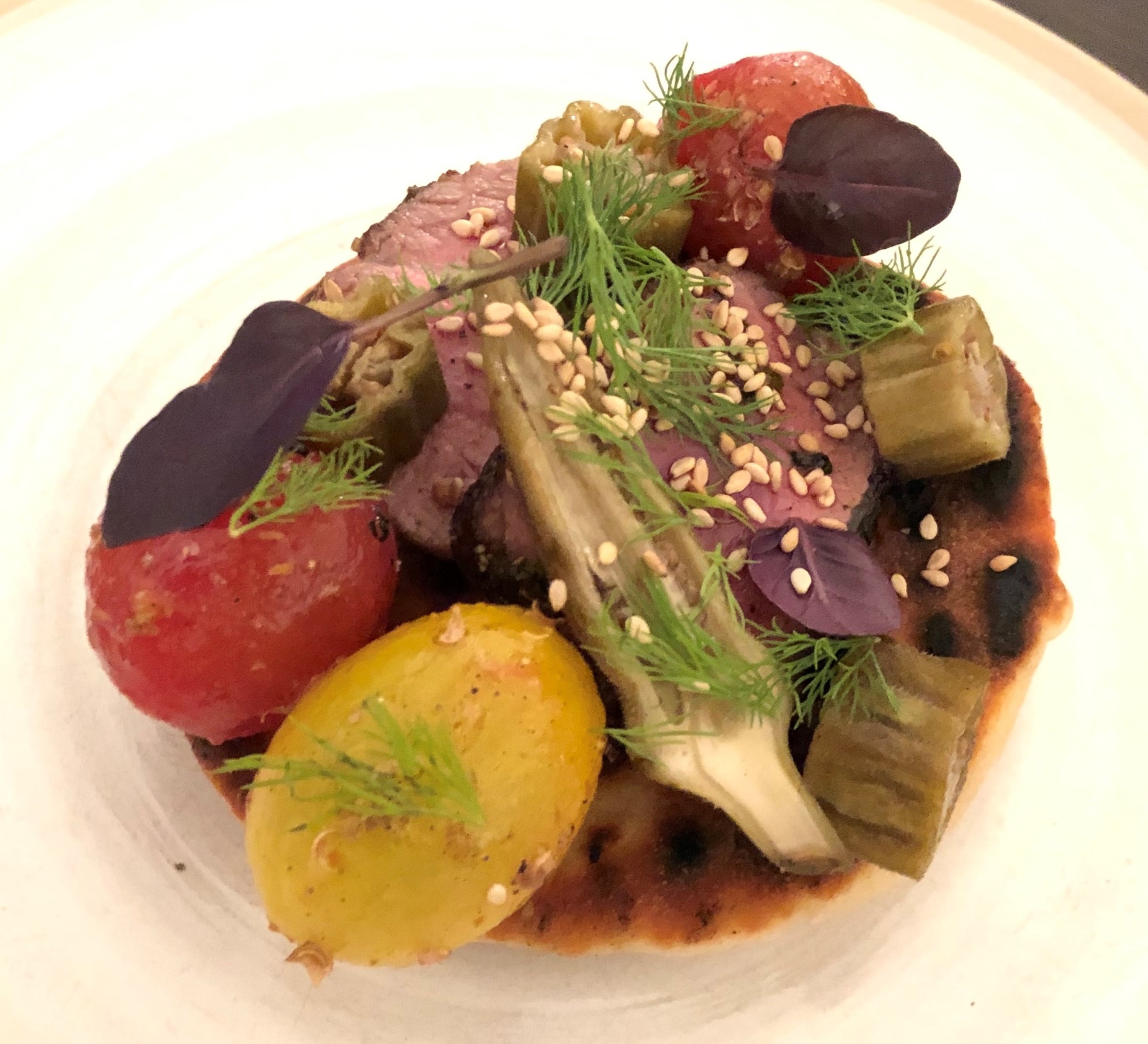
This is Chef Opie’s take on bamia, a traditional South Sudanese dish. It features lamb loin, okra, tomatoes and fresh dill on flatbread.WAMU / Esther Ciammachilli
Apollo is joined by refugees and asylum seekers from Afghanistan, El Salvador, Syria, and East Asia.
Program organizer Sara Abdel-Rahim says some participants were trained chefs in their home countries. For others, cooking was a skill born out of necessity.
“Some, like Mary, have come here and really developed these culinary expertise in their home country’s cuisine and been ambassadors for that type of cooking here in the U.S.,” says Abdel-Rahim.
Abdel-Rahim says the program is about more than just cooking. It’s about showing locals that there’s more to refugees and asylum seekers than what most of us see on the news. The vision of people fleeing desperate situations with nothing more than the clothes on their backs is one of many different experiences. Apollo is interested in human rights, and wants to promote South Sudan and Africa as a whole as more than just a place where people are starving and displaced.
“You have to work really hard and try to give people a different understanding on where you’re from. But through food and through these cultural events, people can actually see South Sudan and Mary as a human for who she is and what she brings to the table, literally and figuratively,” Abdel-Rahim says.
Apollo will literally give visitors to the restaurant a taste of her home country with a dish called basico. After the meal, she’ll continue to advocate for South Sudan and passionately represent the African diaspora in D.C.
Participating restaurants and their refugee chef partners include:
- Mary from South Sudan will cook at A Rake’s Progress on June 17
- Maria from El Salvador will cook at Espita Mezcalaria on June 18
- Qamar from Syria will cook with Little Sesame at the Apollo on June 19 and 20
- Nejat from Afghanistan will cook at Maydan on June 21
- Hurriyet, a Uyghur refugee from China, will be paired with Himitsu on June 22
Space is still available for the dinners on Monday and Tuesday.
This story originally appeared on WAMU.