Rachel Kurzius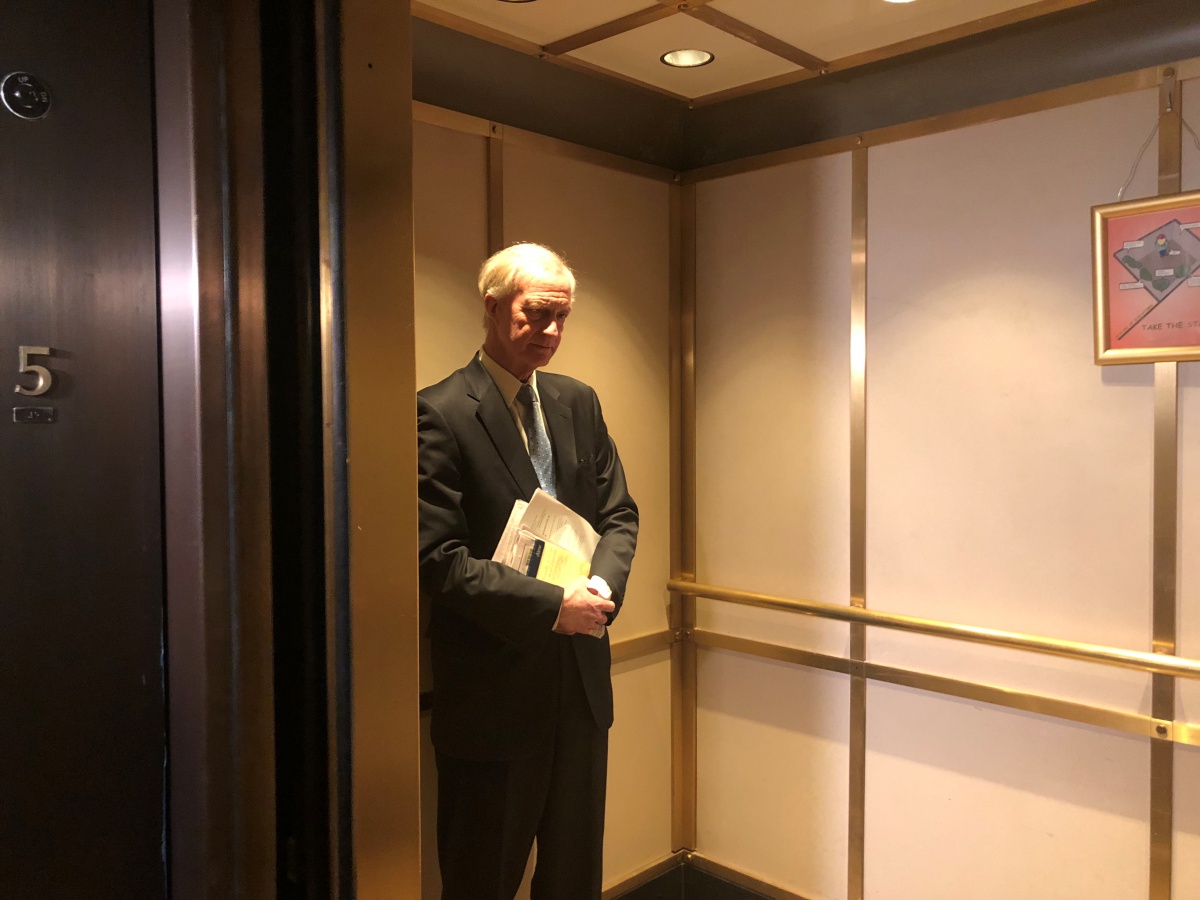
Jack Evans is resigning from the Metro Board of Directors after the release of a 20-page memo outlining his violations of the transit agency’s ethics code and compact.
Evans sent a letter to D.C. Council Chairman Phil Mendelson stating that he will step down from the board on June 27, when his term as chairman ends, though he does not give a reason why. The resignation was first reported by Tom Sherwood.
It’s been a busy week for the so-called “Mayor of Metro,” who faced an inquiry into possible conflicts of interest from the WMATA board’s ethics committee. On Wednesday night, Evans acknowledged that he violated the transit board’s ethics code, in a reversal from earlier this week. Now, new information contained in a 20-page memo from the law firm that investigated Evans is shedding further light on his actions.
So what, exactly, did Evans do?
“Our investigation uncovered a pattern of conduct in which Evans attempted to and did help his friends and clients and served their interests, rather than the interests of WMATA,” write lawyers Adam Hoffinger and Jeffrey F. Robertson of Schulte Roth & Zabel in a memo released in full by the Washington Post. “Evans did not disclose his consulting and personal relationships, and he did not recuse himself from any WMATA-related transactions, discussions, or issues.”
The memo outlines the various ways in which the investigation determined Evans violated both the WMATA Code of Ethics and the WMATA Compact since rejoining the board in 2015. Here’s what it says:
- Evans had agreements to receive a total of $325,000 annually in consult work for a total of 10 entities, none of which he disclosed to Metro. He never recused himself from any votes or issues while serving on the WMATA board.
- At least one of those clients, Eagle Bank, was a WMATA vendor, and two others (Colonial Parking and Digi Media) were looking to do business with the transit agency.
- Evans was “vague” about what services he provided to his clients, but there’s insight in a business plan that has since been made public (and has led to the D.C. Council’s reprimand of Evans).
- In the email to potential private sector clients, Evans said he would “leverage my contacts and relationships” as board chairman. The probe found that Evans made edits to the document, but chose to leave in the language that ultimately led to his reprimand and the Metro ethics investigation.
- Colonial Parking’s parent company, Forge, became a client of Evans’ private consulting business, NSE, in 2016. At first, NSE received $25,000 annually, but that amount rose to $50,000 mere months later. Evans never disclosed the consulting agreement with Metro, nor his “close personal friendship” with Rusty Lindner, Colonial’s CEO, but took an “active role” in parking issues and tried to replace LAZ Parking, Metro’s parking vendor, with Colonial.
- Evans called upon Metro’s inspector general to investigate LAZ three separate times, criticized LAZ and Metro’s proposal process (he also raised concerns about the proposal with the D.C. Council), and shared internal information with Lindner, some of which was not publicly available.
- Evans acknowledged in an interview with lawyers at Schute Roth & Zabel that his efforts were “prompted by Lindner and were based on information that Lindner provided to Evans for the purpose of discrediting LAZ.”
- The memo determines that Evans violated his duty to avoid conflicts, his duty of loyalty, the ban on seeking assistance of WMATA personnel, and used his official position for personal gain, all under the WMATA ethics code, as well as violating the WMATA compact by having a financial interest in Metro’s existing business relationship with LAZ Parking, and for soliciting and accepting money related to his official duties.
- Digi Outdoor Media is a sign company with which that Evans has had a controversial relationship that has prompted a still-ongoing federal inquiry. The memo says that Evans’ actions on behalf of Digi are similar to those for Colonial in many respects
- Digi and Evans had two consulting agreements, each for $50,000 annually, that were agreed upon in early August 2016. Evans did not disclose this to Metro. By the end of August, Evans returned the checks to Digi without cashing them.
- Before returning the checks to Digi, Evans went on vacation. While he was away, one of his D.C. Council staffers emailed a Metro employee and requested that Metro workers help Digi access WMATA property after hours to install digital signs. (A month later, D.C. Attorney General Karl Racine sued Digi for putting up a slew of electric signs without permits, and despite the city’s orders for the company to stop.)
- While Evans’ staffers made that request of WMATA employees, Metro was simultaneously working to install its own digital signs, thereby “competing with Digi for advertising revenue. To the extent Evans’ staff was seeking to assist Digi to install its signs, it was placing the interests of Evans and Digi above those of WMATA.”
- The memo determines that Evans violated his duty to avoid conflicts, the ban on seeking assistance of WMATA personnel, and used his official position for personal gain, all under the WMATA ethics code, as well as violating the WMATA compact by soliciting and accepting money related to his official duties.
The majority of the Metro board ethics committee agreed that Evans violated ethics rules only in the case of Colonial Parking, where it found that he failed to disclose a conflict of interest.
Following media reports of potential wrongdoing, the board’s ethics committee began looking into the allegations against Evans in March and wrapped up in May. But for more than a month, the results of that investigation were kept secret, in a lack of transparency criticized by the governors of Maryland and Virginia, among others.
WMATA board member Christian Dorsey, who represents Virginia, says that he saw the 20-page memo for the first time last night because the ethics committee “kept it really close to the vest.” (Dorsey himself is not on the ethics committee.) While Dorsey still has questions about the report, he says its findings are “incredibly troubling,” in particular, the instance regarding Colonial and LAZ parking.
While Dorsey says the investigation into Evans is an example of “Metro policing itself … [and] acting in the public’s best interest,” he adds that the “information did not come out in any kind of a coherent way. That’s all been very disappointing to watch.”
Maryland Governor Larry Hogan has been calling on Evans to resign from the Metro board for at least a month. Now, Virginia representatives Gerry Connolly and Don Beyer have joined the call, as have D.C. At-large Councilmembers David Grosso and Elissa Silverman. The D.C. Council reappointed Evans to his four-year term as a board member at the end of 2018. He also represents Ward 2 as the longest-serving D.C. councilmember, where faces reelection in 2020 and a recall effort.
Since returning to the Metro board in 2015 after previous stints in the 1990s, Evans made it a priority to secure the transit agency with a dedicated funding stream. In 2018, he succeeded, and WMATA now has $500 million in annual funds from D.C., Maryland, and Virginia. He often played good-cop/bad-cop with General Manager Paul Wiedefeld, including at a contentious Congressional hearing, though he and Wiedefeld had public disagreements about the agency’s decision to cut down late-night service.
Mayor Muriel Bowser has previously defended Evans and chided Virginia and Maryland governors for poking into the matter. After Evans admitted the violation, Bowser said she will have “further discussions with Jack,” but would not elaborate, saying “that’s it, that’s my answer.”
Jordan Pascale contributed reporting.
Previously:
Jack Evans Admits He Violated The Metro Board Ethics Code (After First Denying It)
Council Votes To Strip Jack Evans Of Some Finance Committee Responsibilities In Wake Of Ethics Scandal
D.C. Councilmembers Receive Subpoenas For Their Conversations With Jack Evans
Notes On A Scandal: WTF Is Going On With Ward 2’s Jack Evans?