 Jordan Pascale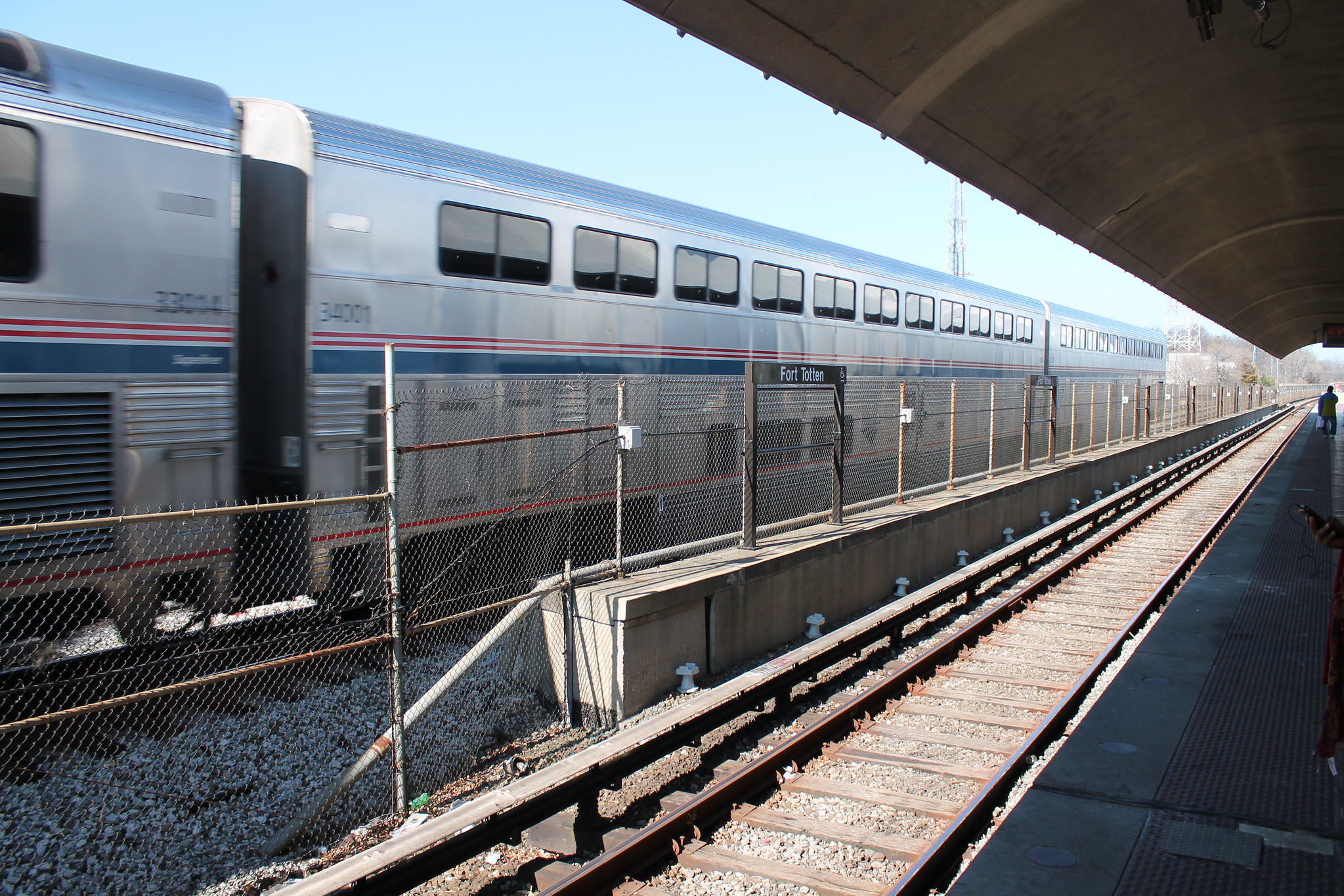
Saturday marks the 10-year anniversary of the deadliest crash in Metro history.
On June 22, 2009, a steamy hot day, a southbound Red Line train was heading from Takoma to Fort Totten at rush hour. Sensors in the tracks were malfunctioning. The train’s computer controls did not see that another train was stopped just around a turn. Train operator Jeanice McMillan slammed on the emergency brake, but was too late. The train crumpled and cars ended up on top of each other.
The crash killed McMillan, as well as eight passengers. Another 80 passengers were injured.
It was a wake-up call for both Metro and national transportation safety officials. The decade since the crash has seen WMATA prioritize safety and rethink the use of automated train operation, though that system was never faulted in the crash.
Today, Legacy Memorial Park sits just off New Hampshire Ave. in Northeast D.C. near the crash site. Nine stone columns represent the nine victims of the crash. Trees form a canopy representing the network of families, friends and first responders affected by the tragedy. From the park, you can hear the Red Line trains rumble behind you, but you can’t directly see the site of the crash.
Families and friends are set to gather in the park on Saturday at 10 a.m. for a memorial service.
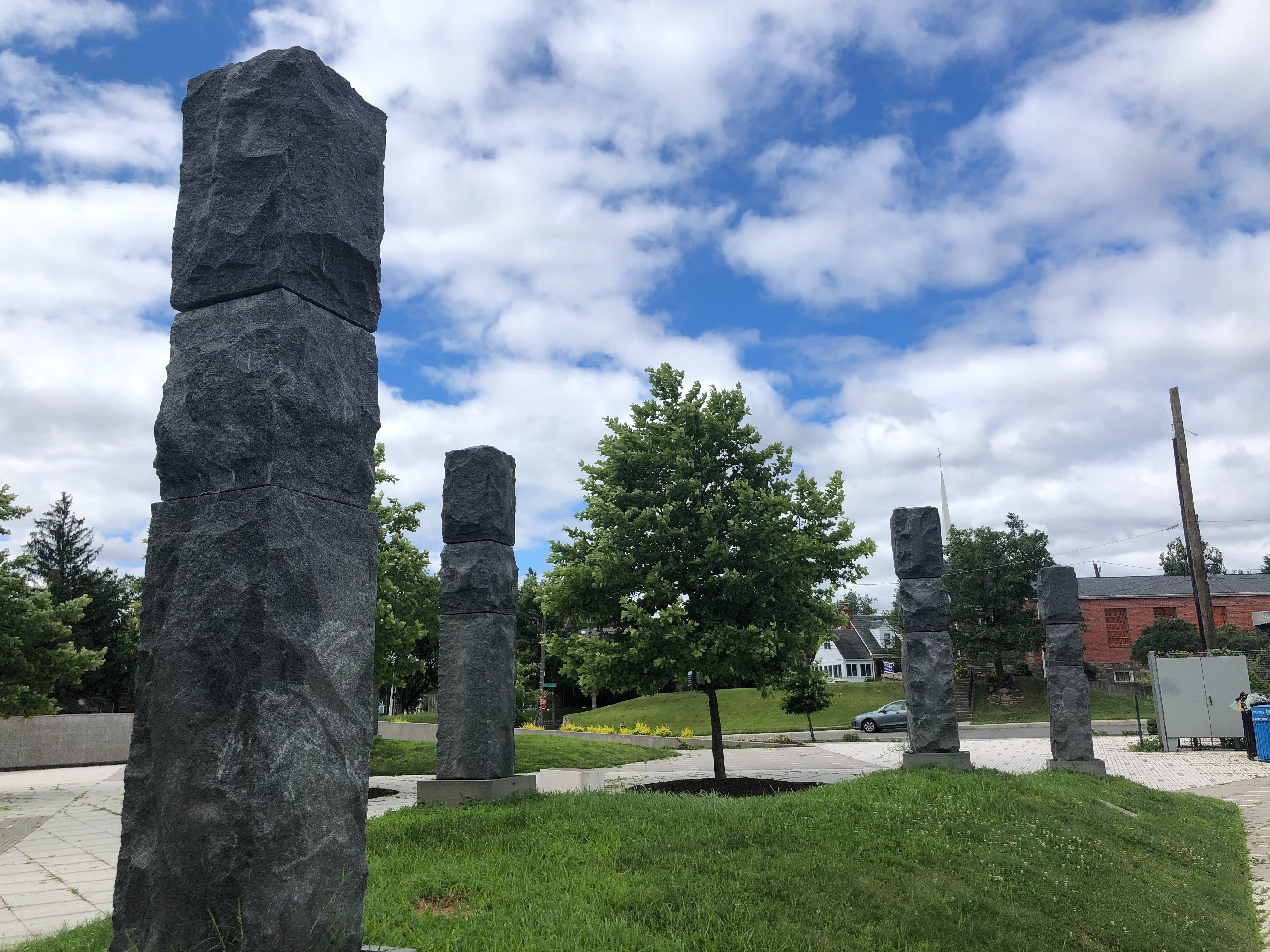
Nine columns in Legacy Memorial Park represent the victims in the crash. The park is site for a memorial service Saturday.
Dabney Hudson was one of the first firefighters on the scene that day. He had worked a full shift already when the call came in. He remembers the confusion over the radio, not being able to understand what exactly had happened and where.
When he arrived at the scene, he found trains stacked on top of each other and an eerie quiet.
“You run to this train wreck, you’d think there’s all sorts of chaos and commotion of loud noises,” Hudson says. “But it was quiet … there are some people just kind of walking down the tracks … they’d gotten off the train, not really sure what had just happened.”
Rescue workers directed passengers to a safe area away from the electrified third rail. Passengers had increasingly serious injuries as crews moved closer to the crashed cars. Hudson worked with the heavy equipment unit to pull people from the wreck. He tried to free two people that later died.
“We’re in the mindset of when we show up, we’re going to make everything better,” Hudson says. “We’re going to make sure that everybody goes out, and we’re going to make sure to the best of our ability, that no one dies. There was an unfortunate loss of life. These are people that didn’t get to go home to their loved ones after that day. That is never an easy day.”
The recovery and clearing the crash took days. Trains would not run on that stretch for another five days.
A years-long investigation by the National Transportation Safety Board followed the crash. The reckoning for Metro has gone on ever since.
“One of the things that we found was that WMATA at the time really lacked a safety culture,” says David Mayer, who was managing director at the National Transportation Safety Board at the time. “There was not a safety committee. The board of directors and the top of the organization weren’t paying the attention to safety that thankfully they are now.”
Mayer oversaw the crash investigation and now heads the newly-established Metrorail Safety Commission. He says the crash could’ve been prevented.
“A WMATA engineer studied two similar near-miss crashes and developed a test procedure that, if institutionalized, could have prevented the Fort Totten collision,” he says.
Trains were operated on Automatic Train Control at the time, a partial auto-pilot of sorts. Sensors in the tracks were meant to keep trains a safe distance apart.
“Technically it’s a pretty complex accident, but essentially, the system that is designed to detect the presence of trains erroneously reported that the tracks ahead were clear,” Mayer says. “In the weeks and months following the crash, WMATA essentially rebuilt the entire signaling system along the Red Line to make sure that the same loss of detection wouldn’t happen again.”
Still, Metro had operators run the trains manually to prevent similar crashes. Metro has still not returned to automatic operation, though some automation—like the opening of train doors at stations—is coming back online shortly. Metro officials said full automation was close to returning, but now has been shelved.
Metro also got rid of its oldest, 1000-series trains. They were susceptible to telescoping, where one car could penetrate the next car in a collision. Newer cars are supposed to avoid such situations.
Metro General Manager Paul Wiedefeld has made it his focus to foster a “safety culture” in the organization. And while Metro still is sorting out numerous problems—decreased ridership, increased costs and other issues—many safety advocates say Metro is heading in the right direction.
“In recent years, WMATA has done a great deal to professionalize its safety department to be able to ensure that we can learn from near misses and incidents in a way that just simply didn’t happen many years ago,” Mayer says. “Safety is something that is talked about and viewed as important from the top down now.”
For many years, Metro had been focused on creating new lines rather than maintaining what existed. That changed after the crash.
“Some of the skills that were necessary to do a good job institutionalizing good work practices and good maintenance activities just really had either died out or not fully been developed in the first place,” Mayer says. “The Fort Totten accident really gave them a need and a reason to focus on that.”
Metro spokesperson Sherri Ly said the transit agency now operates with the overriding philosophy that “safety trumps service, as we demonstrated with the emergency shutdown of the entire rail system to inspect power cables, to the year-long SafeTrack program, to the current effort to address the structural integrity of platforms.”
Metro also says its metrics to measure reliability are improving.
“While the work to foster a safety culture is never done, and while there is more work to be done to rebuild the system, we believe that Metro is on the right track to restoring the system that residents of this region expect and deserve,” Ly wrote in an email.
At the time, now-Mayor Muriel Bowser was councilmember for Ward 4, where the crash happened. She later served on Metro’s board from 2011 to 2015. She says securing dedicated funding and establishing a 15-year maintenance plan is key for the future of the system.
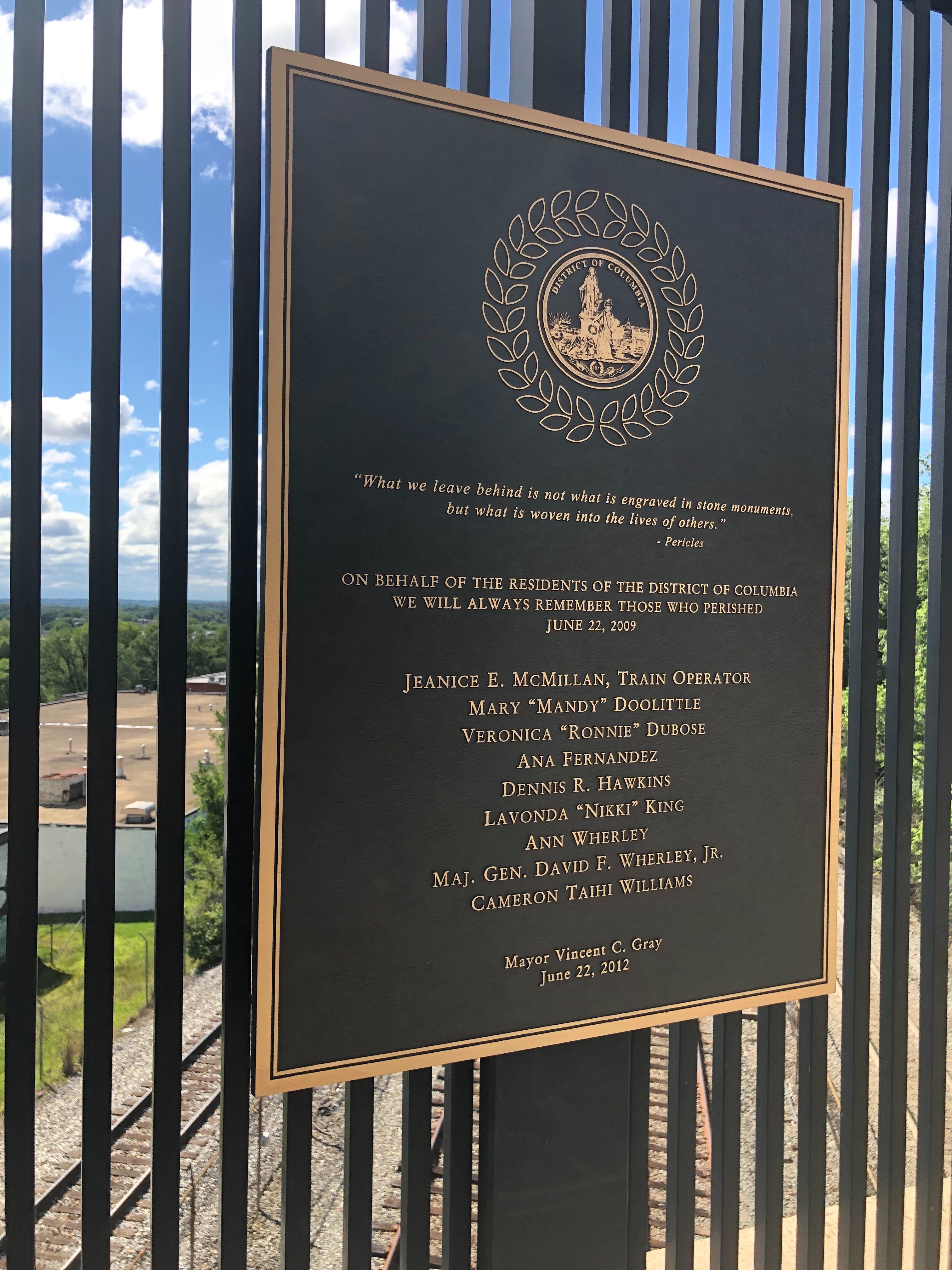
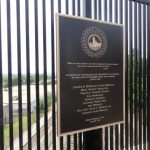
A plaque above the crash site was placed on the three-year anniversary of the accident.
“We never want to see a crash like that and we’ve done everything in our power to make sure Metro has the resources and oversight it needs,” Bowser says.
Mayer says there’s always risk while operating trains, but Metro is a long way from another crash happening again.
“I tell people that safety is really a journey,” Mayer says. “There’s always going to be room to improve and to grow.”
This story originally appeared on WAMU.