 Jordan Pascale
Out with the old, in with the new.
Embattled D.C. Council member Jack Evans held the gavel as Metro board chair for the last time Thursday.
He also got an acrylic plaque for his four years of service on the board.
“Notwithstanding the recent events, I feel it is appropriate to recognize the former chair for his four years of work on behalf of WMATA,” new board chair Paul Smedberg said before giving him the award and listing Evans’ work.
Evans is stepping down from the board after an ethics investigation that found he had a “pattern of conduct” in which he put his friends’ and clients’ interests above WMATA’s.
The meeting was the first since details of the investigation were released to the public and Evans submitted his resignation letter.
In his farewell speech, Evans gave a top 10 list of accomplishments during his tenure including securing dedicated funding from the region, hiring General Manager Paul Wiedefeld and, he said, getting the system back to safety and reliability.
Evans did not address the ethics violations Thursday, but has previously criticized the investigation memo saying it was inaccurate. He also previously denied that the ethics committee found violations. That assertion was incorrect.
He’s asked the D.C. Council to hear his side of the story before they strip him of the chairmanship for the finance committee. He’ll address the Council on July 2.
Evans still faces a federal probe and an independent investigation by the Council.
And the D.C. Council still needs to appoint a new Metro board member. Alternate board member Tom Bulger will take Evans’ place until a new member is appointed. An alternate member steps in when other board members from their jurisdiction are not available. Bulger has been an alternate member since 2011.
Some have also called on the Council to remove Corbett Price, who falsely said no violations were found by the ethics committee.
Both Evans and Price left Thursday’s meeting before reporters could ask them questions.
Smedberg hopes to restore rider confidence
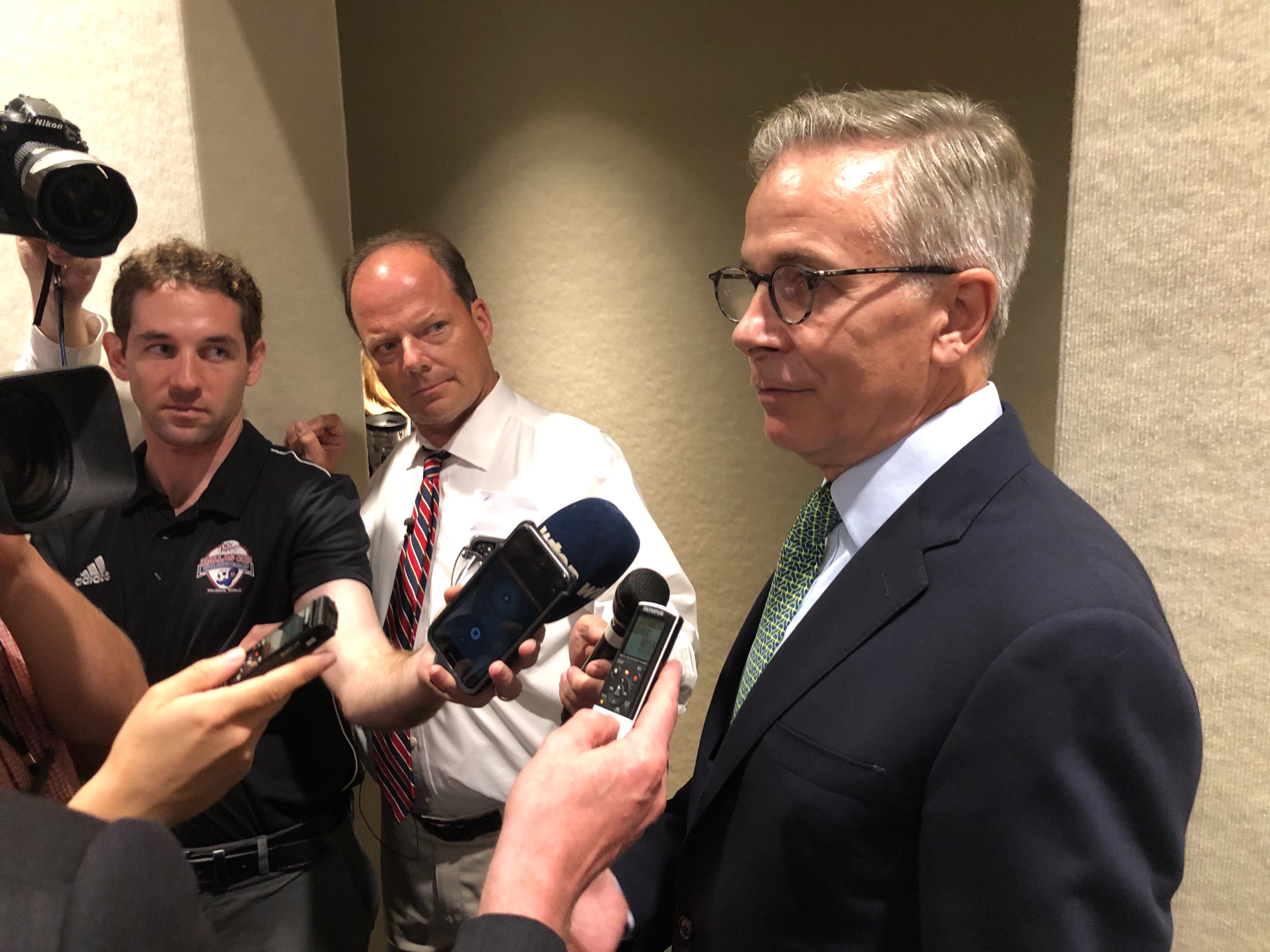
New WMATA board chair Paul Smedberg answers questions from the media after the June 27th board meeting.
Smedberg, a Virginia board representative, will look to calm the waters after weeks of controversy surrounding the board’s ethics investigation into Evans.
“It’s truly an honor to be elected chair,” Smedberg said. “I’m focused on the future.”
He said his priorities were pushing through ethics reforms, making sure the $150 million in annual federal funding is renewed and continuing momentum on a customer focus. Increasing ridership and winning back rider confidence is one of his top priorities, he said.
“We’re going to move forward in a positive way and turn the page,” Smedberg said.
Smedberg said he does not think the board’s reputation is sullied after the Evans investigation.
Smedberg joined the board as an alternate in January 2016 and elevated to a principal member this January. Professionally, he’s a government affairs officer for numerous associations in the medical field.
Smedberg lost his re-election bid for Council last June after serving five terms on the Alexandria City Council starting in 2003. He’s served on the Northern Virginia Transportation Commission, which deals in public transit issues and appoints WMATA board members and on the Virginia Railway Express board.
He told the Alexandria Gazette at the time that a Freedom of Information Act disclosure regarding a canceled southern entrance at the Potomac Yard Metro Station hurt his candidacy.
Smedberg had said in an email to residents that drawings without the second entrance were not final, but later revealed that a second entrance was not coming. When Amazon announced it was coming to the area, the state said it would put the second entrance back in the project. Now that appears to still be in flux.
Crawford recommends ethics committee reforms
Public officials have criticized the way the WMATA ethics committee botched communication and documentation during the Evans investigation.
Ethics Committee Chair Clarence Crawford is recommending a number of reforms like mandating written reports, involving the inspector general in an investigation and having an odd number of members to avoid tie votes. The committee could not come to a conclusion on some allegations against Evans because of ties.
A letter to the board also called for creating a public written report of findings and a full board resolution to close matters. The ethics committee did not comment on the investigation after it was closed and said it was following the board’s code.
The committee did not say anything about the investigation until local government officials and the Maryland and Virginia governors called for the release of the findings. Then the Washington Post released the full 20-page report outlining the investigation.
Crawford will not be able to see the reforms through, however. He is being replaced by Maryland Secretary of Transportation Pete Rahn, which is required as part of the dedicated funding legislation.
New Huntington station entrance approved
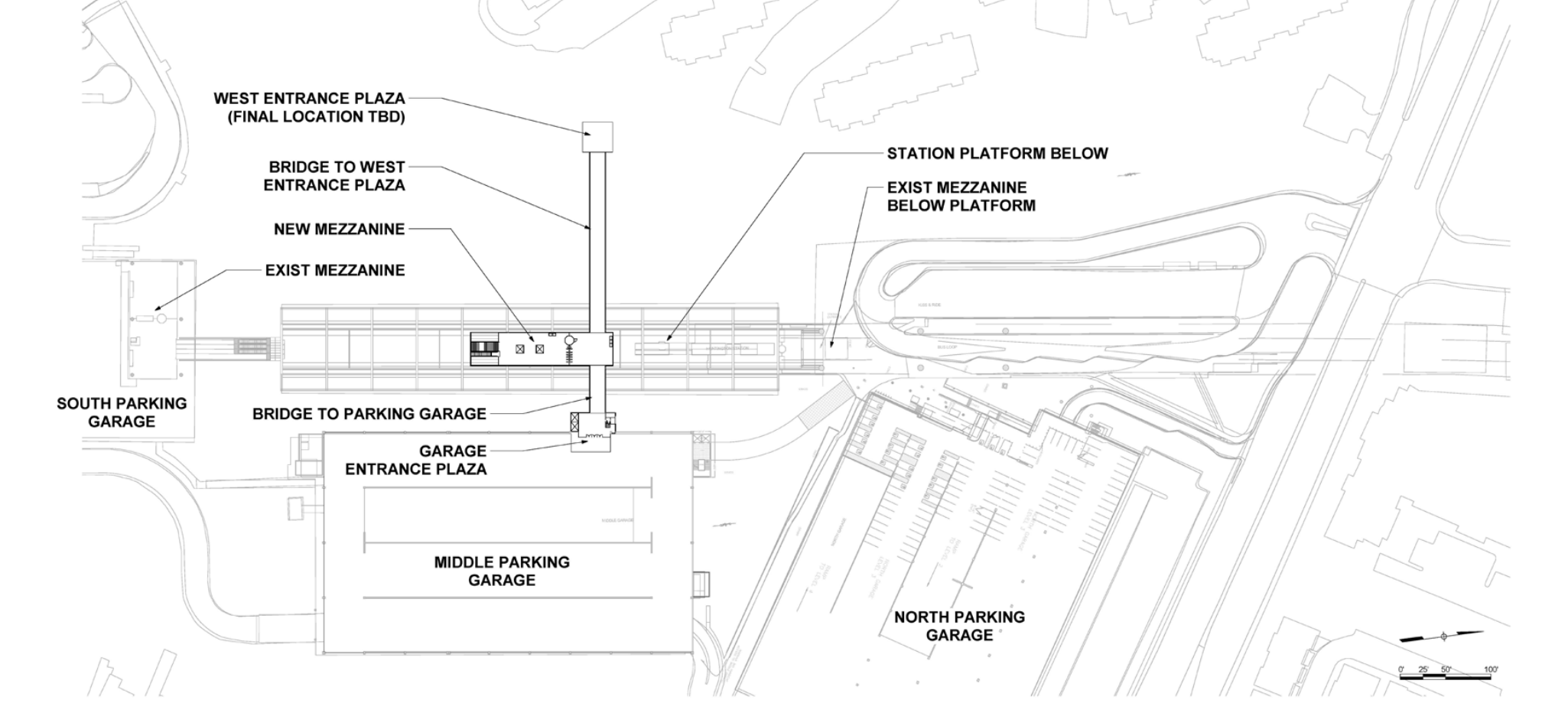
Metro is building a new entrance to the Huntington station to replace one at a soon to be demolished garage.
But board personnel changes didn’t take up the entire agenda at Thursday’s meeting.
A new entrance from the middle garage to the Huntington station is part of a $300 million budget increase request. It should open by 2021. Then the old garage will be demolished.
The entrance was one of several budget adjustments that will cost each jurisdiction about $400,000 more than expected.
Other news
- Metro says the Dupont chillers should be back online in July after years of problems. NBC 4 reported a DDOT lamp post was in the way of the chiller work and needed to be relocated. The lamp post was not in project drawings and set the project back a few weeks, a Metro spokesperson said.
- The Kids Ride Free program in Montgomery County is expanding its hours. The board approved the change to expand it from school hours to all day, including the summer. Montgomery County is covering the $900,000 cost.
- The “this is a 7000-series train” announcements are going away soon. The announcements began last year to alert riders with visual impairments of the unsafe between-car-barriers. Multiple riders with impairments had fallen onto the tracks between the cars, but in the last year Metro replaced the barriers with chains. The announcements confused riders early on but have since become somewhat of a meme in the online transit community.
This story first appeared on WAMU.