Natalie Delgadillo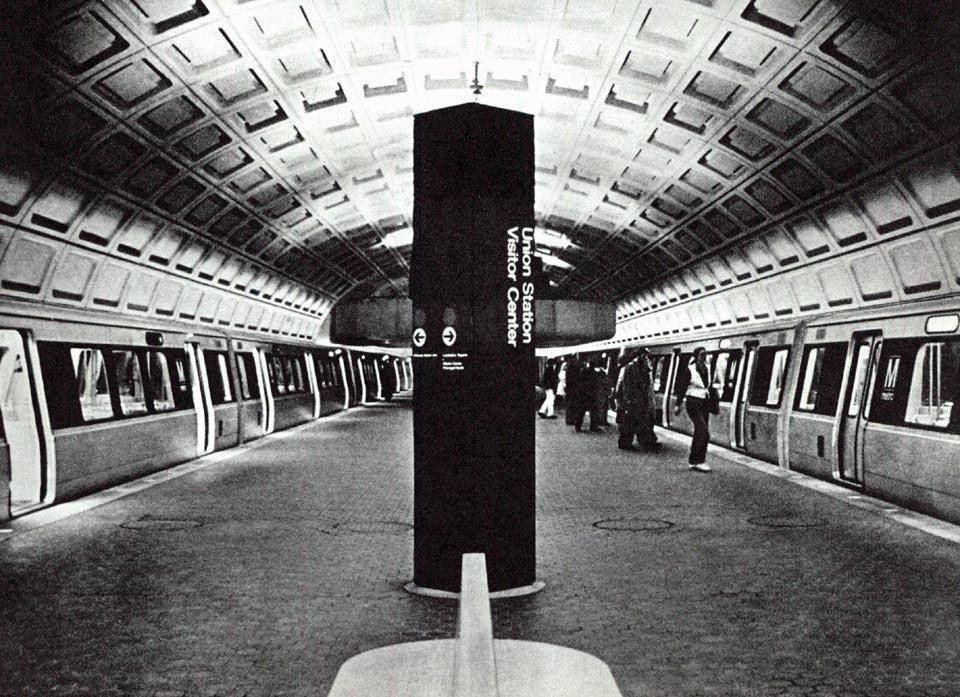
Update 7/22
The cooling system at Union Station is now back online and pumping chilled air into the station, says Metro spokesperson Sherri Ly.
Update 7/18:
The cooling systems at Union Station, Dupont Circle, and Farragut North are still broken. Repair work at Union Station is set to begin Friday, and should be finished within one to two weeks, according to Metro spokesperson Sherri Ly. The repairs at Dupont Circle and Farragut North, which share a chiller, were delayed, but crews are now “working on an accelerated schedule with the goal of restoring chilled air service by late July or early August,” Ly says.
Original:
Here’s a thing you may (or may not) be surprised to learn: none of the Metro stations in the D.C. area have actual air conditioning. The design of the tunnels makes effectively cooling them with a traditional air conditioning system impossible, says Metro spokesperson Dan Stessel.
Instead, the transit agency uses a cooling system that functions via cold water, chilled at a chilling plant. That water is run through pipes that then produce chilled air for the Metro station (see a video explanation here). Even operating at its peak, Stessel says, this system isn’t really capable of bringing the Metro stations down to room temperature—the most it can do is bring the heat down about six degrees from whatever the ambient temperature is outside.
But six degrees makes a difference. At three stations across the system, riders can feel it.
The cooling systems at the Farragut North and Dupont Circle Metro station, which use the same chilling plant, have been broken for four years. Thanks to aging pipes, the system hasn’t been able to effectively move cold water from the chilling plant that services both of the stations since 2015.
That doesn’t mean the stations have been insufferably hot for all that time—last year, for example, the transit agency set up a large temporary chilling station on the street to service those stations and help bring temperatures down, Stessel says. But this year, expecting to have the permanent fix in place before it got too hot, Metro made no such arrangements. And after the transit agency missed that deadline, those stations have felt more or less like a fiery inferno since late May.
The cooling system at Union Station is broken, too, and has been since last month.
Both of the chillers in question are some of the oldest in the Metro system, Stessel says—they date back to the day the system first opened its doors in 1976. Because of that, the pipes running cool water to the Metro stations have suffered degradation, especially at Farragut North and Dupont Circle. When the system first discovered the damage to pipes carrying water under Connecticut Avenue near Farragut North, Metro tried to fix it with minimally invasive solutions, like pumping sealant through the piping, Stessel says. It didn’t work, and it soon became clear that crews would have to replace the pipes altogether in this underground stretch.
That’s taken a long time, but the agency says it’s now in the home stretch. The pipes were supposed to be replaced and the cooling system back on by May 15 this year, but crews ran into a problem: as they worked, they encountered an unforeseen street lamp that wasn’t in engineering drawings of the area. They had to stop work and go ask the District Department of Transportation for permission to tear the street lamp out while they worked, Stessel says. Now that all that’s done, the stations should have cooled air back by the end of next month, he says.
There’s been a delay at Union Station, too. Metro only owns a small part of land at the station, and the cooling pipes extend into property owned by Amtrak and the Union Station Redevelopment Corporation. Right now, the transit agency is waiting on permission from Amtrak to make fixes in an area that belongs to them, Stessel says.
This week, the cooling system at the Stadium-Armory station was also broken for several days, but the problem has since been fixed, according to Metro.