Jacob Fenston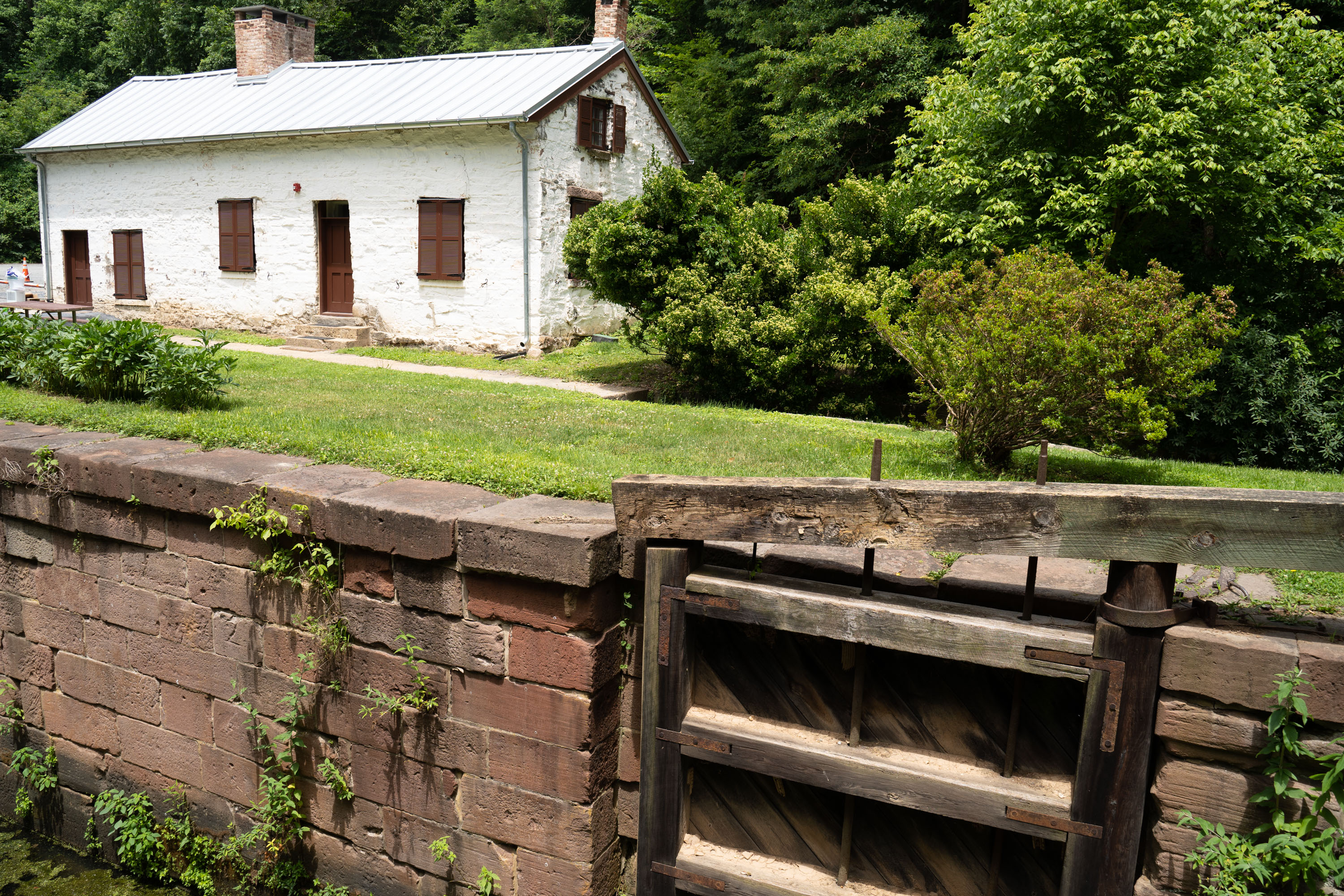
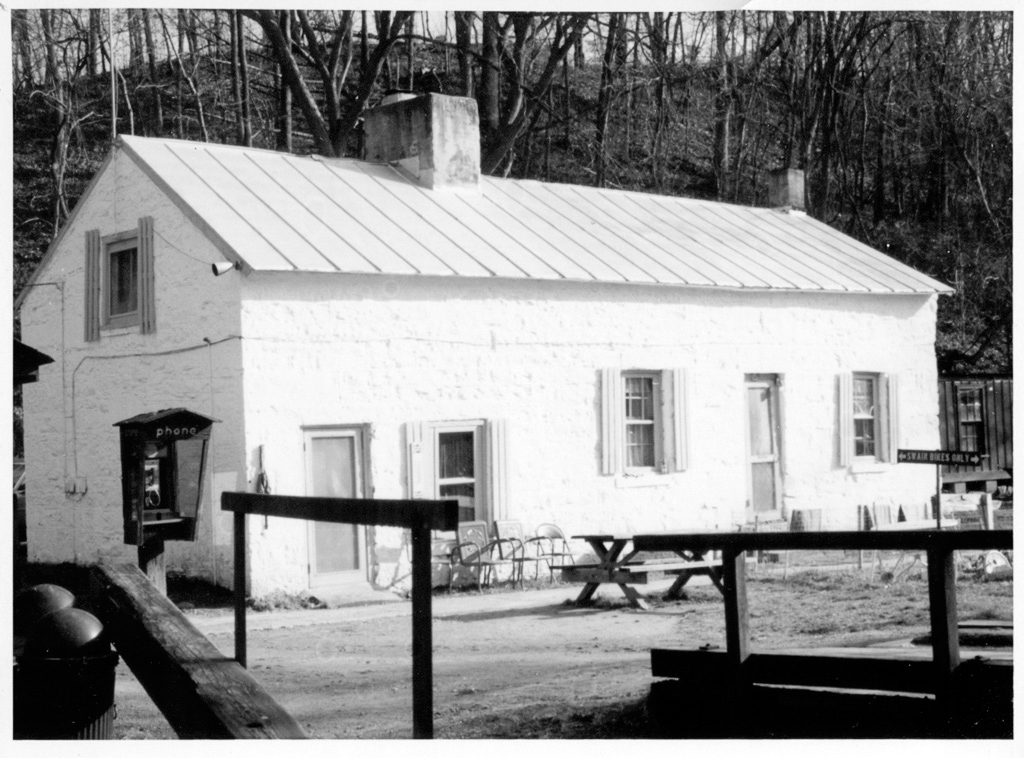
What was it like to be a lock keeper on the C&O Canal in 1916? Starting this weekend visitors will be able to find out, by spending the night at a historic lockhouse in Montgomery County. Lockhouse 21 is the seventh to be restored and opened to the public. It was occupied for 99 years by the same local family.
“This was actually my room—my bedroom,” says Bert Swain, visiting the lockhouse for the first time since its restoration was completed.
Swain was born in 1957 and spent the first 23 years of his life living in this small house, steps from the Potomac River. It’s just 10 miles north of D.C., but when Swain was growing up, it felt like a different world. There was no indoor plumbing, and the house was heated by wood stove.
“I had many mornings of waking up and jumping out of bed and running downstairs and changing next to the warmth of the wood stove,” recalls Swain.
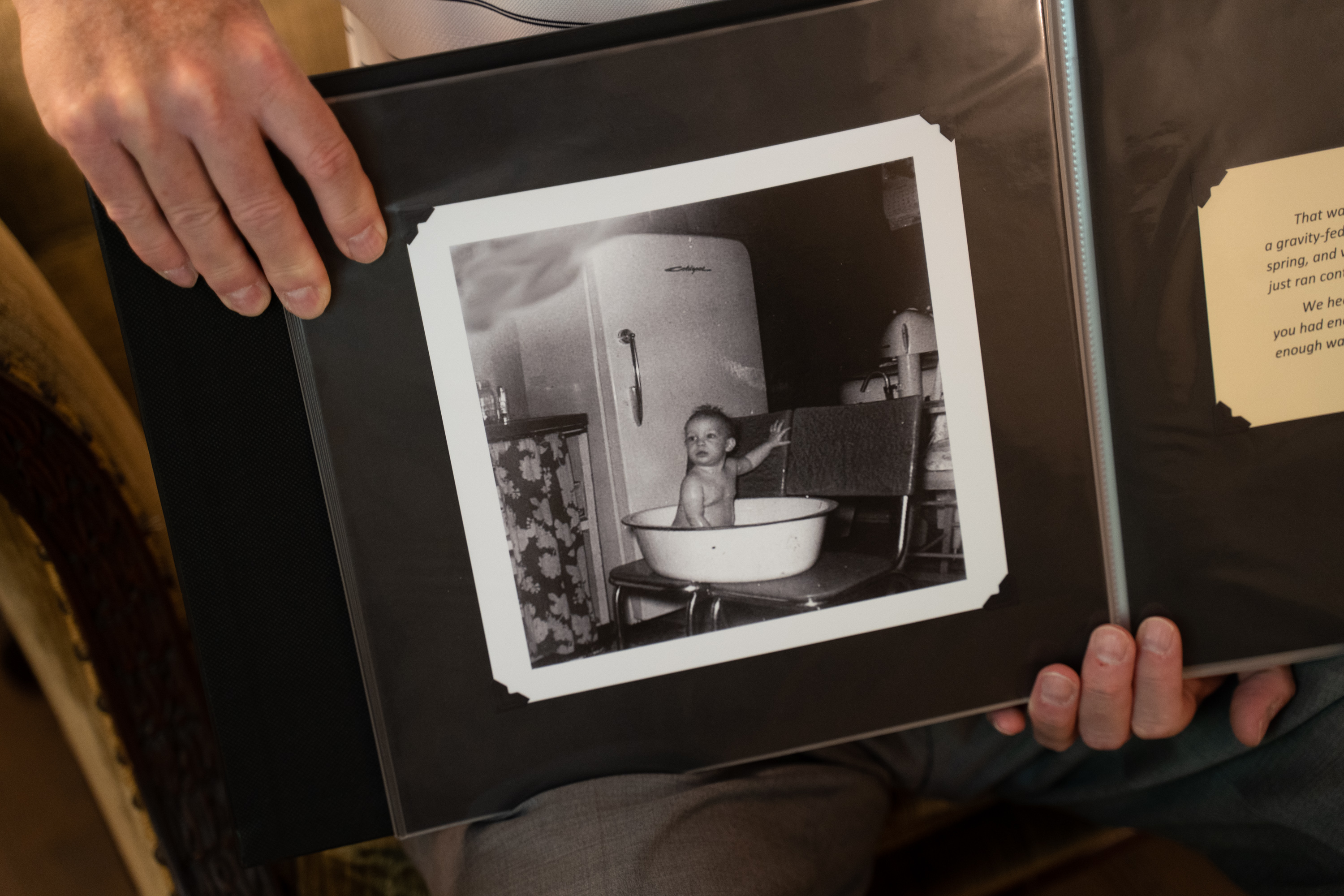
Bert Swain holds up a photo of his toddler self, bathing in the kitchen of Lockhouse 21, before there was indoor plumbing or hot water.
During the 19th century, 64 lockhouses were built along the canal. They provided basic housing for lock keepers and their families, whose job it was to open and close locks for boats moving up and down the canal carrying goods like coal or timber.
“The lockgate design and concept is something that Leonardo Da Vinci had come up with hundreds of years before,” says Kevin Brandt, superintendent of the C&O Canal National Historical Park. “By creating these locks, they were able to lift these very large canal boats, including the cargo which would weigh as much as 120 tons per boat.”
The idea for what would eventually become the Chesapeake & Ohio Canal (connecting the Chesapeake Bay region with the Ohio River Valley) originated with the nation’s first president. “It was really George Washington’s vision of connecting the Eastern Seaboard—and all of the commerce and trade that could occur—with the interior resources of this continent.”
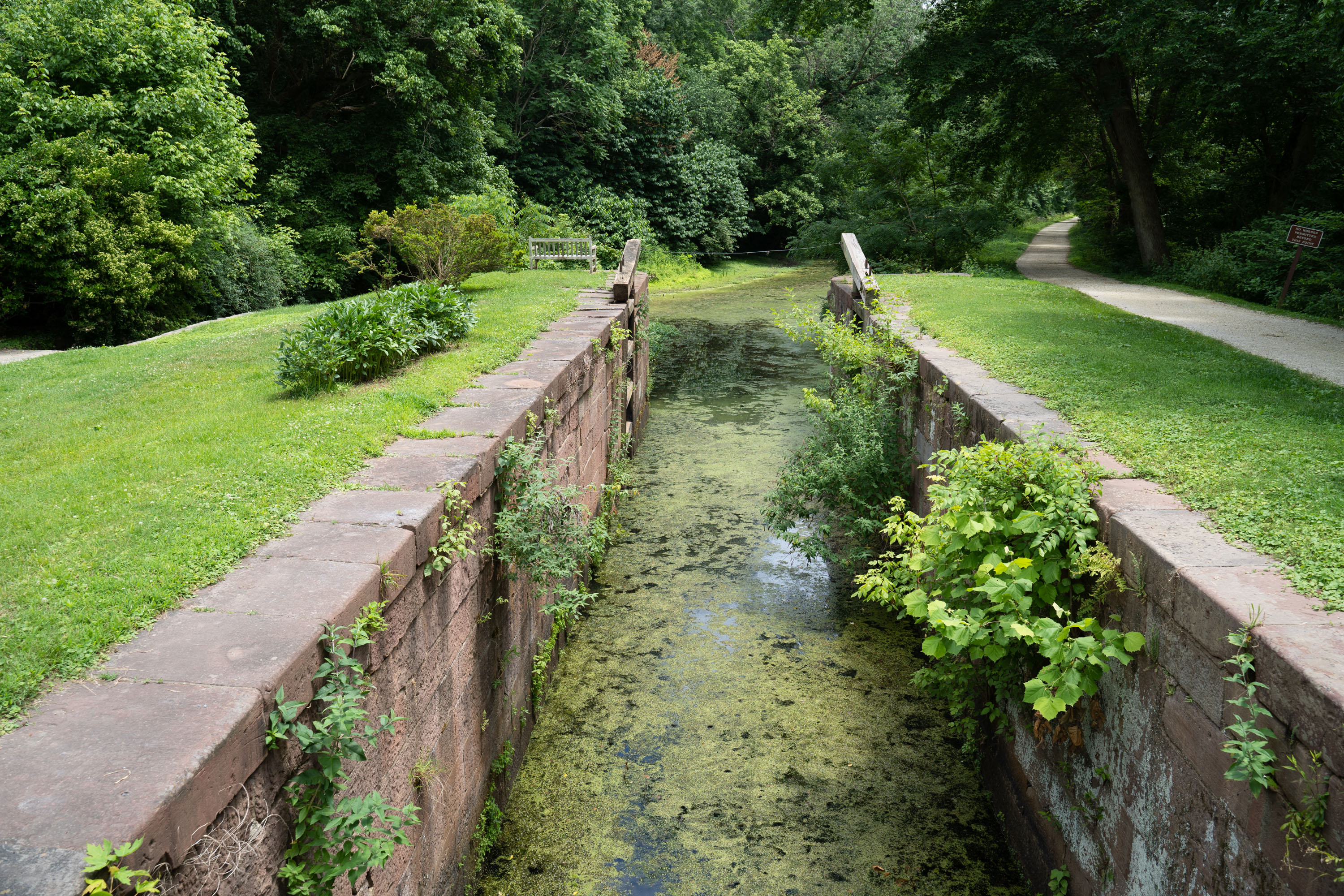
Lock 21, a few yards from the lockhouse, filled with stagnant water and algae.
Brandt says the canal was the federal government’s first major infrastructure program, costing as much as the Apollo space program, adjusted for inflation. “These were really big ambitions that our country had at the time, in the 1820s and 30s,” says Brandt.
Those ambitions were carried out by working families, like the Swains. The family occupied Lockhouse 21 from 1907 to 2006, and they were involved in canal life even before that. Bert Swain says several of his ancestors helped build the canal in the early 1800s. Later, they owned canal boats—Bert’s father was born on one of them—before settling down in the lockhouse.
“Over the years, the family evolved from working on the canal, boating on the canal, lock tending to then taking people on guided fishing trips,” says Swain.
By the time baby Bert came along in the 50s, the canal was no longer a booming trade route. Instead it was becoming a popular spot for recreation. The family made a living renting out canoes and bikes. It was Bert’s job to handle all the kids from local summer camps.
“Busloads of kids would come out from these camps, they would drop kids off and they would either canoe or bike,” recalls Swain. “I had so much fun.”
By 2006, Bert Swain’s relatives had either died or moved on from lockhouse living. The house reverted back to the National Park Service, and it sat unused for about a decade.

The restored lockhouse.
The nonprofit C&O Canal Trust started restoring lockhouses about a decade ago. Becky Curtis, with the Canal Trust, says before that the buildings were empty and off-limits.
“They largely sat as scene-setters,” Curtis says. “That’s one way to do historic preservation, is just keep them up as much as you can to have them on the landscape so that when you’re riding by you see a lockhouse.”
She says lockhouses are special. After all, most buildings we choose to preserve tell the story of the nation’s elite — not the case for lockhouses.
“These lockhouses tell the story of who really kept America going,” says Curtis.
To restore it, the Canal Trust gutted the interior.
“It looked like the early 2000s in here. There were still drapes on the windows. Everything was still as the Swains family had left it,” says Curtis.
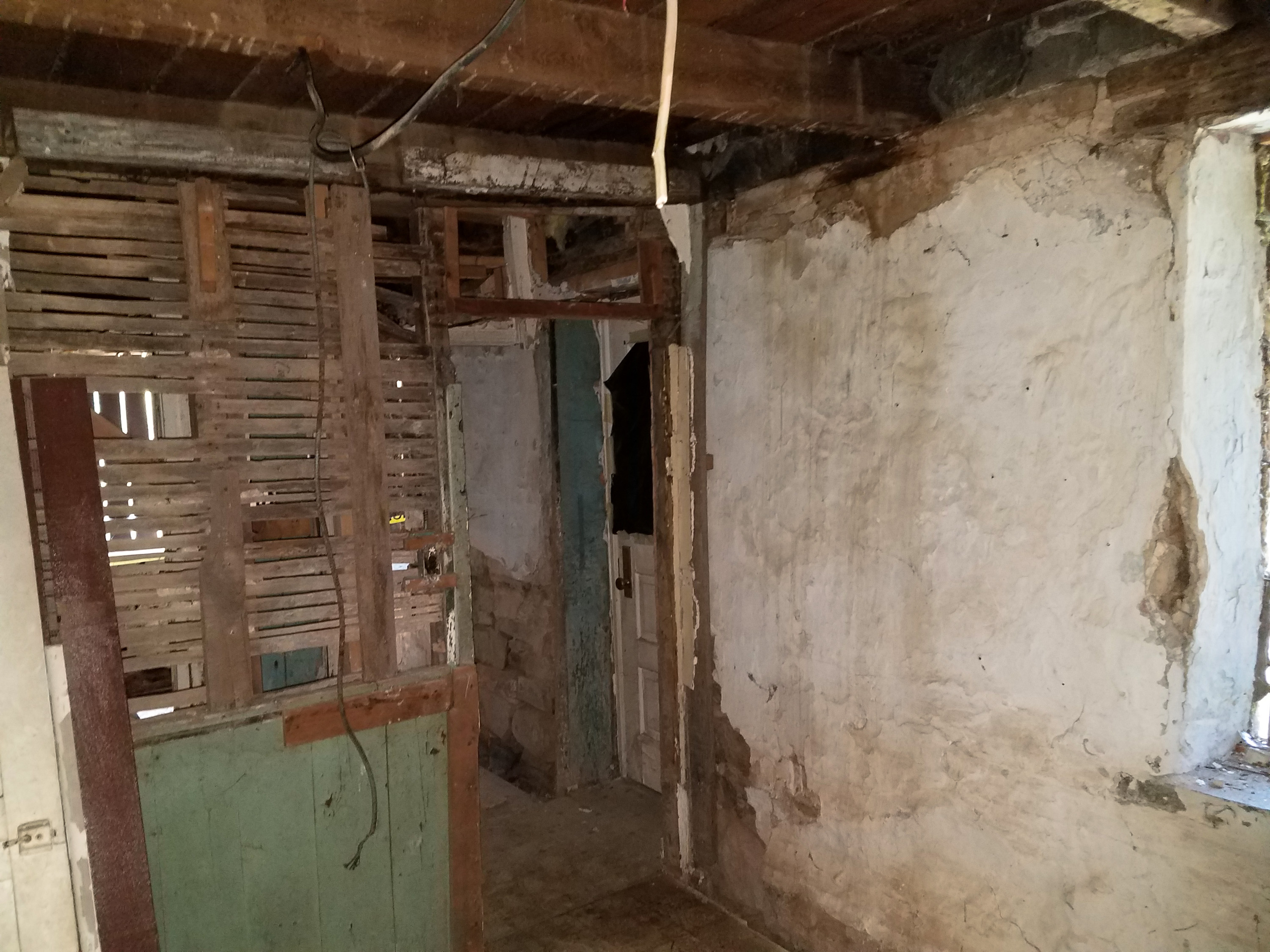
The lockhouse interior, during renovation.
They chose to recreate the year 1916, a time when the canal was starting to transition from commerce to recreation. Each of the restored lockhouses represents a different year, covering the long history of the canal. Robert Merz, a volunteer with the Canal Trust, was responsible for coming up with period furniture for each of the lockhouses. For Swains Lockhouse, he found a green velvet victorian sofa, old wooden rope beds, even period kitchen utensils. He was able to find things like a can opener and potato masher that would have existed in 1916 by checking patent numbers and looking up when those patents were issued.
Merz says the original idea to fix up and rent out the lockhouses was based on the system of hiking huts in the Alps and Pyrenees. “In Europe you had places where you could go from hut to hut, and the idea was—why don’t we go hut to hut in lockhouses?”
The restoration cost just over $500,000, and came from a combination of private donations and park service funding.
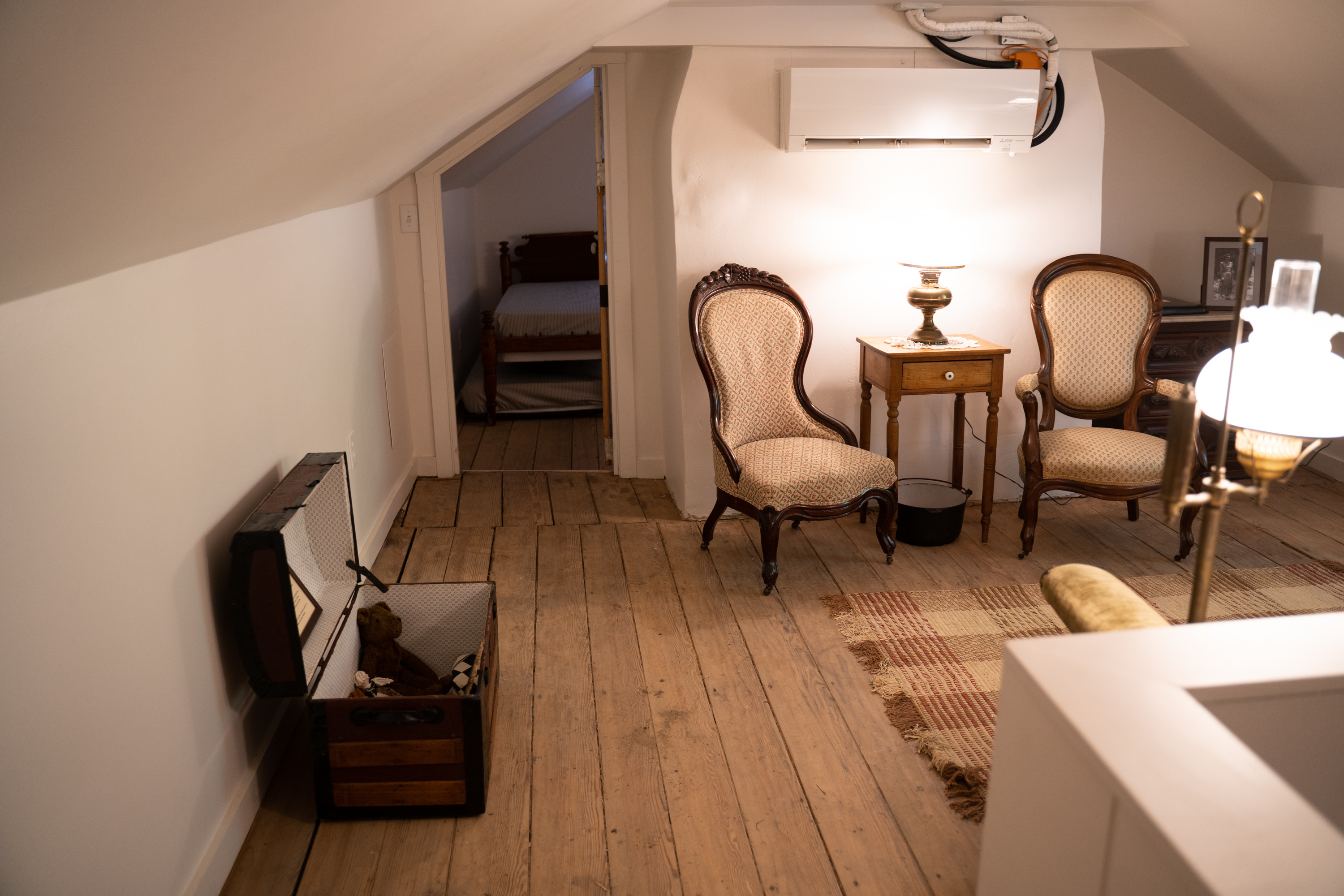
Inside the restored lockhouse.
The C&O Canal runs 184 miles, all the way from the mouth of Rock Creek in Georgetown to the mountains of Cumberland, Maryland. There’s a multi-use path along it the whole way. Merz says the dream is to have a restored lockhouse about every 30 miles so it would be possible to bike along the canal, spending each night at a lockhouse. That dream is still a ways off. So far the trust has restored seven of the 27 lockhouses that are still standing.
Bert Swain was excited to see the restored house, though it now looks completely different than his days living there. He says it still feels like home, and he’s happy it will be enjoyed for years to come.
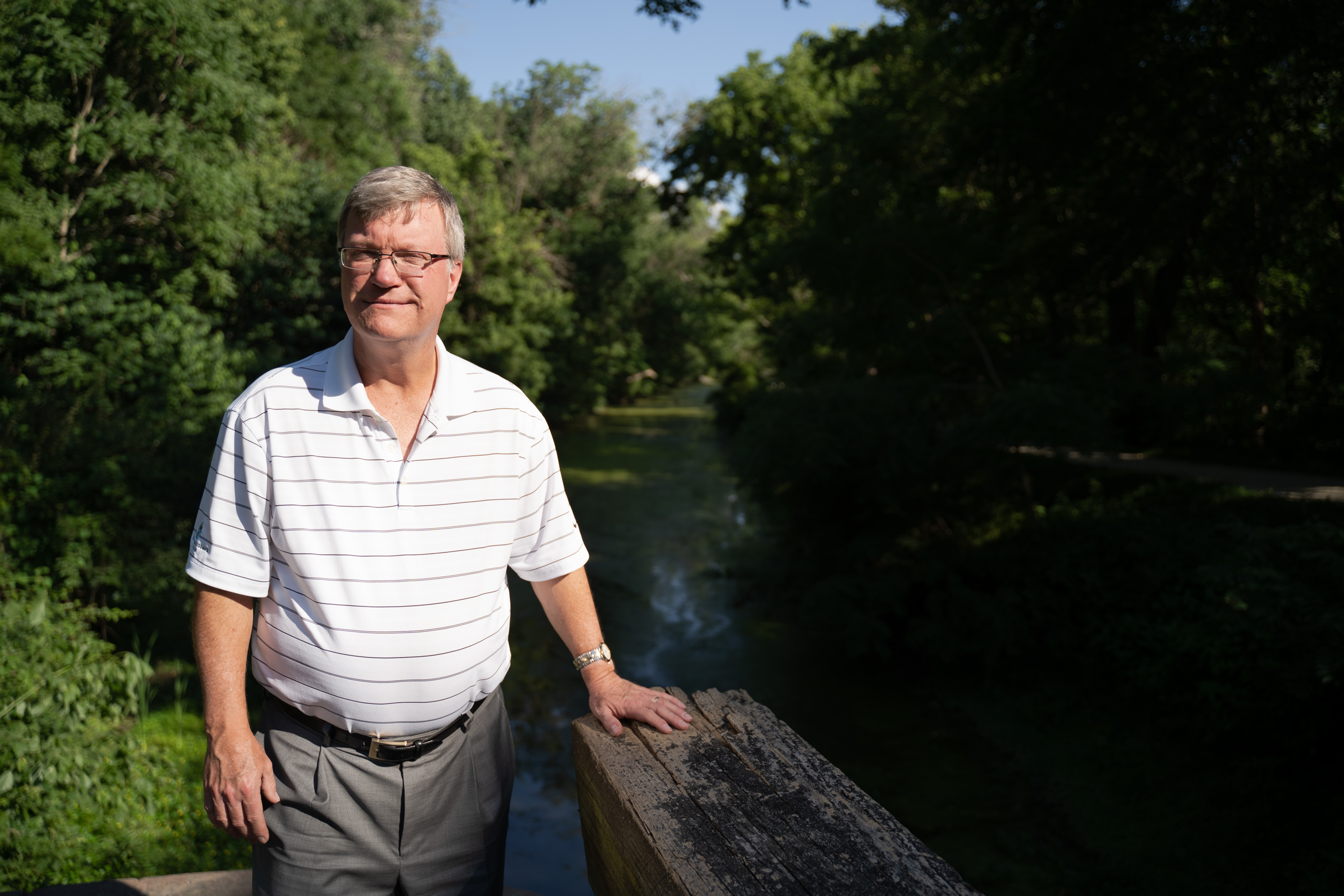
Bert Swain, standing next to the lock that used to be his front yard.
“I think it’s absolutely fantastic,” says Swain. “Here we are 30 minutes outside the center of Washington, D.C., and all we’re hearing is water and wildlife.”
Will he rent out the lockhouse for a weekend stay sometime?
“Yes I will,” says Swain. “Without a doubt.”
This story originally appeared at WAMU.