Summer heat and grilled meats go hand in hand. But lighter fare beckons when the mercury truly shoots through the roof. Enter the rabbit. Its versatile meat works not only on the grill, but also in braising, sautéing, and stewing. No wonder the D.C. chefs who serve rabbit can look to a number of different cuisines for inspiration.
Why such versatility? “As cliché as it sounds, rabbit tastes like chicken,” says Birch and Barley chef Jarrad Silver. (More discerning palates may taste subtle gamey notes that call to mind pork or quail.) The texture, too, resembles chicken, but a bit leaner than poultry tends to be. If a dish can be made with chicken, swapping in rabbit is likely to work.
Since Chef Silver’s arrival to Birch & Barley in Logan Circle late last year, the restaurant has been dabbling in Middle Eastern influences, and they’re on display in the rabbit liver mousse ($9). The key is flavoring the seared livers—in fact a mix of rabbit and chicken livers to get the right flavor balance—with baharat, a combination of roughly 20 different spices including Aleppo pepper, fenugreek, smoked paprika, cumin, and coriander. It’s “kind of like a Middle Eastern BBQ rub,” Silver says. On the side is saluf bread, a pita-esque flatbread that originated in Yemen. “The bread is the vessel, and helps bring out the flavors of the baharat in the mousse,” Silver explains.
Rabbit was once a game meat only, with tender young rabbit available in spring and mature flavorful rabbit available in fall. Today, responsible farming practices have made rabbit available year-round. (Several D.C. chefs turn to Pennsylvania’s Earth N Eats farm for their rabbits.) But at José Andrés’ Jaleo restaurants, the Paella Valenciana ($45)—the signature dish from Spain’s southeastern Valencia region— tries to convey the sense of being close to nature, where rabbit was hunted and legumes gathered for cooking a family meal. The recipe calls for short-grain Bomba rice, the better to soak up every last bit of cooking liquid seasoned by saffron, rosemary, and tomato. Lima beans, runner beans, and chicken round out the recipe.
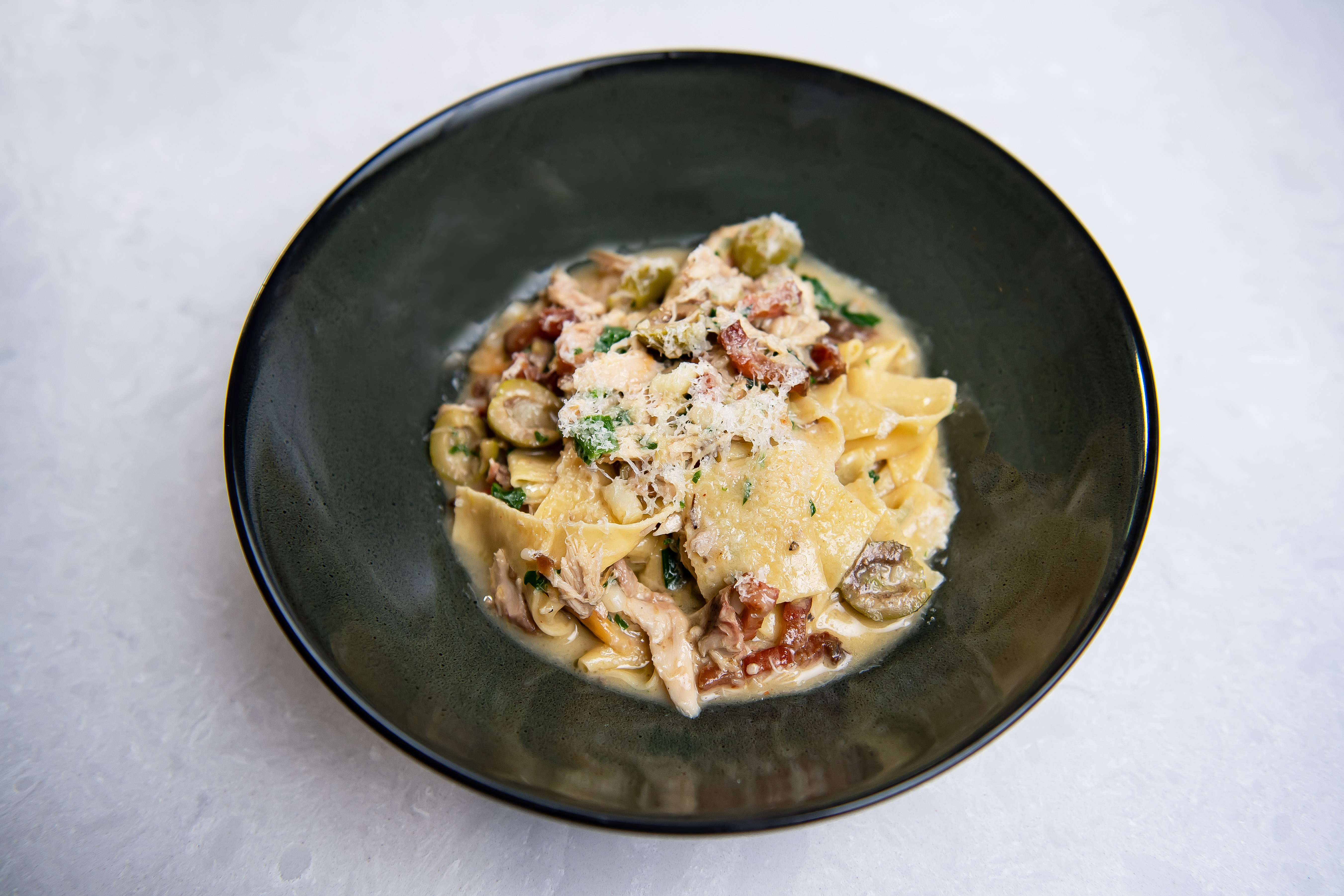
Italy, too, makes good use of rabbit. At recently-opened Via Sophia downtown, executive chef Colin Clark crafts a pappardelle pasta ($32) with braised rabbit ragu. Instead of using chicken as a complement as in the paella or the mousse, “my rabbit pappardelle starts out with pancetta crisped in a pan, which lends texture and salinity to the dish,” Clark explains. Sautéed garlic and baby shallots add flavor, while green Castelvetrano olives provide a subtle richness. Gossamer-thin gratings of four-month-aged Pecorino Toscano cheese finish the creation.
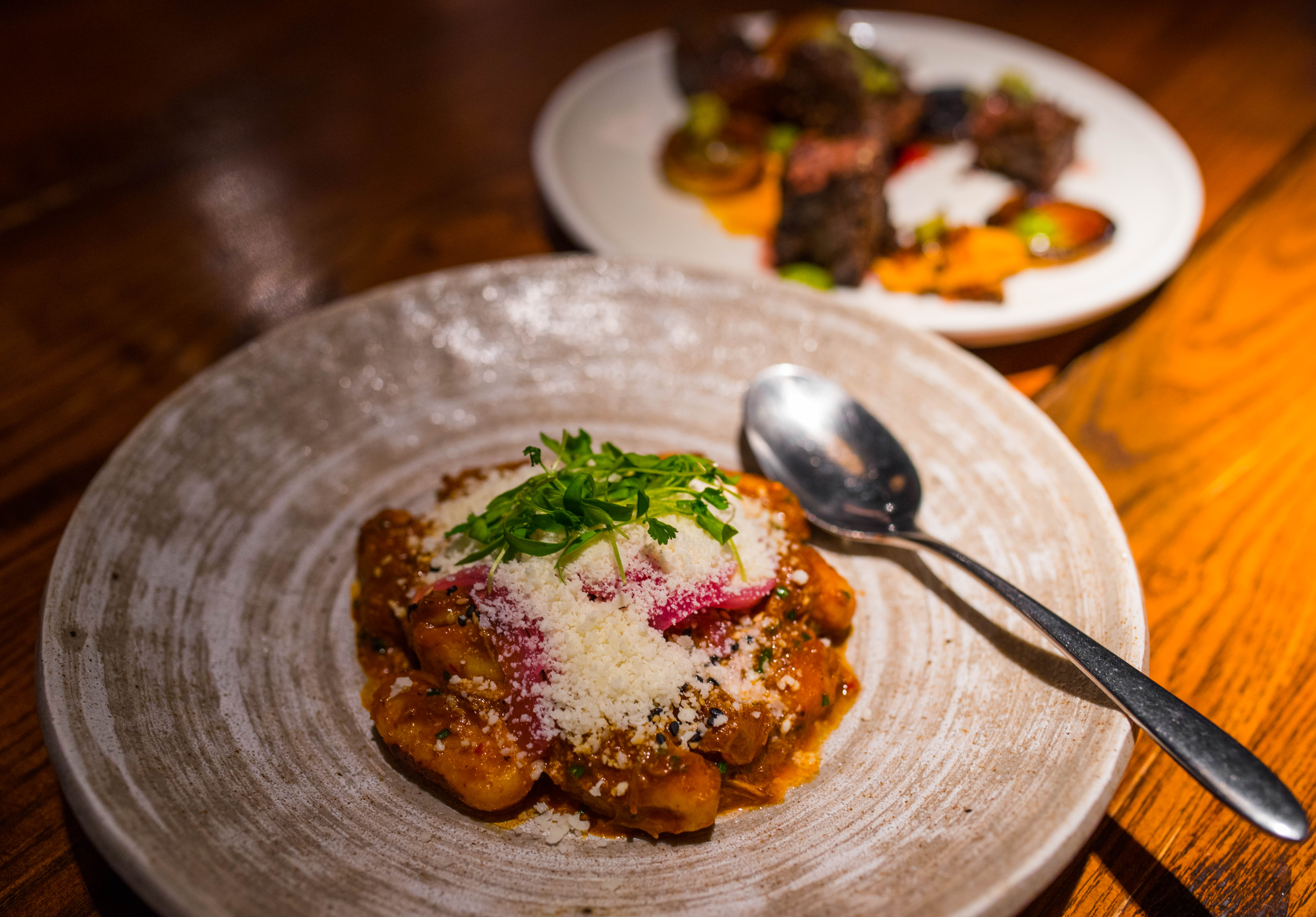
At Hazel in Shaw, a gnocchi ($18) with rabbit confit shines thanks in part to—don’t laugh—carrots. “We use braised carrots with a hint of ginger—both go great with rabbit,” says chef Robert Curtis. His team cures the rabbit with a bit of lemon, and adds basil pesto, “a harbinger for summer,” Curtis says.
Rabbit’s flavor can hold its own against bold seasonings, but isn’t so big that it will steamroll softer ones. The Belgians and French have taken ample advantage of that range. Tail Up Goat in Adams Morgan is serving rabbit rillettes ($13), a take on a French spread made from meat cooked in and then whipped with its own fat. “Our rabbit rillettes include smoked pork in the braising process for added fat as our rabbits tend to be fairly lean,” says chef and owner Jonathan Sybert. Sherry, which complements fatty meats, and orange flavor the dish. Georgetown’s The Sovereign serves Rabbit in Kriek ($24), where the meat simmers in a traditional Belgian sour cherry beer until it nearly falls off the bones. At Montmartre in Capitol Hill, a braised rabbit leg ($27) comes with a red wine sauce and a bold, creamy truffled linguine. Meanwhile, Bistrot du Coin in Dupont Circle offers classic stewed rabbit in a mild mustard sauce ($26.95).
Iron Gate’s Egg & Dill Gemelli ($18) also uses mustard in a recipe that makes rabbit warm-weather ready. “Since we were getting out of colder weather and heavy stews and braises, I wanted to do a lighter preparation for this dish—the intention was to add acid to it to lighten it up,” says chef Tony Chittum. The rabbit remains braised and is served with spirals of house-made gemelli pasta, but the mustard joins olives, cherry tomatoes, white wine, fresh dill, and other ingredients to evoke a mild evening rather than a blustery night.
There’s no reason not to attempt a contemporary take on rabbit at home, too. Rabbit can be brined and fried like chicken, cooked on a rotisserie, or made into sausages. But anyone attempting a rabbit recipe would do well to heed advice from Birch & Barley’s Silver. Compared to other meats, “it takes a little more finesse to use rabbit,” he says. “Since it is leaner, it’s less forgiving if you overcook it.”
Previous dishes of the week: