Rachel Kurzius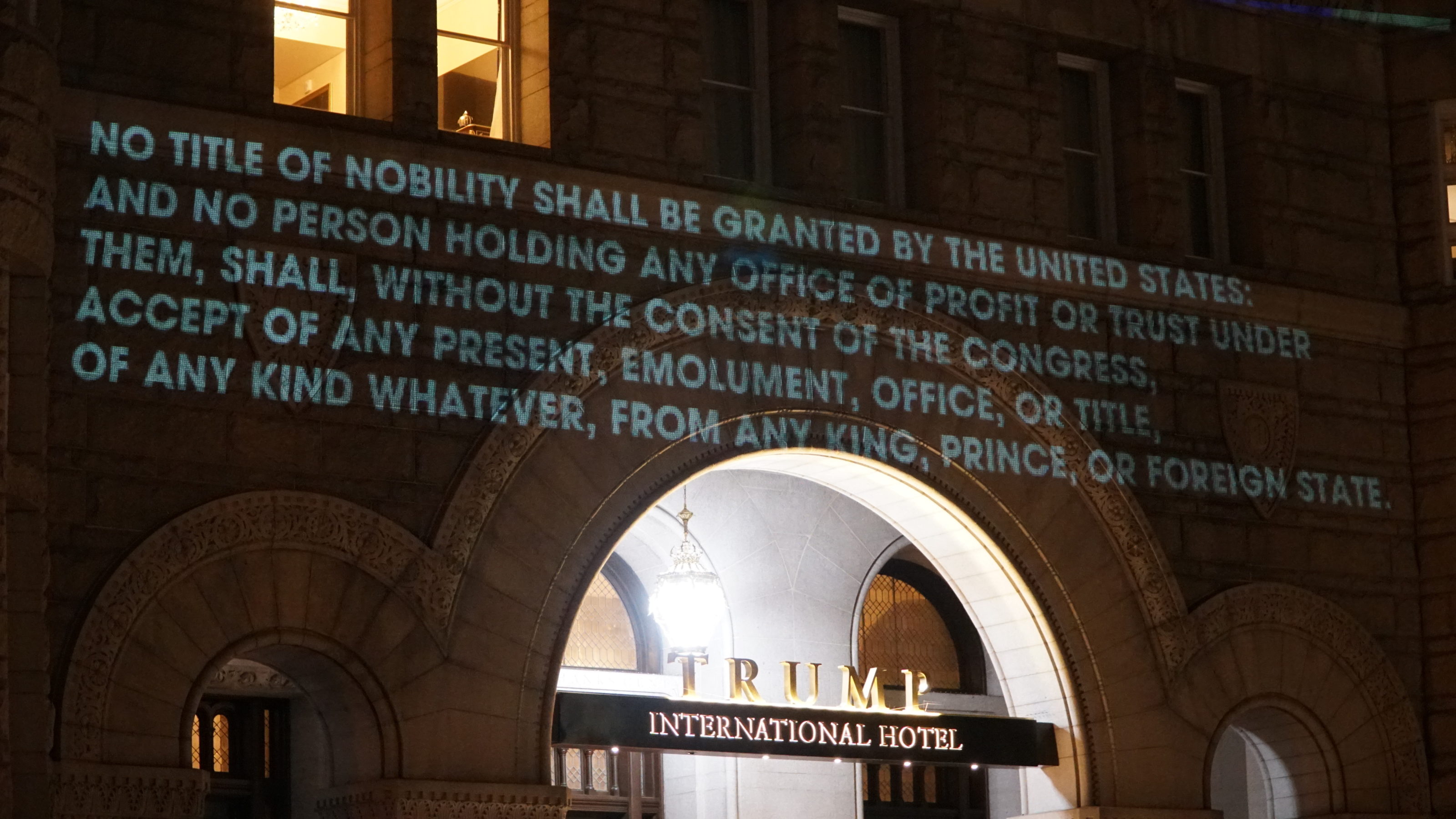
A federal appeals has dealt a major blow to D.C. Attorney General Karl Racine and Maryland Attorney General Brian Frosh’s lawsuit against the president.
The U.S. Court of Appeals for the Fourth Circuit in Virginia sided with President Donald Trump and ruled to dismiss a case that alleges he is violating the Constitution’s anti-corruption provision, known as the emoluments cause, by using his role as commander in chief to enrich himself. In their suit, the attorneys general outlined how foreign and domestic powers spend money at the president’s sprawling business interests, from which he has not divested, to curry favor with him.
One prominent example in the suit is the Trump International Hotel, which has become a popular place for administration officials, diplomats, and advocacy groups to dine and hold events.
“Word just out that I won a big part of the Deep State and Democrat induced Witch Hunt,” Trump tweeted in response to the decision, calling the lawsuit against him “ridiculous … I don’t make money, but lose a fortune for the honor of serving and doing a great job as your President (including accepting Zero salary!).”
In a unanimous and scathing decision, Judges Paul V. Niemeyer, Dennis W. Shedd, and A. Marvin Quattlebaum Jr. say that D.C. and Maryland don’t have standing to bring the case.
“The District and Maryland’s interest in enforcing the emoluments clauses is so attenuated and abstract that their prosecution of this case readily provokes the question of whether this action against the President is an appropriate use of the courts, which were created to resolve real cases and controversies between the parties,” the decision says.
Racine and Frosh said in a joint statement that the appeals court panel “got it wrong. Although the court described a litany of ways in which this case is unique, it failed to acknowledge the most extraordinary circumstance of all: President Trump is brazenly profiting from the Office of the President in ways that no other President in history ever imagined and that the founders expressly sought—in the Constitution—to prohibit … The idea that the District of Columbia and Maryland are not harmed by the President’s violation of the Constitution is plain error.” They said they plan to continue pursuing their legal options, though did not specify what those might entail.
D.C. and Maryland’s lawsuit rests on the previously obscure “emoluments clause” of the Constitution. As the decision notes, that clause doesn’t say what should happen if it is violated, and “efforts to enforce [the emoluments clause] in courts have been virtually nonexistent prior to President Trump’s inauguration in 2017.” Courts have not even conclusively determined what the word “emoluments” actually entails.
U.S. District Judge Peter Messitte had agreed with Frosh and Racine last July that “emoluments” are any “profit,” “gain,” or “advantage.” In its bid to dismiss the case, the Department of Justice more narrowly defined it as a “payment made in connection with a particular employment over and above one’s salary.
The decision from the appeals court also halts a series of subpoenas to Trump’s business holdings and federal agencies to discover more about the finances of the Trump International Hotel in D.C. Trump’s eldest son took control of operations in 2017, but the president retains a 76 percent interest in the property, according to the lawsuit.,
Congressional Democrats filed a lawsuit against Trump over the Emoluments Clause more recently, and the DOJ asked an appeals court this week to dismiss it.
This story has been updated with a statement from D.C. and Maryland’s attorneys general.