D.C. emergency officials have been trying to reduce the number of ambulance rides for patients who don’t need them by diverting patients to clinics and rideshares instead. But over a year into the initiative, there’s still a long way to go — and District residents are skeptical about the changes.
On an average day, D.C. Fire and EMS gets more than 400 medical calls. About 100 of them aren’t life-threatening injuries or illnesses, according to the department. The District started the Right Care, Right Now program last year to address those less-severe cases. The program is based on the idea that patients can get care more quickly at clinics, and they can set up subsequent primary care appointments. This connects patients with long-term care and keeps ambulances and emergency rooms open for more severe cases.
Patients are sorted through a nurse triage line at the 911 call center. Since March, emergency responders can arrive on a scene and weigh in on whether a patient needs an ambulance.
But diversions are not yet common. Since April 2018, at least 1,617 people have been directed away from emergency care. That’s only about four patients a day.
“At the same time that we’ve put this program into place, we faced a continued increase in our call volumes,” says Dr. Robert Holman, medical director for D.C. Fire and EMS.
Holman says D.C. has one of the highest per capita call volumes in the country, and it’s not letting up. He says call volumes have grown about 40 percent since around 2011, while the population has only grown by about 17 percent. Part of the increase in calls is due to the number of substance abuse cases in the District.
Holman says the department is working with a group of statistical scientists to see whether or not patients who use the nurse triage line end up getting comprehensive primary care in the long-run.
Saving Resources For True Emergencies
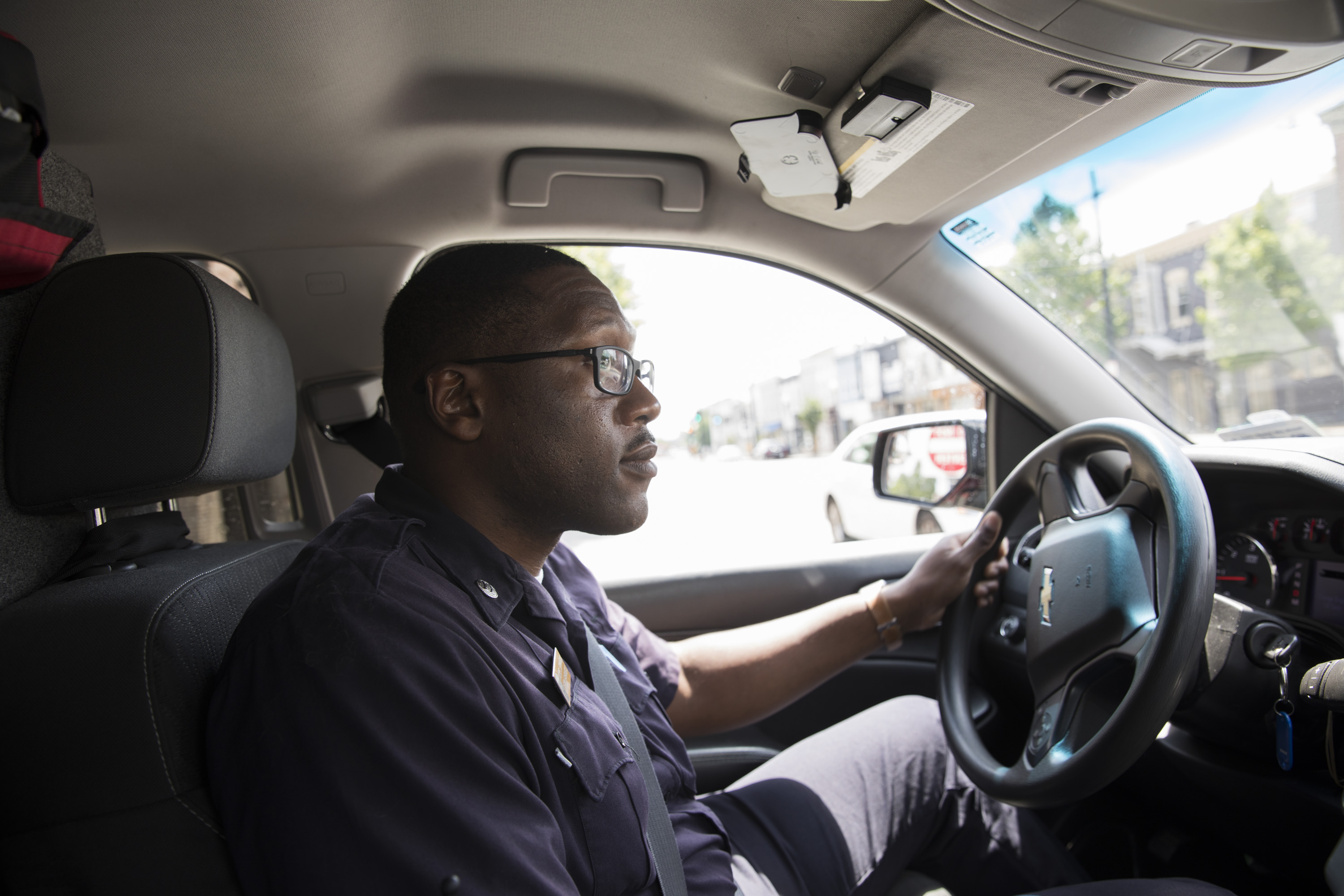
Paramedic Captain Andre Edwards drives to a call.
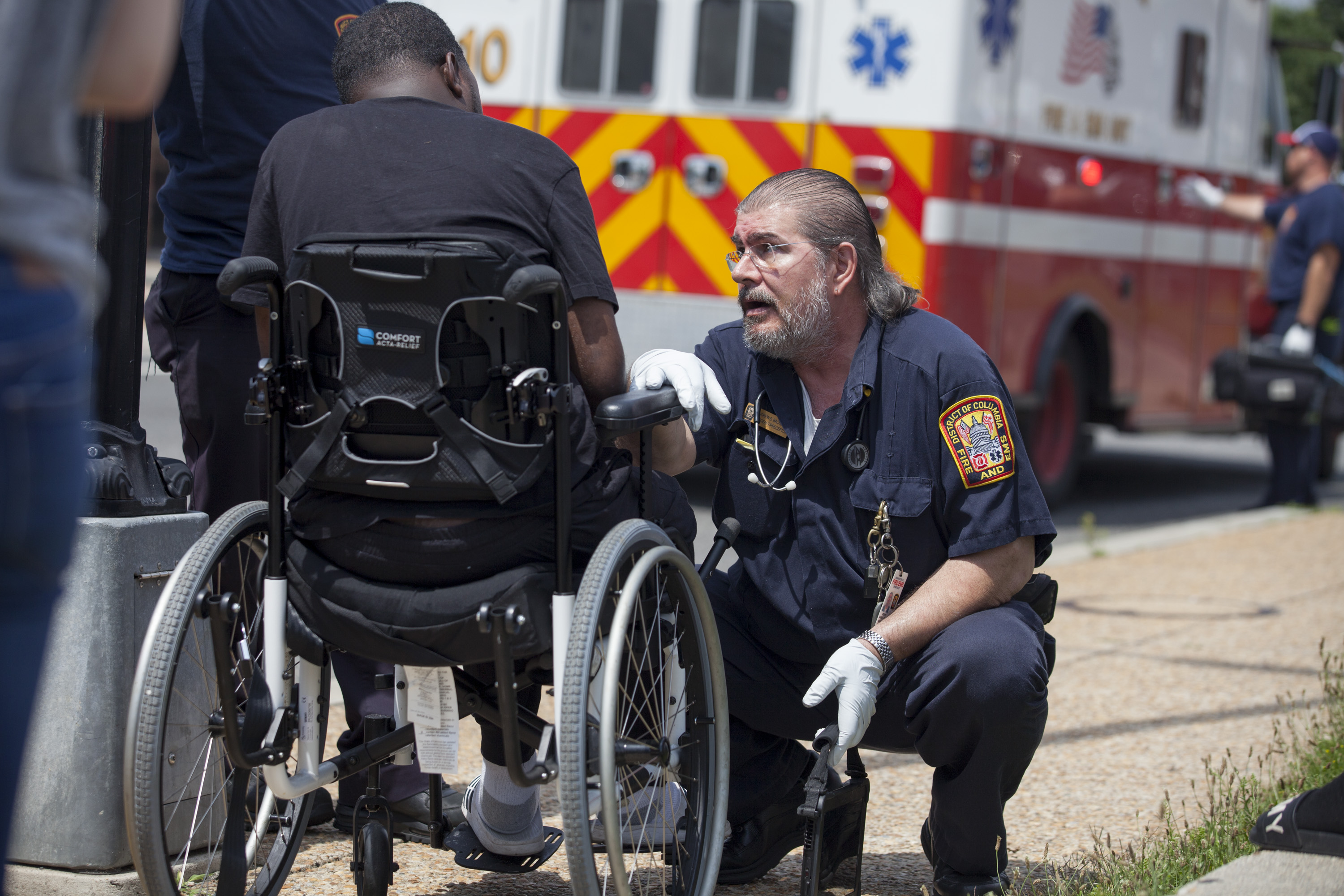
Captain Paramedic Andre Edwards, who’s been with the department for 15 years, has responded to a lot of calls that didn’t need an ambulance or an emergency room.
“I ran a guy who stapled his finger on accident with a regular office stapler, but he wanted to go to the hospital and get a tetanus shot, [or] calls where, you know, there might have been a kid who skinned their knee, and the parents didn’t have anything to bandage it with, things like that,” Edwards says.
He says calls like this have subsided lately, but the department still hears from people who have ignored a condition to a point where they felt like they need 911.
“So with the nurse triage, it’s been educating the public,” Edwards says. “If the issue is that you haven’t been to the doctor in three weeks and you’ve been sick this whole time, you can go ahead and get you scheduled to go to the doctor and see what’s really going on.”
He says emergency rooms in the District have been overwhelmed, especially with the recent closing of Providence Hospital in Northeast D.C.
On a recent Thursday morning, Edwards was busy responding to patients — many who needed ambulance transport.
At a large apartment building in Northeast D.C., Edwards helped treat a man who EMTs rolled out on a gurney. The patient was conscious, but his torso was wrapped in bandages. The EMTs put him in an ambulance and sent him to the hospital.
“11 o’clock on a Thursday morning, somebody’s getting stabbed in the middle of the day,” Edwards says.
Edwards says ambulances responded pretty quickly to this call because the day hasn’t been very busy. But it’s early.
“Wait until maybe later on in the afternoon when people start really getting out and about and the city gets busy — especially on, say, a Friday, Saturday or Sunday — then it could be a medic unit coming from clear across the city,” he says.
The diversion program is meant to make sure ambulances can always respond quickly to emergencies like a stabbing, no matter when they happen. But patients, nurses, and EMTs can have different ideas about what constitutes an emergency, and they can have different expectations for 911.
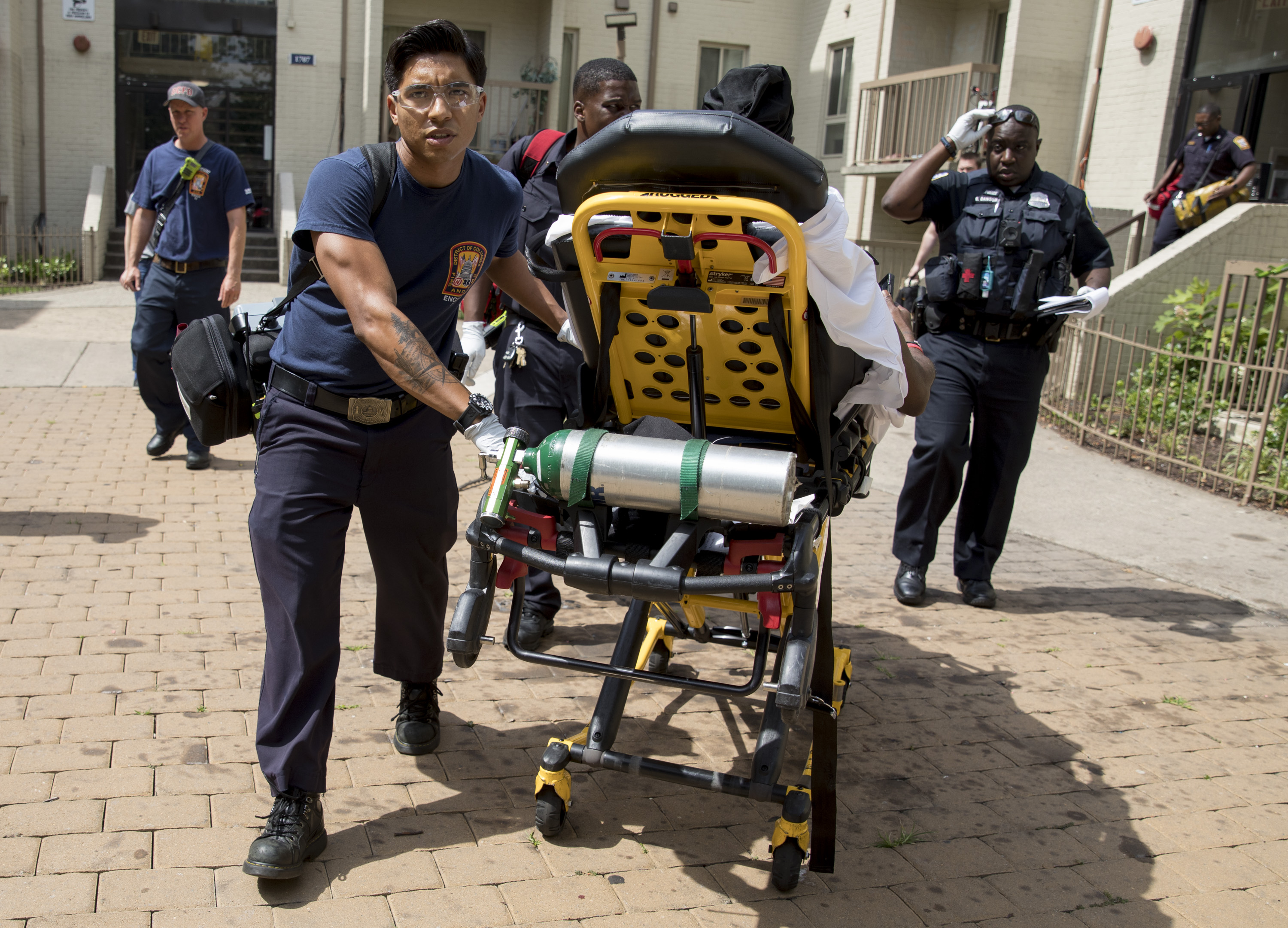
D.C. emergency personnel transport a person who had been stabbed.
“I Lost A Lot Of Faith In The 911”
The 911 system has been in place for 51 years, and Holman says the culture doesn’t change easily.
“We have generations that are used to using the 911 system for, of course, serious and life threatening diseases, but also, in many cases, a sizable number, using the 911 system for non-life-threatening illnesses. And it’s that group, which is actually pretty substantial, that we’re really trying to break that cycle of calling 911 frequently and getting them into primary care,” Holman says.
But some patients, like Edward McMahan, 60, are worried that the diversion program might mean they won’t get the care they need.
McMahan called 911 last year when he his left leg hurt so much that he couldn’t bend it.
“The pain last two days prior before I even called 911 because I was going to try to get to the ER on my own. So when I woke up that particular day in question, I couldn’t move it, and I needed an ambulance to come and take me out,” he said.
But an ambulance didn’t come.
He said he spoke to a nurse who arranged for a rideshare ride to pick him up, paid through his Medicaid.
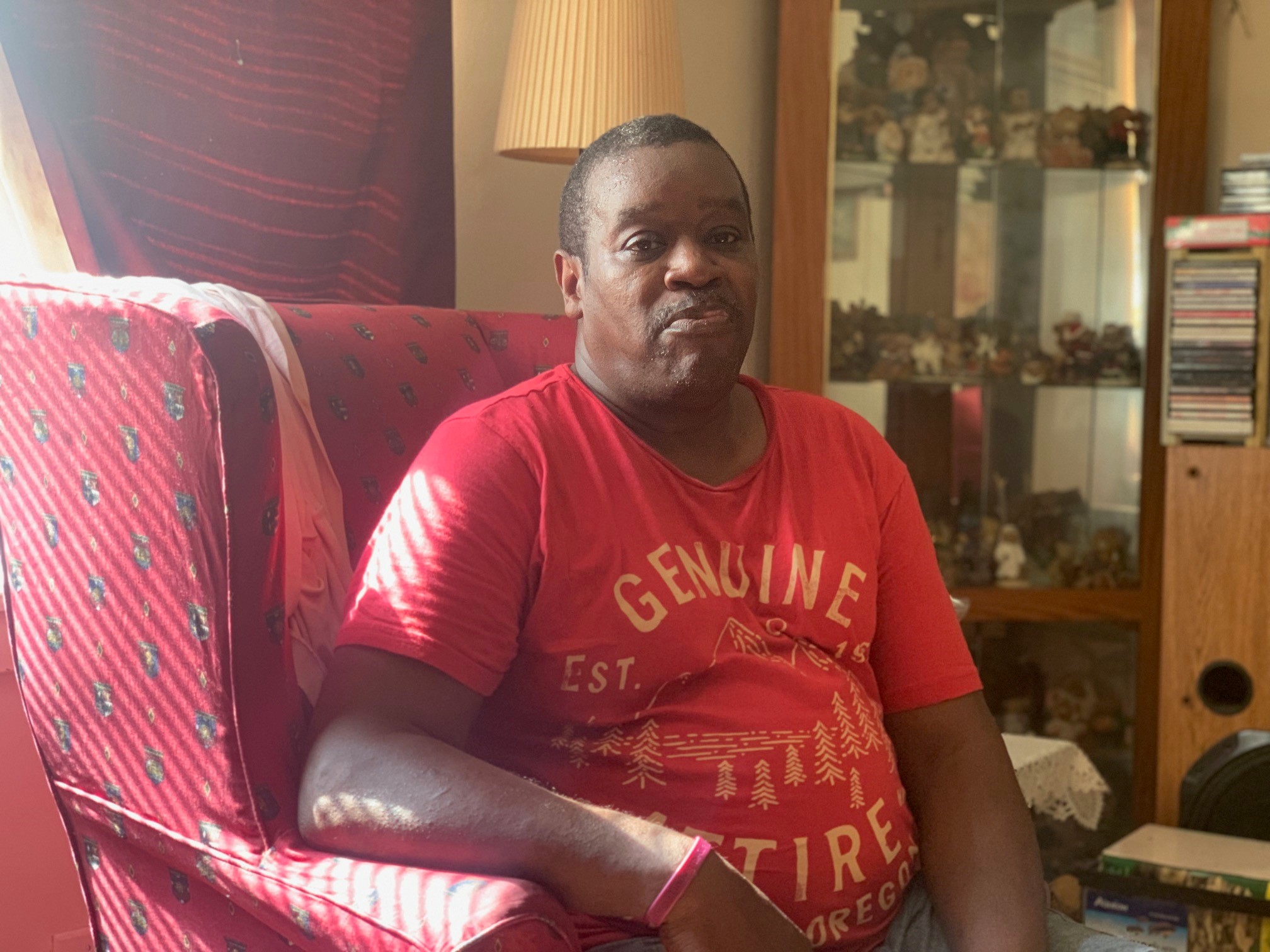
Edward McMahan, 60, called 911 last year after pain in his left leg became so painful that he couldn’t move it. A nurse arranged a Lyft ride instead.
McMahan lives on the second floor, and said it was very hard to get down the steps. His wife and his daughter helped him down.
“It should have been an ambulance,” he says. “I was mostly frightened so for 911 not to come out, [I was] a little shocked.”
McMahan went to a Community of Hope clinic that’s one of several clinics participating in the District’s diversion program. He was diagnosed with gout, and he’s been going to the clinic ever since for his primary care and regularly sees his doctor.
He says he understands that ambulances should be reserved for emergencies, but says at the time, he didn’t know what was happening to his leg. McMahan has diabetes, and is currently undergoing treatment for multiple myeloma. He says with his age and other health conditions, he wants to be able to depend on 911.
“At the time, I didn’t know — so for that to happen to me, I lost a lot faith in the 911,” he says.
D.C. officials don’t want people to lose faith, but want more people to find clinics for non-life-threatening cases.
“We still need community buy-in,” says Holman. “Some individuals believe that going by lights and sirens through traffic to an emergency department gets them quicker care, and better care. And yet, we know that our patients who go to the clinic through the nurse triage line get care faster, and of course, the clinics are set up to give them a primary care, which is more comprehensive.”
This story first appeared on WAMU.