 Lori McCue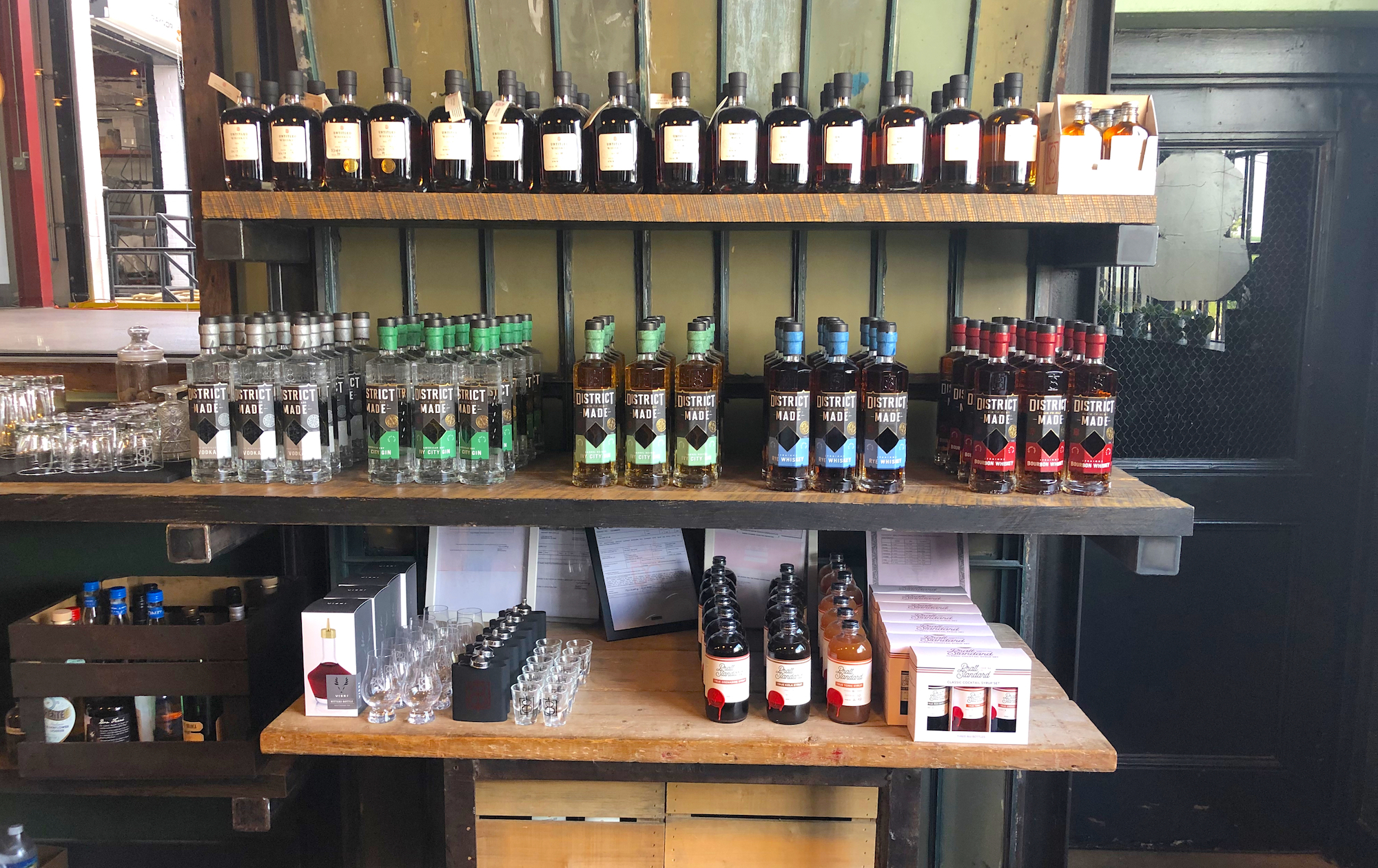
It may not be as expansive or dense as Kentucky’s famous bourbon trail, but D.C. now has its own tour of locally-made whiskey and other spirits. The Whiskey Rebellion Trail is a collaboration among four Mid-Atlantic cities—Washington, Baltimore, Pittsburgh, and Philadelphia—to promote their craft liquor scenes and offer discounts at local distilleries.
Organizers of the trail, which include tourism marketing groups and distilleries around the region, claim that the Mid-Atlantic area’s creators “laid the groundwork for American whiskey.” They’re betting that this history makes distilleries as much of a tourist draw as free museums and monuments.
“We like to think [tourists] are coming for a variety of reasons, but part of that is American history,” says Elliott Ferguson, president and CEO of Destination DC, one of the groups behind the Whiskey Rebellion Trail. “So from our perspective, what a cool way to add to the things you can see and do when you’re in Washington.”
The program, which launched on Friday, gets its name from the three-year Whiskey Rebellion that took place shortly after the Revolutionary War. It began in 1791, after some guy named Alexander Hamilton proposed a whiskey tax to help pay off some of the debt that the brand-new United States had racked up during the war. Local distillers—particularly those in western Pennsylvania—protested, arguing that the tax was unfairly high for small producers. Violence followed (then-President George Washington even sent in the militia) and the tax—the first one levied on United States citizens by its government—was seen largely as a failure.
There are other pieces of whiskey history in the Mid-Atlantic region. Pennsylvania and Maryland are thought to be the birthplace of rye whiskey, and George Washington’s Mount Vernon was home to one of the nation’s largest commercial distilleries.
So now, locals and tourists can celebrate that history at the host of distilleries from Pittsburgh to D.C. Guests can buy a “passport” to specific cities that are valid for one or three days, or a 90-day pass that covers broader regions (Baltimore and D.C., for example, or the Greater Philadelphia area). Participants show their passports (delivered to their phones via text message) at each distillery for specific offers, such as discounted bottles or free tours or tastings. Some cities include access to museums or historical sites that are relevant to the history of American whiskey.
In D.C., a pass will get you access to deals at amaro producer Don Ciccio & Figli and distilleries Cotton & Reed, New Columbia Distillers, One Eight Distilling, and Republic Restoratives. A three-day pass for $69 also includes passes to Peirce Mill in Rock Creek Park and the Smithsonian American History Museum. A $39 passport gets you one-day access to four distilleries in Ivy City.
While some of these offerings represent a significant discount (like a free cocktail at New Columbia, or a free tour and tasting at Republic Restoratives, normally $12), some of the services included in the passport happen to be free already. Don Ciccio’s tastings are gratis to everyone who walks in, for example, and the Smithsonian museums also don’t charge admission. According to Teresa DeFlitch of Pittsburgh’s Wigle Whiskey, one of the co-chairs of the trail’s advisory committee, the offerings could eventually change to be more exclusive and whiskey-specific.
“As we continue to grow the trail, we will likely work with these distilleries and organizations to craft even more unique offerings related specifically to their participation on the trail,” DeFlitch tells DCist via email.
Should the Whiskey Rebellion trail be successful, Destination DC may be open to implementing a similar passport structure to other types of entertainment in the city.
“We may look at in the future, how we can perhaps tie it into theater and maybe sporting events happening in Washington,” Ferguson says. “That’s why we’re here: What can we do differently to attract folks that might be in town over a given period of time? [For example], where there’s a soccer match, a baseball game, and and some other sporting event that might be happening in Washington, they can buy a collective pass.”