Matt Blitz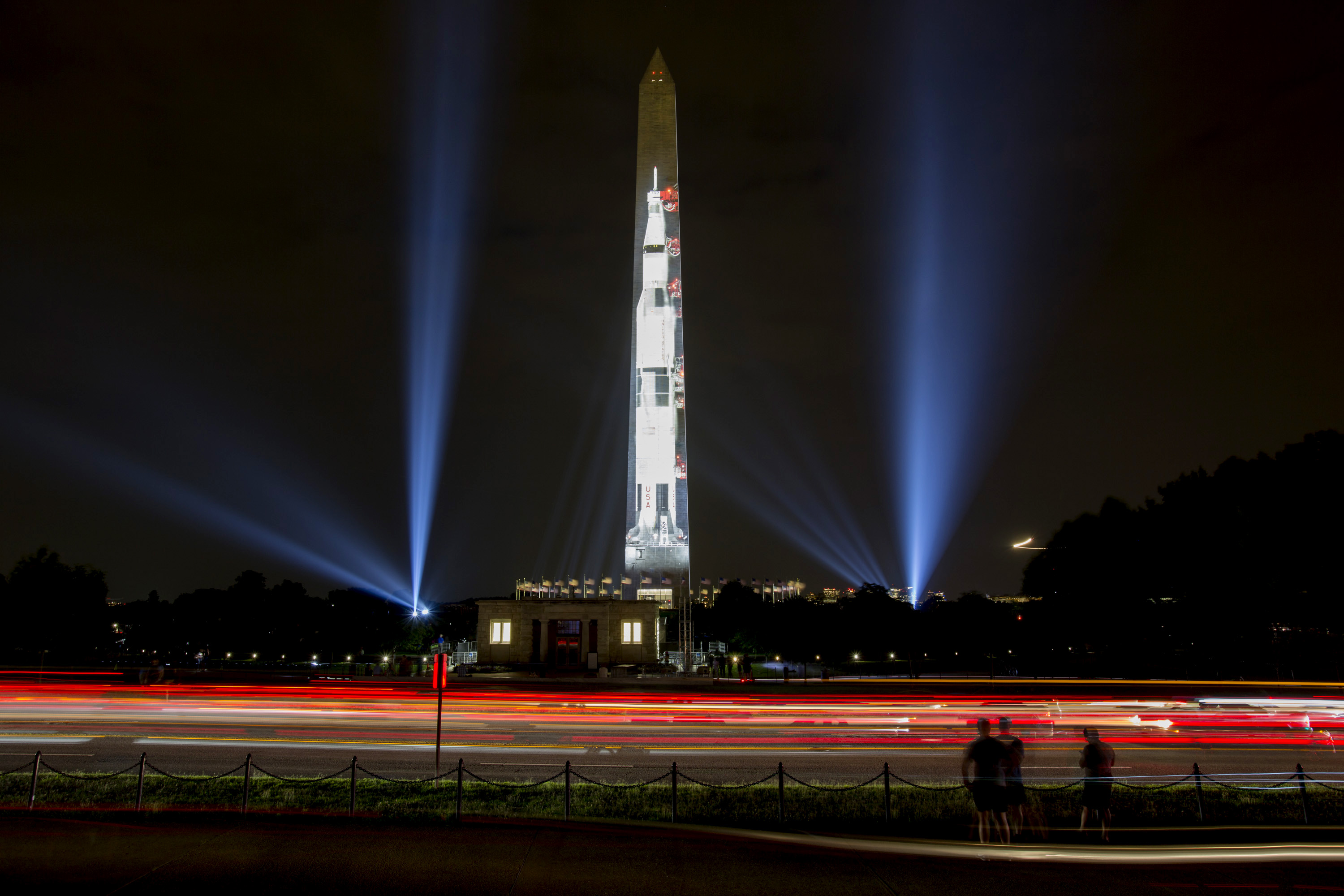


The Washington Monument looks downright majestic at 3 in the morning. Even more so when lit up with animated video of the Saturn V rocket projected on to it. Very early this morning, the media was given a short preview of the 17-minute show commemorating the 50th anniversary of Apollo 11 that the public will get to see on Friday and Saturday nights.
The Smithsonian National Air and Space Museum and the UK-based 59 Productions unveiled about 90 seconds of “Apollo 50: Go For the Moon” and assorted still images from the program. The projection and light show is the main event of the planned display on the monument. The museum is also displaying a still image of the rocket for a few hours each night through Thursday. That projection was the reason for the preview’s early-morning start time: The still image projection didn’t conclude last night until 11:30 p.m., and organizers needed time for the public to clear out. Additionally, presenting a sneak peek to the media when the Mall was deserted kept the show from being spoiled (unless you are one of those power types who jogs in the middle of the night).
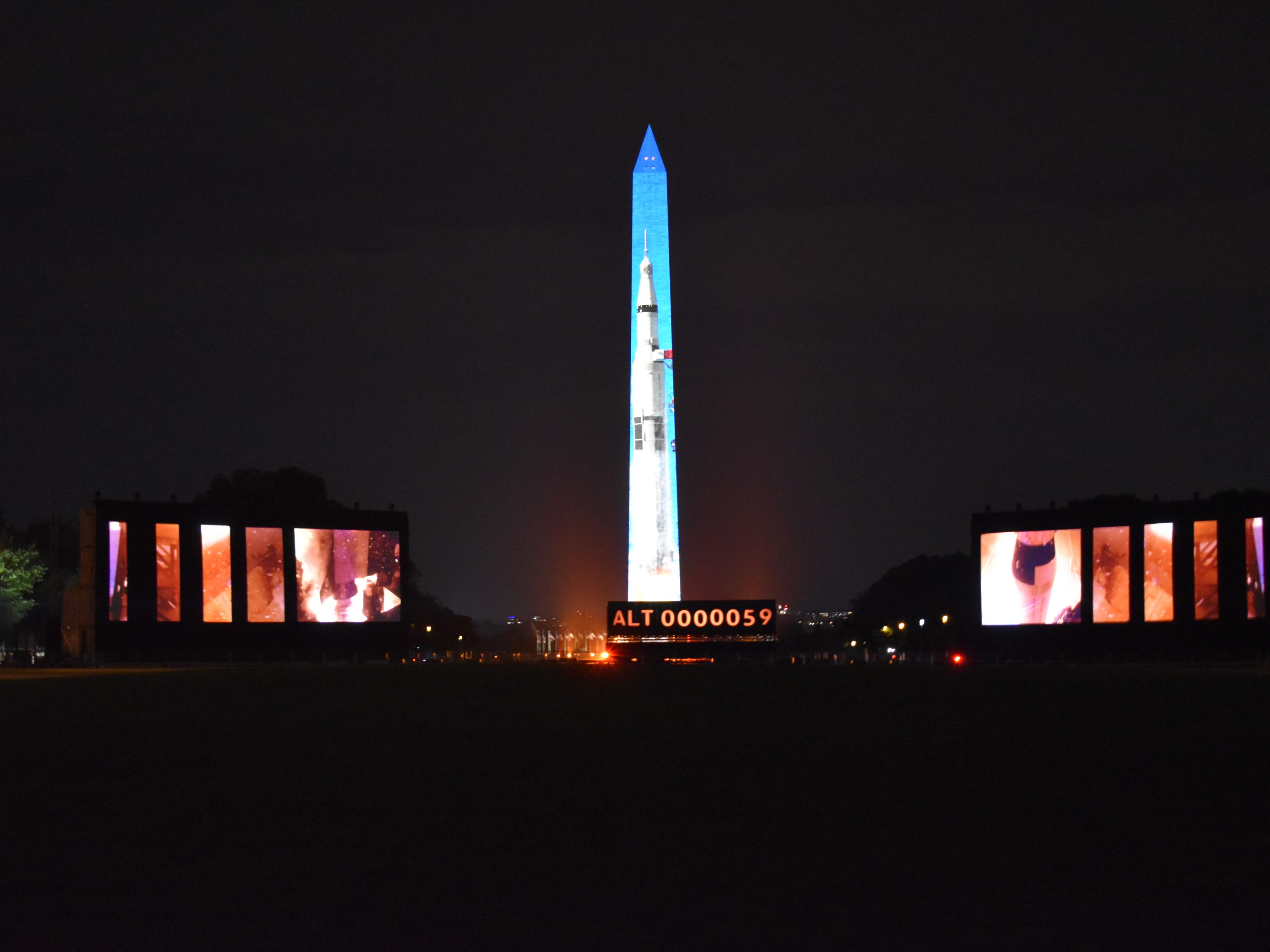
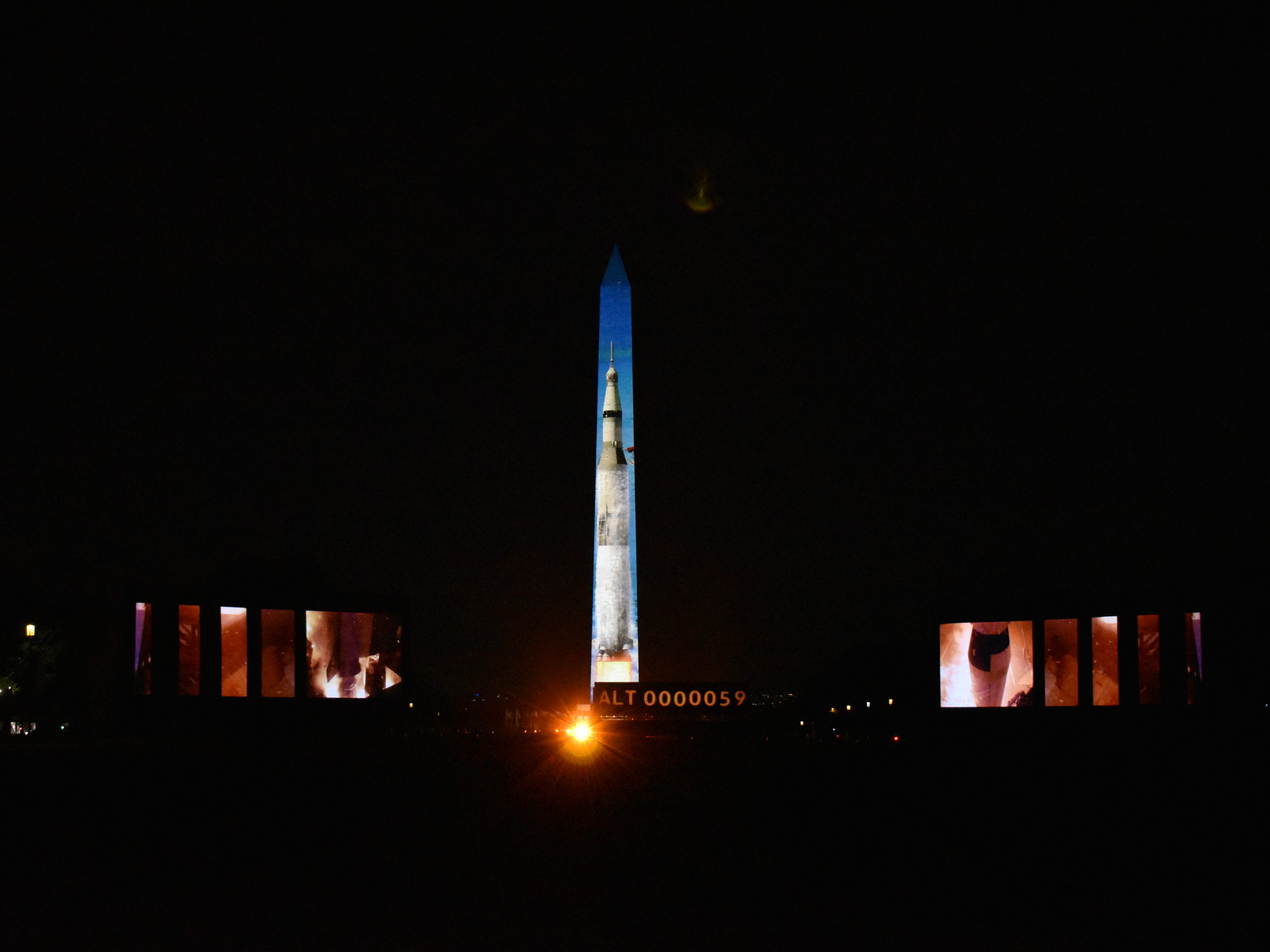
While a static projection of the rocket is cool, an animated CGI, smoke-billowing, sound-blasting rocket accompanied by archival footage of the Apollo 11 mission on 10 giant digital screens raises it a few notches.
Viewers will see an animated Saturn V rocket being built and launched while a 40-foot countdown clock (like the one that was at Kennedy Space Center) ramps up tension. Historical footage on nearby screens adds context, all enhanced by an epic score from Emmy-winning composer Jeff Beal. For those who are big fans of the D.C.-centric Netflix show House of Cards, that name could sound familiar: Beal composed the main title theme.
“We wanted to give … an experience for the generations who were not alive fifty years ago,” says Katie Moyer, programs specialist at the National Air and Space Museum and one of the show’s executive producers. “What better way than to stimulate what a rocket launch was like?”
Moyer says the idea came to them about a year ago while brainstorming a way to celebrate the 50th anniversary of Apollo 11 that would be experiential, immersive, and wholly unique. She and fellow executive producer Nick Partridge have been shepherding the project since its inception, which included securing congressional and presidential approval. The event was announced just over a week ago, but museum officials expect that it will attract tens of thousands of people to come to the National Mall. Moyer says the best place to experience the show will be right near the Smithsonian Castle, between 9th and 12th streets. “That’s where you’re actually going to feel the rumble of the Saturn V rocket launch.”
Helping the museum with this literally enormous task is 59 Productions, who also did the large-scale projection mapping show for the Freer|Sackler’s grand reopening in October 2017. Moving just down the National Mall, the show’s director Richard Slaney says projecting the story of Apollo 11 onto the Washington Monument is far different due to its scale, both in its narrative and what the Monument actually is—a 555-foot-tall obelisk-shaped structure made out of white marble bricks. “It’s tricky because we are projecting on something that has bricks and it’s own texture,” says Slaney. “It’s not a flat screen or surface.”
Despite the technical challenges of the Monument (“The very first question we had was ‘can we project that high from the ground?’” says Moyer), the recreation of the launch is presented with crisp images and inspirational storytelling. “We are all still amazed that this … was possible,” Moyer says.
The Saturn V rocket will be projected on the monument Wednesday and Thursday 9:30 p.m.-11:30 p.m. “Apollo 50: Go for the Moon” will take place Friday and Saturday at 9:30 p.m., 10:30 p.m., and 11:30 p.m. FREE
This story has been updated with more information about Nick Partridge’s role in the projection.
More ways to celebrate Apollo 50:
11 Ways To Celebrate the 50th Anniversary of the Moon Landing In And Around D.C.
Neil Armstrong’s Spacesuit Is On Display For The First Time In 13 Years