




When Ronnie Jackson’s landlord put his building up for sale more than a decade ago, he said that he and other residents felt like they were kept in the dark about what would happen next.
The residents decided to sue, kicking off a nine-year legal battle. “We found out a lot of things in increments,” said Jackson, who is now the president of the Waterside Towers Resident Association near D.C.’s Southwest waterfront. Looking back, he wishes he had gotten more support along the way.
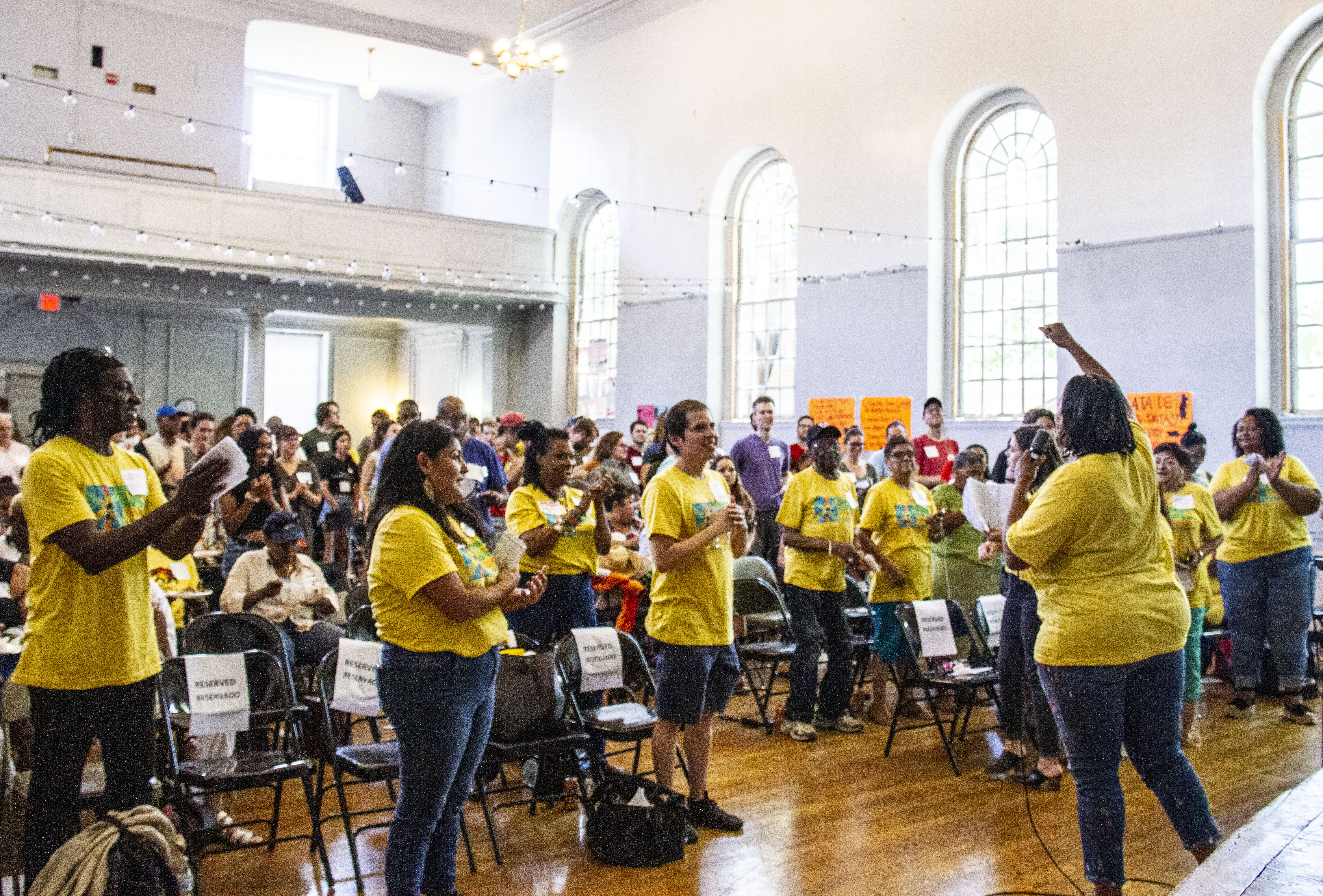
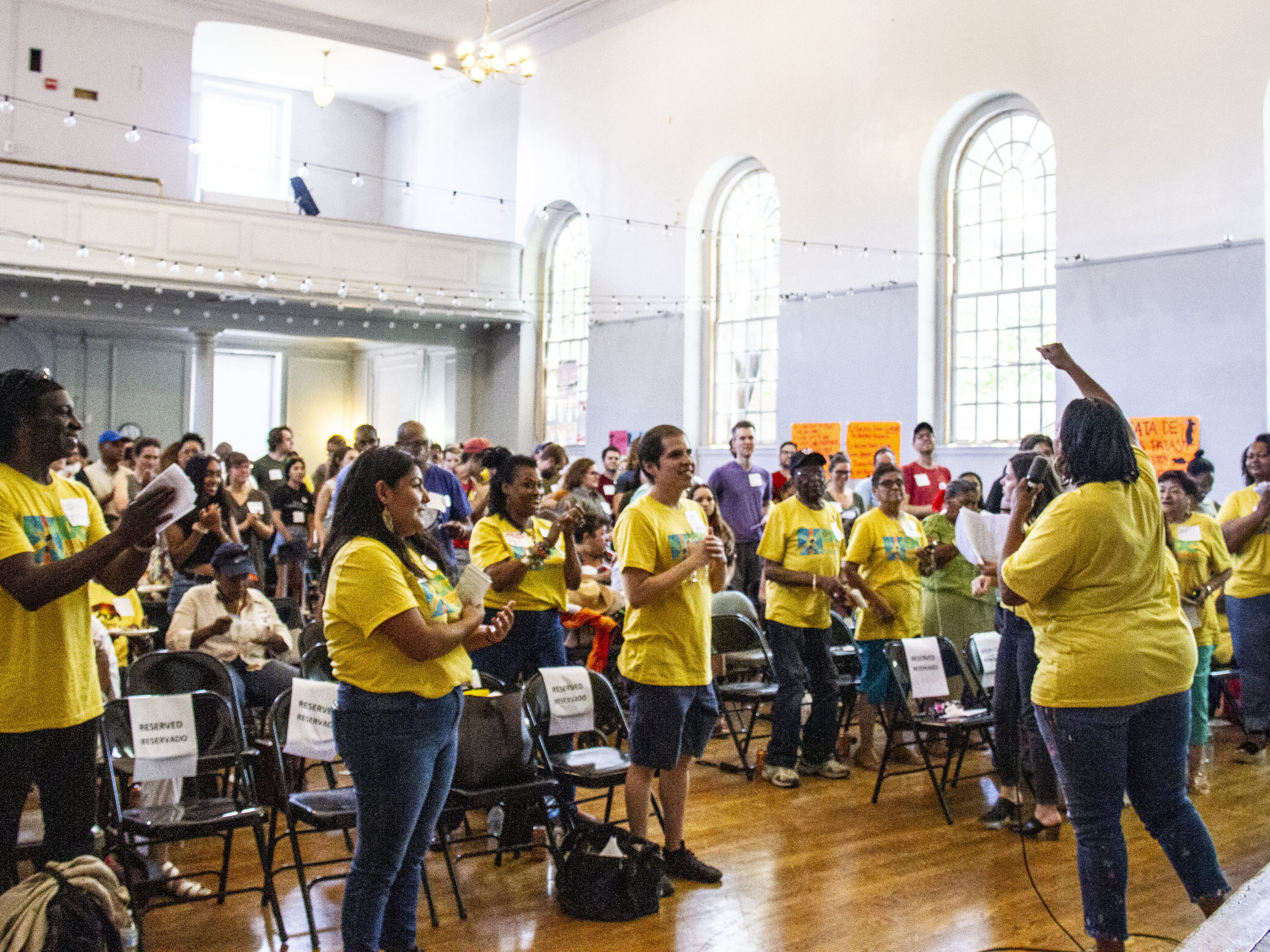
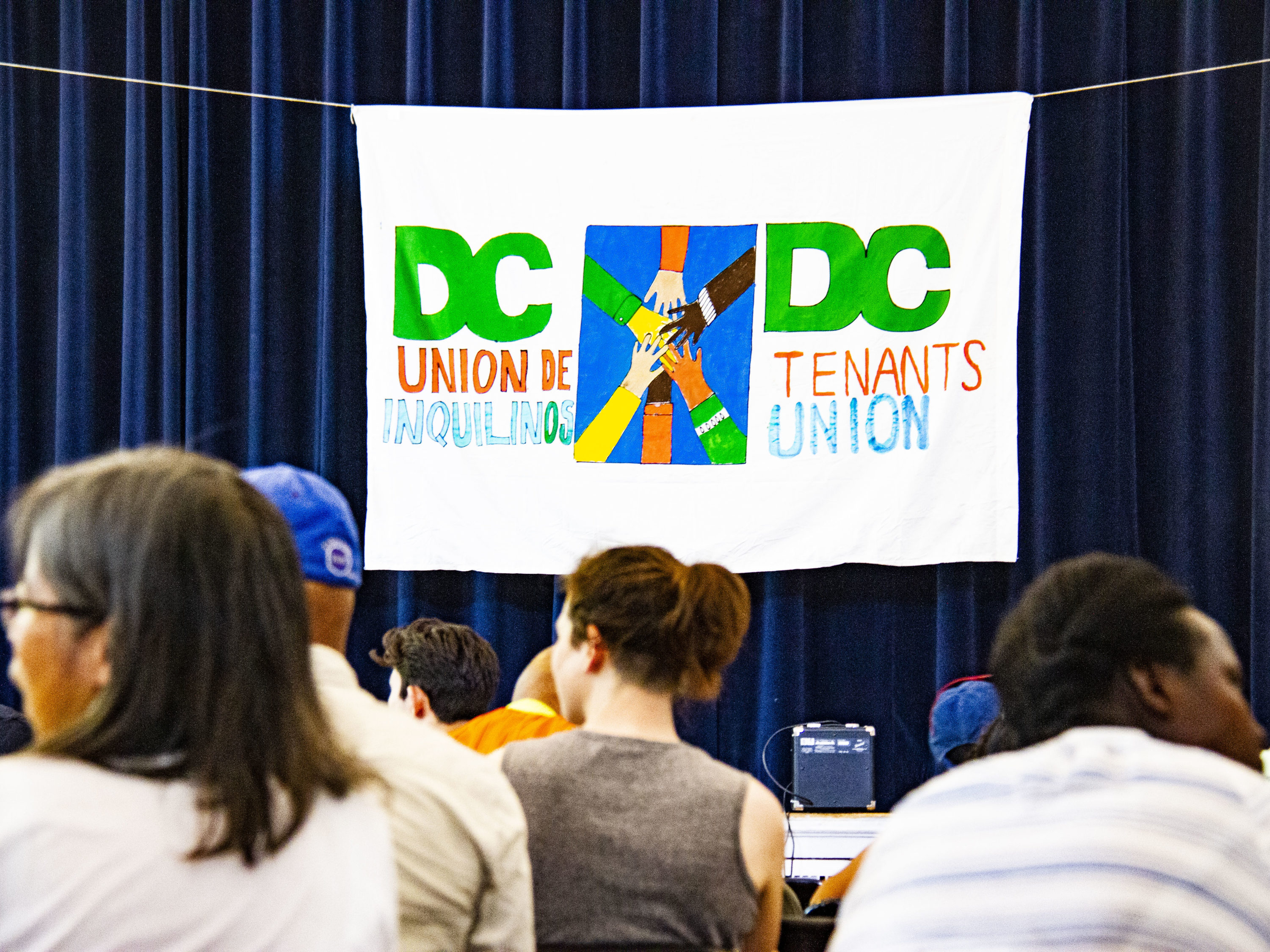
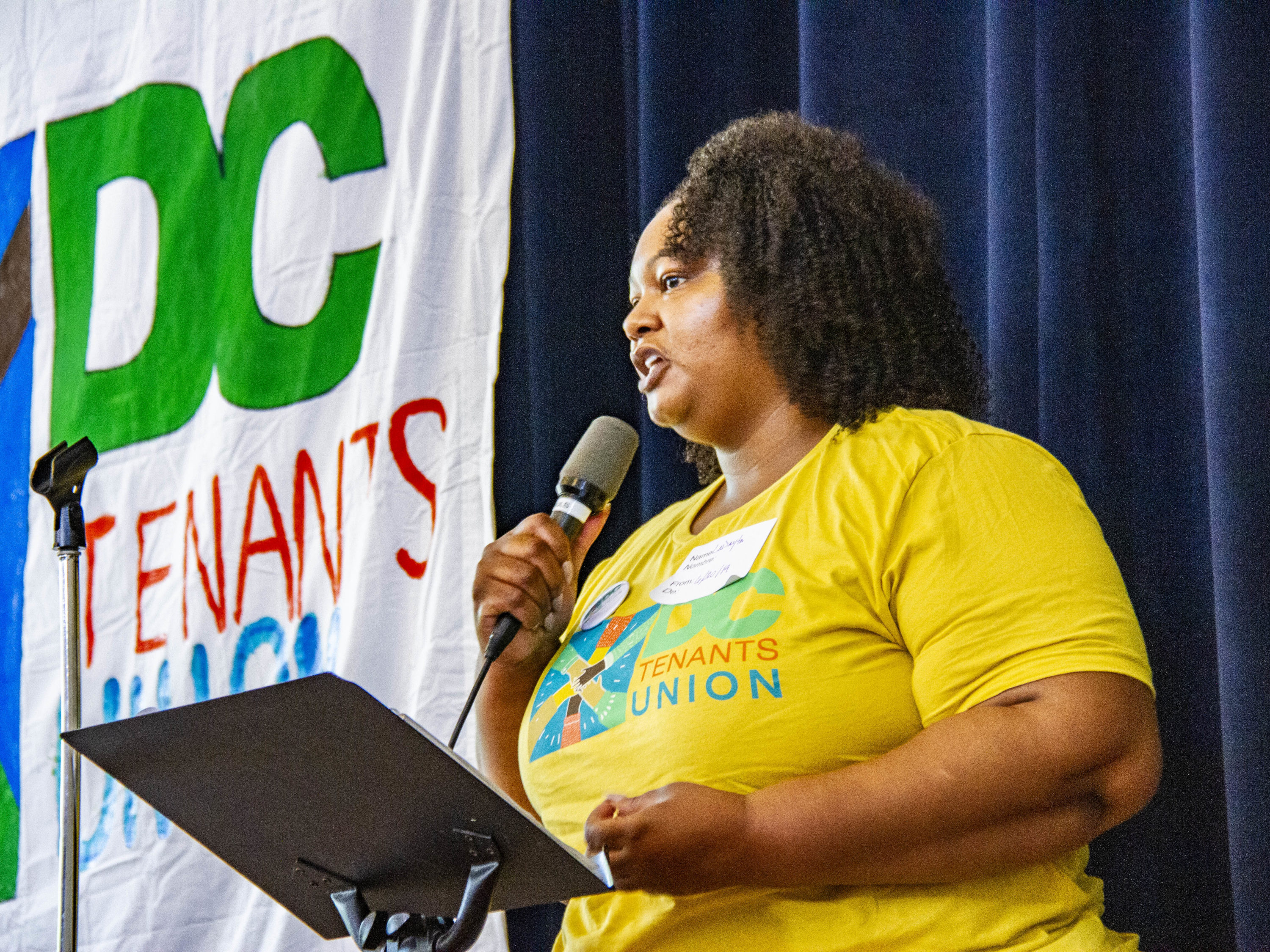
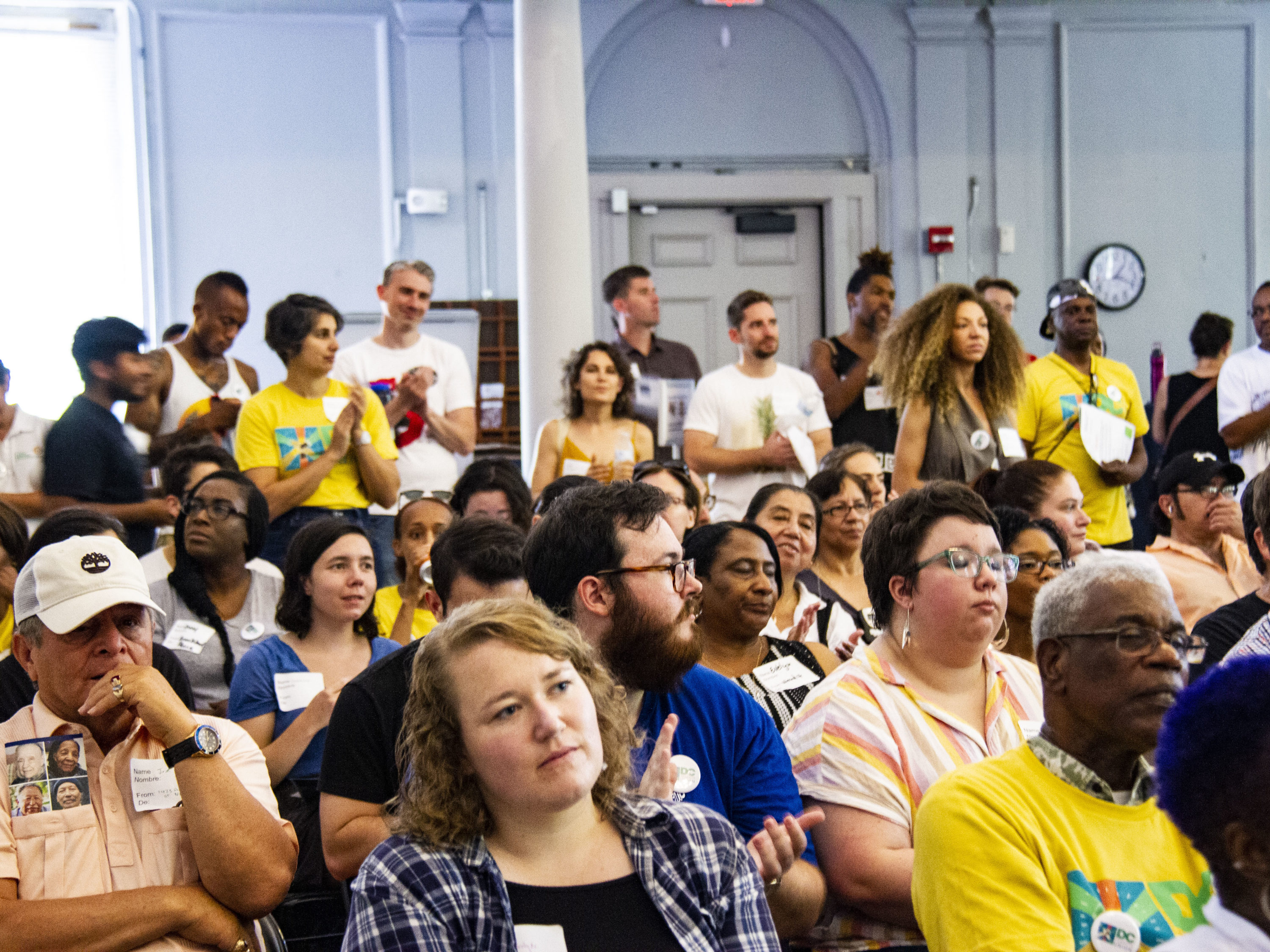
Now, he’s working towards creating an organization that would provide help to other residents in a similar situation. On Saturday afternoon, Jackson was one of around 150 people who gathered for the launch of a new citywide tenant union at All Souls Church in Columbia Heights.
“More and more minorities are being pushed away,” Jackson said. “We need to be unionized because chunk by chunk, place by place, ward by ward, gentrification is taking over.”
The event, hosted by the Latino Economic Development Center, drew activists, tenant leaders, and residents from across the District’s eight wards. They gathered in a stiflingly hot church hall with fans whirring to discuss the future of tenant organizing in the District, form neighborhood chapters, and elect new leaders for the union.
“Slumlord housing, it’s a crime. Time for slumlords to serve their time,” the crowd repeated, fists in the air, as organizers translated the chants into Spanish and Amharic.
This new union comes at a time when affordable housing is harder to find in the city. In the last two decades, rapid gentrification has displaced low-income District residents at some of the highest rates in the country. A recent survey showed that one fifth of residents in Wards 7 and 8 are worried that rising housing costs will force them out of their homes within the next three years. Washington is currently among the nation’s top five most expensive renting markets, according to a July report by Zumper. And those rents are rising at increasing rates, especially in areas near Metro stations.
“We’re in a crisis,” said Rob Wohl, tenant organizing manager for LEDC. “We have to act quick, and we have to act dramatically.”
The new group is not a union in the technical sense of the word—like the Teamsters or the United Automobile Workers—but Wohl hopes that bringing the District’s tenant leaders together will help secure stronger housing rights for the city’s many low-income residents who may be at risk of displacement. He said that while LEDC is well organized across Northwest D.C., the organization still has a lot of work to do in other parts of the city.
The group’s top priority will be to get established leaders of tenant associations to mobilize residents of other buildings, Wohl said. People will have more leverage as part of a larger group than as disparate entities, and can better share information. And in terms of policy, Wohl hopes the group can help close loopholes in D.C.’s rent-control legislation and change housing laws along the lines of the landmark rent-reform bill passed last month in New York City.
D.C.’s citywide tenant union will be broken up into three branches: the Uptown chapter (Wards 1, 3, 4) the Midtown chapter (2, 5, and 6), and the East of the River Chapter (7 and 8).
Several participants in the East of the River breakout session said they worried that Wards 7 and 8, which include some of the poorest parts of the District, would be marginalized within the union. Karen Settles, a veteran tenant organizer in the District who chairs the citywide advisory board for the D.C. Housing Authority, objected to dividing the union into chapters out of concern that it could sow division within the organization.
But organizers contended that splitting the group into chapters would help ensure it could meet the needs of its members. “We want people to be able to walk to a meeting ideally,” said Wohl. “We need to have things that people can be a part of in their day-to-day lives.”
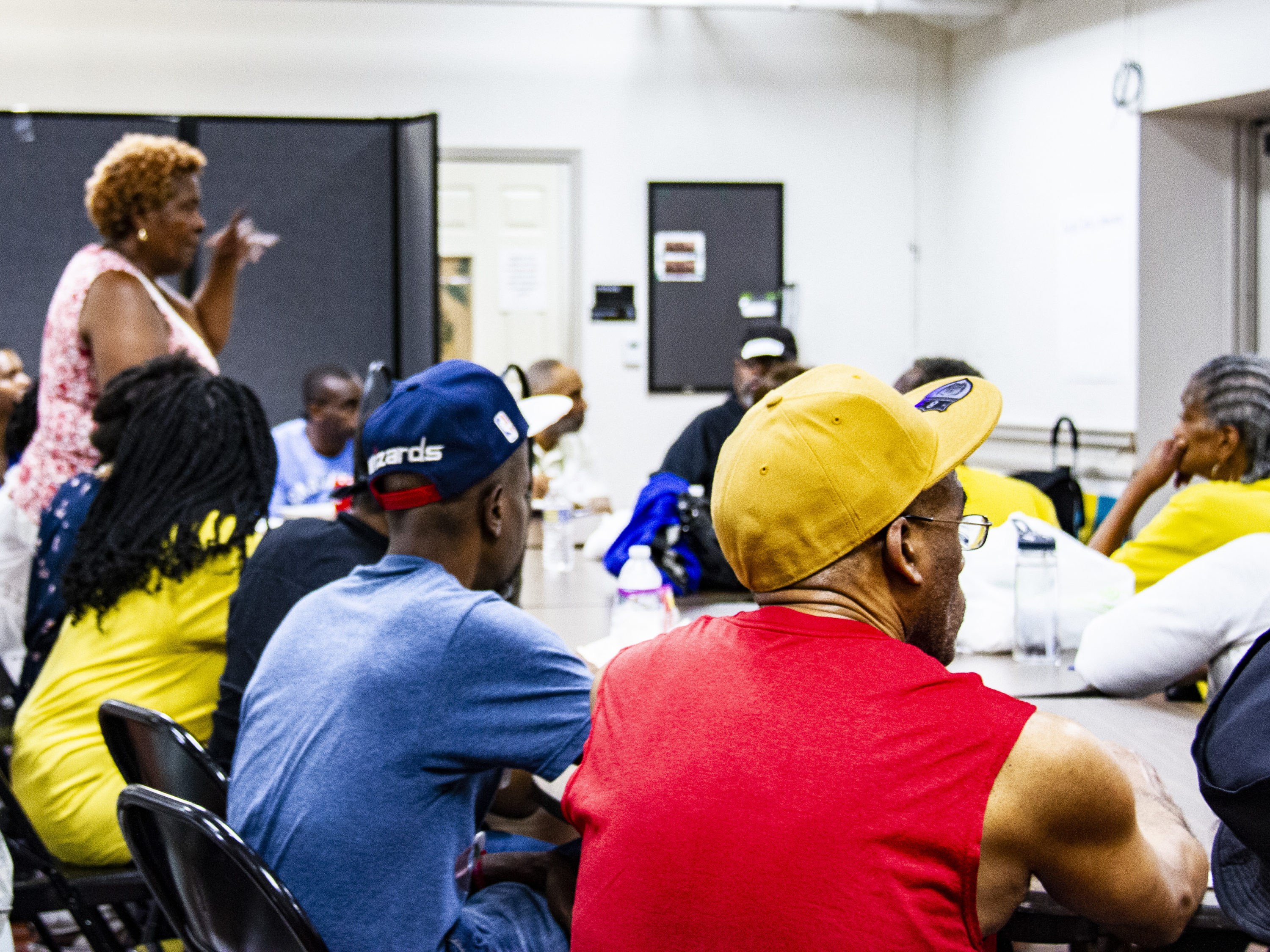
After congregating in All Souls Church’s main hall, people broke off into separate rooms to elect five new leaders for their respective chapters. Participants could nominate themselves, or anyone else in the room. It was a blitz election—nominees were given a short minute to say something about themselves before each chapter proceeded to a vote.
Beatrice Evans was among those nominated as a leader of the East of the River chapter, though she didn’t win. Six months ago, Evans got help from LEDC to create the residents association at the Triangle View apartments in Fort Dupont and she said that getting information out to residents is one of the biggest challenges for tenant organizers.
“If people knew what was happening in the city and what rights they have about getting things accomplished in their building, then people would participate more,” Evans said.
Settles was elected as one of the leaders for the East of the River chapter on Saturday. For the organizing efforts to be successful, she said, leaders will have to learn from past mistakes and overcome infighting.
“What we should focus on is what we all have in common,” Settles said. “And that is our human right to have a place to live—whoever you may be.”
This story has been updated to reflect that Beatrice Evans was nominated, but not elected, as a leader for the East of the River chapter.