Jacob Fenston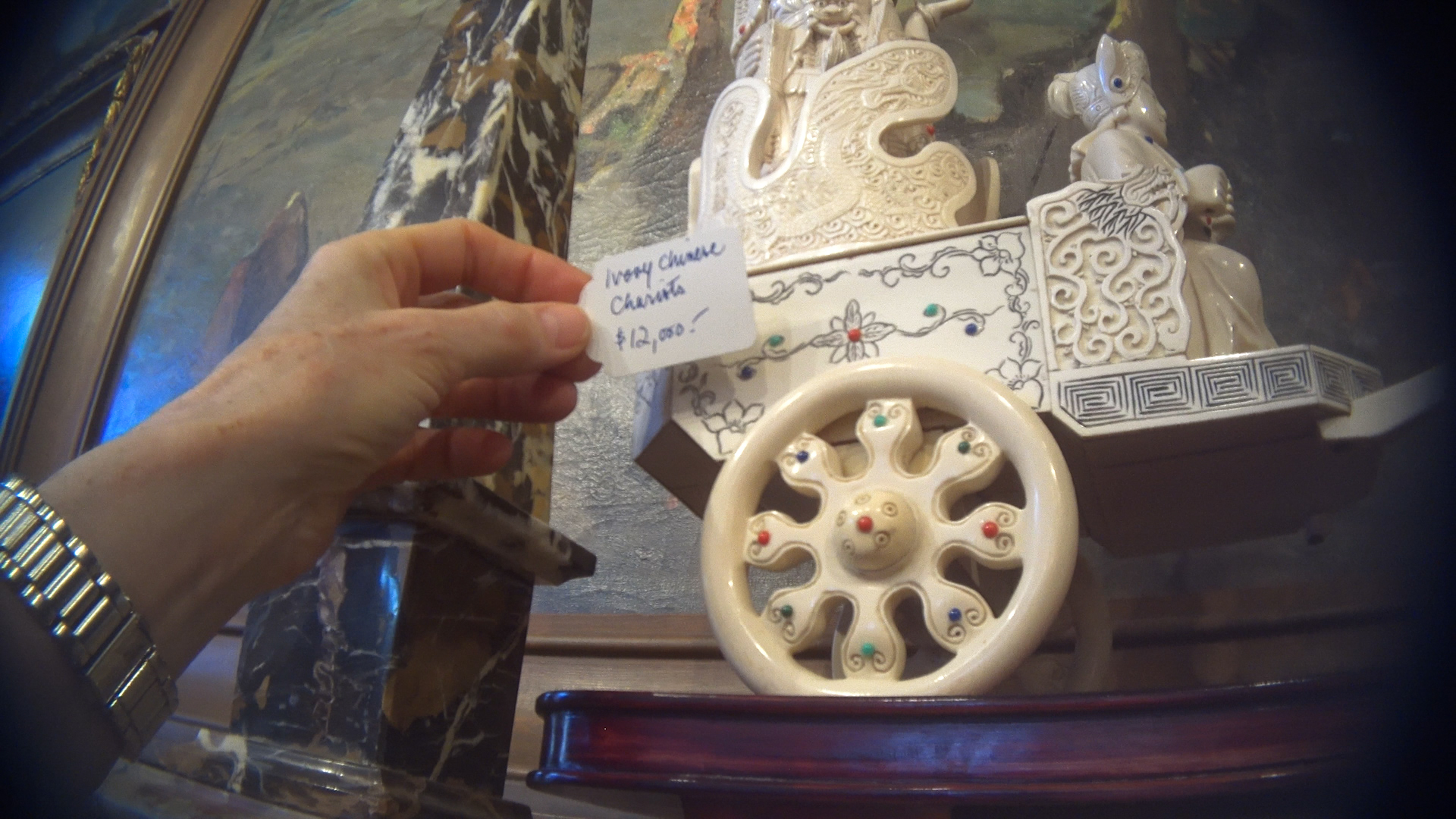
In shaky video footage, a Humane Society investigator asks antiques dealers naively, “Is this ivory?”
In follow-up questions, she asks if there’s any documentation of the ivory’s age or origin—important to know if you don’t want to violate federal law. The answers are vague and evasive.
“I got them from a lady, she’s 87 or 88,” says one seller.
Since 2016, federal law has banned the import, export, and sale across state lines of African elephant ivory. The Obama Administration ban was an effort to cut off the U.S. ivory market, making elephant poaching less profitable. But ivory sales have persisted. The Humane Society of the United States and several D.C. lawmakers are pushing for tougher local legislation targeting those sales.
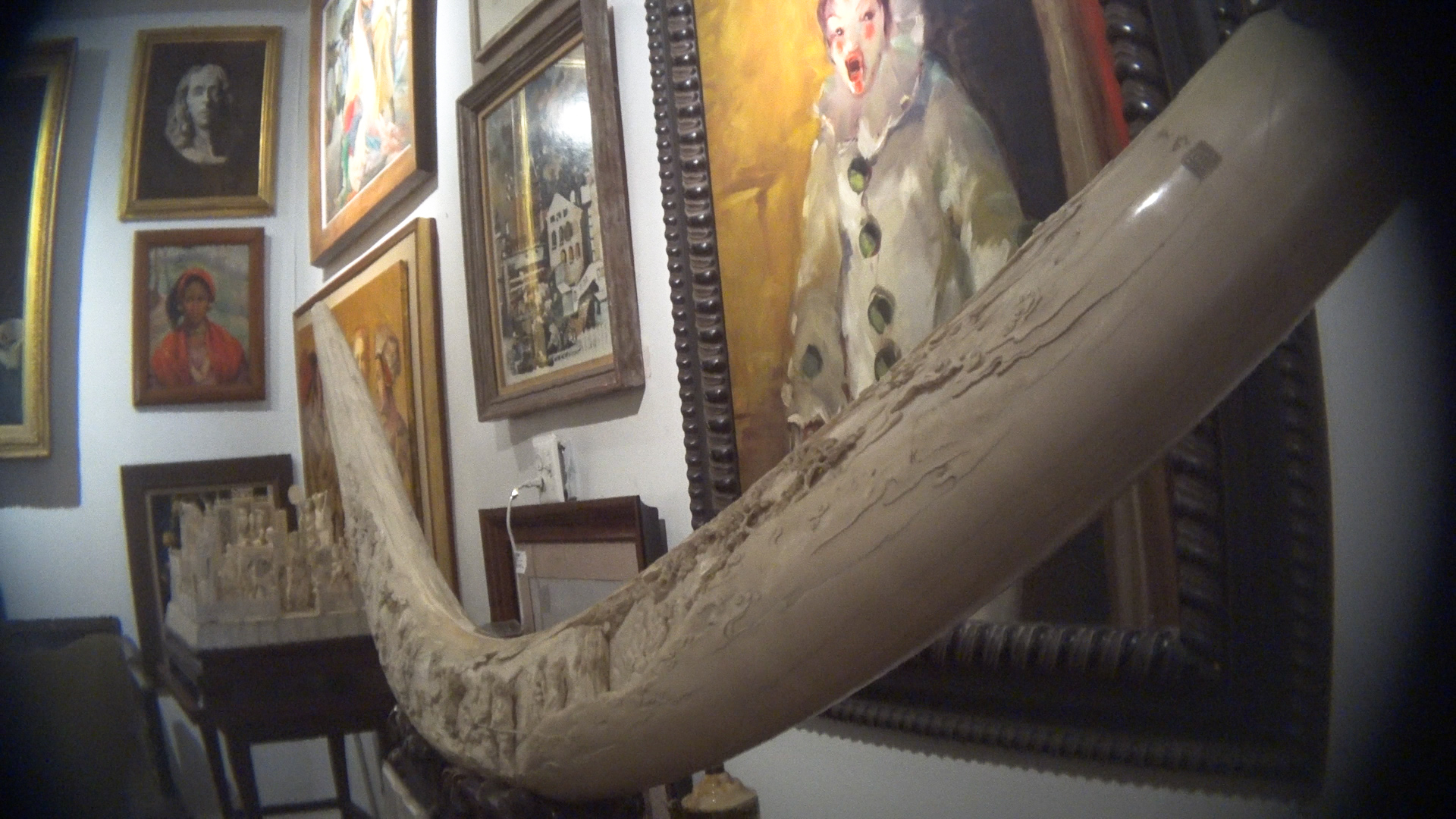
A carved full tusk for sale for a cool $600,000 in D.C.
The Humane Society investigation found ivory at four D.C. antique shops and two vendors at the Georgetown Flea Market during visits between April and June 2019. The most expensive piece was what appears to be an entire tusk, with an intricately carved scene along the side. The price tag: $600,000. That’s significantly more than the median home value in the city, and the most expensive piece of ivory the investigator had seen over years of work in the field.
Also for sale: an ivory boat for $25,000, a pair of ivory chariots for $12,000, and an ivory Buddha at the bargain basement price of $540.
Previous investigations have also found a thriving ivory market in D.C. A 2017 study found the D.C. area had more ivory items for sale than any other metropolitan area surveyed, edging out cities that used to dominate the ivory market: New York, San Francisco, and Los Angeles.
Those cities saw ivory sales plummet after new state laws went into effect cracking down on the market. At the same time, the number of vendors selling ivory in D.C. and the number of items for sale in the area increased threefold. “It is likely that this is due to the enactment of stricter regulations governing intrastate ivory sales in some of these states, and resulting increases in enforcement,” the 2017 report noted. In other words, when California and New York cracked down on sales, the market shifted to D.C., where restrictions were not in place.
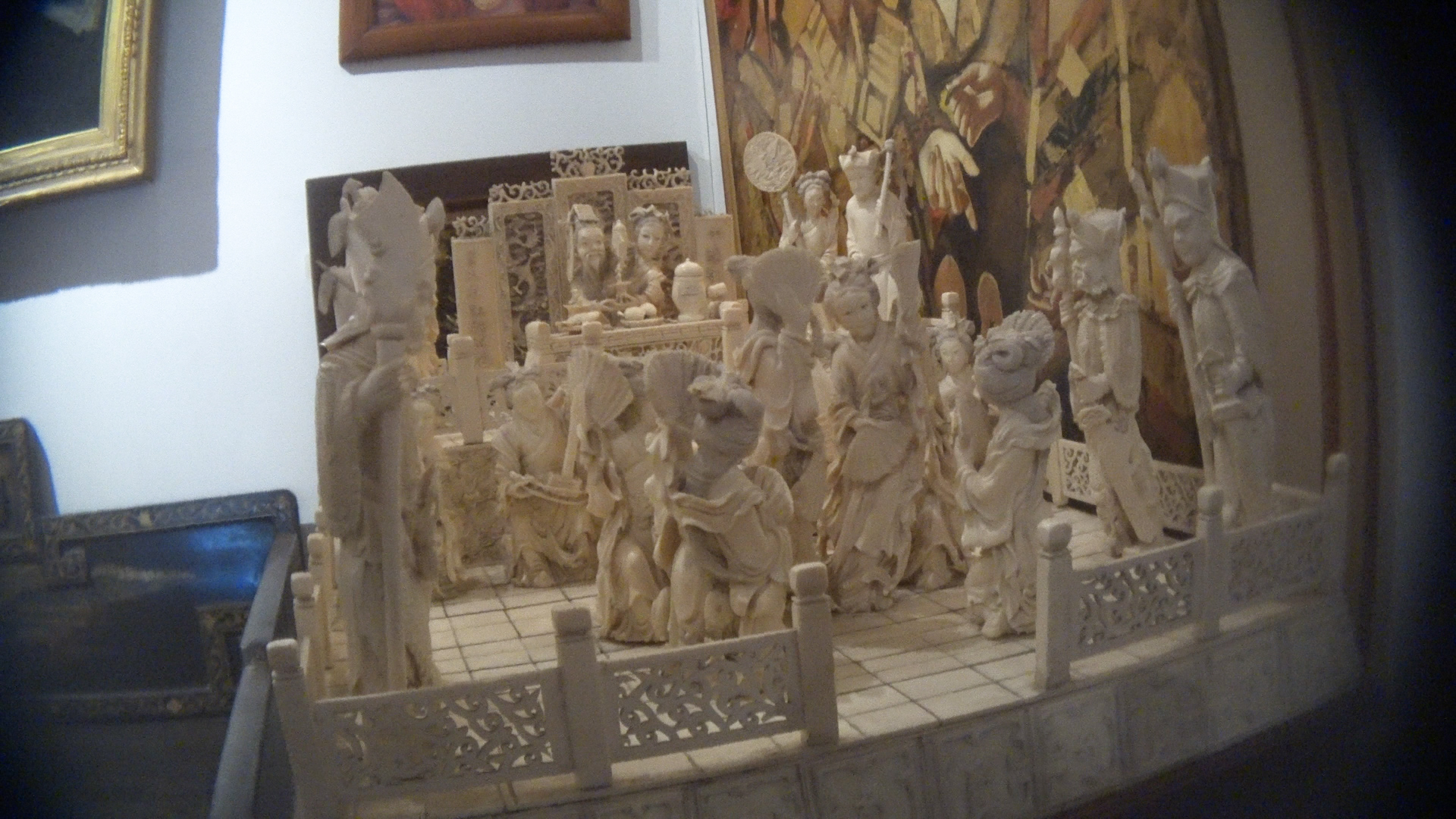
An ivory game board, selling for $48,000.
“It is devastating to me that ivory sales are occurring right here in the District,” said Humane Society President Kitty Block, during a press conference about the new investigation on Monday. “The demand for wildlife products right here in the District stimulates supply and exacerbates the killing of these incredible animals.”
Ward 3 Councilmember Mary Cheh has introduced legislation to outlaw most ivory sales within the city, with fines of up to $25,000 for multiple offenses.
“The District of Columbia should not be the sanctuary for profits of animal slaughter,” said Cheh during the press conference. “That’s the bottom line, and that’s why we need this legislation.”
Cheh introduced similar legislation twice in recent years, but it hasn’t made it to a full council vote.
The latest African elephant census showed the continent lost about one-third of its elephant population in just seven years—a loss of 144,000 animals. Illegal poaching was the primary cause of the decline.
This story originally appeared on WAMU.