Jacob Fenston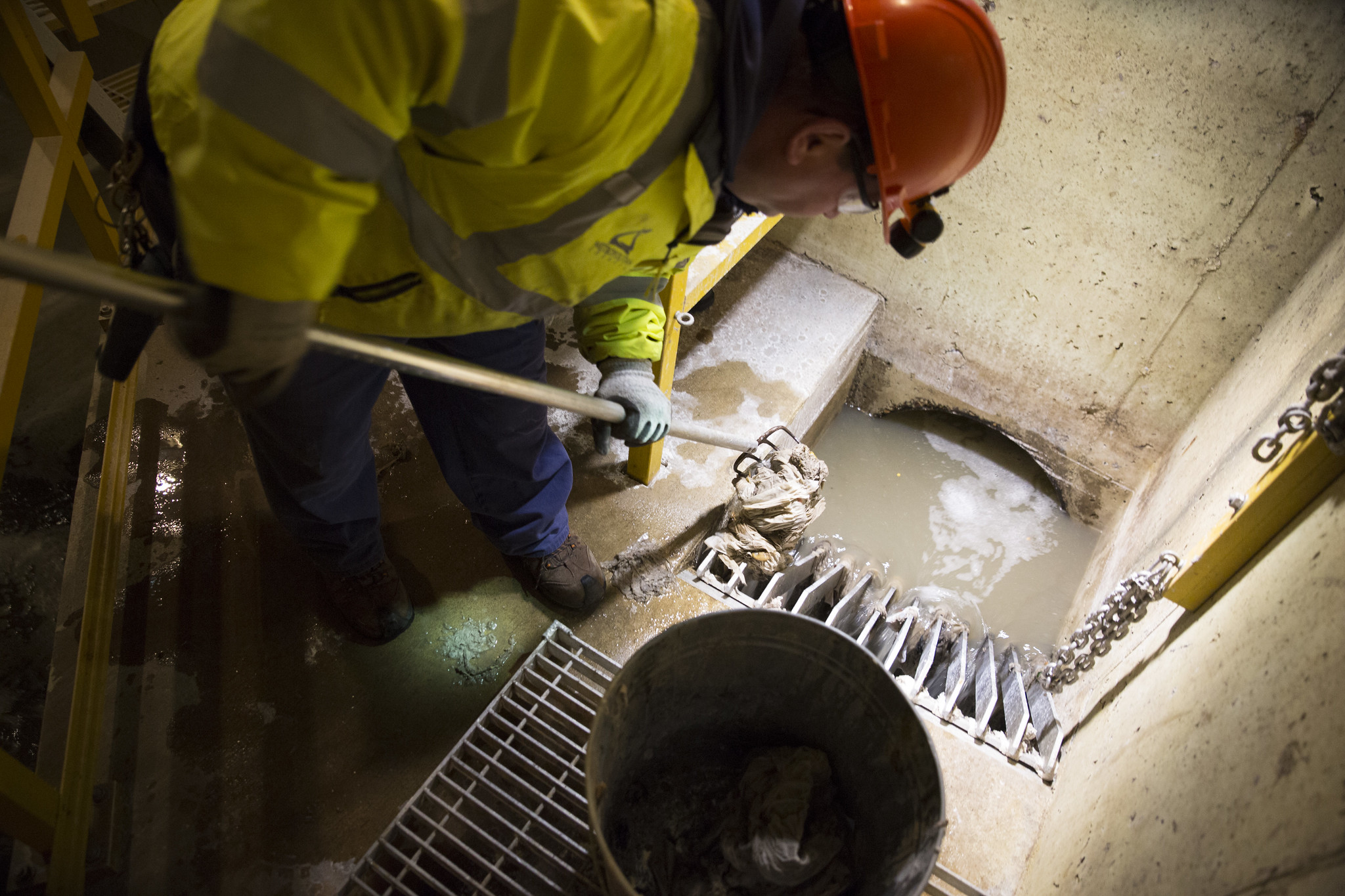
If you pour used cooking grease down the kitchen sink, you’re not alone—according to a new survey, 44 percent of respondents in the D.C. region pour cooking oil, fat, or grease down the sink at least occasionally. In doing so—rather than dumping it in the trash—you may be contributing to the creation of something truly horrifying—a fatberg.
“If people are flushing hair and dental floss and wipes, and then also pouring grease down drains, all of this combines once they’re in the sewer pipes,” explains Heidi Bonnaffon, with the Metropolitan Washington Council of Governments, which conducted the survey.
The resulting combination is a fatberg: a disgusting mass of congealed fat so big it clogs sewer pipes. There have been a few local examples, in Southeast D.C. in 2014, in Baltimore in 2017. In London—world-famous for the fatbergs that block its Victorian sewers—there was a fatberg the size of 11 double-decker buses, and another the size of a Boeing 747.
While grease and oil dumping appears to be fairly common, according to the COG survey, flushing wipes down the toilet (the other key ingredient of a fatberg) is less popular: 21 percent of respondents admitted to doing it at least occasionally.
The digital survey was conducted by COG on behalf of 16 local water and sewer utilities in May, and had close to 500 respondents.
“We really wanted to get a baseline understanding of the public’s knowledge and behaviors concerning water and wastewater,” says Bonnaffon. It’s the first time COG has done the survey, and Bonnaffon says it will be an annual undertaking in the future to help gage the impact of education efforts.
Bonnaffon says the survey showed people are generally doing the right thing, in terms of disposal of things like wipes, grease and medication—90 percent say they never flush unwanted medications. (Wipes, grease, and medications all belong in the trash, not the toilet or drain.) Bonnaffon also says people also generally trust their water utilities. For example, she pointed to the finding that 71 percent of respondents always or mostly drink tap water. On the flipside, though, one in five people rarely or never drink tap water. Of those who rarely or never drink tap water, one in three say the reason is concern about safety.
In terms of water conservation, most respondents are not wasting it on their lawns: only 4 percent of people said they water their lawns daily or more. Almost one third never water the lawn, and another one third don’t have a lawn to water.
One area where there is room for more public education, says Bonnaffon, is salt use for snow removal. Salt use has been on the rise in recent years, and it’s having a negative effect on water quality and water infrastructure. According to the survey, more than half of those who manage their own property said they use chemicals to remove snow.
The survey also found one in three respondents didn’t know where their drinking water comes from (for most people, it’s the Potomac River.) Interestingly, people were much more aware of their impact on the Chesapeake Bay than on the quality of their own drinking water.
A full 70 percent of people strongly agreed with the statement: “Actions on my property that I take, such as fertilizing, oil changes, and disposal of pet waste, can impact the health of the Chesapeake Bay.”
Only 43 percent strongly agreed with the same statement regarding their impact on the quality of their drinking water.
“That was an insight to us,” says Bonnaffon. “This really helped inform us that there should be more messaging about our drinking water, and our source of water and how individual behaviors help protect that drinking water.”
Oh, and if you want to see what one of the largest fatbergs ever discovered looks like, part of the famous Whitechapel Fatberg of 2017 is on permanent display at the Museum of London (curators say they are “preserving it to fascinate and disgust future Londoners”). And yes, there is a live webcam. And yes, it’s called the FatCam.
This story originally appeared on WAMU.