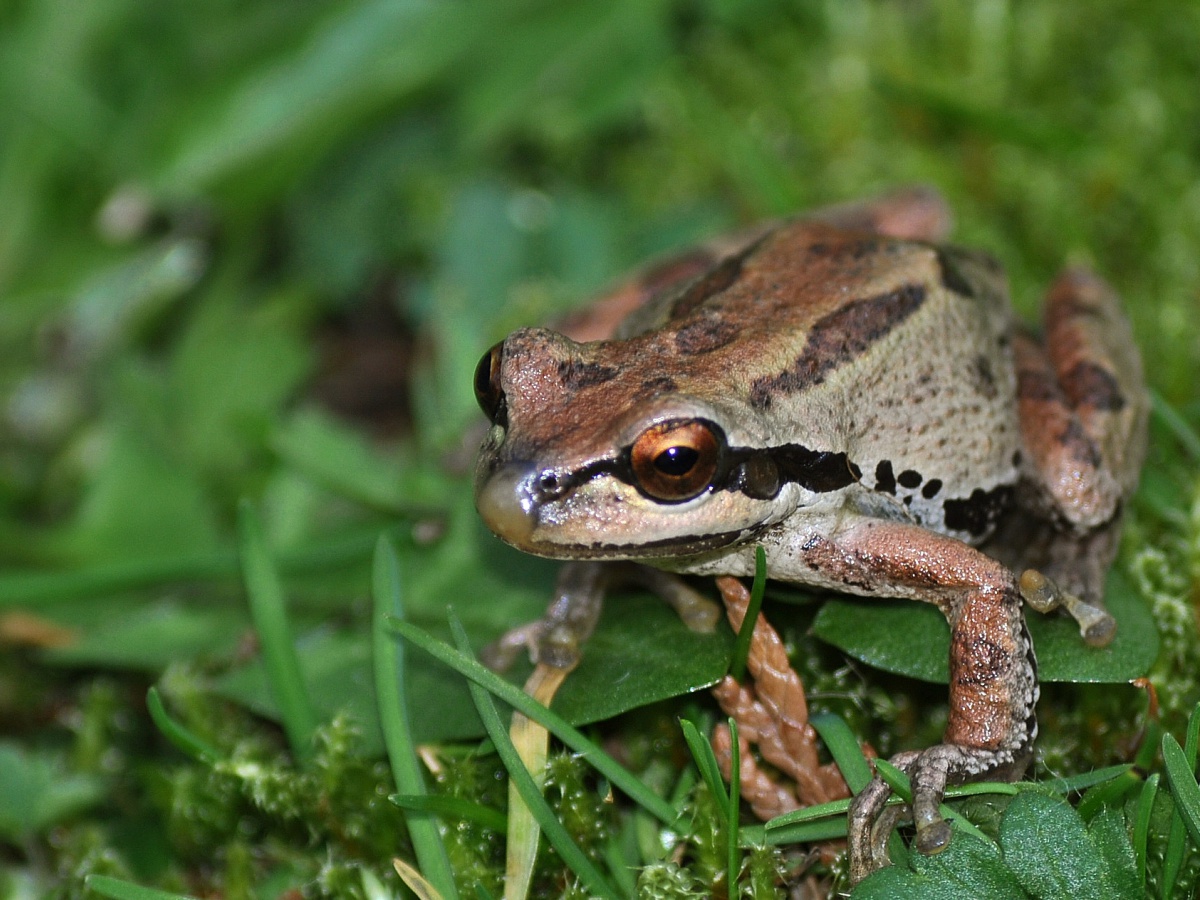
Remember last fall when a woman in Tenleytown found a frog in her Cava salad? Well, according to a new research paper, these incidents aren’t as rare as you might think.
American University graduate student Naomi Stahl was in “a full-on panic,” when she found the amphibian intruder, she told the Washington Post. Stahl, who was alone in her apartment at the time, put a heavy coffee-table book on top of the salad bowl to keep it sealed and waited until her boyfriend got home. The two took the salad back to the fast-casual Mediterranean eatery, eventually releasing the frog in the wooded area near their apartment.
The incident is one of two recent cases of Washingtonians finding animal intruders in their pre-packaged produce included in the new research paper. The other is the time a shopper found a lizard in her Trader Joe’s pre-packaged kale near Foggy Bottom in April 2018.
Stories like those prompted University of Illinois postdoctoral researcher Daniel Hughes to begin gathering data on just how frequently people found unwanted animal intruders in their prepackaged produce.
Out of curiosity, Hughes started researching instances of people finding frogs in their salads and noticed that most of the articles he came across characterized these incidents as “once-in-a-lifetime” situations. There wasn’t any publicly available data to support this assumption, and as Hughes’ list of saved article links grew, so did his skepticism about the rarity of finding animals in salad.
The first-of-its-kind study, which is based on a survey of online news articles from 2003 to 2018, found an average of five instances of wild vertebrates found in prepackaged food across the country each year for the past five years.
That number is “kind of contrary to common opinion,” Hughes, who led the study, tells DCist. He says that, while these sorts of occurrences are still uncommon overall, they’re “a bit more common that you would think based on your gut intuition.” Plus, there may be even more that, given that the methodology limits the study to instances that were picked up by media outlets.
Of the 40 total instances identified by Hughes and his colleagues, amphibians, including frogs like the one Stahl found, were the most common intruders, with a little over half of the recorded instances falling into this category. The researchers ID-ed the frog in Stahl’s salad as a Pacific Tree Frog and found that this amphibian group was the most common, with 62 percent of the occurrences being tree frogs. Reptiles made up almost 23 percent of all the animal intruder instances, with birds and mammals being less common at 18 percent and 8 percent, respectively.
Despite his findings, Hughes still recommends that people continue eating fresh produce.
“And if you happen to get a live frog, please don’t release it in your backyard,” Hughes said in a press release. “Releasing wild animals is how invasive species start, and could introduce disease into local frog populations. Just don’t do it.”