 Jordan Pascale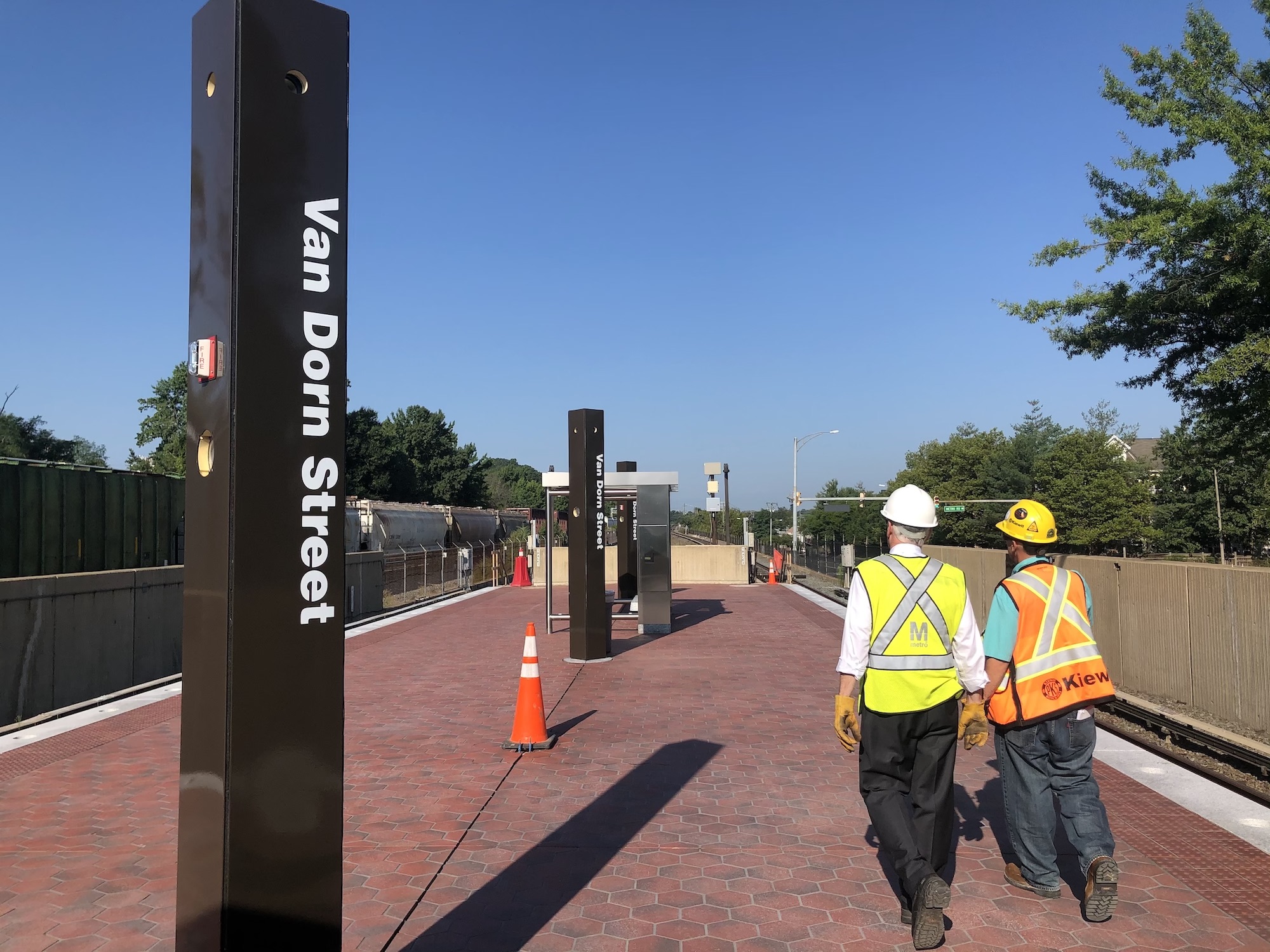
With about a month left until six stations south of Ronald Reagan Washington National Airport reopen, Metro gave reporters a tour of the Van Dorn Street station Thursday to show its progress.
Most of the heavy construction is over. Crews are grouting tile, installing new passenger information displays and other amenities.
Years of weather exposure caused the outdoor stations to deteriorate. The biggest safety concern was crumbling concrete that held up the lip of the platforms where passengers board. Those have been replaced.
Metro decided to close all six stations for the entire summer instead of spreading work out over three to four years, saying that it has a less overall impact to riders.
General Manager Paul Wiedefeld says the projects average about 800 construction workers a day, and the stations are all on track for a September reopening.
“Walking here, it’s almost like a total rehab of the station, when you really step back and look at it,” Wiedefeld said.
Work will continue after stations open, including redoing bus loops and tiling portions of station mezzanines. End of the line stations Huntington and Franconia-Springfield will use only one side of the platform to load and unload passengers until late fall, Wiedefeld said, but it shouldn’t impact service.
“When we’re done, service will resume and it’ll be safe, but you will still see some construction going on,” Wiedefeld said. “We’re aiming (to finish) September 8, and we think we’re in pretty good shape. I say that not knowing what the weather’s gonna bring tomorrow, but otherwise, we’re in good shape.”
Metro is also on track to get both sides of the platform at Van Dorn Station reopened, but if weather or other delays occur, that could mean single-tracking and trains coming only every 24 minutes through the end of the Blue Line.
While Metro is rebuilding the six stations, it’s also been doing track work, fixing power stations, and prepping the new Potomac Yard station construction area.
Wiedefeld says he’s confident riders will return to the system once work is over.
This is the first round of platform rehabilitation. Metro is rehabbing 20 stations over three years.
A Look At What’s Changing
Among some of the most notable changes:
- Slip-resistant tile that has better traction than the old, smooth tiles.
- More and larger passenger information displays that can show train arrivals and service advisories at the same time.
- New shelters on the platform have USB plugs and power outlets.
- Blast-proof trash cans.
- Better speakers for station announcements.
- Improved surveillance cameras.
More details for progress at each station can be found on Metro’s website.
Lastly, WMATA enthusiasts noticed a subtle, but important aesthetic change: a new weight of font on the station signs.
Join us as we analyze WMATA font and styles https://t.co/OAlZrVwDoe
— Jordan Pascale (@JWPascale) August 8, 2019
Asked what things riders will look forward to most, Wiedefeld said, “It’s going to be the trains showing up when they’re supposed to show up. These are great things, but that’s what riders really want.”
This story originally appeared on WAMU.