



Justin Ward just finished a tuneup on his 2006 Triumph Bonneville. The brakes were shot, he says.
“They were done. It was metal on metal,” Ward explains while soaping down the shiny black motorcycle on a sidewalk outside the shop. But he isn’t actually a mechanic.
“I literally knew nothing about working on bikes and maintaining them until I started here,” he says.
Ward, 37, is a member of Dunn Lewis, a do-it-yourself motorcycle repair club in Northeast D.C.’s Ivy City. He pays a membership fee ($30 for three months) to bring his bike to the shop, and use all the tools he needs to keep it running smoothly.
“I love it,” says Ward, who works at a law firm and bartends on weekends. “It is time consuming, though. So if you have the time, I’d say do it.”
Since he joined the club two years ago, he’s been gradually learning the art of motorcycle maintenance on his free time.
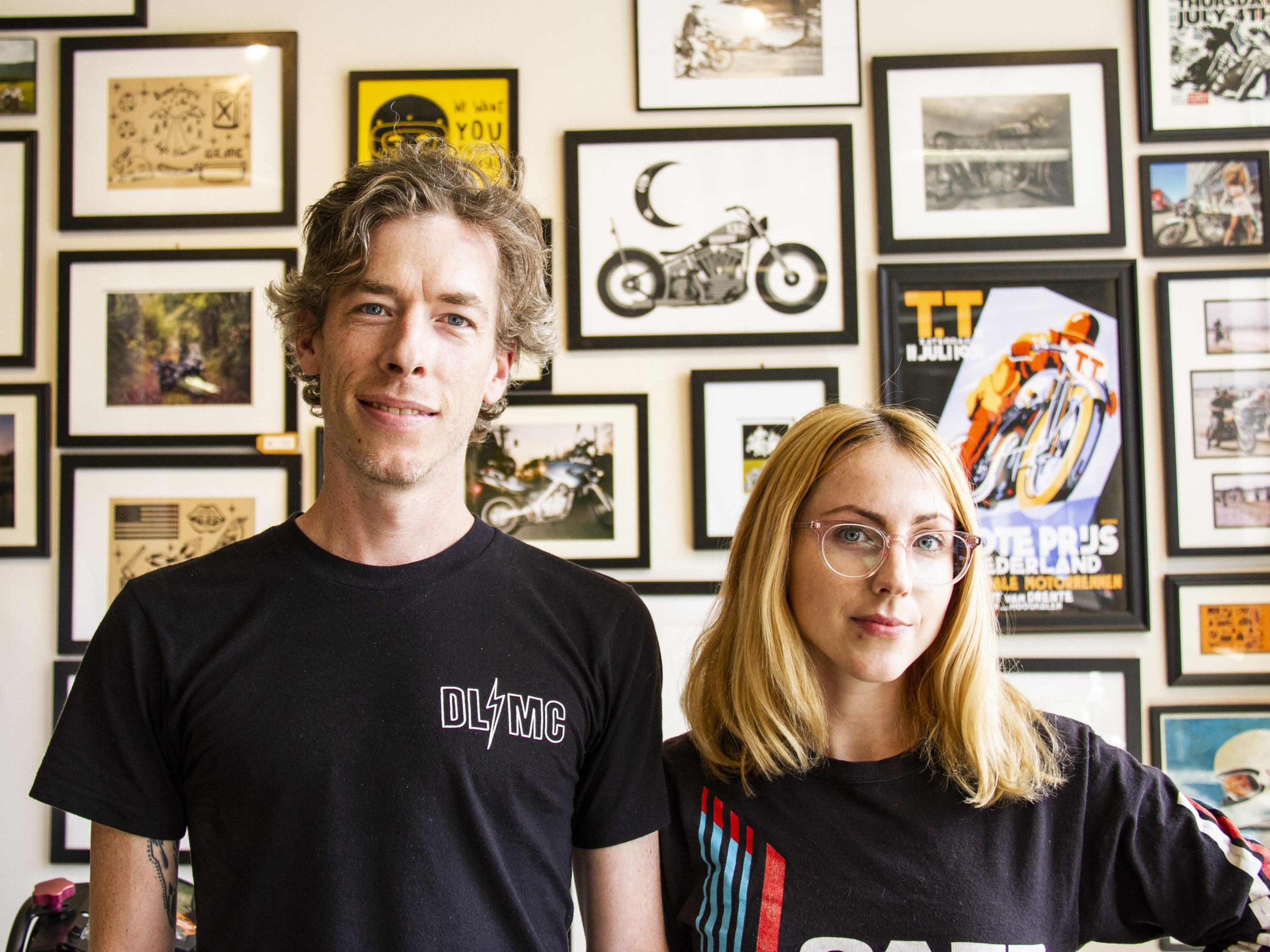
“Education is a very important part of what we’re doing here,” says Mason Anderson-Sweet, who runs the shop with his business partner, Clayton Schaefer, and his wife, Laurel Bray. “We very much want people to understand their motorcycles.”
Club members can pick and choose from a variety of classes, workshops, and clinics. The full curriculum—-a comprehensive review of how motorcycles work—lasts about six months. “By the end of it, you should be pretty confident, and capable to take a $300 pile of rust from someone’s barn and turn it into a $5,000 this-is-me-on-two-wheels,” says Anderson-Sweet. Other options include $50 or $100 monthly membership levels.
The concept grew out of an informal “Craigslist service garage” that Schaefer operated out of Union Arts. Schaefer and Anderson-Sweet, who are childhood friends, then opened a pop-up repair shop at Union Market, where they sold custom swag.
In July 2017, the duo opened their permanent location at 2007 Fenwick St NE, on the same block as a Nike Store and across from a craft cocktail bar in D.C.’s rapidly gentrifying Ivy City. Now, Anderson-Sweet says the club has more than 100 members that range from longtime District residents to transplants working as lobbyists on Capitol Hill.
“We definitely have a slice of just about every type of person and industry that you find in D.C.,” says Anderson-Sweet. “Their perfect idea of a Saturday afternoon is taking something broken and ugly and turning it into something wonderful and practical.”
In the last decade or so, do-it-yourself garages have cropped up across the nation. In San Francisco, MotoGuild offers pay-as-you-go repair workstations for $20 per hour, one-on-one sessions with a mechanic for $85 an hour, and even has a consignment shop for used motorcycle gear. And outside Los Angeles, Skull Moto Shop has a do-it-yourself garage alongside its full service repair shop.
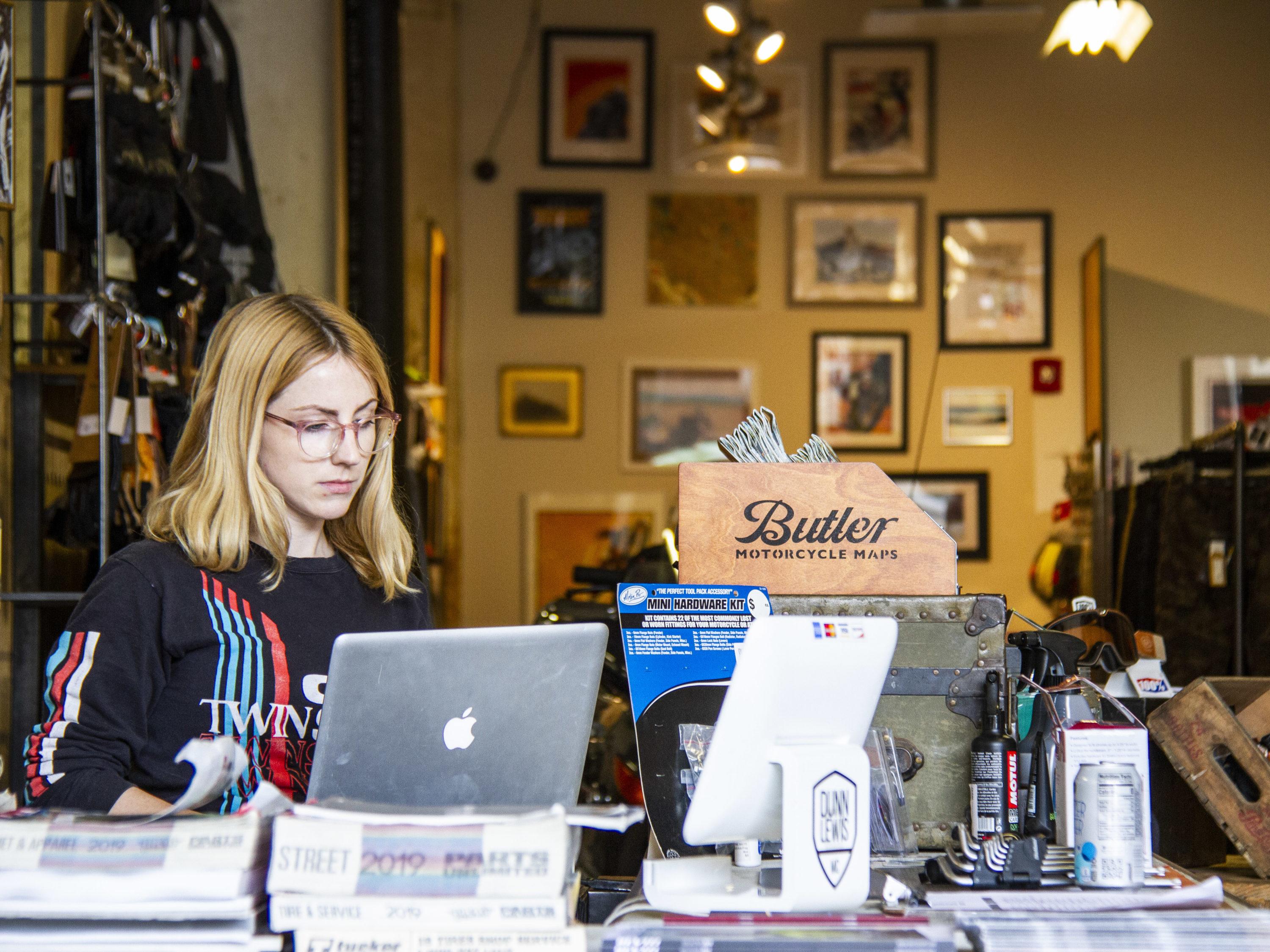
But Dunn Lewis may be different in that it feels unmistakably catered to a younger (dare-we-say millennial?) motorcycle audience. The space is trendy—impeccably designed with an industrial chic that is reminiscent of an Urban Outfitters. One side of the shop is a boutique, with designer t-shirts, jackets, and mugs carefully displayed next to more practical items, like chain lubricant and roadmaps. On the other side of the shop—the DIY garage part–you’ll find a neatly organized wall of tools and a couple motorcycles with wires sticking out. That section is reserved for members only, but anyone is welcome to peruse the boutique, which even sells artisanal ice cream sandwiches.
“I kind of describe it as a lifestyle shop,” says Laurel Bray, who takes care of everything retail related at Dunn Lewis. “We pick and choose from things that we think are great for riders, and maybe something that has really good crossover appeal that you just think looks cool.”
So far, the bulk of the store’s revenue has come from boutique sales, Bray says. But club membership is steadily growing. “As we add more to our education program, the DIY garage is definitely bringing in more revenue than it did on day one,” she says.
John Levine, the co-owner of Cycles of Silver Spring, a full service repair shop in Montgomery County, says that motorcycle shops have recently struggled to keep up with declining sales. “The retail side of the business over the last ten years has more or less evaporated,” Levine says. “So people are just trying all kinds of different configurations to see what works.”
But while the community aspect of DIY garages is appealing, the concept doesn’t work for everyone, Levine says. “People have to have massive amounts of free time, which is not something you find in a professional urban area, at least in my experience,” he says.
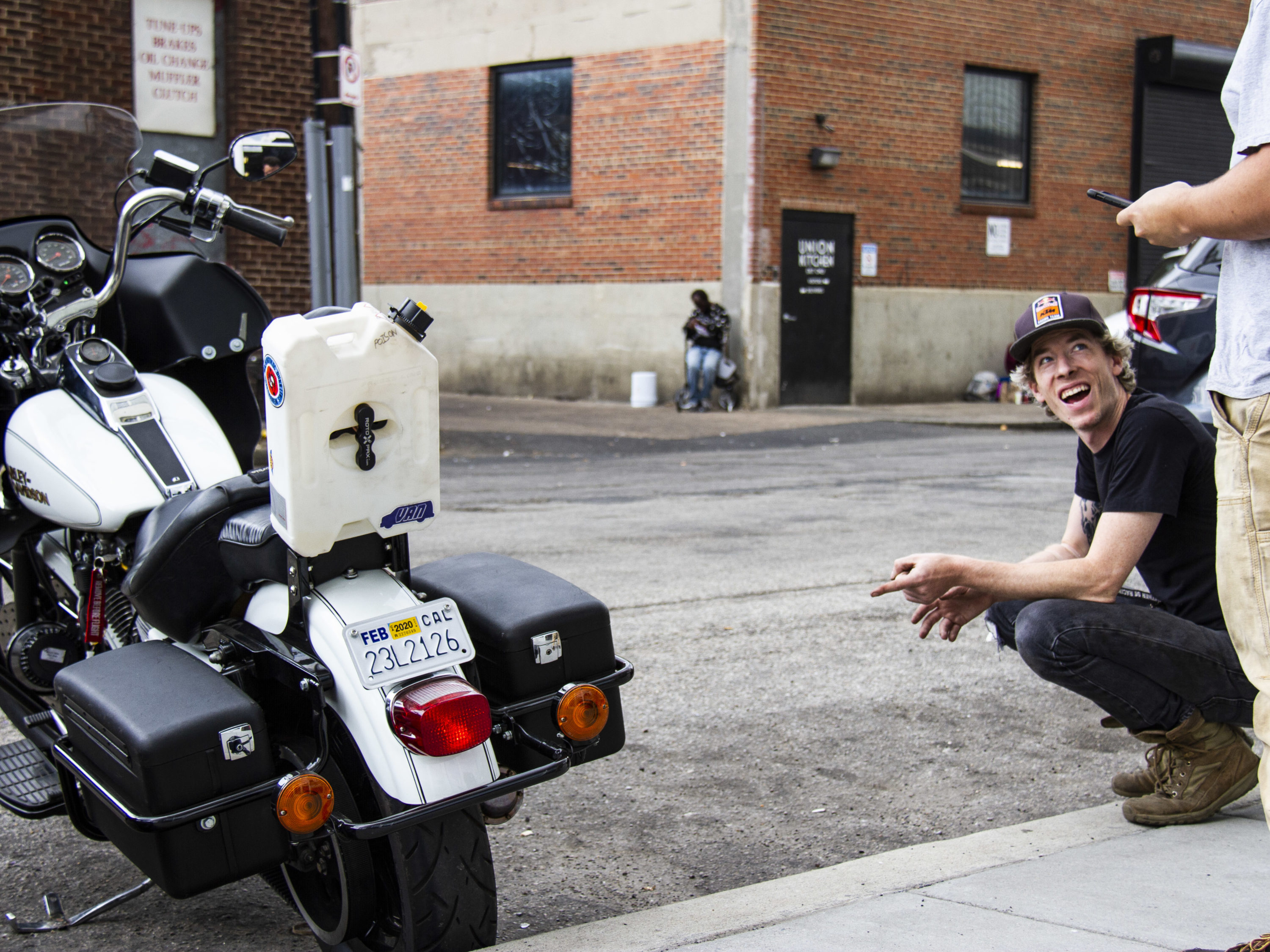
For Geoff Bund, part of the appeal of Dunn Lewis is being able to work in a comfortable space. “I had a tendency to rush the task, even subconsciously,” says Bund, who stopped by on Saturday to work on his Harley Davidson FXR, a police model that he fixed entirely himself. “It’s nice to come to a place that is air conditioned. You can stand the bike up, put it up on a lift, and really methodically think through what you’re doing.”
Of course, there’s also the financial incentive. In the D.C. area, getting basic work done on a motorcycle can be costly at a regular garage. Parts aside, the cost of labor usually runs more than $100 per hour. “I mean a tune-up is probably $400 or $500,” says Justin Ward. “So you can probably spend $100 and do it yourself.”
On top of that, motorcycle mechanics can be few and far between. Within District boundaries, there isn’t a single full-service shop dedicated to motorcycle repair.
But Ward says that joining Dunn Lewis has many social perks as well. Members regularly get together for group rides, movie nights, and to watch motorcycle races. In July, members organized the “Capitol City Scramble,” a group ride with checkpoints around the city. The proceeds for the event went to Martha’s Table, a local charity group and food pantry.
“I met a lot of good people here,” says Ward. “It’s actually one of my favorite spots in the city to come hang out.”