Martin Austermuhle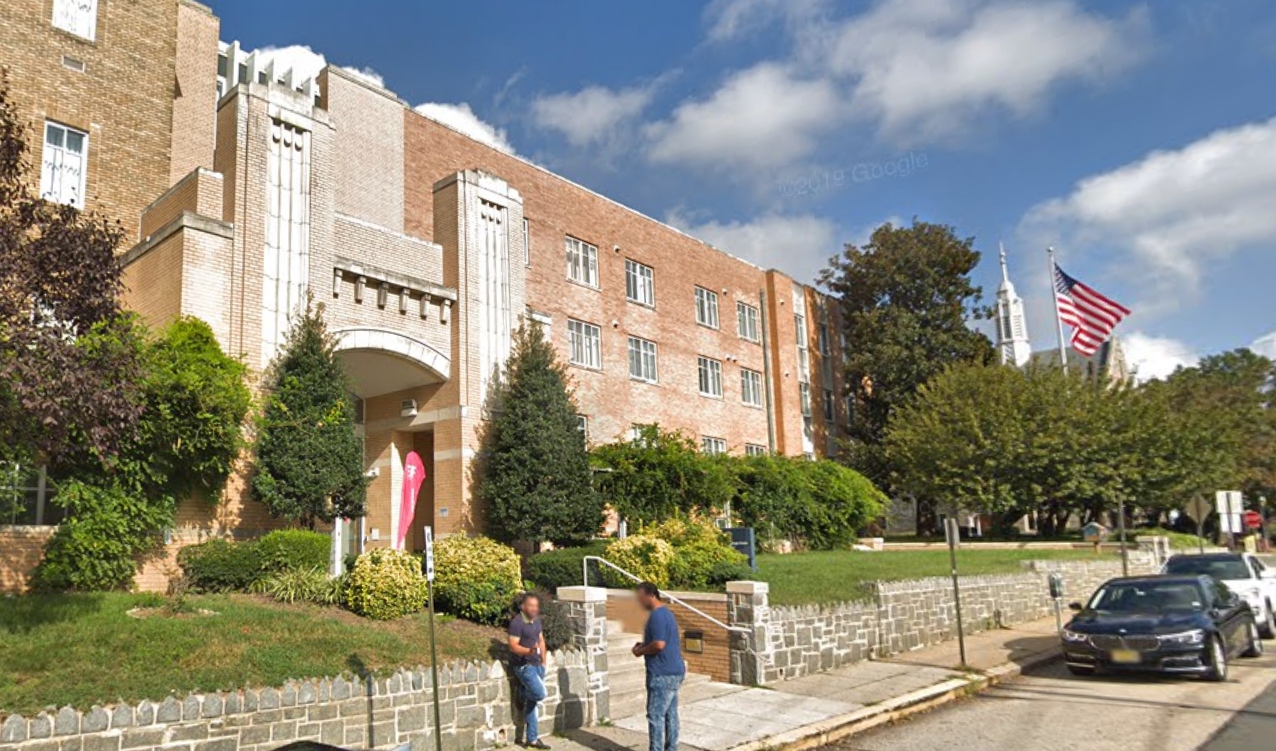
A proposed 200-bed shelter in D.C. to house detained immigrant children is likely to face a number of legal and regulatory obstacles from city officials and residents, including a possible public zoning hearing and legislative attempts to prohibit such a large facility from getting a license to operate to begin with.
Dynamic Service Solutions, a Maryland-based contractor, has received a $20.5 million contract from the U.S. Department of Health and Human Services to operate the shelter in D.C. for undocumented and unaccompanied immigrant kids aged 12 to 17. The shelter would be one part of the controversial federal effort to handle the influx of immigrants along the nation’s southern border, an effort that has drawn opposition in other jurisdictions — including Northern Virginia.
As currently planned, the proposed shelter would be located on Laurel Street NW in the Takoma neighborhood, less than a block from the border with Maryland. The building, which once housed the Washington Theological Union, is owned by Douglas Development, a prominent development firm in the city.
But D.C. officials say that using the building for a shelter would require approval from the city’s five-member Board of Zoning Adjustment (BZA), which considers requests from homeowners and businesses who seek to do construction or use their property in a way that exceeds what the zoning code allows.
In that part of Takoma, a facility to house any more than seven people requires a special exception from the board. A number of the family homeless shelters built by Mayor Muriel Bowser to replace the D.C. General shelter also went through the BZA approval process.
A request from a variance or exception from BZA would trigger a hearing, which would be open to public testimony. Community organizations would be able to seek party status, giving them additional opportunities to weigh in for or against the shelter. Advisory Neighborhood Commissions, which represent local neighborhoods throughout the city, are automatically given a chance to offer their opinions on a project, which then have to be given “great weight” when the board decides whether to approve or oppose a project.
“I would absolutely want our commission to weigh in, and I would push to see that that happened,” says Geoff Bromaghim, an ANC commissioner representing the part of Takoma where the shelter would be located. “The neighborhood is clearly very interested in the matter, so I think it would be incumbent on us to provide an opportunity for their voices to be heard.”
And while the public could broadly weigh in against President Trump’s immigration policies at a hearing, the board can only consider matters specific to zoning when reaching a decision. For a facility the size of the proposed shelter, that would be traffic, noise, and whether there are other facilities in the city that could better serve the purpose of housing a large number of minors.
Still, BZA hearings — especially hotly contested ones — can result in delays up to 18 months on any proposed project, and even longer if a final decision is appealed.
“It can be a long, drawn-out process,” says Daniel Warwick, an ANC commissioner in Ward 2 who has worked on zoning matters. “And with something as terrible as what’s being proposed, I expect it will be a long, drawn-out process.”
But it may not even get to that. Elected officials are debating possible measures — whether regulations or legislation — that would prohibit the shelter because of its size alone.
“We don’t currently have a cap on the number of children that are allowed in a congregate care setting, which opens the door to projects like this,” says Ward 1 Councilmember Brianne Nadeau. “It’s not a best practice to put children in large group settings, we don’t do it anymore, we haven’t done it for years, and that’s one reason that everyone’s so alarmed about this project.”
Nadeau says she’s considering emergency legislation once the Council returns from its summer recess in mid-September, but Bowser — who has also spoken out against proposed shelter — could also issue regulations.
“Our message is clear: reunite the children with their families,” said John Falcicchio, Bowser’s chief of staff. “No more warehouses!”
There are other efforts afoot to derail the shelter. Ward 4 Councilmember Brandon Todd, who represents the area where it would be located, wrote to Douglas Development CEO Doug Jemal this week asking that he not lease his building for that purpose.
“I along with an overwhelming majority of my constituents and neighbors do not support this type of facility in our community,” he wrote. “We believe that it is paramount that we protect the safety and security of all children, and we look to you to do the same. I am asking you to reconsider and terminate this agreement.”
An email to Douglas Development’s top three officials on Thursday went unanswered. Dynamic Service Solutions referred a call to the Administration for Children and Families, which is overseeing the effort to shelter unaccompanied immigrant minors. It did not immediately respond to a request for comment, but told The Washington Post this week, “We treat the children in our care with dignity and respect, and deliver services to them in a compassionate and organized manner while we work expeditiously to unify each one with a suitable sponsor.”
Takoma residents have largely been speaking against the proposed shelter on their neighborhood listserv, though some have said having one in the city could be better than putting it somewhere else.
“This may be naïveté on my part, but if these children are being detained somewhere, I would rather have them next door and try to show them some kindness,” wrote the poster. “Our neighborhood would likely treat them with a lot more warmth and compassion than many other possible locations in our country right now.”
“No, we won’t be able to have a say about how children are treated, nor do we know that we would have any access to communicate with them at all. There’s no such thing as humane child detention,” responded another.
Nadeau says she doesn’t think the city should cooperate with the Trump administration’s immigration policies at all, and hopes the shelter will not open at all. But she also concedes that unlike other parts of the country, D.C. may not have the final say.
“We could do all these things to prevent them from coming, but Congress could still tell us we have to do it,” she says.
This story was first published on WAMU.