Natalie Delgadillo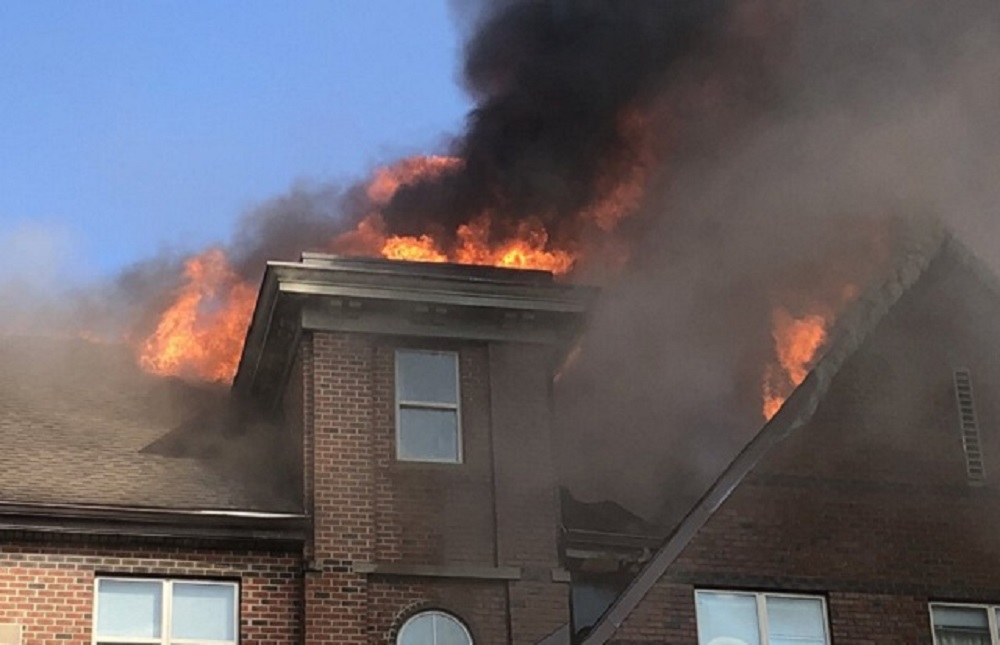
The elderly man who was found trapped in his apartment at the Arthur Capper Senior Center five days after a fire ravaged the building is now suing the senior complex’s management company for $3 million.
Seventy-four-year-old Raymond Holton is accusing Edgewood Management of several counts of negligence which caused him not just to lose his home, but to be trapped in a water-logged apartment for five days without water to drink or food to eat, slowly starving and rationing out medication to stave off his hunger, per the lawsuit. Holton and his lawyers say he has suffered permanent mental, emotional, and physical damage as a result of his entrapment which will necessitate expensive medical care for the rest of his life.
“He has no place to live. He is still living in a nursing home, and he is going to need continued medical care which will be very expensive, and some of it will not be paid for by his current medical plan,” says Holton’s lawyer William Lightfoot, a former D.C. councilmember. “[His entrapment] was obviously horrifying and traumatic. He was trapped in that room in the dark without electricity and water and food.”
Holton was left trapped in his apartment after Edgewood Management falsely told the city that it had accounted for every resident in the building after the fire. The management company is reportedly conducting an investigation to find out why its employees said Holton was safe when in fact no one had spoken to or seen him.
“Because we have only just been in receipt of the plaintiff’s notification, we have no response at this time,” a representative of Edgewood Management told DCist over email.
The Arthur Capper Senior Center caught fire on September 19 last year, and the flames destroyed huge portions of the building and rendered it unlivable. Nearly 200 seniors lost their homes in the blaze, and some of them lost nearly everything they owned, too. The building’s fire alarms failed to sound during the fire, even after a maintenance worker saw the fire and manually pulled alarm switches, per witness accounts and a report from the Bureau of Alcohol, Tobacco, Firearms, and Explosives. Neighbors who saw the flames rushed over to the building and began warning seniors to evacuate, per the report. Many of the ATF report’s findings are outlined extensively in Holton’s lawsuit as a part of Edgewood’s alleged negligence.
A person employed by Edgewood Management told ATF investigators that they had pushed a button to silence the fire alarm several times in the past, including on September 18, the day before the fire. At its last inspection, the fire alarm system in the building showed several problems, including several broken strobes and horns; ATF wrote in its report that it’s unclear whether those deficiencies were addressed, but that the system was not being monitored offsite, as recommended by inspectors.
ATF investigators could never pinpoint an exact cause of the fire, but theorized that it was likely the result of “human activity” in a small attic space, likely nonresidents who accessed the area via the roof and possibly used narcotics there, the report says. Residents had reported to Edgewood management that they heard people walking around the roof and attic at odd hours of the night when maintenance staff would not have been working, per the ATF report. One resident told ATF that she smelled marijuana or other narcotics through the vents in her apartment, and often heard people in the attic space.
The day of the fire, investigators found a watering hose on the roof pulled as close to the origin of the fire as possible, indicating that someone tried to put it out right when it started, per the ATF report.
Both the alarms and the nonresidents in the attic are referenced in Holton’s lawsuit as part of Edgewood’s alleged negligence in preventing such a fire in the first place. But Holton also says in the suit that he suffered a particular harm at the hands of the management company: the day of the fire, Edgewood told D.C. Fire and government officials that every resident in the complex had been accounted for, prompting the police chief to stop search and rescue efforts in the building. As a result, Holton was not found in his apartment, trapped by a heat-swollen door, for five more days.
“On the night of the fire, with apartment management there, we were assured [management] had touched, spoken to, or seen everyone that lived or worked in the building and were therefore given assurances that everyone was accounted for and safe,” Douglas Buchanan, a public information officer for D.C. Fire and EMS, told DCist in January. “Which made Chief [Gregory] Dean’s decision mostly easy in terms of not allowing his members or our dogs into the building because it was unsafe, with the condition of much of the building being unsecured or at least undetermined.”
The lawsuit lays out an excruciating experience for Holton during the five days he was trapped. At some point, the sprinklers reportedly activated in his apartment, soaking everything. At one point Holton tried to sleep on a cabinet in an effort to keep himself dry, per the suit. His toilet stopped working, he had no running water, and the electricity cut off, leaving him in the dark and spoiling the little food he had in his fridge, the suit says. When he ran out of food, Holton began eating medication to try to curb his hunger; at some point, he fell and injured his knees, back, and shoulders; by the end of his entrapment, Holton had lost all of his teeth; and he was sleep deprived for five days, all according to the suit.
Holton was found when engineers contracted by Edgewood were on the property and heard him screaming. He was sitting on his couch, covered in his own feces and urine, disoriented and confused, and in significant pain, per the lawsuit. Medical tests confirmed his physical injuries and found elevated levels of thyroid medication that he had been consuming due to starvation, the suit says.
As a result of his entrapment, the lawsuit claims that Holton is no longer able to live independently, as he was doing before the fire. He can no longer walk without assistance, and he has suffered memory loss and “significantly lower mental functioning,” the suit says. He underwent significant emotional stress during the entrapment that he has not recovered from, per his lawyer.
In addition to $3 million in compensatory damages, Holton is also seeking punitive damages in an amount to be recommended by the court.