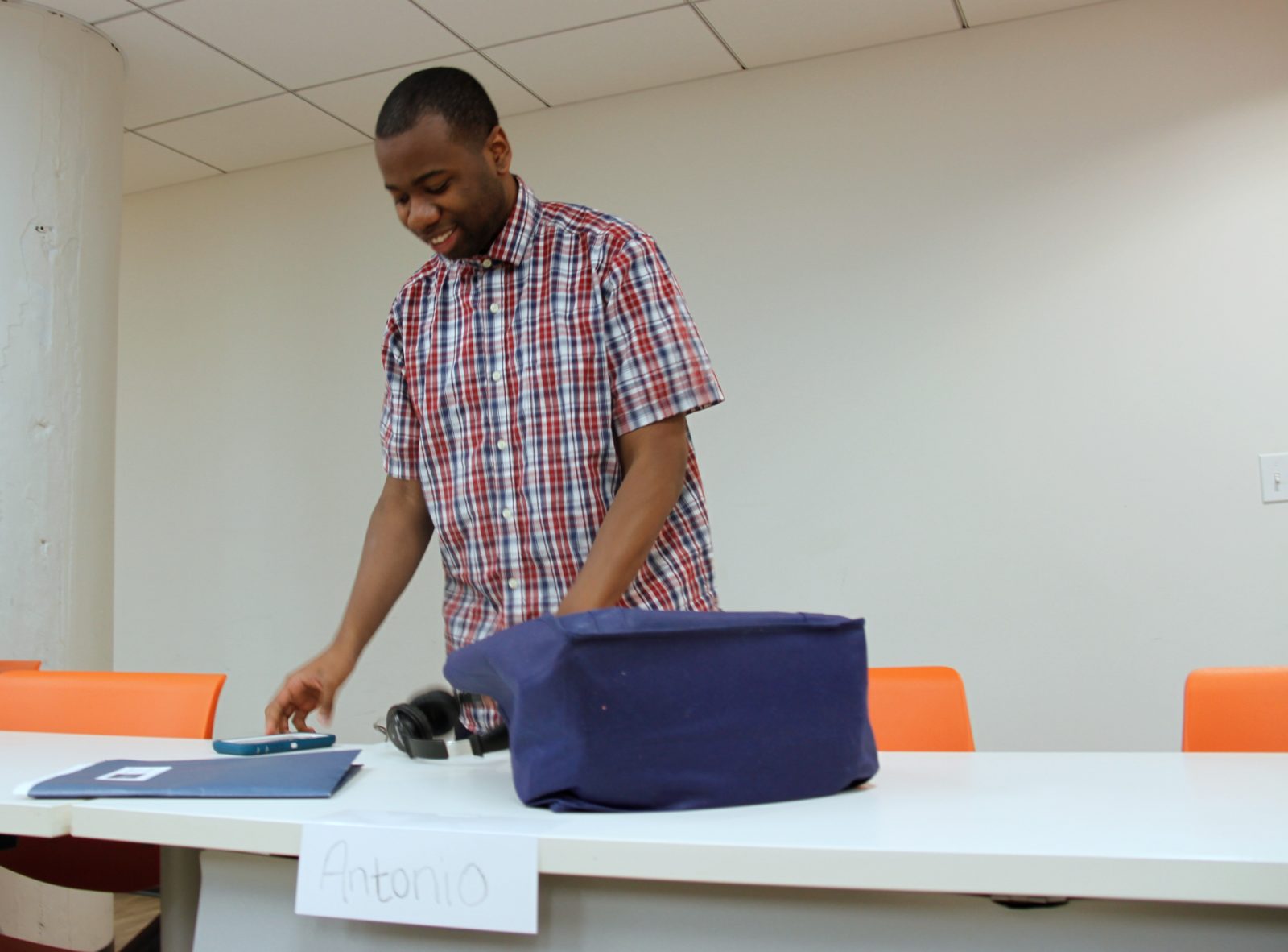
After graduating from college in 2015, Antonio Myers, 25, had some trouble finding steady work. He was a marketing assistant at a nonprofit. Then, he became a mail clerk at a federal agency in D.C. He had two stints of unemployment—one that lasted about 15 months. In between jobs, he helped out at his father’s work.
None of these felt like the right fit.
“Not to dismiss the office world, but when I tried the office world, I was a little more distressed, because I wasn’t as altruistic as I naturally am,” Myers says.
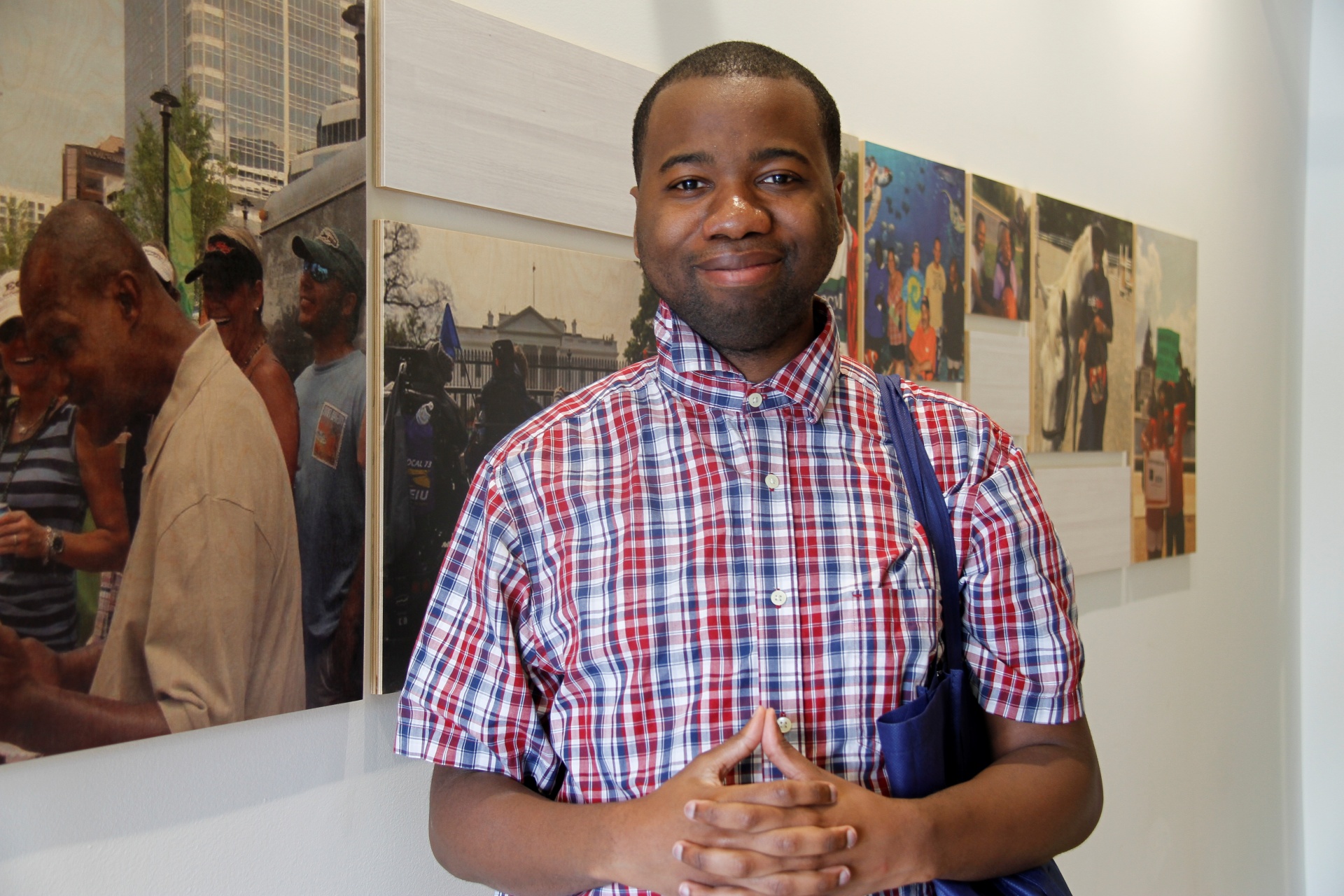
Earlier this month, Myers enrolled at a training program to become a direct support professional at RCM of Washington, an organization that serves people with intellectual and developmental disabilities. Myers has seen DSPs, as they’re called, in action. He has autism, and he went to a school in Rockville for students with disabilities.
“I grew up in a world where I saw direct support all the time,” he says. “What DSPs do, I saw teachers and staffers do that. And I said, I want to do that too. I want to make outcasts genuinely smile.”
Myers is one of 12 students enrolled in “The DSP Academy,” a new program that was launched earlier this year to help people with disabilities train to become DSPs. As part of the six-week academy, students learn things like the history of disability rights, developing day plans for people with disabilities, and CPR. It’s funded through the D.C. Department of Disability Services, which refers prospective job candidates to the program. It’s an effort organizers hope will create jobs and fill a significant gap in caretaking.
“The reason I thought about this academy in general is to build capacity in the field,” says Amy Brooks, RCM’s CEO.
Nationwide and in D.C., there’s been a shortage of DSPs and other professional caretakers. RCM employs about 300 DSPs, but has about 10 to 15 open positions. There’s a lot of turnover and burnout in the field; DSPs earn about $15 an hour in the District, paid through Medicaid, Brooks says.
Demand for all types of health care aids is on the rise, too, especially as people age and require care within their homes. The DSP Academy is part of an effort to help meet the shortage across the country. There’s a similar program to train DSPs in Ohio, too.
“The shortage has been ongoing for many years, but it’s gotten much worse,” says Esme Grant Grewal, vice president of government relations at ANCOR, a trade association that represents disability service providers. “As we see baby boomers age, we’re going to see this deficit and this workforce grow. We just don’t have the human capital to fill the need. So we’re in pretty dire straits right now, and are looking for lots of innovation to fill the gap.”
The Bureau of Labor Statistics identifies personal care and home health aides as occupations with the most job growth over the next decade. Grewal says her group is trying to push legislation that would provide grants for these types of programs that train people to become DSPs.
In addition to creating a pipeline of more workers, Brooks also wants the DSP Academy to help people with disabilities find jobs — she wanted to create a peer-support model.
“They make wonderful employees. They just may need some specific accommodations to get either through the training, or to be able to pass the testing or the certification,” Brooks says.
On one particular Tuesday, a trainer demonstrates a practice called crisis prevention intervention — techniques to help DSPs deescalate a situation if someone becomes aggressive, making sure everyone remains calm. Myers practices with a partner in class.
For Myers, this is a line of work where he can see himself long term. He’ll graduate from the academy in September.
“I was months without work, and so this is my ‘big shot,’ as we call it, of being able to have steady employment,” he says. “Hopefully altruism can be my way of not taking care of just other people, but myself.”
This story originally appeared on WAMU.