 Jenny Gathright
Advocates fear that if the Bureau of Prisons fails to resolve a complicated contract dispute, the city could be left without a men’s halfway house for federal inmates.
The saga over D.C.’s only halfway house for men manages to touch on many of the third rails of D.C. politics: zoning and land use issues, federal control of the justice system, and the power of developers to shape the city.
It also affects a significant number of people: As of September 2018, 4,336 D.C. men were in BOP custody. About half of those inmates finish their sentences at halfway houses, which are intended to give inmates the opportunity to secure employment and transition back into their community.
D.C. developer Douglas Jemal told DCist last week that he will definitively not pursue a lease with CORE DC, the nonprofit that was awarded a federal contract for a new D.C. halfway house last year.
Jemal’s company, Douglas Development, had initially signed a letter of intent with CORE DC for a property in Northeast near the Arboretum. But after neighbors sued the city over zoning regulations, Jemal decided against executing the lease late last year.
Ever since, activists have been pushing on the developer to change his mind. Earlier this month, they even protested outside Douglas Development’s downtown headquarters.
But Jemal has not budged. He would not comment as to why, and he did not share any alternate plans he had for the property.
Without that lease, and with no public indication that CORE DC has found another location, it’s not clear what will happen when the contract with the current provider, Hope Village, ends in October.
Hope Village has been accused of providing substandard reentry services for years, and many advocates were relieved when BOP turned to the new provider. But in addition to the opposition from neighbors and the dropped lease, Hope Village challenged the decision to award the contract to CORE DC, setting in motion months of uncertainty.
The Bureau of Prisons gave an August 19 deadline for both CORE DC and Hope Village to refine their proposals. Some fear, though, that if neither company satisfies the agency’s requirements, BOP could simply decide not to award a contract in D.C. at all.
Many in the criminal justice reform community say having no halfway house within city limits would have a dramatic effect on the ability of thousands of residents to find employment, housing, and other services upon their return home from federal prison.
“D.C. is their home, and they have a right to come back here and be provided the opportunity to live as productive citizens” says Paula Thompson, co-chair of D.C.’s Reentry Action Network and executive director of the nonprofit Voices for a Second Chance. “But if there is no space being made here, that is a very sad day.”
A long, complicated contract saga
Hope Village has been operating in the District for decades, to the tune of more than $125 million in federal contracts just since 2006, according to the Washington Post. The facility in Southeast’s Woodland neighborhood is the city’s sole federal halfway house for men — though some D.C. inmates do finish their sentences at a facility in Baltimore (a separate facility, the Fairview Residential Reentry Center, houses women).
A 2013 report from D.C.’s Corrections Information Council, an independent monitoring agency, found that some D.C. inmates would rather stay in prison than spend their remaining time at Hope Village, which has earned the nicknames like “Hopeless Village” or “No-Hope Village.”
“The stress of Hope Village was overwhelming,” a former inmate told Street Sense Media recently. “I chose prison at that point and left.”
A 2016 report by the Council for Court Excellence, which advocates for criminal justice reform in D.C., explicitly asked the BOP not to renew the company’s contracts.
The BOP issued a formal request for proposals that same year, offering $60 million dollars over five years for D.C.-area halfway house services. The agency narrowed the field to two applicants: Hope Village and CORE DC, a nonprofit whose leadership operates a separate halfway house facility in New York.
CORE DC won the bid last November. But Hope Village challenged the decision, citing the nonprofit’s struggle to solidify a location.
The Government Accountability Office, a recommending body that evaluates disputes over contracts, found that the BOP was incorrect in judging that CORE DC had the right to use its proposed location because it only had a letter of intent from Douglas Development. But in the same decision, the GAO upheld the BOP’s objections to Hope Village’s proposal because it does not accept child sex offenders.
The GAO recommended that the Bureau of Prisons either re-open the competition or revise its requirements. The BOP confirmed to DCist that it did reopen the competition for a brief window, but did not change its request for proposals.
Joanne Zimolzak, an attorney who specializes in government contracts, says federal regulations allow an agency to limit the pool of a re-opened competition to just the bidders that it considers to be competitive, in this case, CORE DC and Hope Village.
The re-opening of the bidding process gave those two companies the opportunity to revise their applications; CORE DC could provide sufficient proof that it has the right to use a location, while Hope Village was given the opportunity to satisfy the requirements regarding accepting all offenders.
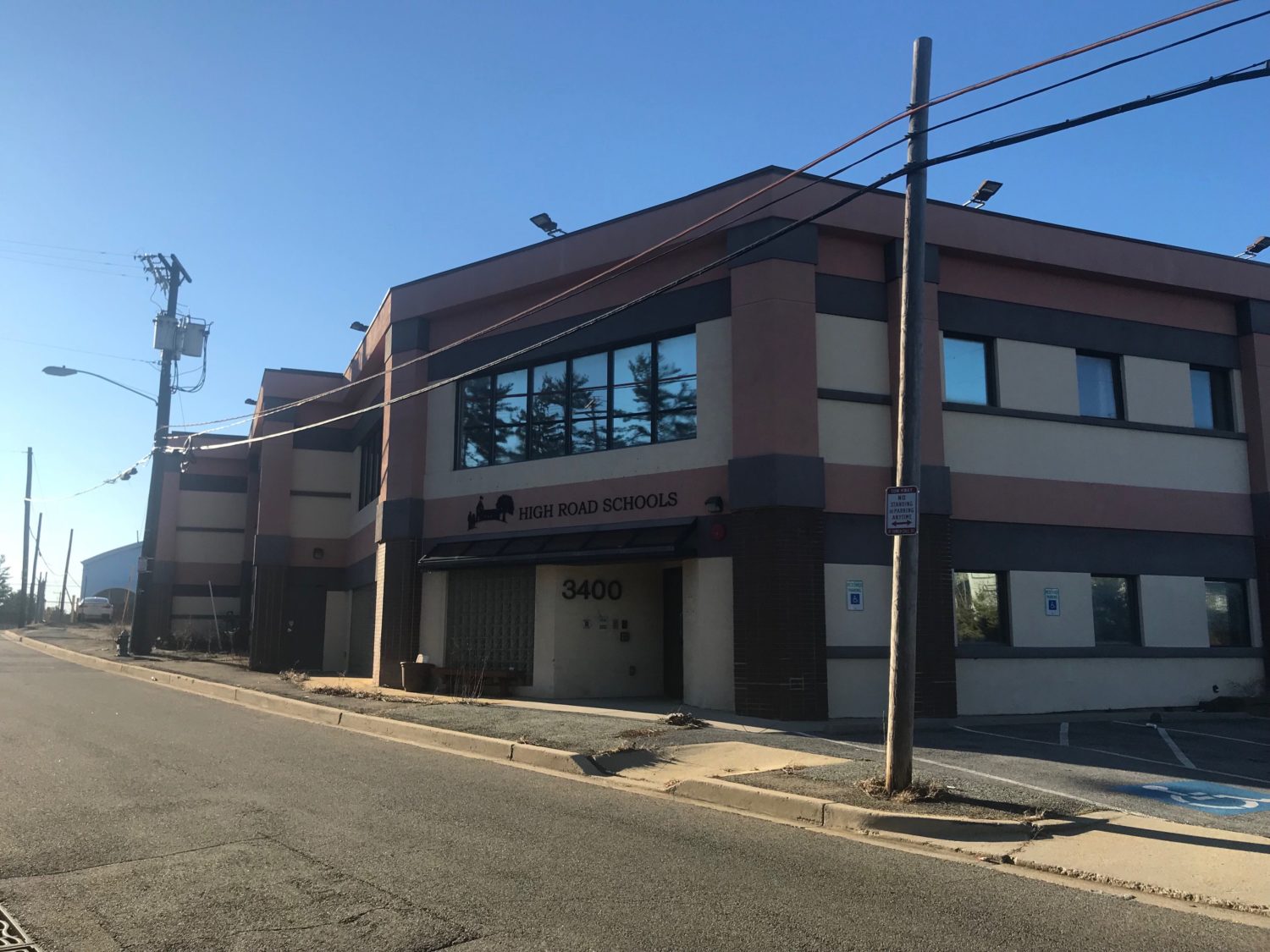
Zimolzak does not believe CORE DC would be limited to its initial location as a “technical matter,” but said that as a practical matter, finding a new location for a halfway house may not be easy. Before it considered 3400 New York Ave, CORE DC proposed two other locations — one in Ward 5 and one in Ward 6. Both encountered opposition.
CORE DC officials would not agree to an interview with DCist, but CEO Jack Brown said in a statement that “CORE is committed to bringing its successful model of reentry to D.C.”
Hope Village spokesperson Phinis Jones told DCist he could not discuss the details, but said the company did provide the Bureau of Prisons with a revised proposal by its latest deadline. He said he has “no idea” when to expect a decision about the contract.
Jones said he could not comment on whether Hope Village has changed its stance on accepting all sex offenders, but later added that the BOP has “worked with [Hope Village] on that point for the last 15 or 20 years.”
In the meantime, “we are open for business,” Jones said, dismissing the possibility that the city could be left without a halfway house as “noise.” (Hope Village’s existing contract has been repeatedly extended as the award process for the new contract has dragged on.)
A BOP spokesperson told DCist in an emailed statement that the agency “has not taken any actions regarding moving inmates from or reducing numbers of inmates placed at the Hope Village Residential Reentry Center.”
But without evidence that either CORE DC or Hope Village has met the BOP’s requirements, advocates are getting nervous about the future of reentry for the city’s men.
What’s at stake
Thompson, the co-chair of D.C.’s Reentry Action Network, says the coalition of nonprofits has taken the position that it is “unacceptable” to have no federal halfway house for men within city limits. Searching for housing and employment and applying for locally administered benefits would be far more difficult to do from a different jurisdiction, according to Thompson.
Recently, RAN’s member organizations explicitly endorsed CORE DC in the competition, a move they characterized as a rare step. In a letter to the BOP signed by more than 20 organizations, RAN said CORE DC has promised to collaborate with nonprofit service providers in the city, while expressing concerns about Hope Village.
“RAN member clients who have resided in Hope Village report many problems over the years with both the physical facility and lack of programming to support their reentry,” the letter states. “RAN member clients also complain about how they are treated, from a lack of sufficient and nutritious food, to a lack of consideration and accommodation regarding resident’s work schedules, and to a lack of support for them as individuals trying to turn their lives around.”
Andre Gray, a peer navigator at University Legal Services who is formerly incarcerated himself, says his agency is allowed to enter Hope Village to give presentations to inmates, but not permitted to have one-on-one, confidential meetings with clients inside the halfway house buildings.
This means that clients must come to his office, which presents an additional barrier for inmates who have to follow strictly-enforced sign-in and sign-out procedures.
“We need to find a way to not just have a halfway house, but one that will allow core agencies to come in and render services to individuals before they’re released,” Gray says.
Jones, however, insists that Hope Village has “broad support” in Ward 8, where it is located, including among formerly incarcerated D.C. residents.
Jones told DCist that the problem of provider access comes down to limited space. “We can’t provide space for every provider,” he says. “That is an unreasonable request.”
Gray says there are other signs that D.C.’s web of services for those returning from prison is not adequate, mentioning multiple clients experiencing homelessness. (The 2016 report on reentry by the Council for Court Excellence cited one advocate who said that the men’s homeless shelter at 2nd and D streets Northwest has been referred to as a halfway house because of the high number of recently incarcerated men who spend nights there.)
Most incarcerated D.C. residents are in federal custody; only residents sentenced to less than a year serve their time at the D.C. jail. This means D.C. residents are scattered to prisons across the country. Advocates say this reality puts even more pressure on the city’s network of reentry services, including halfway houses.
Gray said his agency has already encountered scheduling and access problems with D.C. clients who are at a halfway house in Baltimore.
“People are coming back to D.C.,” Gray said. “Your choice: You can help render these services and make a beautiful entry back into the community, or we can forget about it and leave them in the dark.”
D.C.’s Deputy Mayor for Public Safety and Justice Kevin Donahue declined an interview with DCist, but insisted in a statement that his office has been making an effort.
“For months, we have urged the U.S. Bureau of Prisons to work transparently and collaboratively with District residents and returning citizens advocates in identifying suitable locations for a new halfway house,” Donahue wrote. “The District’s public safety is better served if its returning citizens can utilize a halfway house located within the city.”
It isn’t clear what steps, if any, the city has taken to identify a possible location for another halfway house.
Earlier this month, CORE DC filed a protest with the Federal Court of Claims, asking that the BOP be required to either deem its proposal revisions acceptable or amend its proposal requirements. Last week, the Federal Court of Claims stayed the case, meaning it will be put on hold until the BOP makes a final decision about the contract.
So for now, the city awaits a decision about whether CORE DC or Hope Village’s proposals were satisfactory for the Bureau of Prisons. It isn’t the first, or the last, time that Washingtonians find themselves at the mercy of a federal agency.