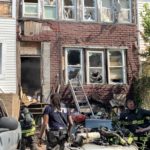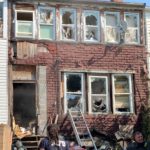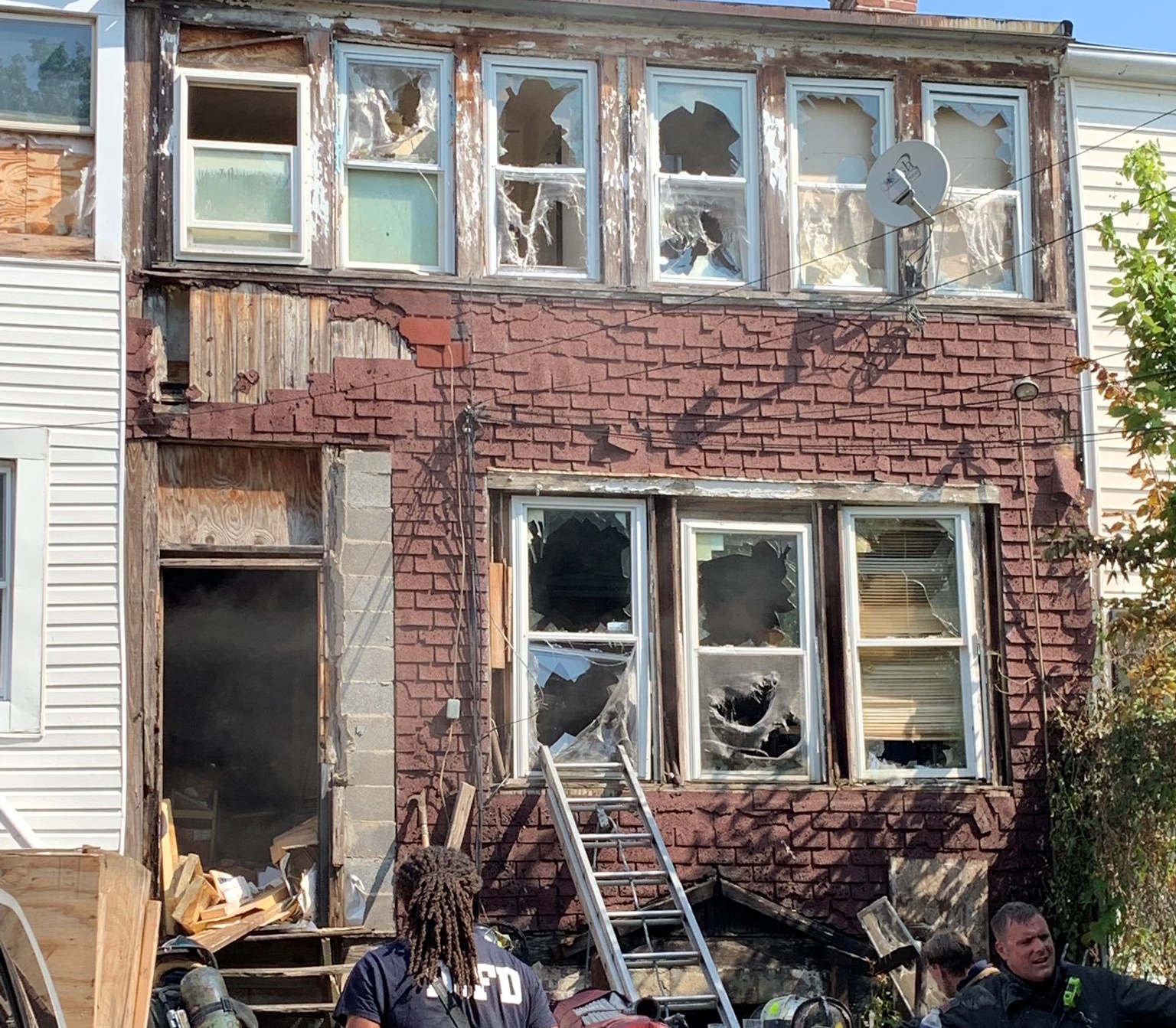
D.C. officials are adopting new protocol for reporting and responding to potential fire code violations following an August fire in an unlicensed building in Brightwood that killed a man and a 9-year-old boy. While a police officer informed other city agencies about illegal conditions in that Brightwood rental months before the deadly blaze, D.C. Fire never followed up on the officer’s report and the Department of Consumer and Regulatory Affairs closed the case without ever conducting an inspection.
New city policies aim to prevent gaps like this from happening in the future.
“We’re trying to get on the same page in order to have a more direct, prompt, and thorough response to settings in which an officer may believe that there are people living in conditions that might put their safety at stake,” D.C. Fire spokesperson Doug Buchanan tells DCist.
Under the new protocol, a D.C. Fire battalion chief needs to respond to potential fire code violations within 30 minutes of the initial report, using direct communication such as radio dispatches and phone calls, per Buchanan. The idea is to cut down on email chains where delays could prevent matters from being addressed in real time.
A police officer who comes across a scene and notices a fire code violation that could be considered as a “life-safety threat”—such as locked doors and other hazards that could make it hard for occupants to leave a building—must report it to a supervisor, who then reports it to the Office of Unified Communications by calling 911.
From there, the report is passed along to the D.C. Fire liaison operating within the Office of Unified Communications. Then, it goes to the deputy fire chief of operations, who finally assigns the case to the appropriate battalion fire chief, depending on where the alleged fire code violation is, Buchanan says. The battalion fire chief must respond to the scene within 30 minutes from the initial 911 call.
“We’re determined to do everything and anything we can so that this doesn’t happen again,” Buchanan says. D.C. Fire and EMS plans to send an order to its members detailing the steps in more detail within the week, per Buchanan.
Police Chief Peter Newsham signed a separate executive order on Tuesday that outlined some of the policies for Metropolitan Police Department officers, including steps that still include email communication strategies.
Before the officer’s shift is over, he or she must also contact DCRA and MPD providing information that specifically states the location’s address, an explanation of the alleged violation, and the associated customer complaint number, the order reads. MPD did not immediately respond to requests for comment.
Mayor Muriel Bowser directed MPD, D.C. Fire, and DCRA to come up with a strategy moving forward to prevent tragedies like the one at Kennedy Street from happening again, along with commissioning an independent study of what led to the fatal fire. Bowser has also called for a criminal investigation into the blaze.
After the revelations that an officer’s report about illegal conditions in the Brightwood rowhouse was mishandled months before the fire took place, four government officials from DCRA and D.C. Fire were placed on paid administrative leave. Officials described the home as a maze of rooms with narrow hallways that often made it nearly impossible to open two doors at once. Bars covered doors and windows and several sections were partitioned off with locked security gates, making it harder for rescuers to reach occupants during the fire.
It took four minutes for D.C. emergency dispatchers to send D.C. Fire personnel to the scene. The city’s response time standards call for 90 percent of call to be dispatched in less than 64 seconds. Nine-year-old Yafet Solomon and a 40-year-old man that the Washington Post identified as Fitsum Kebede died in the fire.