



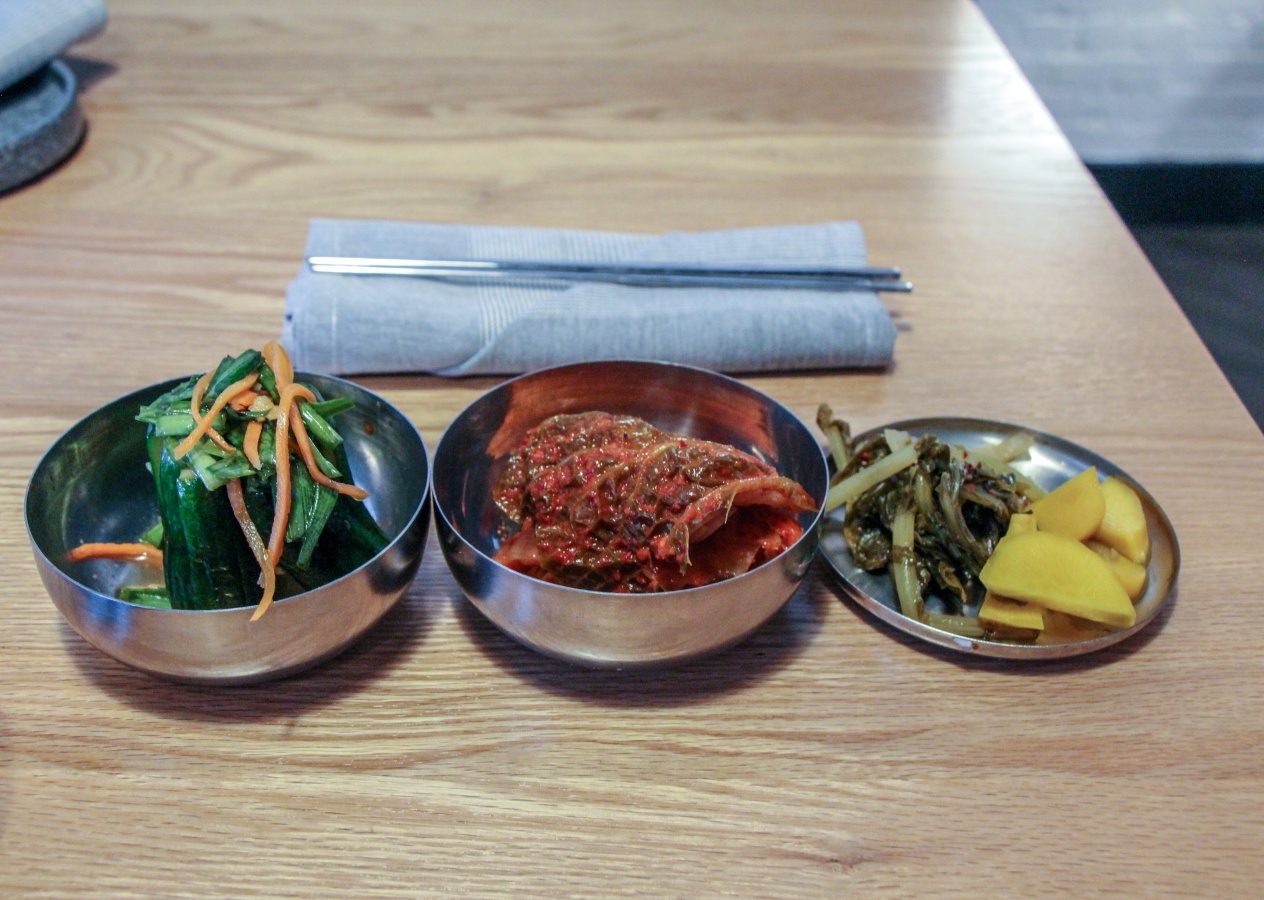

If the kimchi budget is any indication, Anju, the new Korean restaurant that opened last week in Dupont Circle, is already set to follow in the footsteps of Mandu, its predecessor from the same ownership. Like Mandu, Anju puts its kimchi, fermented in-house, front and center on its menu of Korean dishes.
“We expected to sell a lot, but literally every dish has kimchi,” says executive chef Angel Baretto. “We’ve doing six cases every Monday and Thursday. It’s been one week, and we’ve already processed 150 pounds.”
When they opened the original Mandu back in 2006, chefs Danny Lee and his mother Yesoon “Mama” Lee earned national acclaim for their spin on the steadfast traditions of Korean food. The demand for their plates grew into a second location—still open on K Street—and another multi-restaurant concept, Chiko, with Danny Lee’s restaurant group The Fried Rice Collective.
After a fire ravaged Mandu two years ago, there was no question about rebuilding, Lee wrote in an email to DCist, who calls the two-year reopening process a “homecoming for our family.” When he says family, he’s also including the many people who have shaped the interconnected web of Korean-centric ventures stemming from Mandu’s success.
Anju—which translates to “food that pairs with alcohol—unites the talents of Lee and his mother with his Fried Rice Collective partners, chef Scott Drewno and Matchbox’s Andrew Kim. They tapped Baretto, who worked with Drewno at the Source and Chiko, to be executive chef. General manager Eric Chodkowski and beverage director Phil Anova come from Mandu’s second location. Together, they envisioned a concept that would honor Mandu’s roots and also breathe new life into the space.
“There’s still a place for Korean restaurants, such as Mandu, that are rooted firmly in traditional recipes and formats,” Lee wrote. “But with Anju, we wanted to stretch a bit and find our own way of exploring Korean cuisine and dining, taking inspirations from Korean street markets, Anju bars, as well as Korean Royal cuisine, which dates back centuries to the dynasty era.”
The team felt they had more leeway with Anju’s menu design in part because of the country’s evolving perceptions around Korean food, says Lee. When Mandu opened more than a decade ago, Korean cuisine was narrowly recognized as Korean barbecue. The options for a sit-down Korean meal in D.C., even a few years ago, often required a drive. (Gogi Yogi, the first KBBQ restaurant in D.C. proper opened this month.)
At Mandu, Lee and his mother, who still cooks full-time at Mandu #2, would add on adventurous items that had yet to make their way into mainstream culture. Now, he says, you can find kimchi at Safeway. While the dishes maintain traditional flavors, they go progressive through technique and presentation.
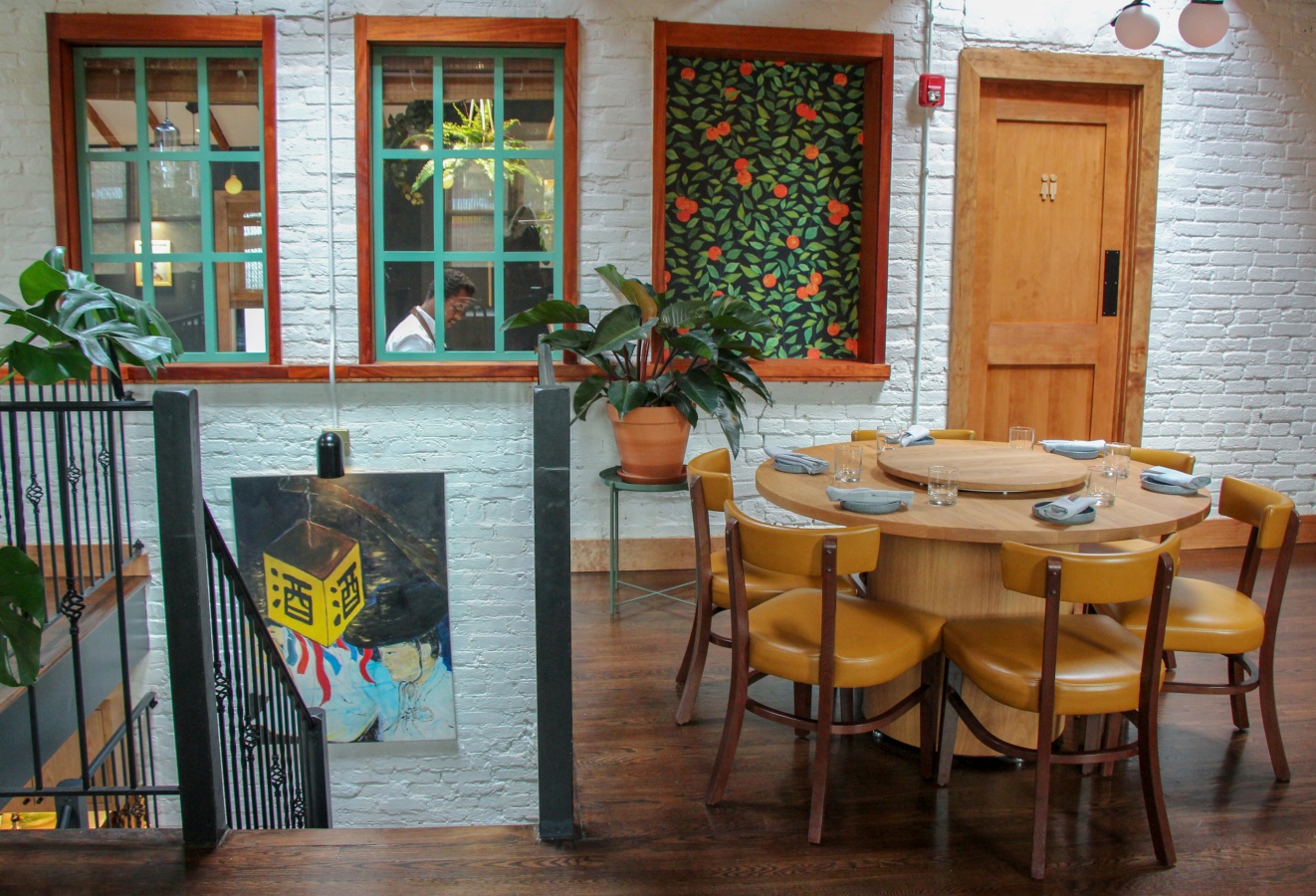
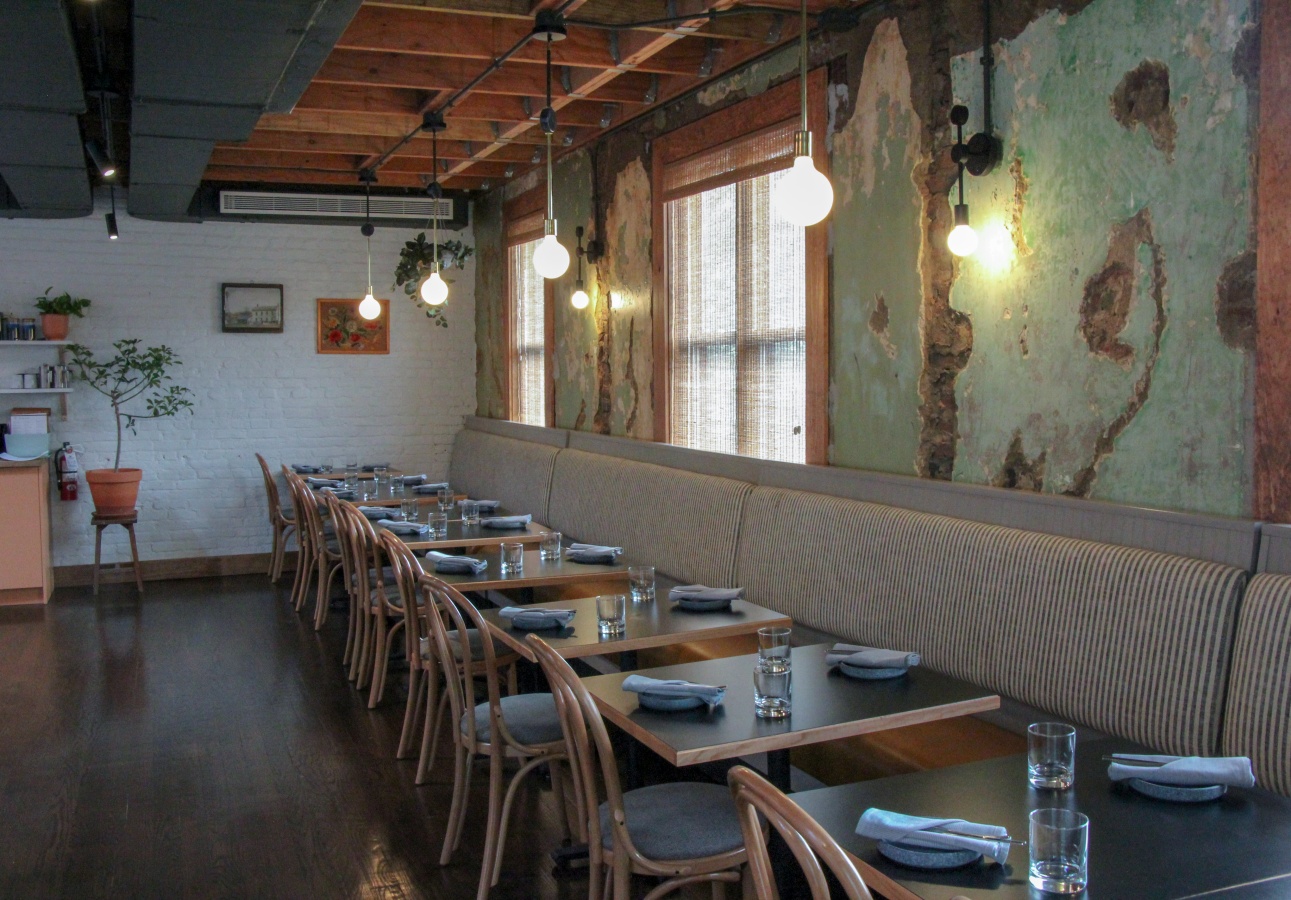
Anju is multiple experiences rolled into one—part late-night bar with happy hour prices, part fine-dining—in a two-floor setting populated by plants, patterned wallpaper, airy ceilings, and family artwork. Designer Natalie Park, who is also Lee’s wife, created the space to showcase remnants of the original walls. The Fried Rice Collective’s dogs have a prime spot at the bar in framed portraits. (Their names are Boo Radley, Agnes Ice Princess Von Fultz, and Stella June Kim, for the record.) The private dining room and the downstairs space are available to rent for parties.
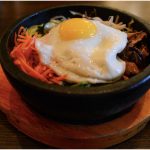
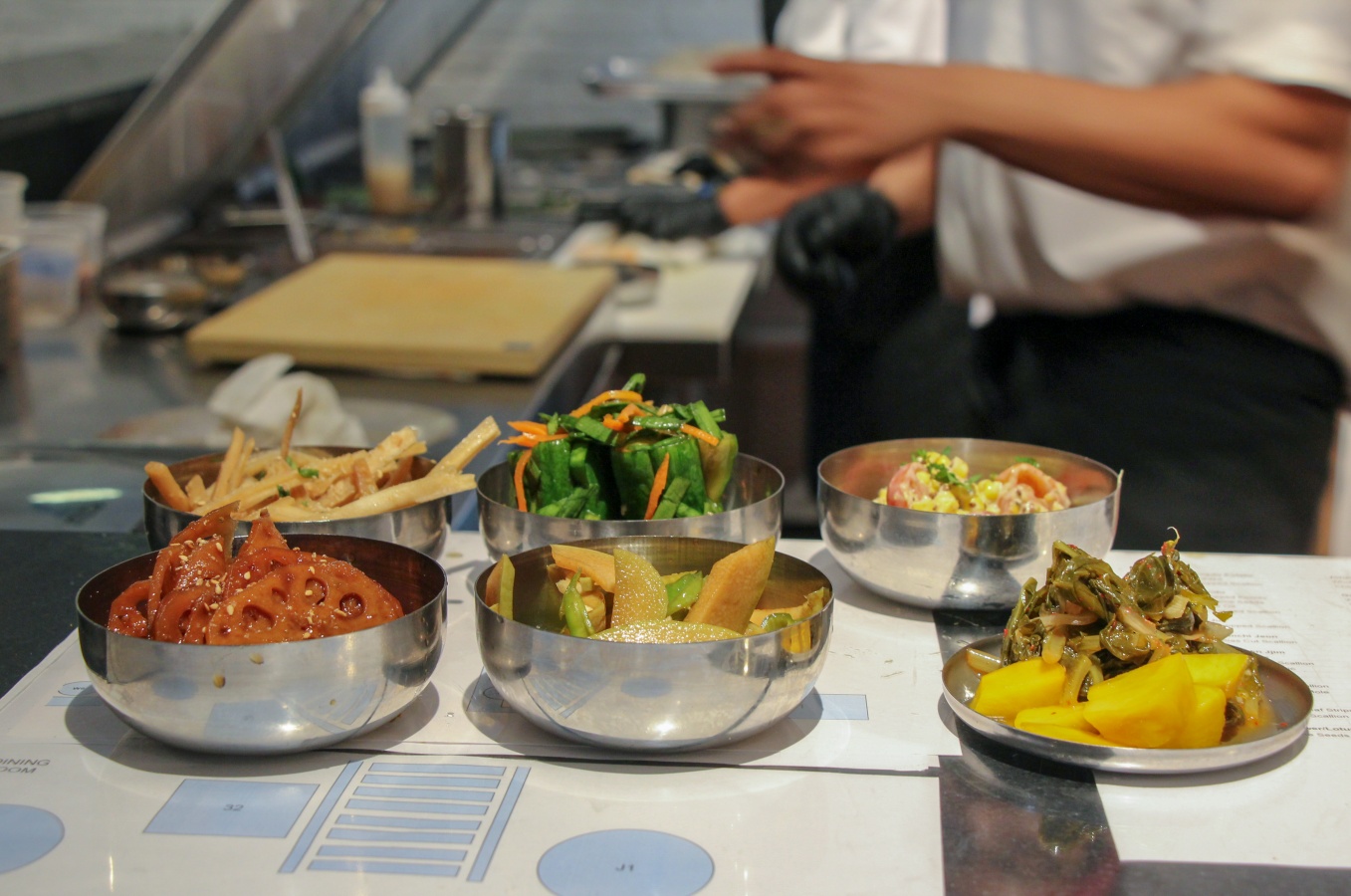
Mama Lee’s classics carry over her beloved recipes from Mandu, including bibim bap cooked in hot stone and Korean chili-braised chicken thighs. The panchan section of sides, which are usually free at KBBQ restaurants, will be $3-$5 per dish, in part because of the time and ingredients that go into them, says Barreto. One kimchi dish has been pickled for 100 days, while a bellflower root comes all the way from the Korean oceanside.
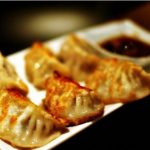
Appetizers like kimchi pancakes, beef tartare with a palm sugar brine, pan-fried dumplings, and a savory silk egg custard pair with mains ($18-$32) reliant on seafood or pork shank. Diners who want an immersive hot-pot experience (reservations required) can try the jeongol table up for up to six and sit around a bubbling pot of beef; Cornish hens stuffed with ginger, garlic, and jujube fruit; seafood; or a vegetarian meal. The bar and late-night menu will have kimchi slaw dogs, deviled eggs, and Korean beef jerky (all under $5), and eventually, Korean ramen.
For every dish, Barreto learns the traditional method with Mama Lee—usually no written recipe involved, he says—before he and Danny Lee add their creative juices. They created a Google doc of more than 100 recipes before narrowing down; Barreto continues to tweak recipes and anticipates plates will change often.
Some dishes have modern twists, like Mrs. Lee’s dongchimi, a Korean water-radish kimchi, which turns contemporary with purple ninja radishes. Others are loving homages to tradition. During a trip to Korea in 2018, for example, Barreto couldn’t eat enough bungeoppang—a fish-shaped waffle smothered in custard and fruit compote—and painstakingly recreated it for the dessert menu. His longtime favorite is the jjamppong, a Korean and Chinese noodle dish flavored by a spicy seafood broth.
For Barreto, the position is a fulfilled dream after a long love affair with Korean food. He grew up eating the cuisine on military bases in Korea with his family. Once he got to The Source under Drewno, he found ways to wiggle Korean influence—often in the form of kimchi—into the Chinese entrees.
“My end game was always to work at a Korean restaurant,” Barreto says. “This is exactly what I want to do in food.”
Anju channels its namesake with an extensive bar program designed to be communal. It’s anchored by Soju, a lighter Korean spirit, Makgeolli, a sparkling rice wine, and an extensive wine list. Anova also created individual cocktails to imitate classic drinks. To make an “Old Fashioned,” he infuses soju using charred woodchips and vanilla beans to recreate bourbon, then serves it on the rocks with a lemon twist. A citrus-infused soju morphs into a shandy with Hite beer—Anova’s take on the Korean somaek (a popular beer and soju mix).
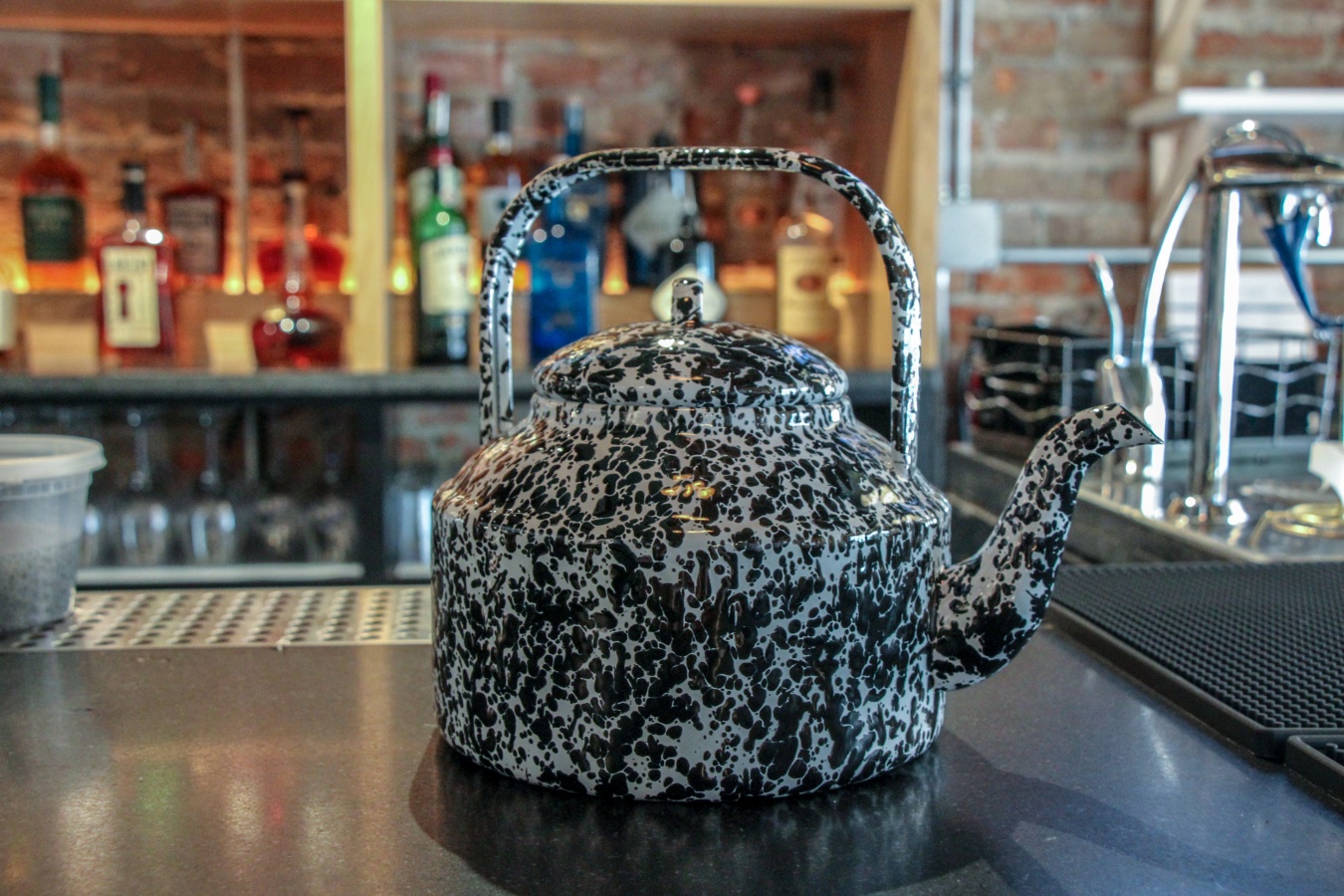
For those drinks that come ready to share in black and white tea carafes—such as a house-infused watermelon and feta soju, or a strawberry and toasted coconut makgeolli—Anju staff encourages following the Korean custom of hospitality.
“In Korea, you never pour for yourself,” Anova says. “There’s an etiquette. It’s very popular to drink with a whole bunch of people and that’s why they have soju, which is bought by the bottle, and everyone serves each other. There’s something really comforting about having someone pour you a drink. We want to encourage that here.”
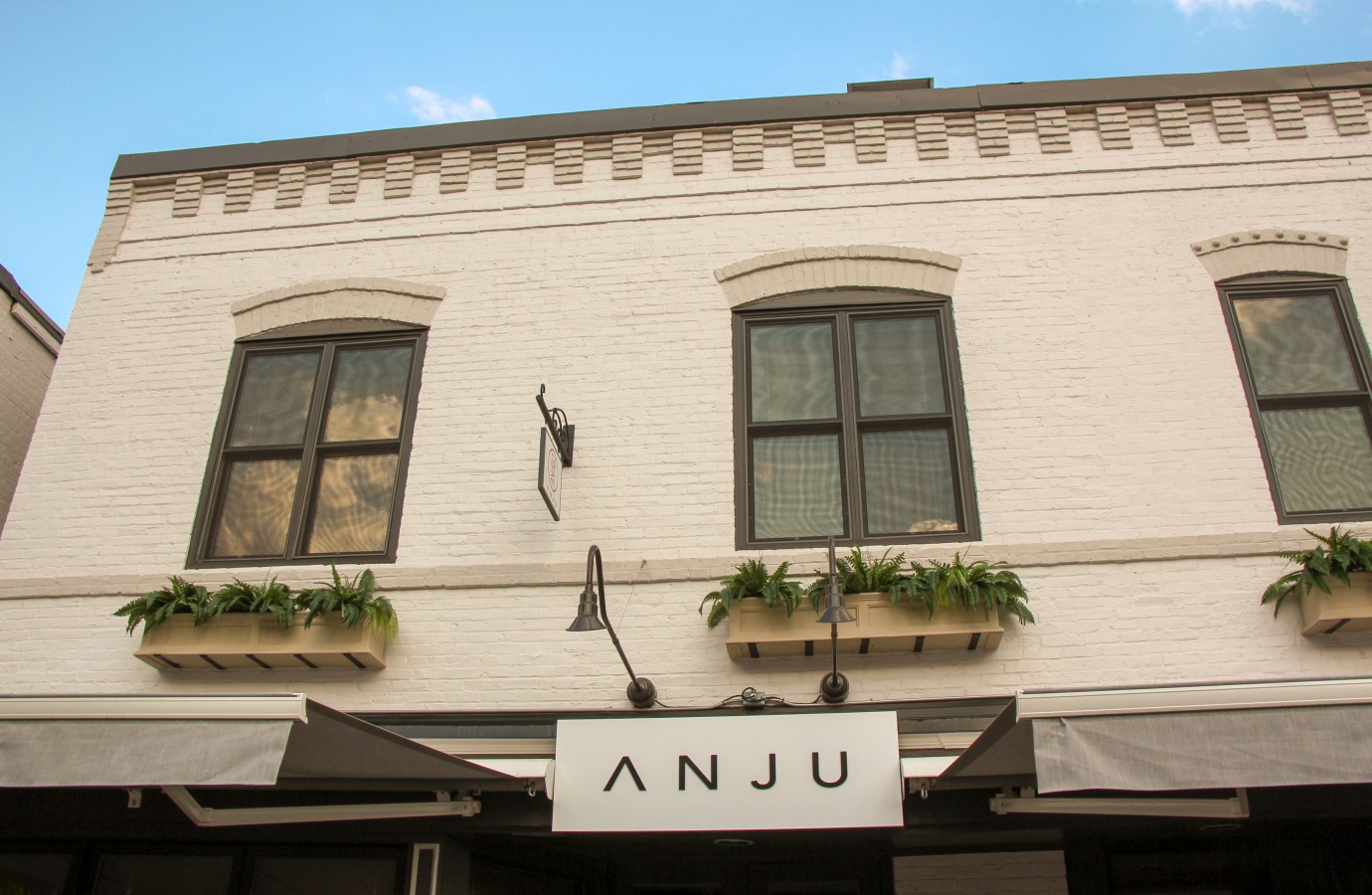
Anju is located at 1805 18th St. NW. Hours for the main dining room are Sunday-Thursday 5 p.m.-10 p.m., Friday-Saturday 5 p.m.-11 p.m. Bar hours are Sunday-Thursday 5 p.m.-1 a.m., Friday-Saturday 5 p.m.-2 a.m. Happy hour runs 5 p.m.-7 p.m. every day. Late-night happy hour is Sunday-Thursday 10 p.m.-midnight (drinks until 1 a.m.), Friday-Saturday 11 p.m.-1 a.m. (drinks until 2 a.m.)