Martin Austermuhle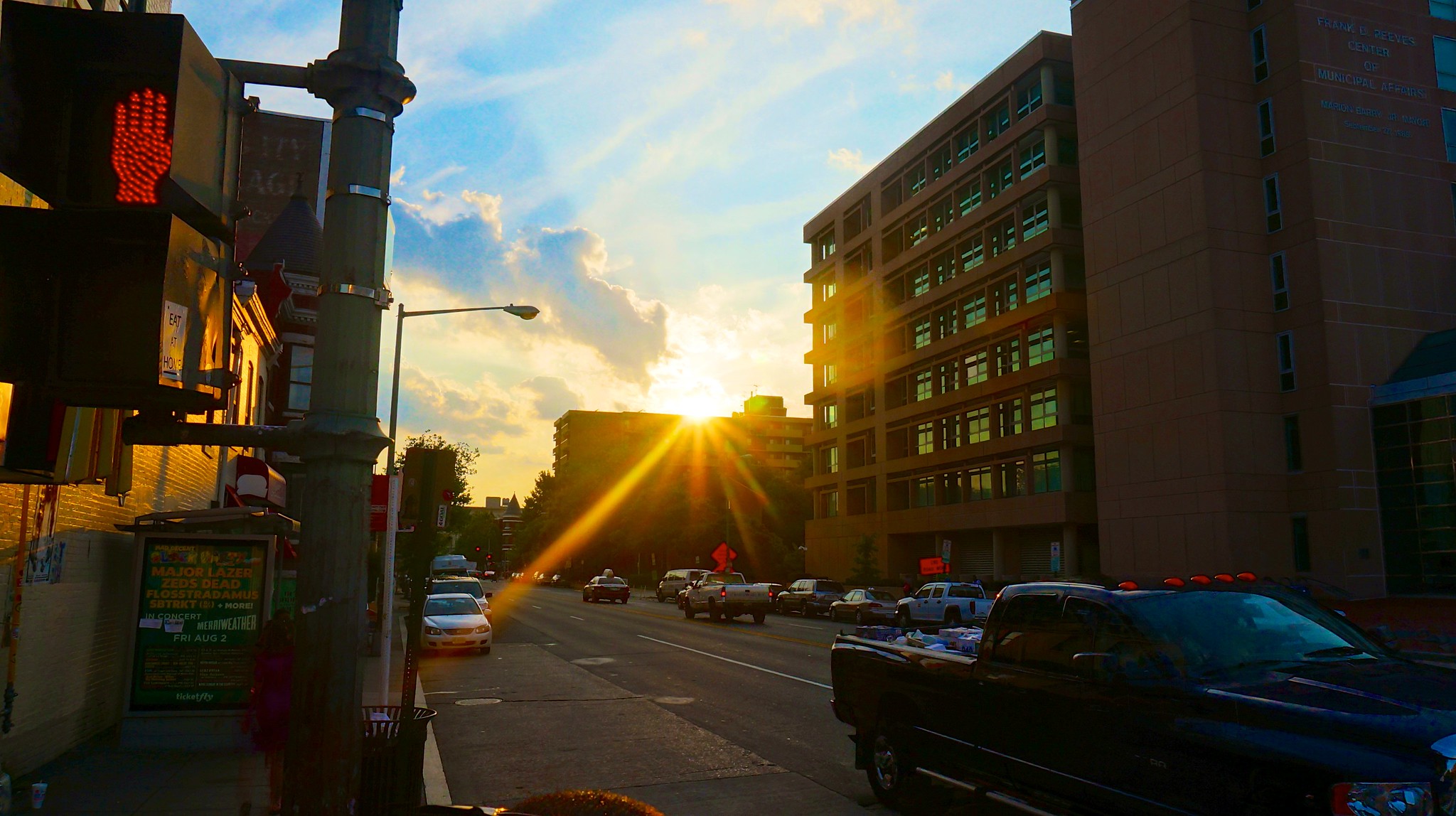
Many neighborhoods east of the Anacostia River have long struggled to attract businesses and development, and D.C. Mayor Muriel Bowser has a new idea on how she can spur both: putting government agencies there.
With a mayoral order, Bowser is requiring D.C. government agencies looking to lease new office space over the next five years to give priority consideration to options in wards 7 and 8 east of the Anacostia River. In the order, Bowser says the mere presence of even a fraction of the city’s 37,000 employees can help turn underserved areas around.
“The daily presence of District employees can have a significant positive impact on an area, driving demand for products and services such as grocery stores, restaurants, pharmacies, health care providers, professional services, and other local businesses, as well as increasing foot traffic that can help influence future retailers’ location decisions,” reads the order.
Speaking after an event in Anacostia on Friday, Bowser added that the certainty of a D.C. government agency as a tenant could be the last push for a development project to become reality.
“What we know is that a guaranteed tenant like the District of Columbia could be the make-or-break transaction for difficult deals. And let’s be frank, in emerging neighborhoods, sometimes it is very hard for deals to come together,” she said.
The D.C. government currently occupies 3.9 million square feet of owned office space and 3.2 million square feet of leased office space.
Drawing From Past Experiences
Bowser isn’t the first mayor to use the presence of city agencies as a means to revitalize neighborhoods. After the 1968 riots decimated businesses along 14th and U Streets NW and resulted in large-scale flight from the area, then-Mayor Marion Barry pushed to build the Franklin D. Reeves Municipal Center at the intersection.
“Sometimes you need something significant to change the dynamic, and the Reeves Center was significant because it meant that a lot of people were here earning consistent wages, and as a result they left money in the community as well as coming here to make it,” said Stanley Mayes, a business owner in Shaw, to WAMU last year.
D.C. is now looking to redevelop the Reeves Center, which could force the government agencies currently there to relocate elsewhere in the city—and per Bowser’s order, they’d have to look east of the river first. A number of agencies are also likely to be moved out of One Judiciary Square, which is going to be repurposed to house the Metropolitan Police Department when it moves out of the Henry J. Daly Building as that gets renovated.
In 2009, the D.C. Department of Housing and Community Development moved its headquarters to Anacostia, and the Department of For-Hire Vehicles also has its offices in the neighborhood. DHCD is seeking a new home, but is likely to remain east of the river.
Bowser and other mayors have also tried to use the office needs of federal government agencies as a means to spur development in underserved D.C. neighborhoods. She backed a developer’s unsuccessful pitch to move the headquarters of the U.S. Securities and Exchange Commission from its current building next to Union Station to a new facility in Ward 8’s Poplar Point. And former Mayor Vincent Gray had also proposed that location as the site for a new FBI headquarters; that search was ultimately scrapped.
“The District government’s decisions of where to lease space for its offices and other facilities can therefore be a powerful tool for investing in the economic vitality of communities,” reads Bowser’s order, “and can be a particularly powerful tool to build, catalyze, and sustain neighborhood and economic development in communities that currently experience underinvestment by the private sector.”
This story originally appeared on WAMU.