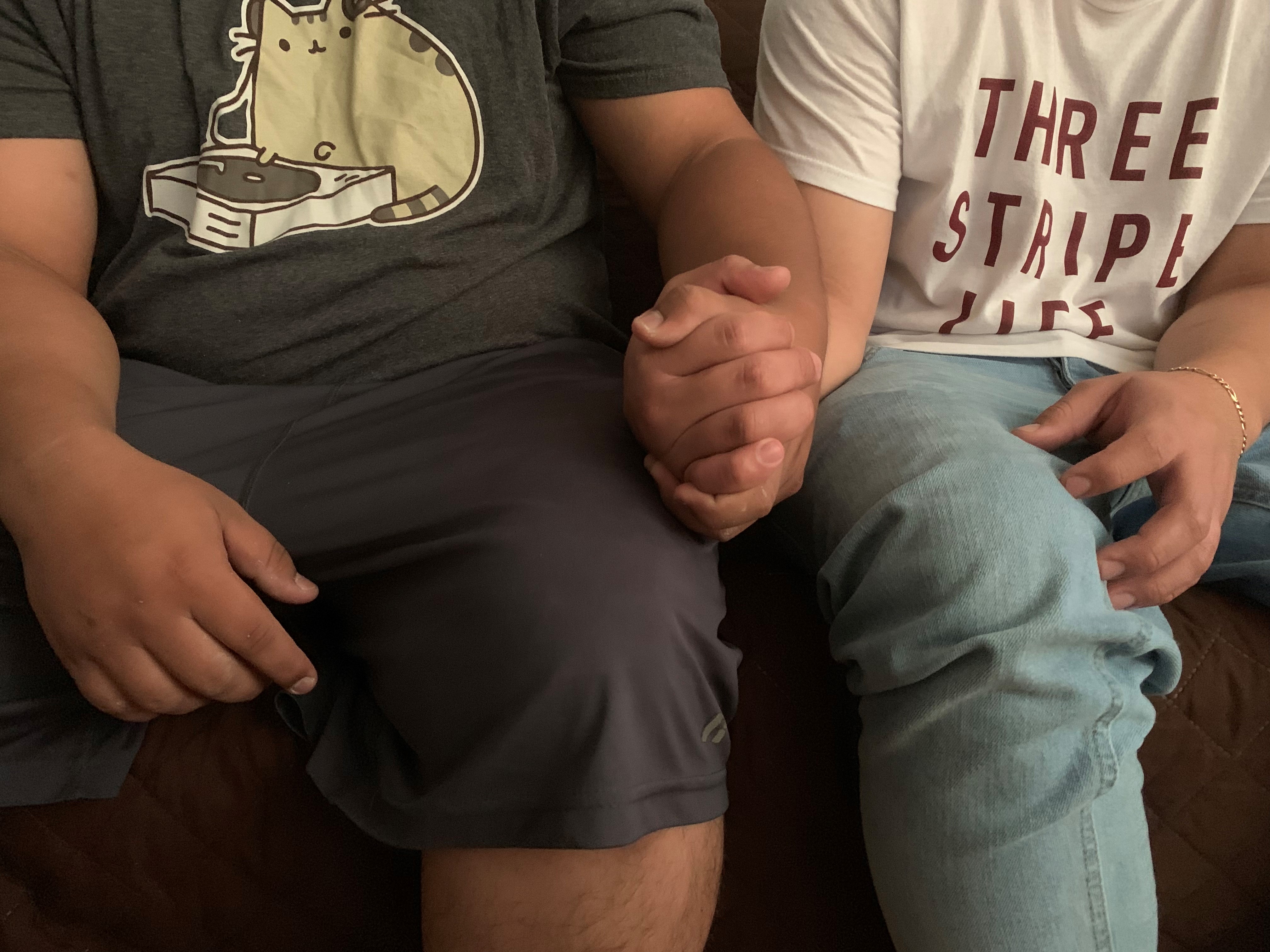
Fernando, 21, was at work this May when immigration officials came to his home in Northern Virginia and arrested his mother, Kenia. When he heard about it, he says his brain went blank.
“I didn’t think about anything. I only wanted to see her,” he says, in Spanish. “It hurts to remember that time.”
Kenia was taken to a detention center in Virginia, then transferred to one in Louisiana. About two weeks ago, she was deported to El Salvador, a country she left 15 years ago because she was afraid that gangs in the area where she lived would rape or kill her. (We’re using the family members’ first names only because of concerns about their safety and legal status).
“The only thing I want is to be here with my mom,” Fernando says. “Here, she could do things she can’t do over there because of fear of bad people over there.”
The U Visa—A Special Protection For Victims Of Crime
Kenia came to the United States in 2004 hoping to be granted asylum. She was apprehended at the border, then released and told to show up for a court hearing. She says she didn’t get a time or date for the hearing. As a result, her attorney says Kenia received a deportation order. U.S. Customs and Immigration Enforcement acted on the order this year.
While she was detained, Kenia applied for a U visa—a protection for undocumented immigrants who’ve been victims of crimes in the U.S. and have cooperated with law enforcement. The application relied on an instance in 2014, when Kenia’s boyfriend at the time abused her. A law enforcement record says Kenia told police “her boyfriend assaulted her and broke her cell phone,” and an officer “observed fresh markings/cuts to victim’s face.” Kenia got an emergency protective order against the man.
Last month, with Kenia’s U visa case pending, Kenia’s attorney requested the deportation be put on hold. ICE denied this request. In a letter from ICE official Lyle Boelens, Boelens wrote “I find no compelling reason to warrant a favorable exercise of my discretion.”
Eileen Blessinger, Kenia’s immigration attorney, says she was shocked Kenia was deported.
“This is a huge change,” she says. “We’re talking about a noncriminal who’s been here for 15 years. I thought it was a guarantee that they’d grant the stay of removal.”
Blessinger says she’s had other clients, some with criminal records, who have had their requests to stay their deportations granted. She says she’s concerned that if the Trump Administration stops granting stays for U visa applicants, it will discourage victims of crimes from coming forward.
“It’s going to have a chilling effect on undocumented persons reporting crimes,” she says.
A spokesperson for ICE said the agency was blocked by statute from commenting on Kenia’s case, but when presented with a waiver signed by Kenia giving them permission to discuss her case, said it would respond. (UPDATE: ICE has commented, see below).
A Change In Immigration Policy
In August, ICE released a fact sheet on changes to how it would handle requests to stay deportations from people with pending U visa applications. Previously, the agency had been required to ask U.S. Citizenship and Immigration Services, the agency that grants visas, to look into a pending U visa application—called a prima facie determination. Now, under new rules, ICE no longer has to check with USCIS before deciding a case. This gives ICE more discretion over deportations, Blessinger says.
ICE says as the number of U visa applications increased, the “process became burdensome on both agencies” and “such determinations didn’t reflect a qualitative assessment of any assistance provided to law enforcement.” It said the process “was a simple confirmation that the petition was filed correctly and was not a substantive review of the petition.”
In a statement, it also said ICE officers and attorneys will now “review the totality of the circumstances, including any favorable or adverse factors, and any federal interest(s) implicated and decide whether a Stay of Removal or terminating proceedings is appropriate.”
“What these actions do is kind of compound that fear of coming forward,” says Cecelia Friedman Levin, senior policy counsel for ASISTA, an organization that supports attorneys for survivors of domestic violence.
She says her organization had already heard about ICE declining stays for clients with pending U visas and inconsistently requesting for prima facie determinations, but says she’s concerned about the policy change further limiting due process for survivors who could be eligible for protections.
“What we’ve seen is that ICE’s kind of shift has meant that survivors have been swept up in these, this broad shift in enforcement priorities, even when they might potentially have access to protection,” Friedman Levin says.
‘It’s Difficult Here’
Back in El Salvador, Kenia says she feels lost.
“I’m hoping something can happen, but I don’t want to be here in El Salvador. I can’t sleep. I feel anguish. I’m desperate,” she says in Spanish.
Kenia says she has been afraid to go out of the house by herself. She made a life in the U.S., where she worked as a caregiver, but hasn’t been able to find work in El Salvador.
Fernando and his 19-year-old brother, Erick, have tried to figure out how they can keep supporting themselves and the house. They’re taking care of their mom’s Shih Tzu mix named Shopper. Erick is a senior in high school, but when asked what he wants to do next, he’s not thinking too far ahead.
“[I want] to earn more money to help my brother with the house, and what he needs for my mom,” he says.
For now, they’re in limbo as they wait for their mother’s U visa to make it through the system. With the current backlog, it could take years. With an annual cap of 10,000 visas, Kenia’s attorney says a decision could take at least six years.
“I don’t know how long it will take for [the U visa],” Kenia says. “I don’t want to keep living in this country.”
ICE Responds
In response to Kenia’s case, ICE confirmed she had a removal order for failing to appear at a hearing in 2004. ICE says her U visa petition was based on an alleged domestic violence incident in 2004, and says the commonwealth’s attorney dismissed the criminal case against the alleged assailant.
However, Friedman Levin, with ASISTA, points out a conviction isn’t necessary for a U visa application. A USCIS guide for law enforcement says that U visa regulations do not “require that a case must have progressed to a certain stage (e.g., prosecution or conviction).”
ICE also says “The U nonimmigrant status (U visa) is set aside for victims of certain crimes who have suffered mental or physical abuse and are helpful to law enforcement or government officials in the investigation or prosecution of criminal activity.” It says the fact that it no longer has to check with USCIS “had no bearing on the removal” of Kenia and “she would have been removable under both the agency’s previous and current U visa guidance.”
Friedman Levin says she’s still concerned about ICE having sole discretion on deciding whether or not to deport someone with a U visa case because officers with USCIS—the agency that grants visas— have specialized training on trauma and survivor-based protections.
“The fact that ICE is talking about what a U visa is and who is eligible? That is USCIS’s call and ICE’s taking away their authority to look at [a person’s] case and deporting them before they even have an opportunity to have their case decided,” she said.
This story originally appeared on WAMU, and has been updated to include a statement on Kenia’s case from ICE and additional information from Friedman Levin and with the corrected spelling of Erick’s name.