Ally Schweitzer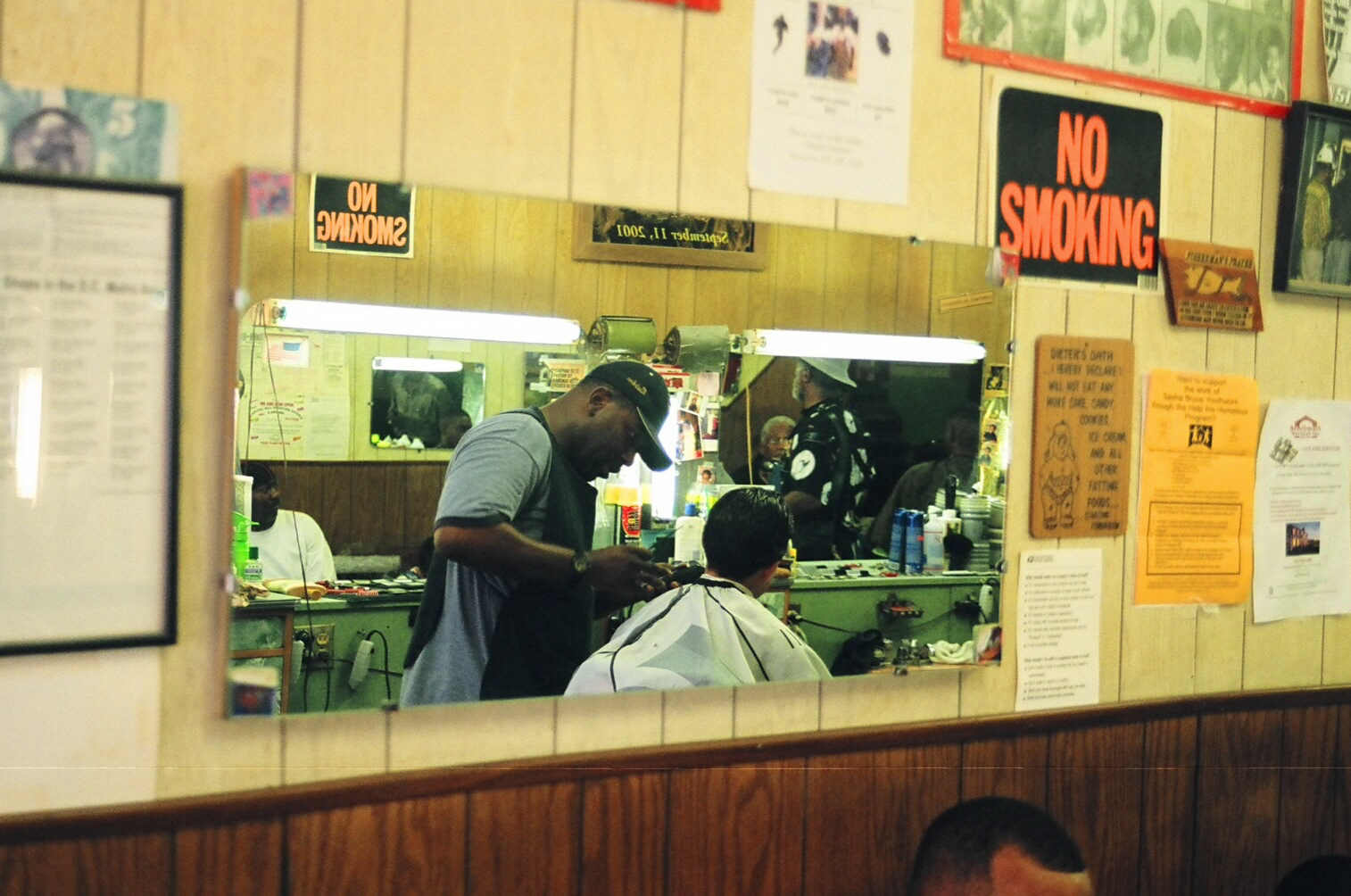
The District already offers some financial assistance to residents struggling to pay rent. Now your local barber shop could be next.
As rising costs threaten to shutter more independent establishments—and potentially replace them with national chains—multiple councilmembers are backing proposals that would provide relief to small, local, and “legacy” businesses in the District.
“Whenever you have this type of growth, there is collateral damage,” says Stephen Glaude, president of D.C.’s Coalition for Nonprofit Housing and Economic Development.
Ward 5 Councilmember Kenyan McDuffie introduced a measure Tuesday that would, in part, offer grants or loans to small businesses that have operated continuously in the District for at least 10 years and have made significant cultural contributions to the city or a particular community.
Meanwhile, a pair of bills sponsored by Ward 6 Councilmember Charles Allen would do much the same: One proposal creates new tax credits for small and local businesses and landlords who rent to them, among other provisions; another helps longstanding businesses pay for rent, capital improvements, and operating costs.
The bills move next to the Council’s Committee on Business and Economic Development, of which McDuffie is chair and Allen is a member.
McDuffie says his legislation is designed to support businesses that are otherwise financially sound but struggle to cover expenses beyond their control, such as sharp increases in property taxes or rent. Many of those businesses, he says, may have withstood tough economic times and are now facing the opposite extreme.
“Local businesses that have been able to weather the storm—the challenges in the District over the years—are trying to survive,” McDuffie said. “Because we have such a robust economy and the cost of real estate continues to rise, it’s the small business owner who is really catching the short end of the stick.”
Keeping D.C. Business Diverse
None of the new legislation expressly targets minority-owned businesses, but those businesses could be among the beneficiaries of any small business assistance that passes the Council.
McDuffie’s bill defines a “legacy business” as a local business enterprise that’s operated in D.C. for at least 15 years or a small business enterprise based there for at least 10 years. Eligible establishments must also demonstrate “a commitment to maintaining the physical features or traditions that define its business.”
The proposal follows recent D.C. Council approval of a 10-year tax abatement for Sankofa Video Books & Cafe, a black-owned institution that opened on Georgia Avenue in 1998. The shop’s owners said soaring property taxes were poised to shut them down.
“The city absolutely has the responsibility of making sure we can be here,” Sankofa co-owner Shirikiana Gerima told DCist in May. “And by ‘we’ I don’t mean just Sankofa—I mean the black population, the colored population of D.C.”
Allen, who supported the abatement for Sankofa, doesn’t disagree. But he later questioned the sustainability of addressing commercial affordability issues one tax break at a time.
“A whole bunch of businesses start contacting me saying, ‘Hey, we’d love to have a tax abatement, too,’” Allen said. “We can’t be in a position where we’re just doing one-off tax abatements. … We should be thinking about this in a much more holistic way.”
Both McDuffie’s and Allen’s bills open up benefits to a range of businesses and property owners who are under pressure from market forces that have transformed commercial areas across the city. Sankofa, whose owners also own their building in the gentrifying Park View neighborhood, faced annual property tax bills of $30,000 and higher.
Allen says offering benefits to landlords—not just tenants—is crucial to maintaining a diverse mix of establishments, rather than block after block of chain stores. Without an incentive to lease to local businesses, he says, landlords may favor renting to nationals because of the financial stability they offer.
That’s why Allen’s “Small and Local Business Assistance Amendment Act” would guarantee a portion of three years’ rent payments to landlords who lease to qualifying local businesses.
“The national chain comes in and they’ll sign a lease for five years and guarantee the rent. They could even open for a year and close. But that property owner knows, ‘I have five years worth of rent,’” Allen said. “Small business, of course, can’t do that.”
A Helping Hand—Or A Bailout?
Both McDuffie and Allen acknowledge their legislation could prompt criticism that they want to use taxpayer dollars to bail out businesses that are no longer competitive. But in order to qualify for incentives, they say, proprietors would have to open up their books to show they have sound business models.
Under one of Allen’s bills, for example, businesses that apply for rent guarantees would have to prove their creditworthiness on an annual basis. “They’d have to show their financials to show their business plan, their financing,” Allen said. “It helps paint a really strong picture of a business that is ready to go.”
Some also quibble with the idea that businesses scrambling to pay their rent are victims of their own poor business choices. Stephen Glaude, president of the Coalition for Nonprofit Housing and Economic Development, says current market forces threaten to topple even businesses operating in the black.
“I don’t think you can call the District ‘normal market conditions.’ We are accelerated market conditions,” said Glaude, who organized business owners to help shape McDuffie’s legislation. “We have to be mindful that whenever you have this type of growth, there is collateral damage. If no one’s paying attention to it, you look up one day and you have a city that you didn’t intend to have.”
This story originally appeared on WAMU.