Rachel Kurzius
The timing of David Krucoff’s announcement that he is running for D.C. delegate is not coincidental.
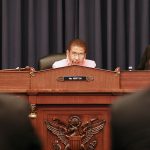
“You’ve got to manufacture your own publicity,” Krucoff says, regarding his choice to file candidate paperwork on the same week as the first D.C. statehood hearing in the House of Representatives in more than 25 years. “Doing what I do in this town is not easy. You have to realize that people do not call me back.”
Krucoff is referring to his work advocating for Douglass County, Md., an alternate proposal for gaining representation on Capitol Hill for the 702,000 Washingtonians who currently have limited voting rights. Rather than fight for statehood—ahem, “51st statehood,” as Krucoff constantly corrects—the idea is to retrocede into Maryland, and turn the vast majority of the city’s land into a new county in the Old Line State. For the past few years, Krucoff has gone to Advisory Neighborhood Commission meetings, local street fairs, and more to spread the gospel about this idea.
“That is the way we will gain our full voting rights, so that is the first tenet of the campaign,” says Krucoff, who works as a real estate executive. The fourth-generation Washingtonian is running as an independent rather than challenging longtime D.C. Delegate Eleanor Holmes Norton in the June 2020 primary. His lack of political affiliation is part of his bid, too: he says he wants to “identify and eliminate cronyism on either side of the aisle” and “help transform Congress from a body which contains and is about partisan score-keeping to a body which is about problem solving.”
D.C.’s delegate has less power than a typical House representative. While delegates can introduce bills and serve on, chair, and vote in committees, they do not have a vote on a bill’s final passage.
Norton, who Krucoff is trying to unseat, has long opposed the idea of retrocession. “It is clear that residents want to become their own state rather than be adopted by Maryland, whose residents and officials have never indicated support for retrocession,” Norton told DCist over email in 2017. “D.C. has a better chance of becoming the 51st state than convincing Maryland, which has only one large city, to have another.”
Indeed, polls indicate that neither District nor Maryland residents back the idea. But Krucoff points to the lack of national popularity for D.C. statehood as a counterpoint, citing a Gallup poll released over the summer that shows 64 percent of Americans don’t think the District should be a state, with 29 percent in favor. “What’s harder?” asks Krucoff. “Advocating here where we live or advocating around the country for a position that is clearly game-changing in terms of the make-up of the U.S. Senate? I’m saying, ‘Join us, reunion, merger, regionalism, everything to do with working together.'”
The idea of D.C. becoming the 51st state would mean two more senators in the upper chamber, whereas retrocession would keep the number as is. But Krucoff’s arguments for retrocession rankle the statehood advocates who think he is ignoring the will of the more than 80 percent of voters who supported statehood in 2016.
“It’s a preposterous insult to the people of D.C.,” says Josh Burch, the founder of Neighbors United for Statehood. “This is a jurisdiction that, for over 200 years, has been bossed around and pushed around by people we didn’t elect.” Burch notes that retrocession could take place without Washingtonians ever weighing in, if Congress and then Maryland’s state house voted on it.
But aside from Burch’s ideological complaints that retrocession is “undemocratic,” he also doesn’t think it’s feasible. “I don’t think the state of Maryland would actually like this process—it would completely change the balance of power in Maryland,” says Burch. “Would a Republican governor ever sign this into law?”
Burch characterizes retrocession as “what guilt-ridden Republicans want. Heaven forbid the people of D.C. get their own senators.”
Krucoff says that his issue with the federal government “is not the Senate. My problem is more the House.” He also has criticisms of D.C. government. “The District of Columbia government is bloated and enormous,” he says. “Let’s be efficient first. Maybe one way to be efficient is to have a merger.”
But retrocession isn’t his only campaign idea. He’s also calling for changes to the U.S. tax code that would allow D.C. to tax the real estate holdings of the federal government and major nonprofits (his example was George Washington University).
Krucoff faces incredibly long odds in a match-up with Norton, who has served since 1991 and generally trounces her competition in both primaries and general elections. “My campaign headquarters is my cell phone,” says Krucoff. He’s particularly worried about getting 3,000 signatures to get on the November 2020 ballot, because he cannot start collecting them until after the primary ends in June. “As far as I’m concerned, I would like to start gathering signatures today,” he says. Greg Boyd, who is serving as treasurer for Krucoff’s campaign, tried to compete in the 2018 Ward 1 race, but failed to make it on the ballot.
And he still struggles to get his ideas out there. He says he interviewed to be the Republican witness at Thursday’s statehood hearing, “but they rejected me.” Instead, a Cato Institute scholar will testify.
Krucoff will be at the hearing nonetheless. He says, “My thought process was, and still is, I’ll be in the room and then maybe they’ll call on me.”