Update, 9/25/19: Robert Tinney, the Copycat Co. bartender who was fired following the viral incident, detailed his own version of events in a statement emailed to DCist. Tinney says Jazmyne Wade’s “belligerent” party instigated the violent altercation earlier this year. According to him, a member of her group struck him in the face, calling him a “bitch-ass n—-r.” He says Wade was aware that she was banned from the bar.
As for the incident earlier this month, Tinney says he did not call Wade a “bitch,” but admits that, having lost his temper after repeatedly asking her to leave, he said, “Get your black ugly ass the fuck out of my bar.” He says he “was angry and defensive and should not have used those words in that way. But Jazmyne is black like me and was being extremely ugly to me.”
From Tinney’s emailed statement:
I can understand why Devin Gong, a man I worked with for more than five years and with whom I built Copycat from nail and board, felt he needed to throw me under the bus. His first thought in this PR maelstrom was to protect the bar at all costs. But the cost to me was my job and for now, and my reputation. But I hope that readers to my reply will be more understanding. I am a black man, raised by black women whom I love [and] respect. I have survived nearly being killed by street violence and I have worked honestly and consistently with integrity.
For all my bartender and bar owner friends and colleagues, please know this: We are often asked to do a politically correct job in a politically incorrect environment. When customers become unruly, drunk, and disorderly—and sometimes violent and dangerous—things can get out of hand. But we bartenders do our best to protect the bar and the business. Sometimes we don’t handle the drama in the smoothest way, but I would challenge anyone to do this kind of work under these circumstances without inviting second-hand criticism. In my case, this criticism and the reporting of what allegedly happened, has so far been extremely unfair.
Original:
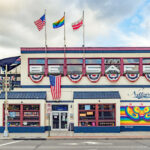
Jazmyne Wade has been visiting the lowlit bar Copycat Co. on H Street NE with friends and co-workers since it opened in 2014. At one point, she had become such a regular that she decided to limit her visits because she was spending so much money on potstickers and cocktails.
As of last weekend, though, Wade has no plans to ever return, she tells DCist. After eating and drinking there for more than an hour on Saturday night into the early hours of Sunday morning, she says, a bartender she’s interacted with for years abruptly approached her right after she had paid her bill and used colorist and sexist language. Both Wade and the bartender are black.
Wade says the bartender told her, “Bitch, you need to get the fuck out.” When she objected to his use of the word “bitch” and asked why, Wade says, he yelled, “You’re just mad because you’re black and ugly. You’re a black, ugly bitch.”
“I was like, ‘Wow, seriously? You’re black, too!’” says Wade, 28.
Wade, herself a bartender in D.C. who also works as a personal trainer, went to find the manager on staff to ask why she was being dismissed. She says Copycat co-owner Devin Gong told her she had been banned from the establishment because she had previously assaulted a Copycat staff member. Wade says Gong didn’t respond when she disputed that account and relayed concerns about the bartender’s language.
“He offered me a refund but it’s not about that,” she says. “I drank the drinks and ate the food, I don’t want the refund. My problem is your bartender’s calling me a bitch and calling me black and ugly.”
The incident drew widespread attention and criticism this week after a witness to the Sunday morning incident published a post on Medium titled, “A Colorist, Sexist Night in D.C.’s Copycat Co.” Activist Nikki Peele called upon patrons to “fry up the owner(s)” of the bar; others declared the bar was cancelled, and called for a boycott.
“I shouldn’t have had to go through this,” Wade says. “Any black woman shouldn’t have had to experience or hear that.”
Gong told DCist on Thursday that he fired the bartender, Rob Tinney, earlier today after the bartender refused to publicly apologize for his conduct.
“I felt like we definitely fucked up. I’m not denying that,” Gong says. “We messed up. I handled it poorly.”
Gong now says that one of Wade’s friends, not Wade herself, had assaulted a bartender during an altercation earlier this year, and that the entire group was banned at the time as a result. He told DCist he was mistaken last weekend when he told Wade she had been banned for committing the assault herself.
Wade maintains she had no idea she had been banned at all.
“I would never assault another bartender, anybody,” she says. “I for sure wouldn’t return to a place where I did something crazy like that.”
Her account of that incident differs from Gong’s telling. She says that in the first half of this year, she was at the bar with a co-worker, who Wade describes as “a visibly gay black woman, who appeared to have a masculine appearance.” Wade says Tinney got into an argument with Wade’s co-worker, grabbed food out of her hand, and said, “If you want to be a man, I’ll treat you like a man.”
Gong says one member of Wade’s group subsequently assaulted two Copycat staffers. Wade denies that an assault happened at all. Gong says he wasn’t there that night, and can’t confirm or deny whether the bartender used homophobic language.
A few days after that incident, Wade says she attempted to get takeout from the restaurant and was told by the cashier that Copycat couldn’t serve her. She says she was eventually given her food but wasn’t told why it had initially been refused. Gong says Wade was told at that point that she had been banned from that establishment for being part of the earlier altercation.
Last Saturday was Wade’s first time visiting Copycat since the takeout confusion, she says.
She found this latest experience particularly mystifying, she says, because she’s interacted with Tinney “more than 20 times” since she started coming to Copycat years ago. “I was really advocating for this guy. A lot of people had shared negative experiences [they had with him] with me,” she says. “I let his skill as a bartender … just cover the fact that he wasn’t that nice of a person.”
Asked about Tinney’s prior conduct, Gong says he had raised concerns with him on several previous occasions about his approach to dealing with patrons who won’t leave, though not on the topic of using discriminatory language.
“We had conversations before where I’m like, ‘This can never happen again,’” Gong says.
Pierrea Naketa, who wrote the Medium post, had been at the bar that night with her friend when she witnessed the altercation between Wade and Tinney in progress.
At the restaurant, Naketa also tried to press Gong for more details and shared that she had been offended by the language. She says Gong laughed and asked her, “So you think he meant it in a racist way?”
When she published the Medium post on Monday, Naketa didn’t know Wade and hadn’t been able to track her down. They’ve since connected on Instagram.
“There are many different ways to say the word black: to describe an item, to empower and uplift, or as an identity,” Naketa wrote in her post. “But the way he said black was none of these, and as a darker-skinned black person, you learn this delivery early. It is said derogatorily to diminish and to devalue, to describe how black someone is in a tone that makes you understand that it is a negative attribute.”
Gong says he had never heard the word colorism before Saturday, and he’s frustrated that his company is being portrayed as racist and sexist. A majority of his employees are non-white, he says.
“After all these years of hard work and really trying to build a company that is very tolerant and very progressive, to be misunderstood in the light of this incident is very upsetting to me,” Gong says. “I feel wrongly accused and I feel that there is no justice.”
Wade first heard about Naketa’s post earlier this week from a friend and fellow bartender. Reading Naketa’s account was eye-opening, Wade says.
“I really teared up,” Wade says. “I relived the experience all over again. I felt touched that someone else who was there validated the experience.”
Witnessing a black bartender using prejudiced language to angrily eject a black customer from the restaurant was unsettling for Naketa as well. She graduated from the University of the District of Columbia’s law program in May, and in the last few months started an organization called Play in the Sun, aimed at educating the public about the existence of colorism and the tools that can help fight it.
“I’m hopeful that this starts a real conversation on the fact that it doesn’t matter what a person looks like,” says Naketa, 28. “I’m hoping we have productive dialogue on how to dismantle institutional racism.”
Gong says he and his staff plan to meet on Friday to work out an appropriate apology “to everybody” for the insensitive language last weekend. He also said he “would love to talk” with Wade.
Meanwhile, Wade says she’s been wary of entering public spaces in the H Street corridor this week because she’s worried about running into someone from Copycat. She says she hopes her experience helps people who haven’t been exposed to the concept of colorism recognize when they may be acting on internalized prejudice.
“I’ve been in this community for 15 years, way before Copycat was even conceived,” Wade says. “Why should I feel uncomfortable walking down H Street or going into any place of business on H Street? It taught me that you can’t expect everybody to be progressive in their thinking.”