 Mary Tyler March
 Jacob Fenston
 Jordan Pascale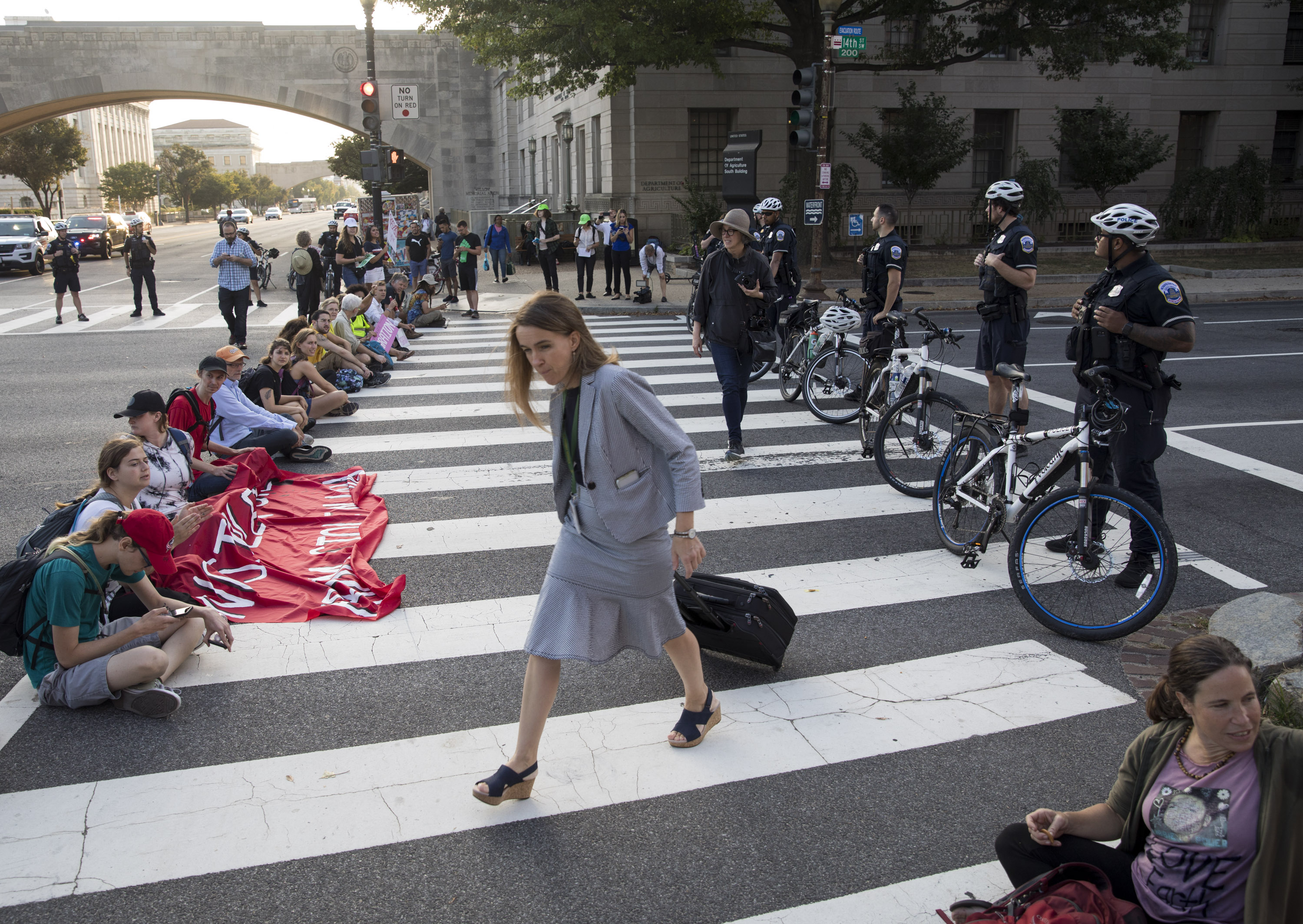
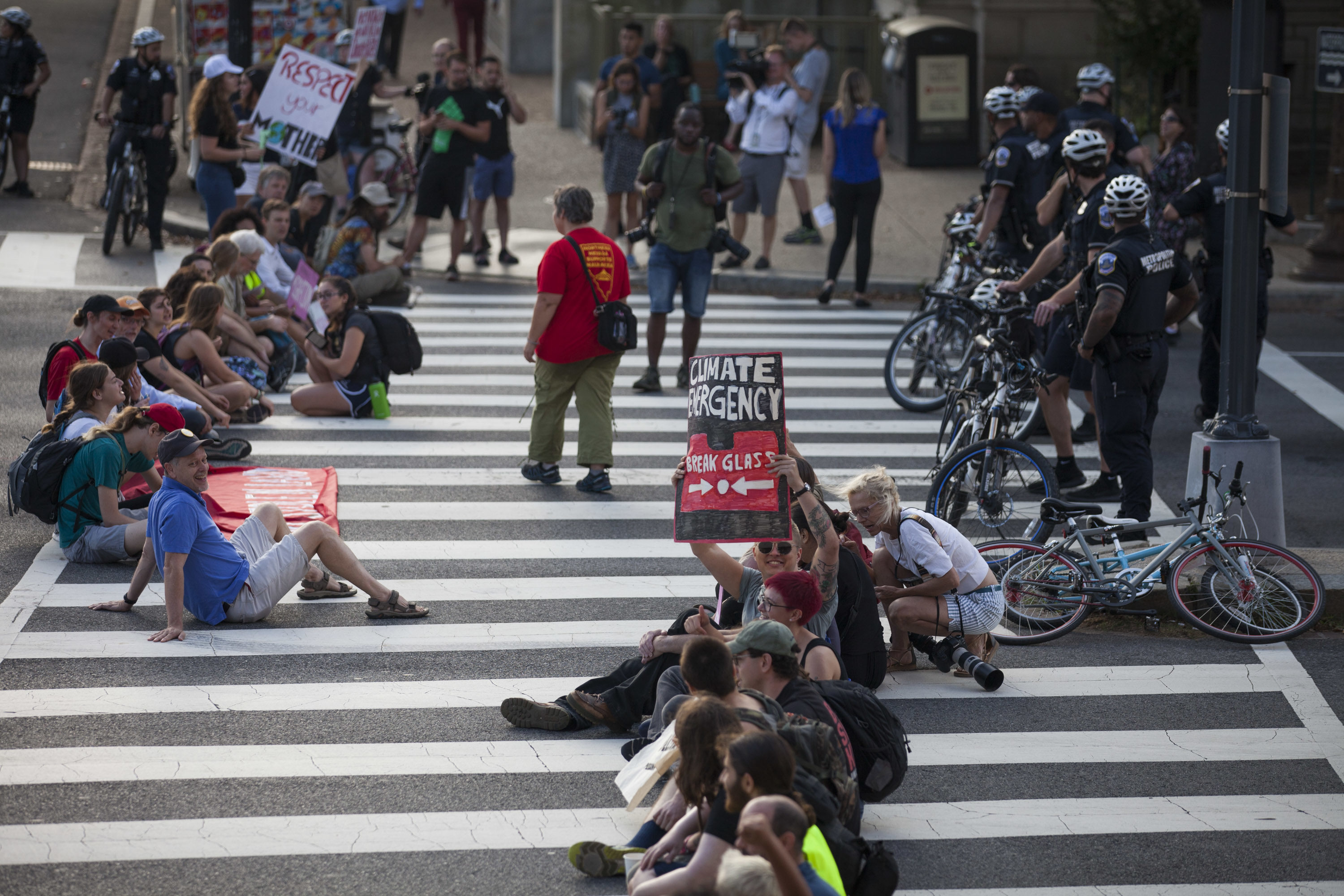
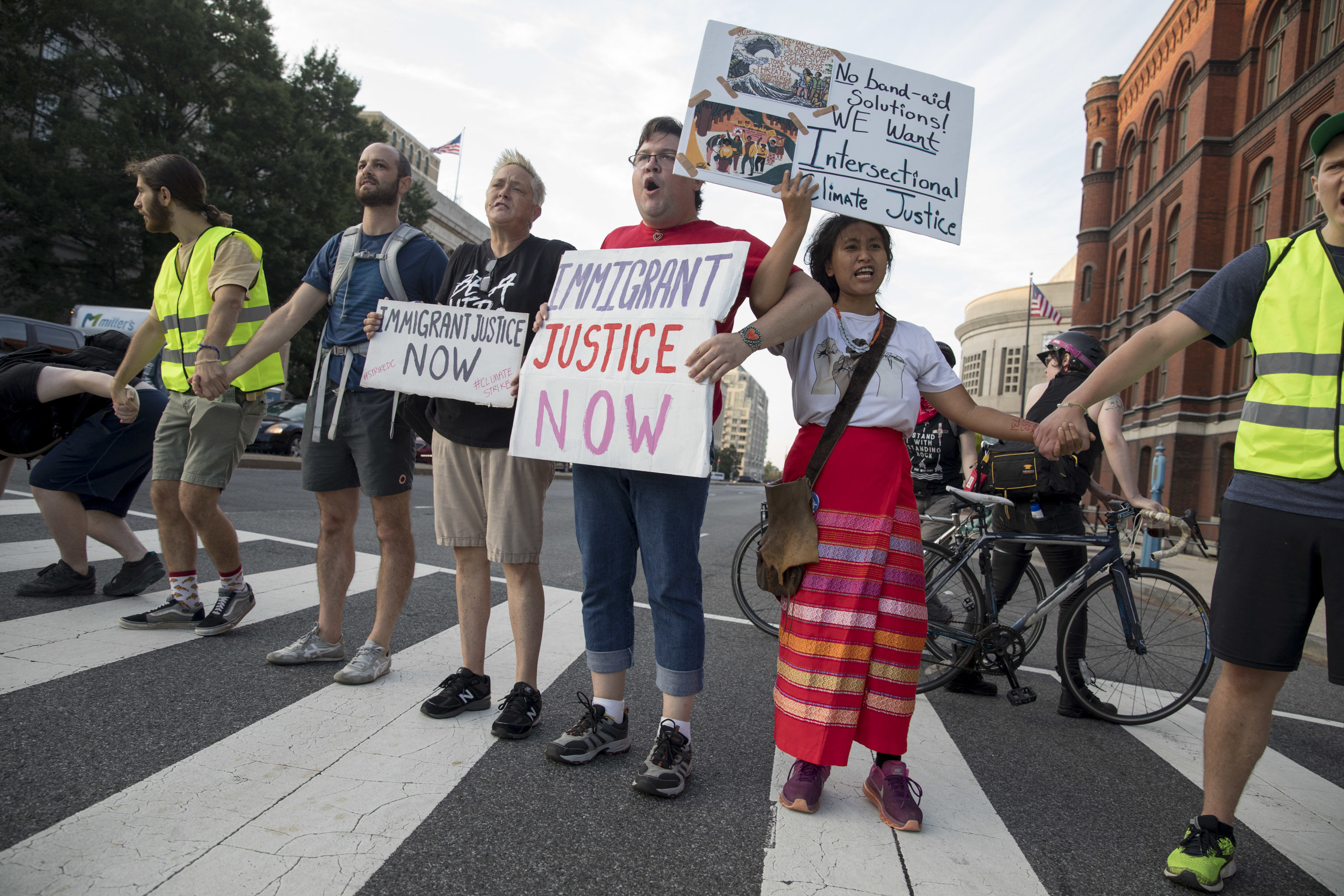
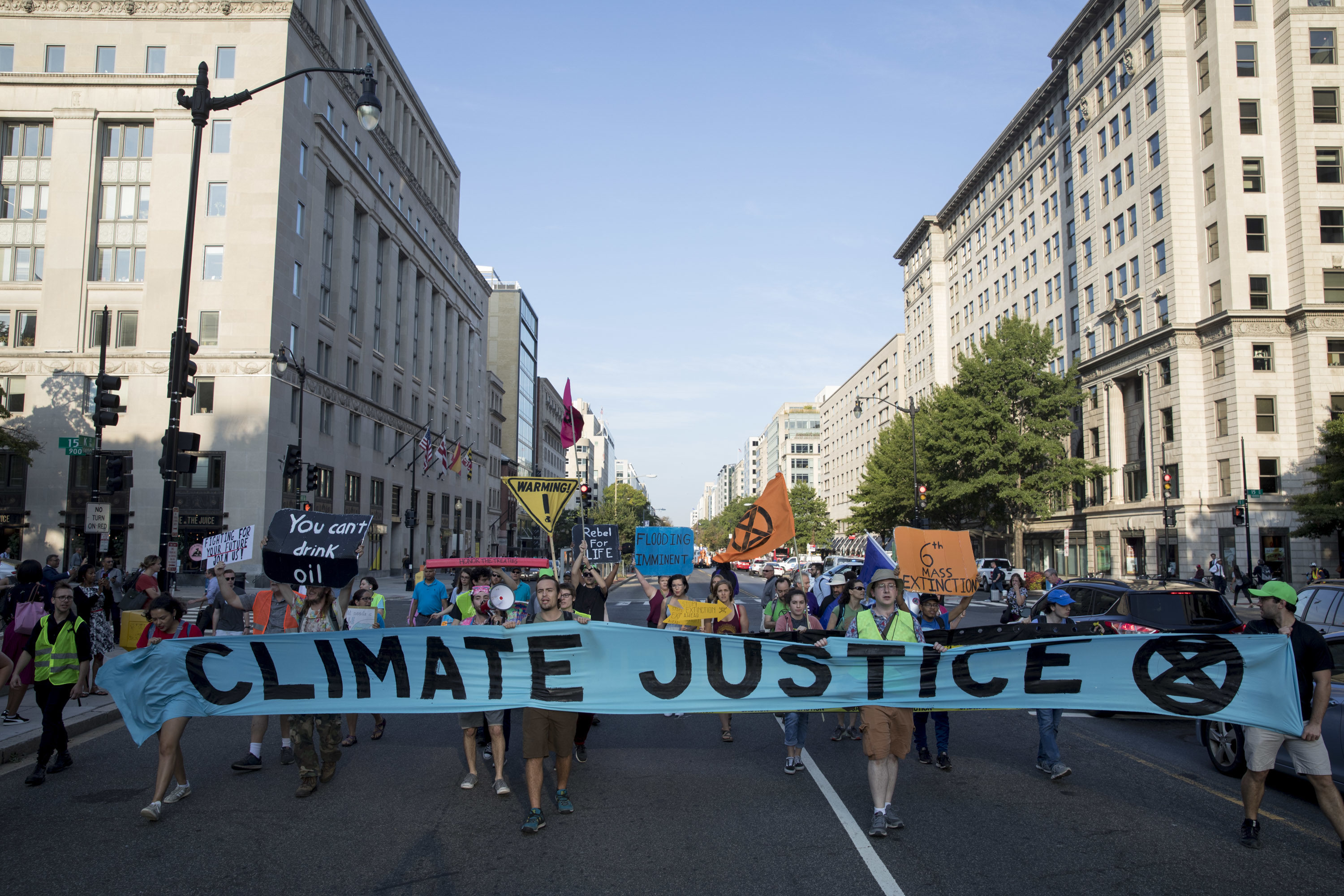
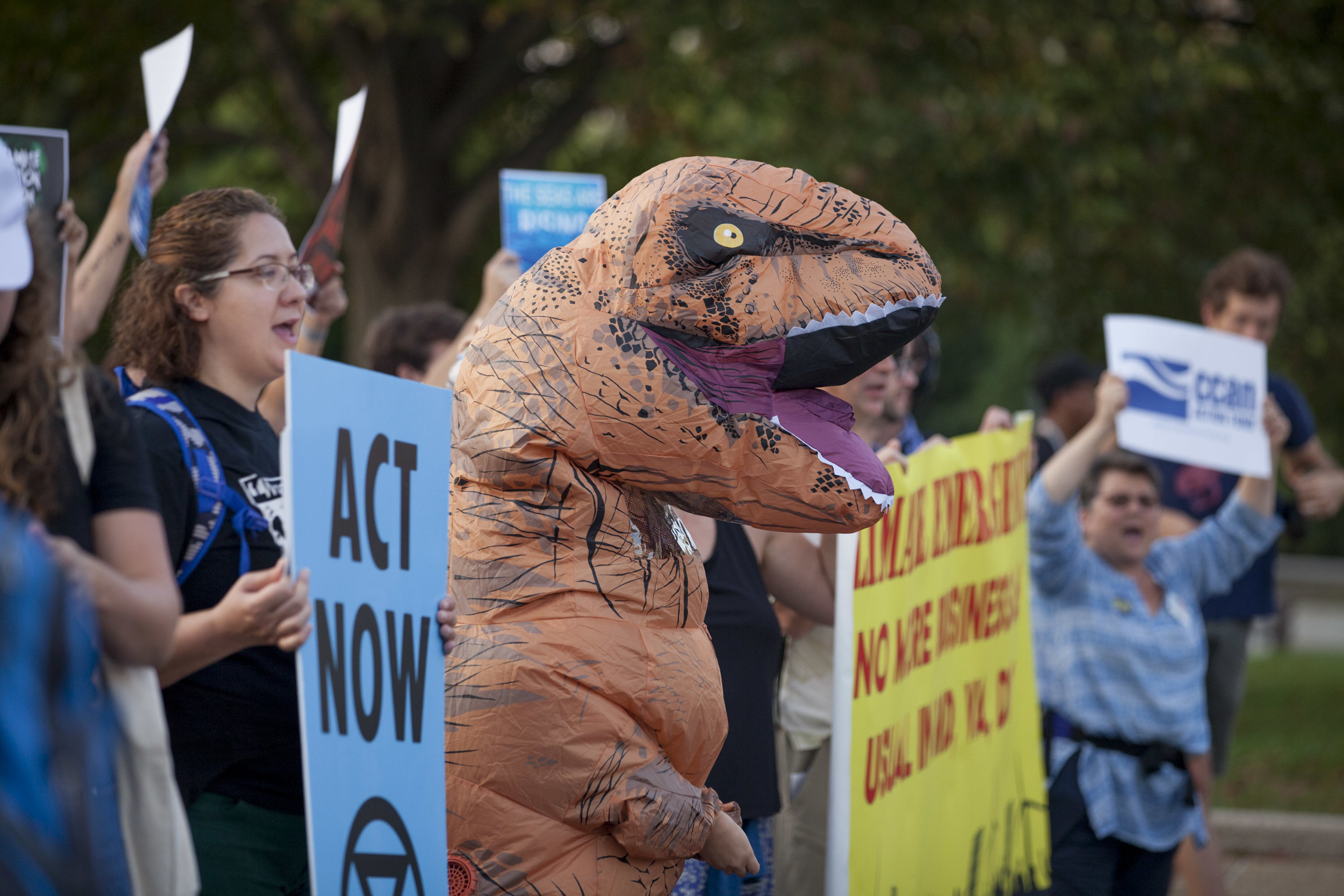
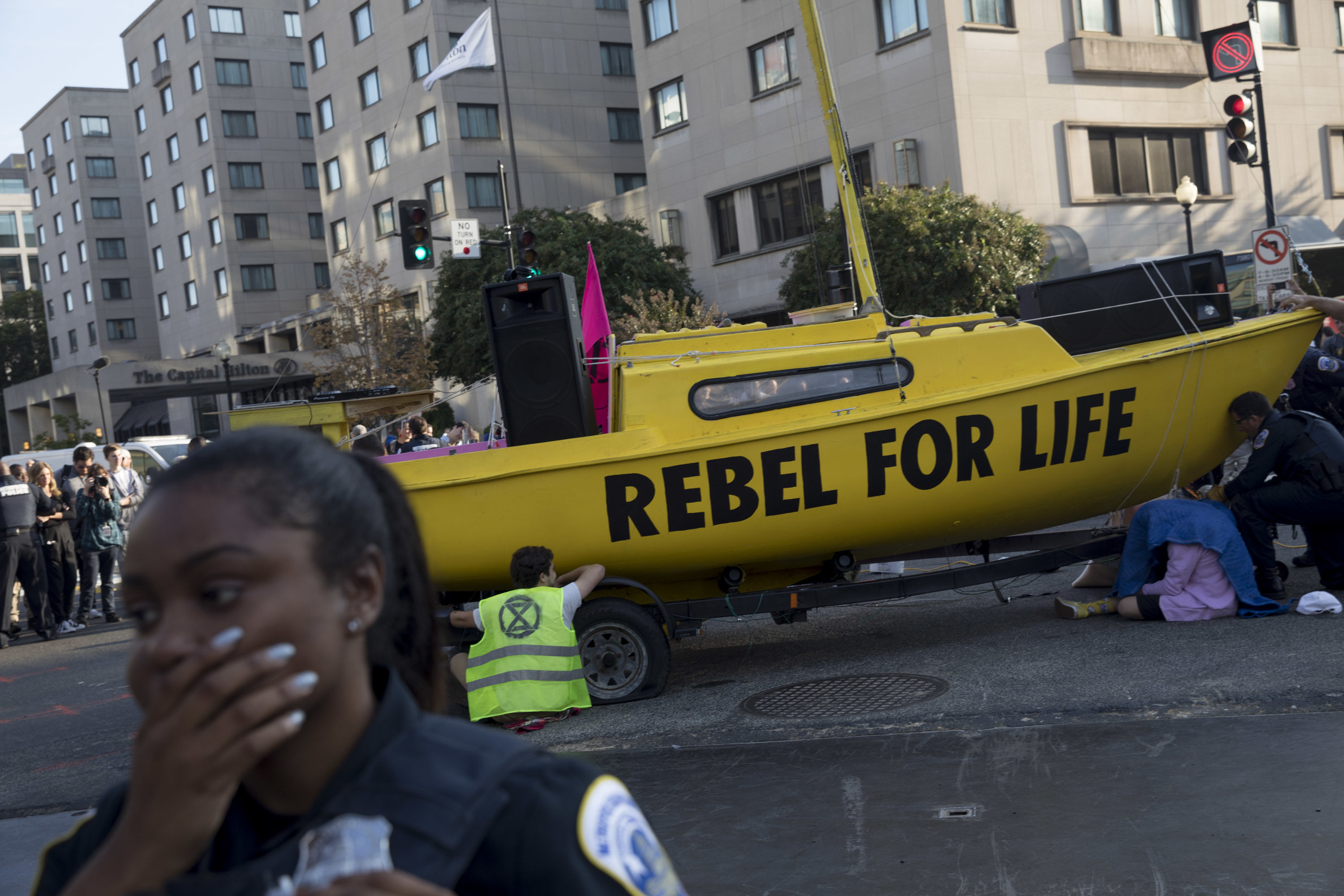
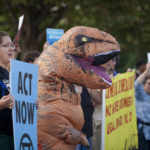
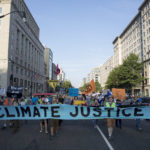
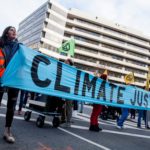
A coalition of demonstrators called “Shut Down D.C.” took to the District’s streets Monday morning, creating gridlock to draw attention to climate change for rush hour commuters.
The protests, which began around 7 a.m. and lasted around three hours, come just days after thousands of Washington area students converged outside the Capitol on Friday to protest climate change as youth protesters across the globe took part in similar strikes. Monday’s blockades were timed to coincide with the United Nations Climate Action Summit, which will take place in New York that day.
Organizers of Monday’s protests wrote on their website that the demonstrations aimed “to disrupt the systems that created and perpetuate the climate crisis,” urging “climate rebels” to bring the “whole city to a gridlocked standstill.” The group wrote that the shutdown was geared, particularly, toward Washington’s powerful political entities—the people, they charge, “are most responsible” for contributing to climate change.
“By shutting down the city we are demanding that those in power immediately address the climate crisis,” the group’s page states.
“We will block key infrastructure to stop business-as-usual,” the group said in a statement. “Parents, workers, college students, and everyone who is concerned about the climate crisis will skip work and school and put off their other responsibilities to take action on the climate crisis.”
Transportation officials had cautioned commuters to allot extra time during Monday’s commute, warning District employees to expect delays along their routes.
One organizer told WAMU that 22 intersections were blocked across the District, including at L’Enfant Plaza Metro Station, Folger Park, Columbus Circle and near Farragut Square.
One organizer told me 22 intersections were blocked this morning. Police cleared one of them on 14th but he says protesters have just retaken it. pic.twitter.com/OLk9A2BaJB
— Jacob Fenston (@JacobFenston) September 23, 2019
D.C. police blocked off parts of K Street from 14th St. to 17th St. NW as protesters gathered near the heavily trafficked downtown intersection. An estimated 250 to 300 people gathered to demonstrate around Farragut Square, chanting “This is what democracy looks like” and “We demand a Green New Deal,” a few blocks north of the White House and a popular corridor where lobbyists have offices.
Police blocking off parts of K Street near 17th pic.twitter.com/8dXW2KZh4g
— Jordan Pascale?️ (@JWPascale) September 23, 2019
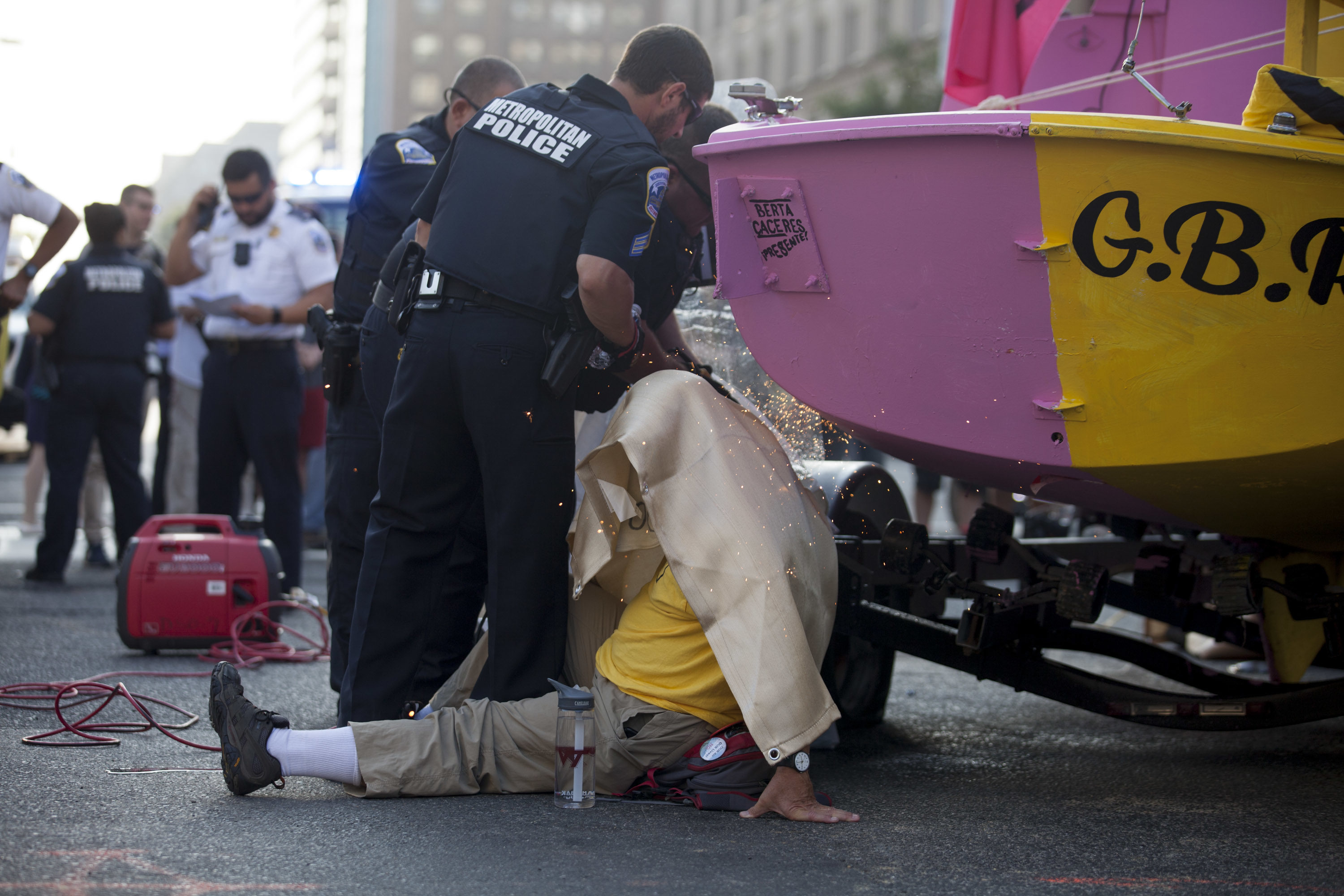
Protesters used a pink and yellow boat emblazoned with the words “Rebel for life” to block the intersection of 16th and K streets NW shortly after 8 a.m.
Sean Haskett, a spokesperson and organizer for the “Shut Down D.C.” coalition and an activist for Extinction Rebellion, said the boat was meant to symbolize the District’s future if action isn’t taken on climate change.
“D.C. is the largest concentration of power in the world. The core of D.C. has dozens of incredibly powerful companies, lobbyists, no profits, Congress, the White House. The core of D.C. has been acting if [climate change[ is normal. This planet is finite,” Haskett said. “If we act if it is not, we are going to sink. We have 10 years to decarbonize the economy or we are going to have civilization-ending levels of climate change.”
It appears police are asking this DJ in a yacht captain hat to shut off the music. pic.twitter.com/gCTVR0BLxF
— Jordan Pascale?️ (@JWPascale) September 23, 2019
Police physically carried some protesters away from the boat, while other officers attempted to unchain another demonstrator from it.
Police now physically carrying people away from the boat. pic.twitter.com/vadQeIRDmM
— Jordan Pascale?️ (@JWPascale) September 23, 2019
Will Carter, 16, a student at H-B Woodlawn Secondary Program in Arlington, attached himself to a large metal tube on the boat around 7:30 a.m. using chihuahua collars and carabiners.
“I just want to show the government that these are our streets, this is our country and we’re going to do this until something happens,” Carter said. “(Climate change) is important to me. A lot of people running this country don’t understand what’s going on here. They’re denying scientific facts. It’s an important thing to fight for.”
Police cut free about 10 protesters from the boat with angle grinders, covering demonstrators in blankets to protect them from sparks. The boat was removed from 16th and K streets NW shortly after 10:00 a.m.
Carter, who said he was prepared to protest the whole day, did not get arrested or receive a citation, though police did take down his information.
Carter said he enjoys skiing and worries his children won’t be able to share that experience because of climate change.
“I don’t want this to end up being a miserable planet,” he said.
All the protestors are now cut free from the boat at 16th and K. pic.twitter.com/JrCTstjhmL
— Jordan Pascale?️ (@JWPascale) September 23, 2019
And the boat is gone from 16th and K. Probably 50-75 protestors remain. pic.twitter.com/Mqhwj5YQNt
— Jordan Pascale?️ (@JWPascale) September 23, 2019
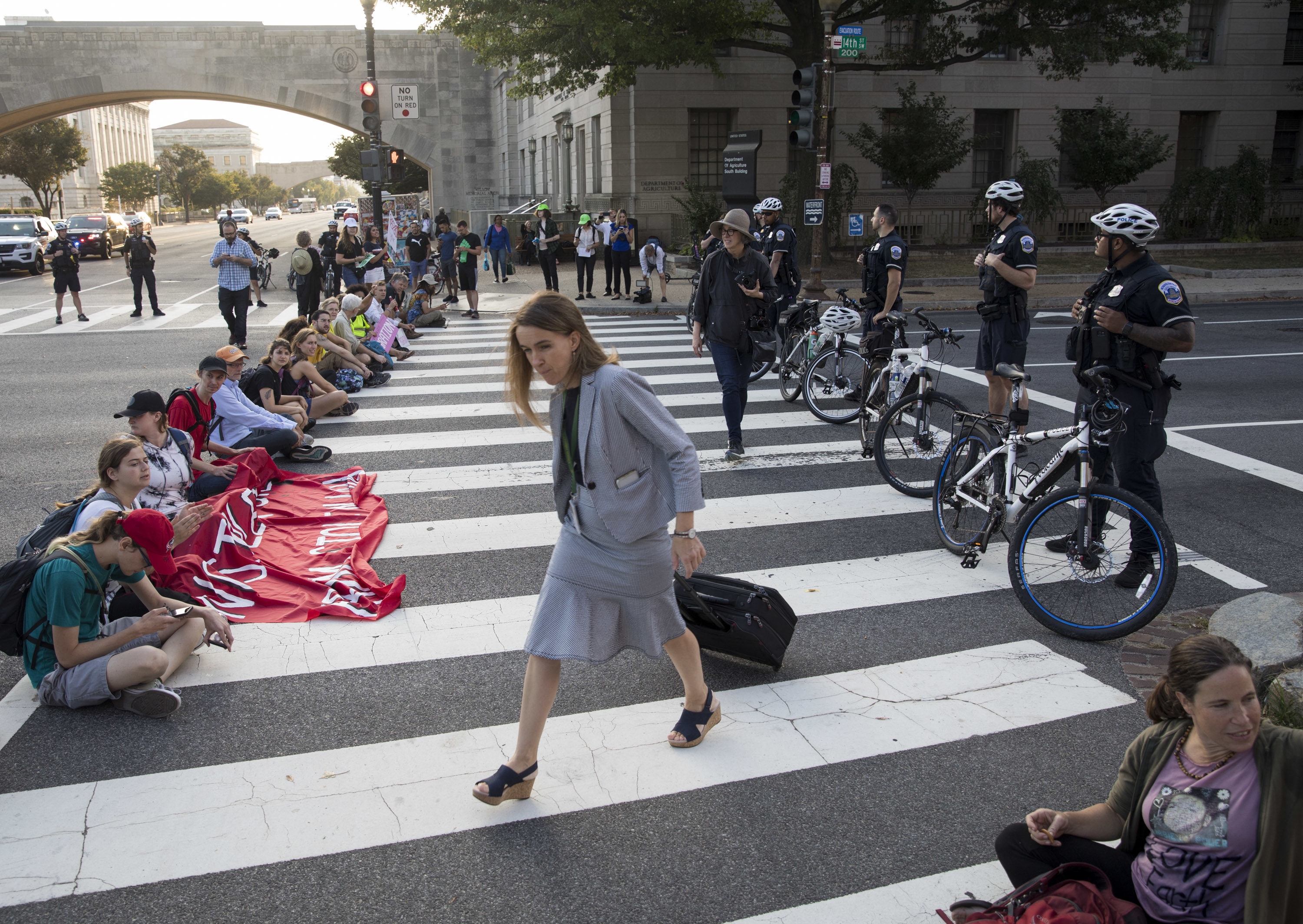
About two dozen people met at the Smithsonian Metro station, mostly with the environmental group Chesapeake Climate Action Network. Many said they were new to and slightly uncomfortable with civil disobedience.
At about 7 a.m., the group made its way to the intersection of 12th and Independence St. SW. In a careful, organized fashion, they waited for the green pedestrian signal, then occupied the crosswalk, blocking four lanes of traffic.
“We’ve tried permitted rallies, we’ve tried rallying political support, and our leaders are not listening, the corporations are not listening, the oil companies are not listening,” said Anthony Field. Field, who works for the Chesapeake Climate Action Network, was beating a plastic bucket drum in the middle of the intersection.
Karen Metchis, of Bethesda, Md., handed out doughnuts to passersby and drivers, along with fliers about climate change.
“We’re not trying to make people angry, we’re sorry for the inconvenience,” said Metchis. “We’re all inconvenienced by climate change, and our children and our grandchildren and generations to come. It’s a climate emergency.”
As protesters took over the intersection, D.C. police in cruisers, motorcycles, and bikes quickly swooped into place to direct traffic around them.
A few blocks away, just downhill from the U.S. Capitol, police did not let protesters remain in the crosswalk. When demonstrators sat down, disobeying police, they were handcuffed and loaded into a waiting police van.
On the sidewalk, a large group chanted in support, while an officer with a bullhorn told protesters to disperse. When nobody moved, the officer threatened to surround the group and arrest them all, prompting the group to scatter.
Haskett said Monday’s blockades were intended as a response to Friday’s worldwide youth climate protests.
“We were responding to demands of the youth climate strikes. They said we need the adults to act. This coalition is the adults in the room acting,” he said.
Similar protests have successfully blocked traffic on some of the District’s major thoroughfares, including demonstrations in December 2014 against a Missouri grand jury’s failure to indict police officer Darren Wilson in the killing of 18-year-old Michael Brown.
Ward 3 Councilmember Mary Cheh, who is a constitutional law professor, told WAMU in 2014 that MPD’s Special Operations Division can use certain techniques to defuse situations in which protesters are blocking traffic.
Those methods often involve clearing the route for protesters and giving them a certain amount of time to block traffic before being asked to disperse. Some of those techniques include requiring three audible warnings to demonstrators, delivered five-minute, two-minute and two-minute intervals in between.
This story was originally posted on WAMU and has been updated to include photos by Tyrone Turner and reporting from Jordan Pascale and Jacob Fenston.