Rachel Kurzius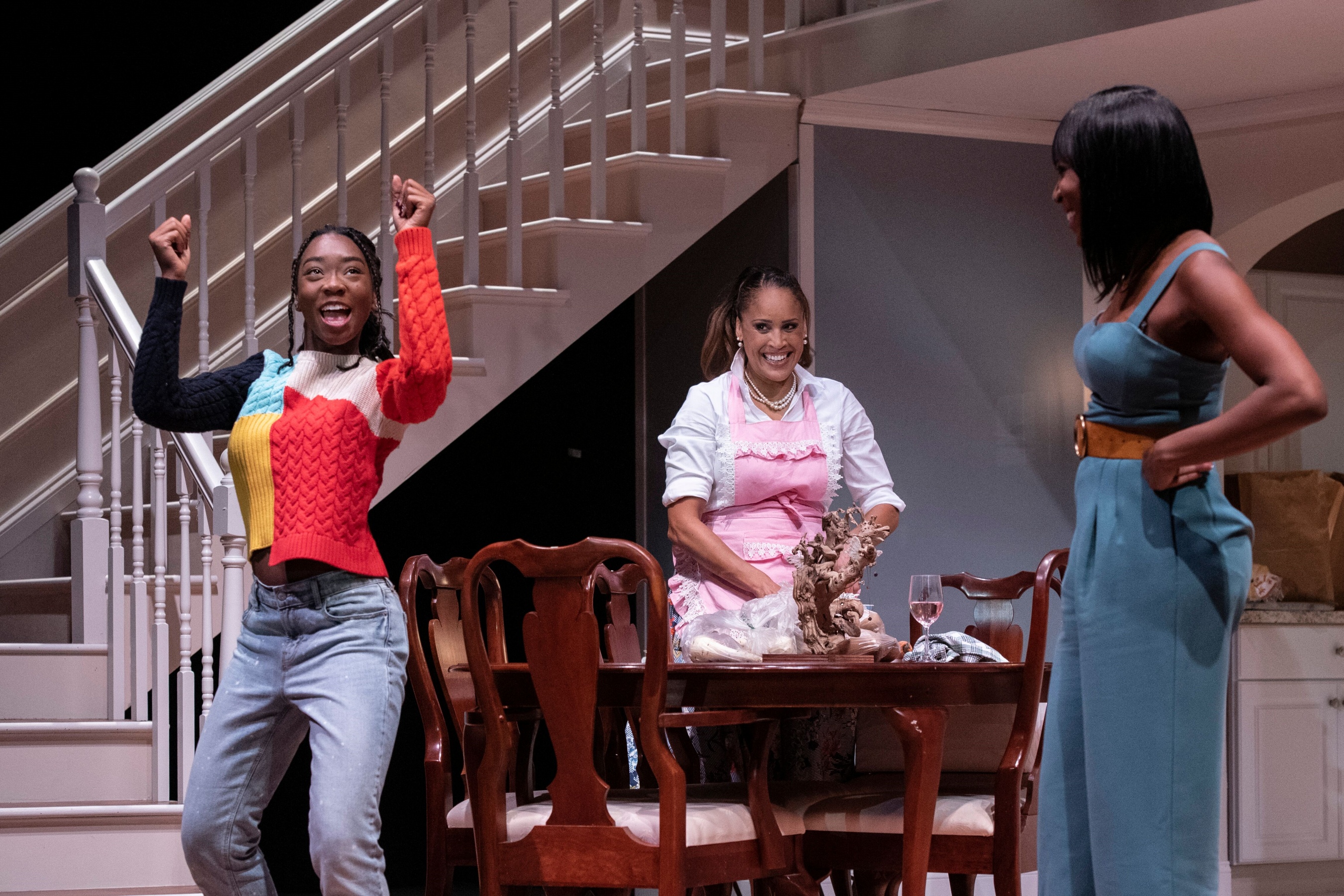
You know it’s going to be an intense experience, even by the standards of the boundary-pushing Woolly Mammoth Theatre, when the program promises a post-show “reflection space for audience members to hold the vital questions raised by the play” and the note from the artistic director encourages white audience members against asking black people they know to share their personal, painful “experiences with the issues confronted” in the show. But those hints were no preparation for the wallop that the Pulitzer Prize-winning drama Fairview provides. Its questions about who gets to sit in a theater and watch comfortably, and who must constantly perform linger long after the performance’s abrupt end.
By the end of Fairview, I was on the stage and none of the actors were.
Before the show begins, the theme songs from sitcoms about black families—The Jeffersons, Family Matters—play amid a set that looks like the first floor from The Fresh Prince of Bel-Air home, priming viewers for what appears to transpire at first: The Frasiers, a black family with goofy foibles and pizazz, are getting ready for a somewhat stressful dinner. As far as plays where people peel carrots with great emotion go (many such plays are performed in D.C.), it’s compelling and entertaining. Nikki Crawford and Shannon Dorsey especially, playing two adult sisters, make sure that characters designed to be archetypes feel fully realized.
But before anyone gets too comfortable, it becomes apparent that the initial setup of the play is an egg, and an entirely new concept hatches out of it: We’re not the only ones watching the Frasiers prepare for their dinner. This version of Fairview is not comfortable, but it’s fascinating amid its awkwardness, and brain-tickling to try to figure out the relationship between this new version and what was there before.
Don’t get too accustomed to that theatrical creature, either, because a parasite bursts out of it to create a third iteration of Fairview, this time horrifying and cringe-inducing, thanks to the white characters who have joined the Frasiers onstage. They turn the narrative into a death spiral. By employing the most hackneyed tropes about representation of black people, the characters upend the idea of a show altogether. Under Stevie Walker-Webb’s direction, the transitions from one part of the show to another feel jarring and yet inevitable.
Out of this frustrating cacophony, the final version of Fairview emerges. The success of the show’s last chapter falls entirely on the shoulders of Chinna Palmer, who plays Keisha, the young daughter. She contextualizes the chaos onstage through the people who have assembled to watch it all go down. Rather than uniformly looking at the action on the stage, members of the audience eye one another as many must decide, “Am I going to take action?”
Fairview is not an escape for theatergoers. Its questions about centering whiteness at the cost of black storytelling and black bodies are inescapable, and have stayed with me ever since.
Fairview runs at Woolly Mammoth Theatre Company through October 6. Tickets $20-$97. Runtime approximately 100 minutes with no intermission.